





Nikon Z8 Review Scores
4.5/5
80%
91%
96%
94%
83%
Scores out of 100 based on ClarityPoint review criteria.
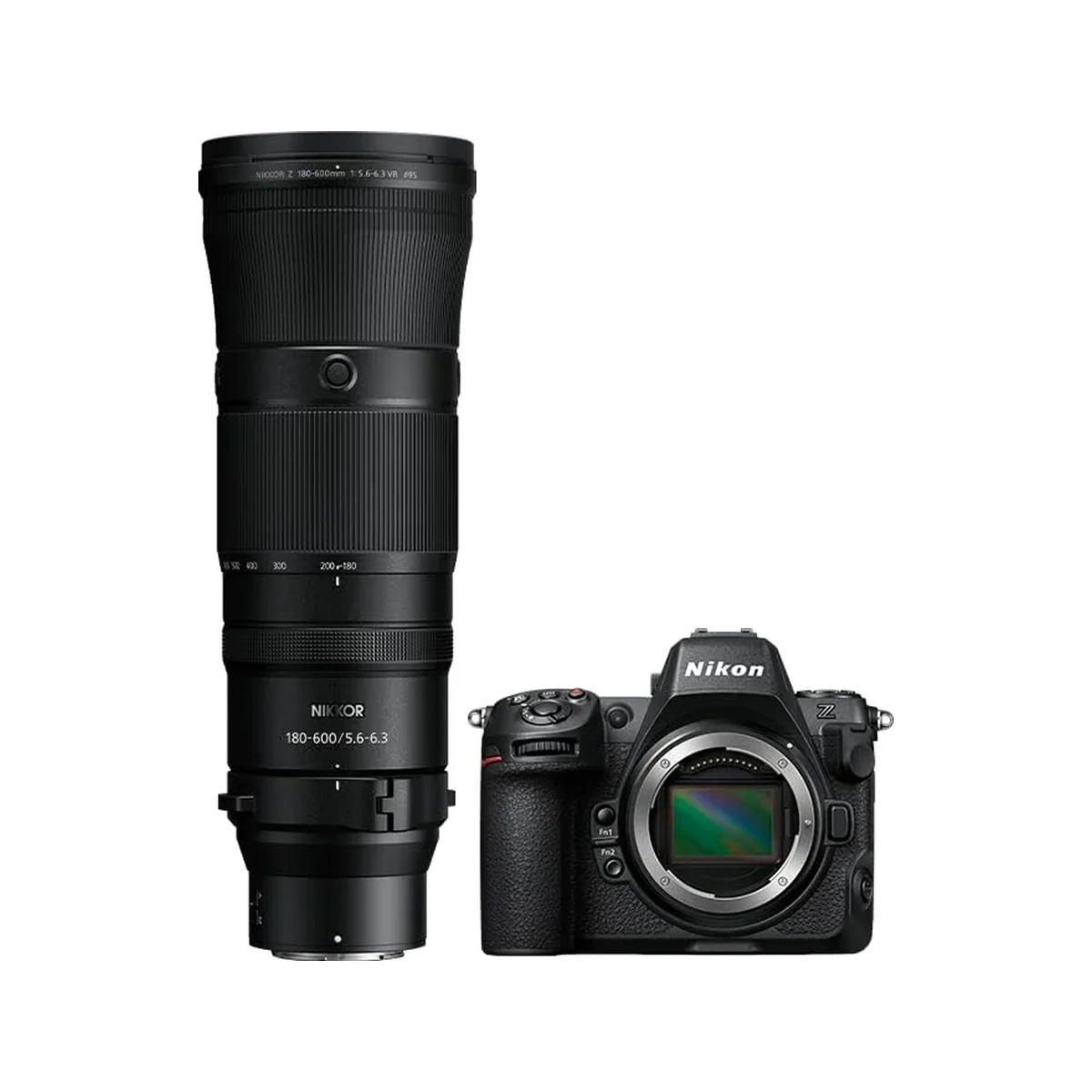
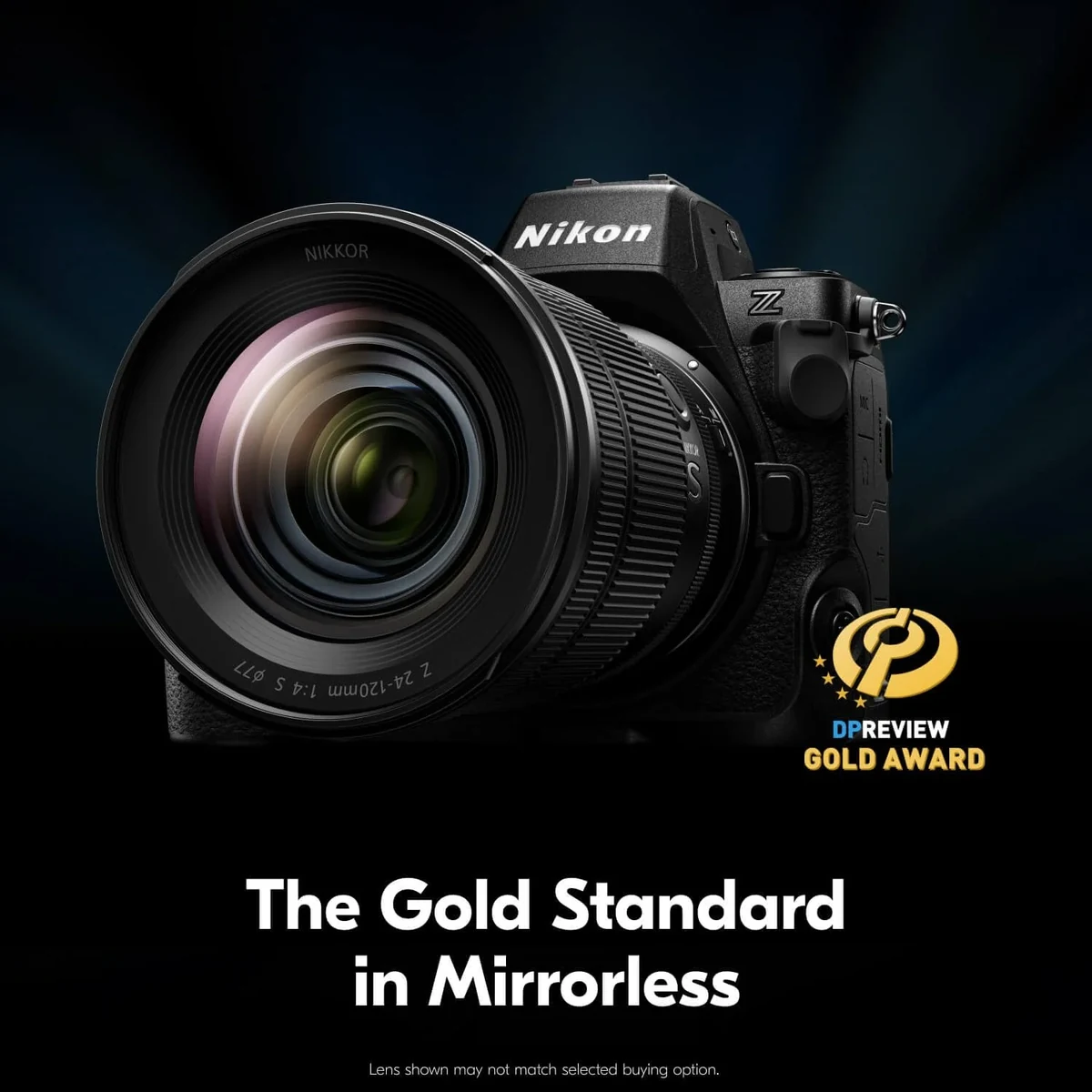
The Nikon Z8 delivers flagship-level performance in a more compact and accessible package, making it one of the most compelling professional mirrorless cameras available in 2026. Armed with a 45.7MP stacked sensor, lightning-fast autofocus, and serious 8K video capabilities, it strikes an impressive balance between the Z9’s power and everyday usability. This review explores exactly why the Z8 has become the hybrid shooter’s dream camera.
Table of Contents
Key Specifications
| Feature | Detail |
|---|---|
| Sensor | 45.7MP Full-Frame Stacked CMOS |
| Processor | EXPEED 7 |
| ISO Range | 64-25,600 (expandable 32-102,400) |
| Burst Shooting | 20fps RAW, 30fps JPEG, 120fps (11MP) |
| Video | 8K/60p, 4K/120p, 10-bit N-Log, HLG |
| Autofocus | 493-point phase-detect with 3D Tracking and subject detection |
| Viewfinder | 3.69M-dot OLED, 120fps refresh |
| Rear Screen | 3.2″ 4-axis tilting touchscreen |
| Stabilization | 5-axis IBIS (up to 6 stops) |
| Weight | 910g (body only) |
| Battery Life | 340 shots (CIPA), improved with newer EN-EL15c |
Design & Build Quality
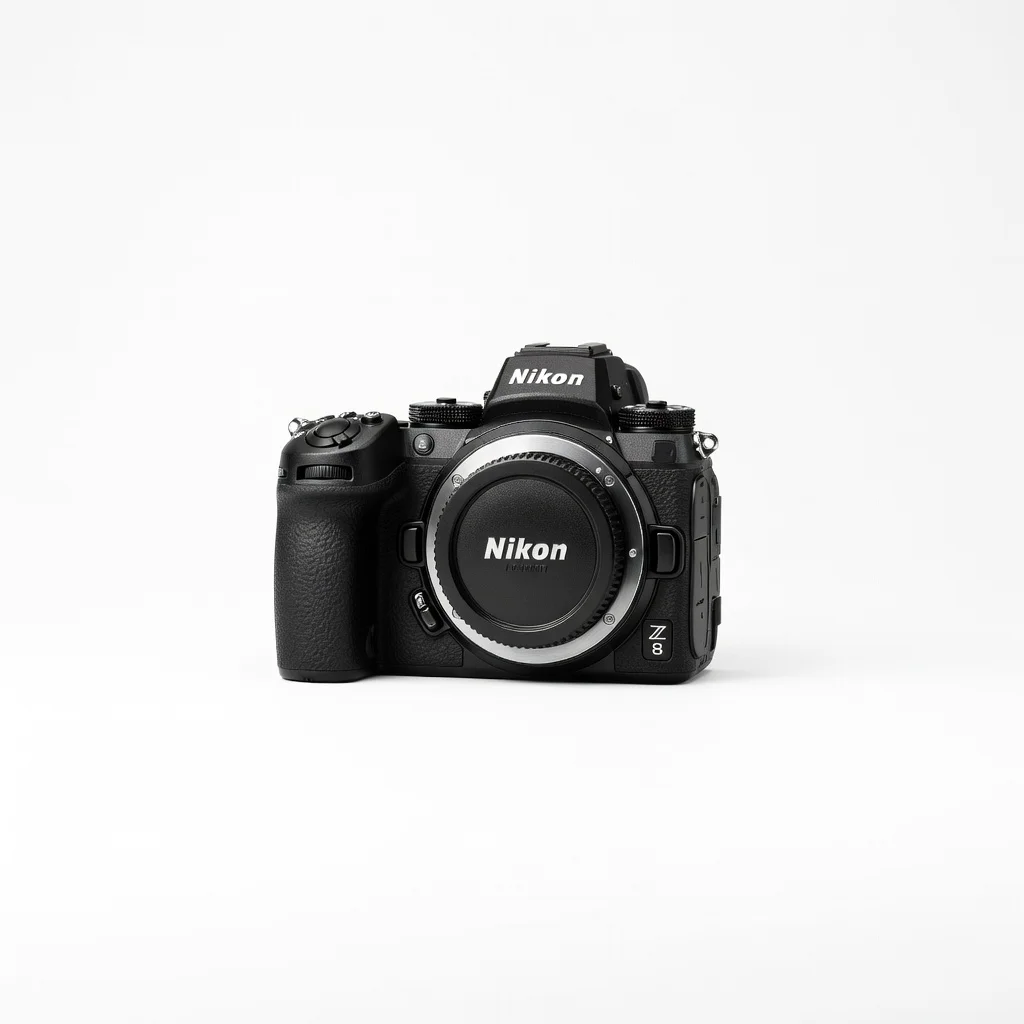
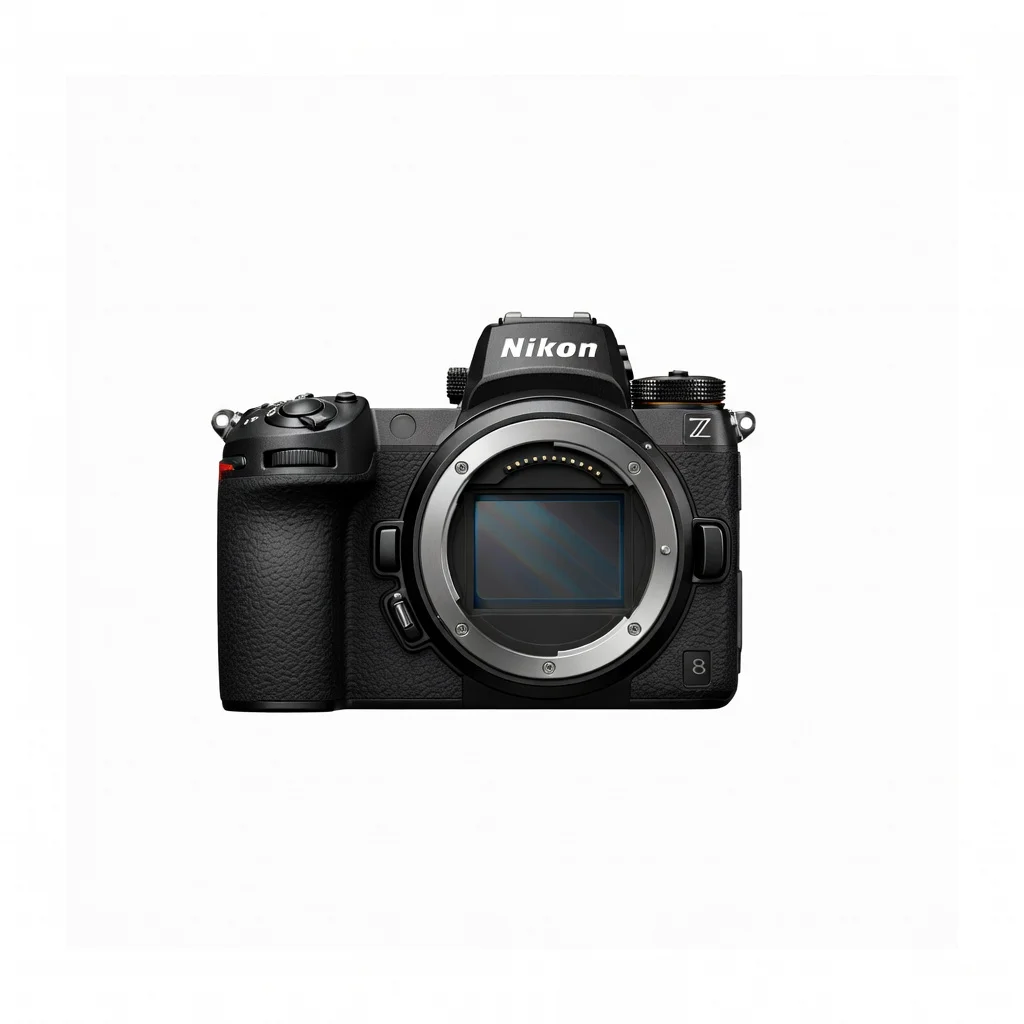
The Nikon Z8 utilizes a magnesium alloy chassis with extensive weather sealing, delivering professional durability without the substantial weight of the Z9. At 910 grams, it feels exceptionally well-balanced with both smaller primes and heavy telephoto lenses. The deep, contoured grip provides outstanding ergonomics, allowing comfortable all-day shooting even when wearing gloves or in awkward positions.
Control placement will feel instantly familiar to existing Nikon users while offering enough customization to satisfy power users. The high-resolution electronic viewfinder is bright, sharp, and virtually blackout-free during continuous shooting. Meanwhile, the four-axis tilting rear screen proves versatile for both stills and video work, maintaining the robust, pro-grade feel Nikon is known for throughout the Z-mount lineup.
Overall, the Z8 strikes an ideal balance between size and solidity. It avoids feeling like a compromised junior model and instead presents itself as a thoughtfully downsized flagship.
Performance
In real-world use, the Z8 is blisteringly fast. The combination of the stacked sensor and EXPEED 7 processor enables 20fps RAW shooting with full autofocus and exposure tracking, and an essentially unlimited buffer when using CFexpress Type B cards. Sports, wildlife, and event photographers will appreciate the camera’s ability to maintain focus on erratic subjects even in challenging lighting conditions.
Autofocus performance is class-leading. Subject detection for humans, animals, birds, vehicles, and aircraft is reliable and sticky. In low-light tests down to -9 EV, the Z8 consistently locked onto eyes and faces where competitors began to hunt. Dynamic range is excellent, with clean files up to ISO 6400 and usable results beyond that for most professional applications.
For video, the Z8 handles 8K/60p with surprisingly good heat management for a camera this size. Oversampled 4K footage is exceptionally sharp, and the addition of 4K/120p slow motion provides creative flexibility that professionals demand in 2026.
Features & Software
Standout features include 8K video recording, pre-release capture, focus stacking, and an enhanced pixel-shift mode that produces 180MP images. The camera also offers dual card slots (CFexpress Type B and SD UHS-II) for flexible backup or overflow workflows. In-body image stabilization delivers up to six stops of compensation, making it practical to shoot handheld with slower shutter speeds.
Nikon’s menu system has seen meaningful improvements, with clearer categorization and faster touch navigation. Integration with Nikon’s NX Studio software remains seamless for RAW processing, while the SnapBridge app provides reliable wireless transfer and remote control. The overall software experience feels polished and production-ready.
Value Proposition
At its current 2026 street price, the Z8 represents one of the strongest value propositions in the professional mirrorless segment. It delivers roughly 95% of the Z9’s capability in a smaller, lighter, and significantly less expensive body. Photographers who don’t require the Z9’s integrated vertical grip or extreme battery life can save substantial money without compromising image quality or core performance.
Compared to rival systems, the Z8 frequently offers better ergonomics and a more intuitive shooting experience than equivalent Sony or Canon bodies, while delivering competitive dynamic range and superior high-resolution stills. For Nikon users already invested in Z-mount glass, the Z8 is a logical and cost-effective step up to professional hybrid performance.
How It Compares
Against its bigger brother, the Nikon Z9, the Z8 is noticeably smaller and lighter while producing nearly identical image quality. The Z9 maintains an advantage in buffer depth during extended 20fps RAW bursts and offers longer battery life, but for most photographers the Z8 is the more practical everyday tool.
When compared to the Sony A1 II, the Z8 offers superior ergonomics and a more intuitive control layout for stills photographers, though Sony retains a slight edge in certain video codecs and frame rates. Canon’s EOS R5 Mark II remains a strong competitor for video-first creators, but the Z8’s higher native resolution and more reliable subject tracking in continuous shooting give Nikon the advantage for hybrid professionals.
Pros and Cons
Pros
- Exceptional image quality with class-leading dynamic range and detail.
- Lightning-fast autofocus with reliable subject detection across varied scenarios.
- True 8K/60p video recording with excellent heat management for its class.
- Comfortable ergonomics and intuitive controls that reduce fatigue during long shoots.
- Robust professional build quality with comprehensive weather sealing.
Cons
- Battery life remains average and may require spares for full-day video or high-burst work.
- Electronic viewfinder can exhibit minor blackout or lag during the most extreme burst rates.
- The high price still positions it as a premium investment that may exceed enthusiast budgets.
- No built-in GPS, requiring smartphone connection for location data.
- Menu system, while improved, retains some depth that can overwhelm new users transitioning from entry-level bodies.
FAQ
Q: Is the Nikon Z8 still worth buying in 2026?
A: Yes. It continues to offer an outstanding balance of resolution, speed, and video capability that few cameras can match, especially for Nikon system users.
Q: How does the Z8’s battery life compare to competitors?
A: Battery performance is average for a professional mirrorless camera. Most users carry at least one spare, particularly when shooting video or high-speed bursts.
Q: Can the Nikon Z8 be used as a primary video camera?
A: Absolutely. With 8K/60p, 4K/120p, waveform monitors, and good heat dissipation, it serves as a capable production tool for many professional videographers.
Q: Does the Z8 have the same autofocus as the Z9?
A: It uses the same EXPEED 7 processor and nearly identical AF algorithms, delivering very similar real-world subject tracking performance.
Q: Is the Nikon Z8 suitable for wedding photography?
A: Yes. Its combination of resolution, reliable eye-AF, dual card slots, and compact size make it an excellent choice for wedding and event photographers.
Verdict
The Nikon Z8 is the ideal camera for professional photographers and hybrid creators who want flagship performance without the size, weight, or cost of the Z9. It excels as a versatile workhorse that handles everything from high-resolution commercial work to fast-action wildlife and cinematic video with equal confidence.
If you’re already invested in Nikon Z-mount lenses and need a single body that can genuinely do it all in 2026, the Z8 is one of the smartest investments available.
Pros
- ✓ Exceptional image quality with class-leading dynamic range and detail.
- ✓ Lightning-fast autofocus with reliable subject detection across varied scenarios.
- ✓ True 8K/60p video recording with excellent heat management for its class.
- ✓ Comfortable ergonomics and intuitive controls that reduce fatigue during long shoots.
- ✓ Robust professional build quality with comprehensive weather sealing.
Cons
- ✗ Battery life remains average and may require spares for full-day video or high-burst work.
- ✗ Electronic viewfinder can exhibit minor blackout or lag during the most extreme burst rates.
- ✗ The high price still positions it as a premium investment that may exceed enthusiast budgets.
- ✗ No built-in GPS, requiring smartphone connection for location data.
- ✗ Menu system, while improved, retains some depth that can overwhelm new users transitioning from entry-level bodies.
Where to Buy the Nikon Z8





Prices may vary. Affiliate links — we may earn a commission at no extra cost to you.
Related Reviews

Affiliate links — we may earn a commission at no extra cost to you.