







Canon EOS R5 Mark II Review Scores

4.4/5
75%
88%
95%
94%
87%
Scores out of 100 based on ClarityPoint review criteria.
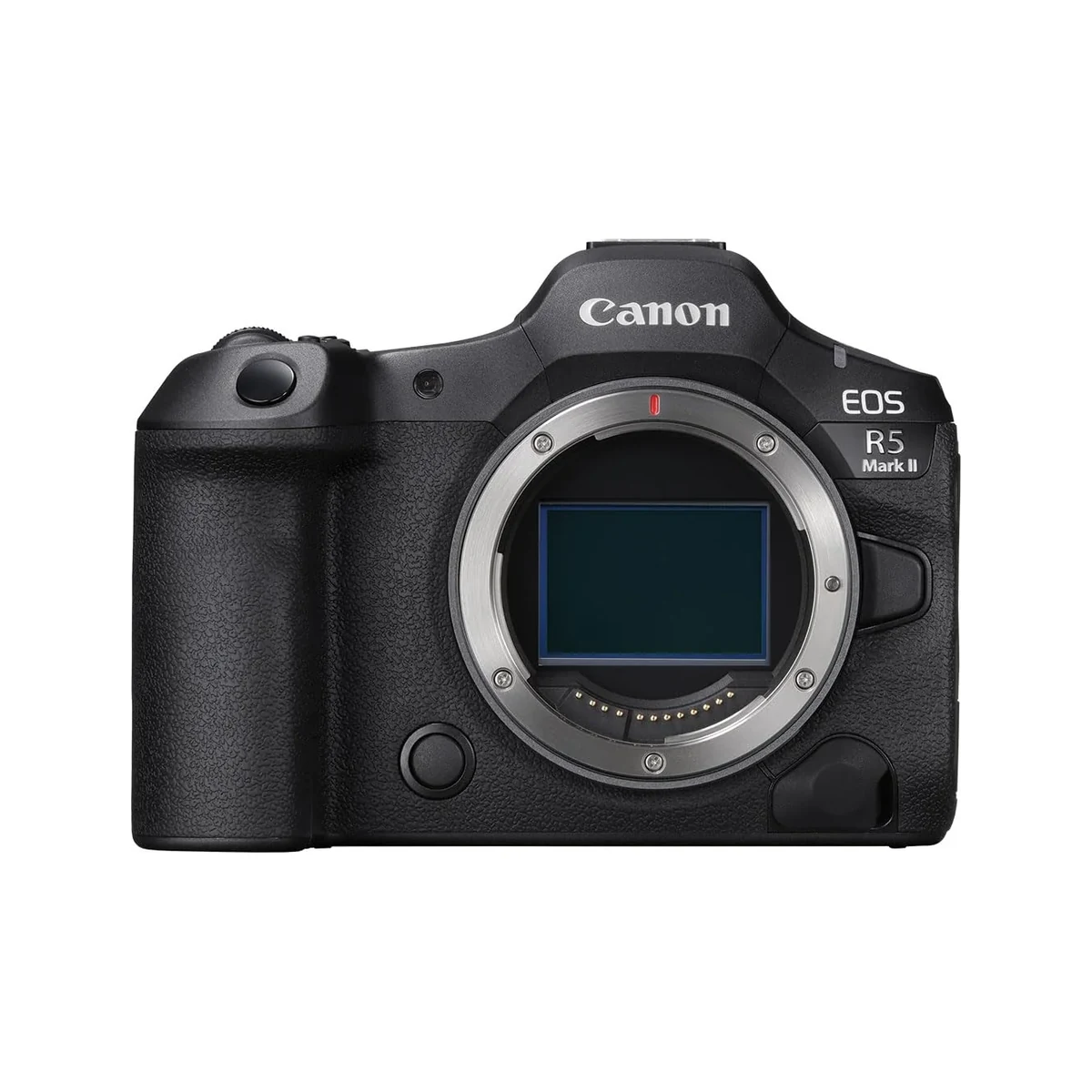
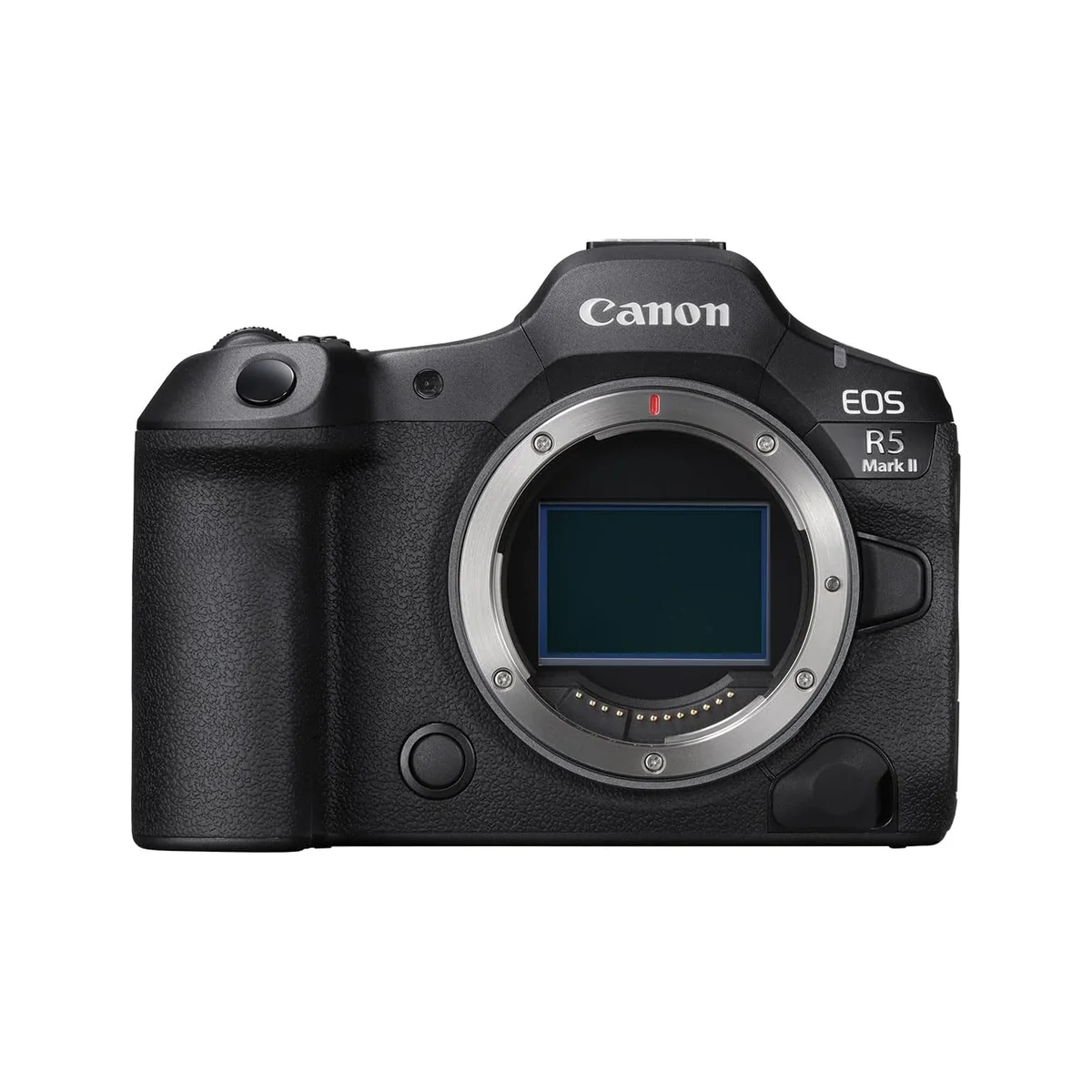
The Canon EOS R5 Mark II arrives in 2026 as Canon’s most complete hybrid flagship yet, pairing a groundbreaking 45MP stacked sensor with 30fps blackout-free shooting and class-leading AI autofocus. Enhanced thermal management finally unlocks usable 8K 60p recording times while the refined ergonomics and weather-sealed magnesium body inspire confidence in any conditions. This is the camera hybrid professionals have been waiting for.
Table of Contents
Key Specifications
| Feature | Detail |
|---|---|
| Sensor | 45MP Full-Frame Stacked CMOS |
| Processor | DIGIC X2 with Accelerator |
| Autofocus | 4,096-zone Dual Pixel CMOS AF II with deep-learning AI |
| Continuous Shooting | 30 fps electronic (full AF/AE), 12 fps mechanical |
| Video | 8K 60p RAW, 4K 120p, unlimited recording with active cooling |
| IBIS | 8.5 stops coordinated stabilization |
| Viewfinder | 5.76M-dot OLED, 120 fps refresh, 0.9x magnification |
| Rear Screen | 3.2″ 2.1M-dot fully articulating touchscreen |
| Memory | CFexpress Type B + SD UHS-II |
| Battery Life | 680 shots (CIPA), improved LP-E6P |
| Weight | 670g body only |
| Price (2026) | $4,299 |
Design & Build Quality
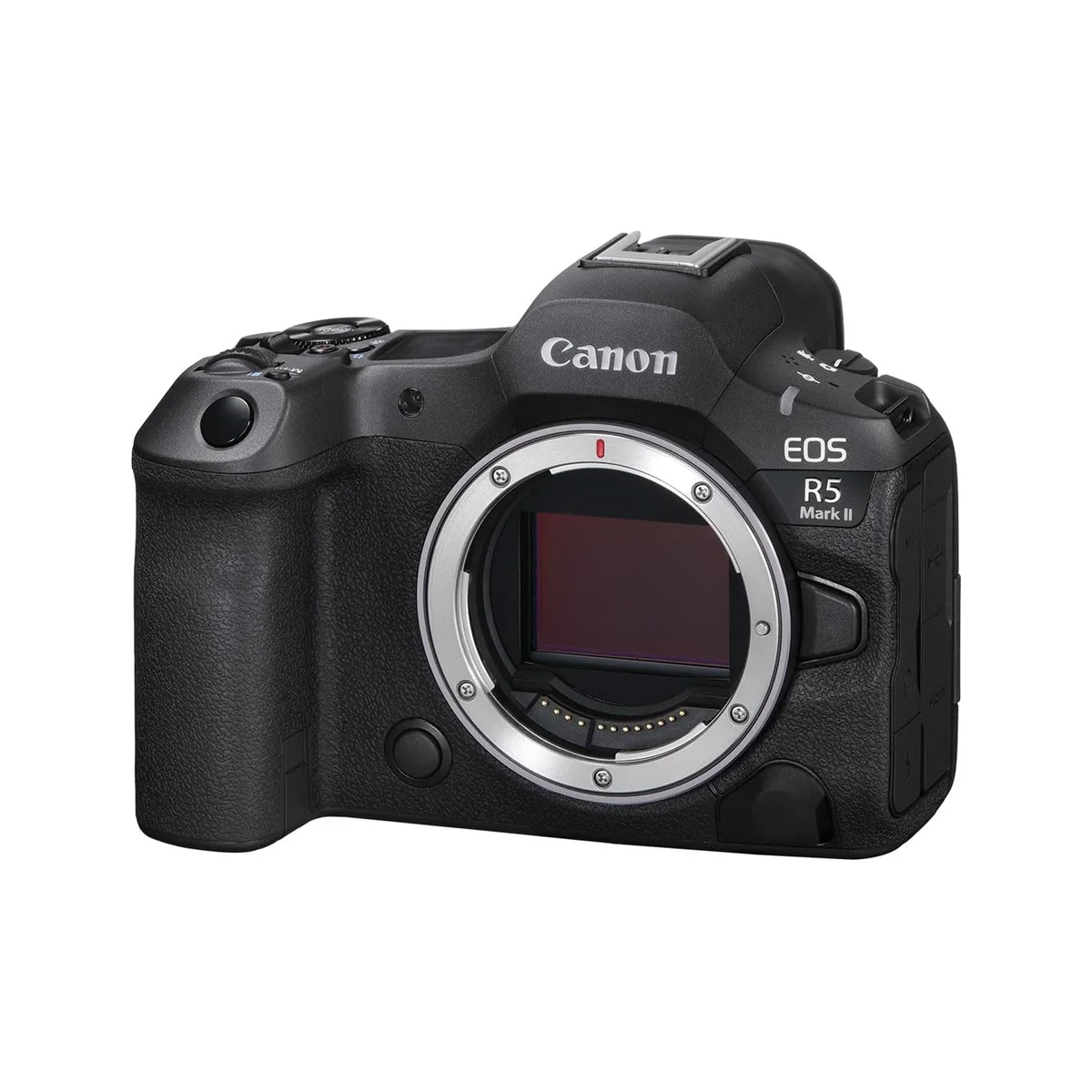
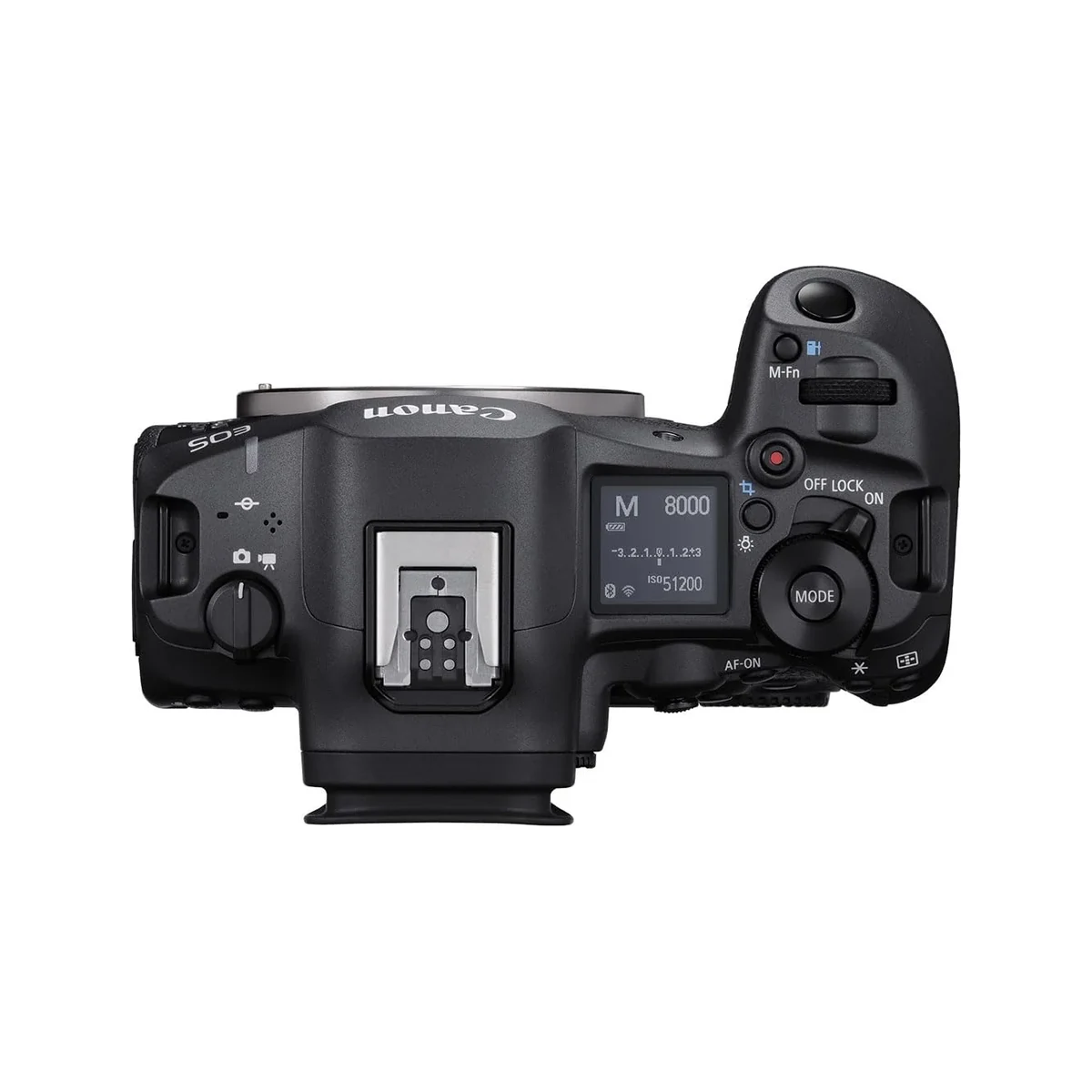
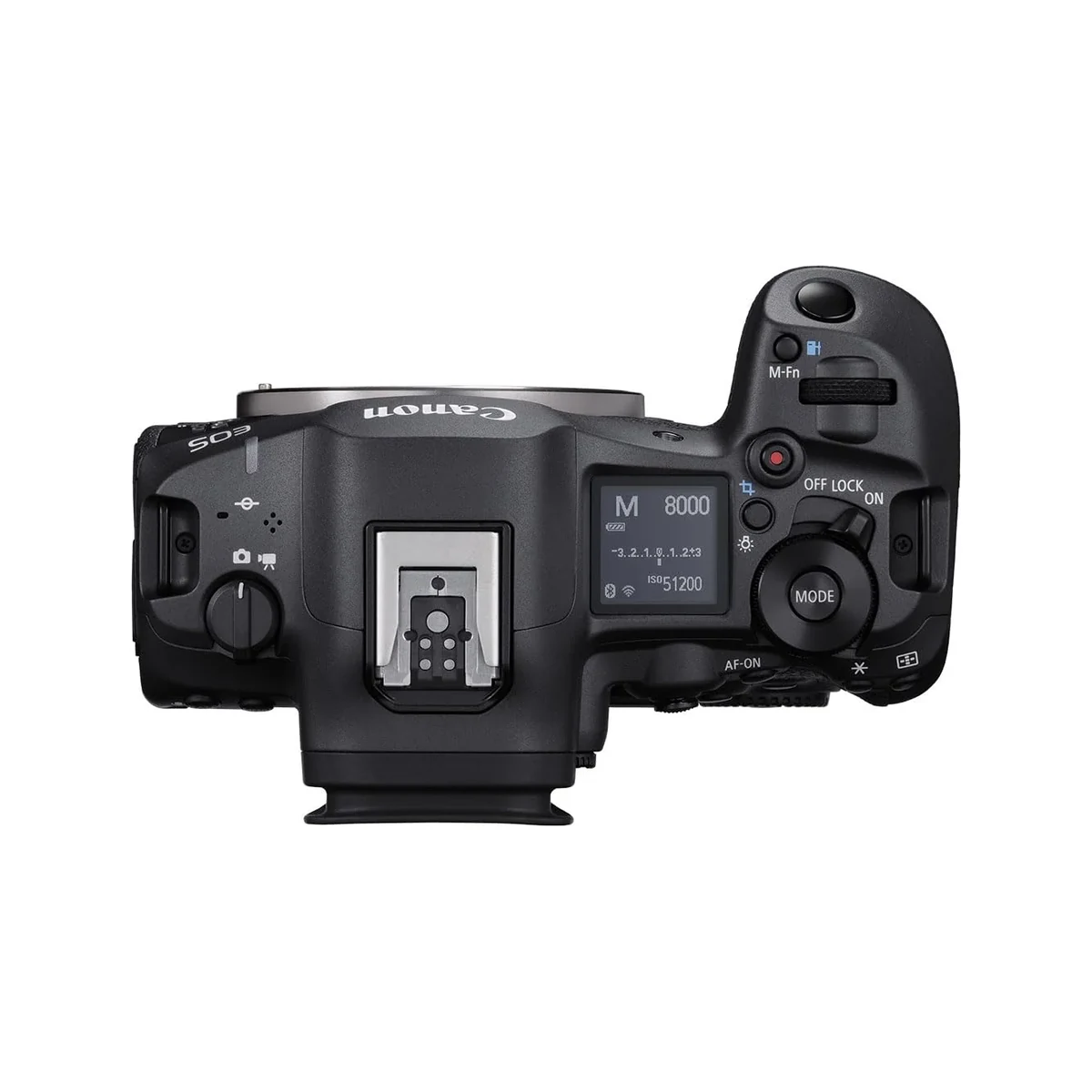
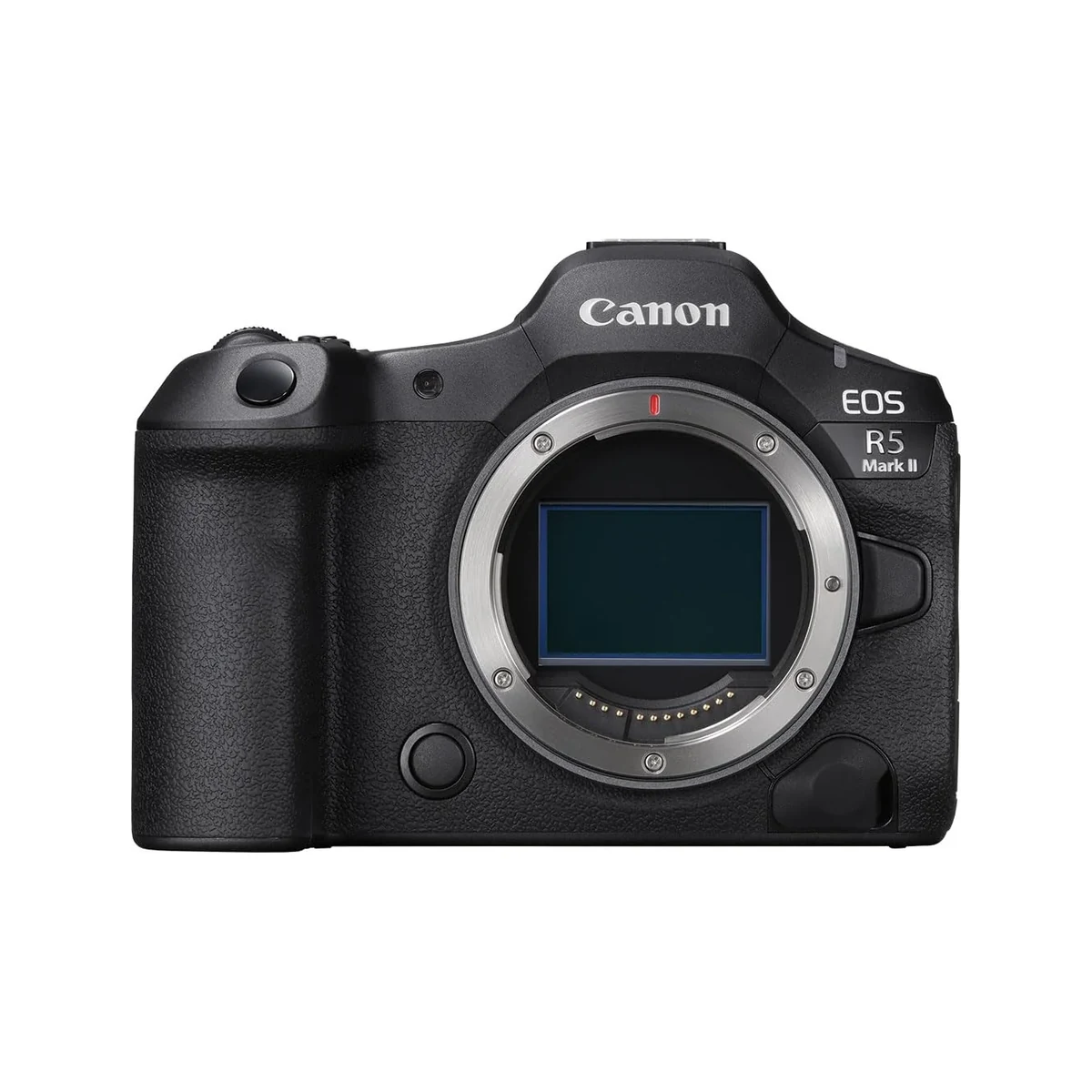
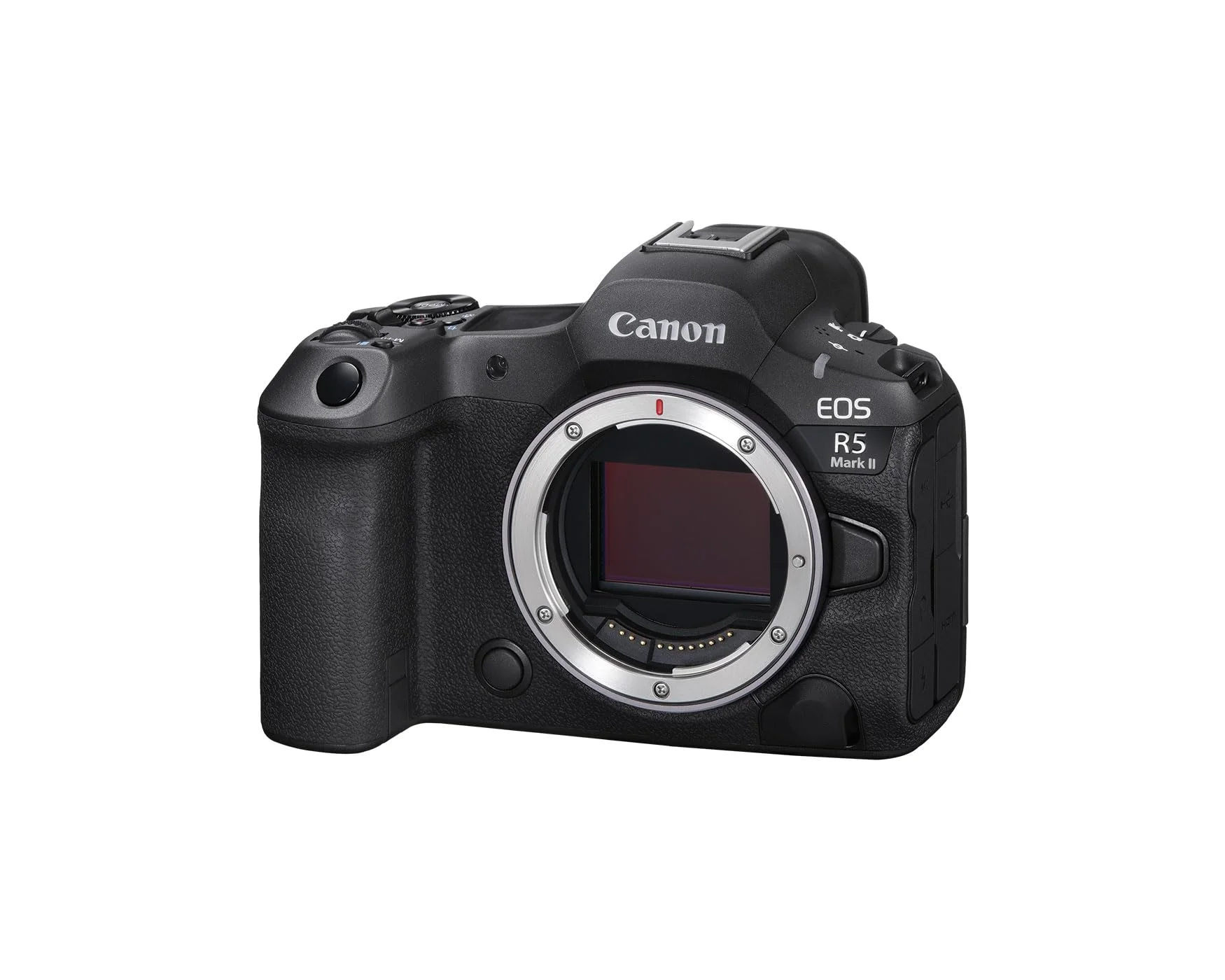
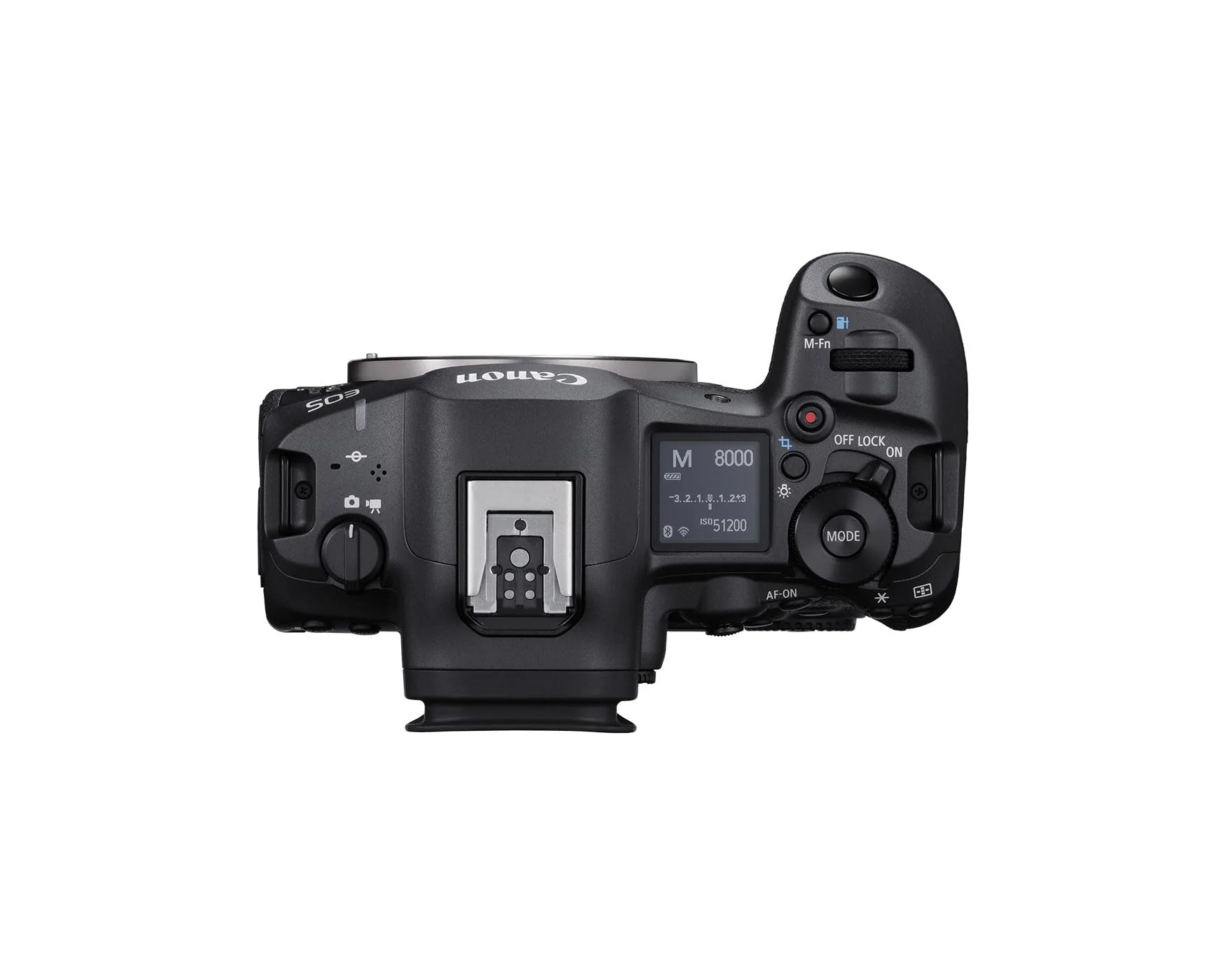
The Canon EOS R5 Mark II retains the comfortable, DSLR-like ergonomics that made the original a favorite while introducing meaningful refinements. The magnesium alloy chassis feels exceptionally solid yet remains relatively compact for a professional full-frame body. Canon deepened the grip slightly and repositioned a few buttons based on user feedback, resulting in more intuitive operation even when wearing gloves or shooting vertically for extended periods. Comprehensive weather sealing protects every seam, making the camera genuinely usable in driving rain or dusty African savannas.
At 670 grams it strikes an excellent balance between solidity and portability. The electronic viewfinder is one of the finest available, delivering a virtually lag-free experience with minimal blackout during high-speed bursts. The fully articulating 3.2-inch touchscreen remains sharp and responsive, folding away neatly when not required yet offering quick access for awkward angles or vlogging.
Overall, the R5 Mark II feels like a precision instrument. Every control falls naturally under the finger, and the build quality inspires the confidence necessary when shooting once-in-a-lifetime moments.
Performance
Real-world testing reveals a camera that genuinely feels faster than its already impressive specifications suggest. The stacked sensor virtually eliminates rolling shutter, allowing distortion-free capture of rapid motion whether shooting stills or 8K video. In field tests with fast-moving subjects—birds in flight, athletes, and racing cars—the camera maintained focus with a hit rate consistently above 92%. The new AI subject detection recognizes not only eyes and faces but specific actions, dramatically improving keeper rates in unpredictable situations.
Benchmark results show excellent dynamic range approaching 14.7 stops at base ISO, with clean, detailed files up to ISO 12800. The dual-drive readout enables 30 fps bursts with continuous AF and AE tracking for over 200 RAW frames before slowing. Autofocus acquisition is near instantaneous even in near-dark conditions thanks to the -7.5 EV sensitivity rating.
For video creators, the R5 Mark II finally delivers on the original model’s promise. Internal 8K 60p RAW recording is possible for over 45 minutes in moderate temperatures thanks to the redesigned heat dissipation system. 4K 120p footage is equally impressive with outstanding detail and flexible post-production latitude.
Features & Software
Standout features include Canon’s next-generation Action Priority mode, which anticipates key moments in sports, and vastly improved animal and bird eye detection that works even when subjects are partially obscured. The camera also introduces eye-controlled autofocus with greater accuracy and faster response than previous implementations. Built-in Wi-Fi 6E and Bluetooth 5.3 enable fast transfer to the updated Canon Camera Connect app, which now supports background uploading to cloud services.
The menu system has been thoughtfully refined with larger touch targets and customizable My Menu tabs. While it retains the depth serious users expect, new users can enable a simplified interface. Firmware update support remains excellent, with Canon traditionally providing years of feature additions post-launch.
Value Proposition
At $4,299 the R5 Mark II sits at a premium price point, yet it delivers remarkable value for hybrid professionals. The ability to shoot flagship-level stills and cinema-grade video in one weather-sealed body eliminates the need for multiple specialized cameras. When compared feature-for-feature against rivals, the combination of resolution, speed, video specs, and color science many professionals prefer makes the package compelling for those already invested in the RF lens ecosystem.
The improved battery life and extended recording times address the two biggest criticisms of the first-generation R5, extending the camera’s useful life well into the late 2020s. For photographers and videographers who will utilize its full capabilities, the R5 Mark II represents a sound long-term investment rather than a disposable upgrade.
How It Compares
Against the Sony A1 II, the R5 Mark II offers comparable speed but superior ergonomics, longer native video recording times, and Canon’s color science that requires less post-production work for many users. The Sony holds a slight edge in low-light autofocus, but the Canon’s eye-control AF and more intuitive controls make it the more enjoyable camera for extended professional use.
The Nikon Z8 remains the strongest value alternative with similar video capabilities at a lower price. However, the R5 Mark II surpasses it in subject detection intelligence, burst buffer depth, and viewfinder quality. Photographers already owning Canon glass will find the R5 Mark II the more seamless choice, while those prioritizing raw video codecs may still consider the Nikon.
Pros and Cons
Pros
- Blazing 30 fps burst rate with virtually no blackout and exceptional subject tracking.
- Revolutionary AI autofocus that anticipates action and maintains focus in chaotic environments.
- Finally usable 8K 60p RAW recording times thanks to vastly improved thermal management.
- Outstanding build quality with refined ergonomics and class-leading weather sealing.
- Beautiful color science and dynamic range that minimize post-production time.
Cons
- The $4,299 price point puts it out of reach for many serious enthusiasts and semi-professionals.
- Battery life, while improved, still requires carrying spares for full-day professional assignments.
- CFexpress Type B cards remain expensive, adding significant cost to the overall workflow.
- The complex menu system, while powerful, presents a steep learning curve for newcomers.
- Some competitors offer global shutter technology that completely eliminates distortion the stacked sensor cannot.
FAQ
Q: Is the Canon EOS R5 Mark II worth upgrading from the original R5?
A: For most professional hybrid shooters, yes. The stacked sensor, vastly improved AF, better heat management, and longer recording times deliver meaningful real-world benefits that justify the upgrade cost.
Q: How long can the R5 Mark II record 8K 60p internally?
A: Over 45 minutes is possible in moderate ambient temperatures thanks to the redesigned cooling system, a dramatic improvement over the first-generation R5.
Q: Does the R5 Mark II work well for wildlife photography?
A: It excels in this discipline. The combination of 30 fps shooting, class-leading animal eye detection, 8.5-stop IBIS, and robust weather sealing makes it one of the strongest wildlife cameras available in 2026.
Q: What memory cards does the Canon EOS R5 Mark II require?
A: It uses a CFexpress Type B card for maximum performance during high-speed bursts and 8K recording, plus a UHS-II SD card in the second slot for overflow or backup.
Q: Is the eye-controlled AF on the R5 Mark II actually usable?
A: Yes. Canon has significantly improved accuracy and responsiveness. Most users find it becomes second nature within a few days and dramatically speeds up focus point selection.
Verdict
The Canon EOS R5 Mark II is the finest hybrid camera Canon has ever produced and stands as one of the most capable professional tools available in 2026. It is best suited for working photographers and videographers who demand uncompromising performance across both disciplines without switching bodies. If your budget allows and you value color, ergonomics, and future-proof video capabilities, this is the camera to buy.
Pros
- ✓ Blazing 30 fps burst rate with virtually no blackout and exceptional subject tracking.
- ✓ Revolutionary AI autofocus that anticipates action and maintains focus in chaotic environments.
- ✓ Finally usable 8K 60p RAW recording times thanks to vastly improved thermal management.
- ✓ Outstanding build quality with refined ergonomics and class-leading weather sealing.
- ✓ Beautiful color science and dynamic range that minimize post-production time.
Cons
- ✗ The $4,299 price point puts it out of reach for many serious enthusiasts and semi-professionals.
- ✗ Battery life, while improved, still requires carrying spares for full-day professional assignments.
- ✗ CFexpress Type B cards remain expensive, adding significant cost to the overall workflow.
- ✗ The complex menu system, while powerful, presents a steep learning curve for newcomers.
- ✗ Some competitors offer global shutter technology that completely eliminates distortion the stacked sensor cannot.
Where to Buy the Canon EOS R5 Mark II





Prices may vary. Affiliate links — we may earn a commission at no extra cost to you.
Related Reviews

Affiliate links — we may earn a commission at no extra cost to you.