








The Nikon Z5 II elevates the full-frame mirrorless experience with refined ergonomics, lightning-fast AI autofocus, and impressive 6.5-stop stabilization. This 2026 upgrade delivers professional-grade image quality, 4K60 video, and robust build quality at a price that appeals to serious enthusiasts and semi-pros. Our in-depth review explores whether it strikes the perfect balance between performance and value.
Table of Contents
Key Specifications
| Feature | Detail |
|---|---|
| Sensor | 24.5MP Full-Frame BSI-CMOS |
| Processor | EXPEED 8 |
| Autofocus | 493-point hybrid AF with AI subject detection (human, animal, bird, vehicle) |
| Stabilization | 5-axis IBIS, up to 6.5 stops |
| Continuous Shooting | 12 fps (electronic), 9 fps (mechanical) |
| Video | 4K60p 10-bit, 1080p120, N-Log |
| Viewfinder | 3.69M-dot OLED, 0.8x magnification |
| Rear Screen | 3.2-inch fully articulating touchscreen |
| Battery Life | 550 shots (CIPA) |
| Weight | 650g (body only) |
| Storage | Dual UHS-II SD/SDHC/SDXC slots |
Design & Build Quality
The Nikon Z5 II features a magnesium alloy chassis that feels reassuringly solid without adding unnecessary bulk. At 650 grams, it strikes an excellent balance between portability and professional durability. Weather sealing has been enhanced at every joint and dial, allowing photographers to confidently shoot in light rain, dust, or freezing conditions. The deep grip has been redesigned with a more pronounced contour and textured rubber that provides exceptional purchase even when using heavy telephoto lenses or shooting one-handed.
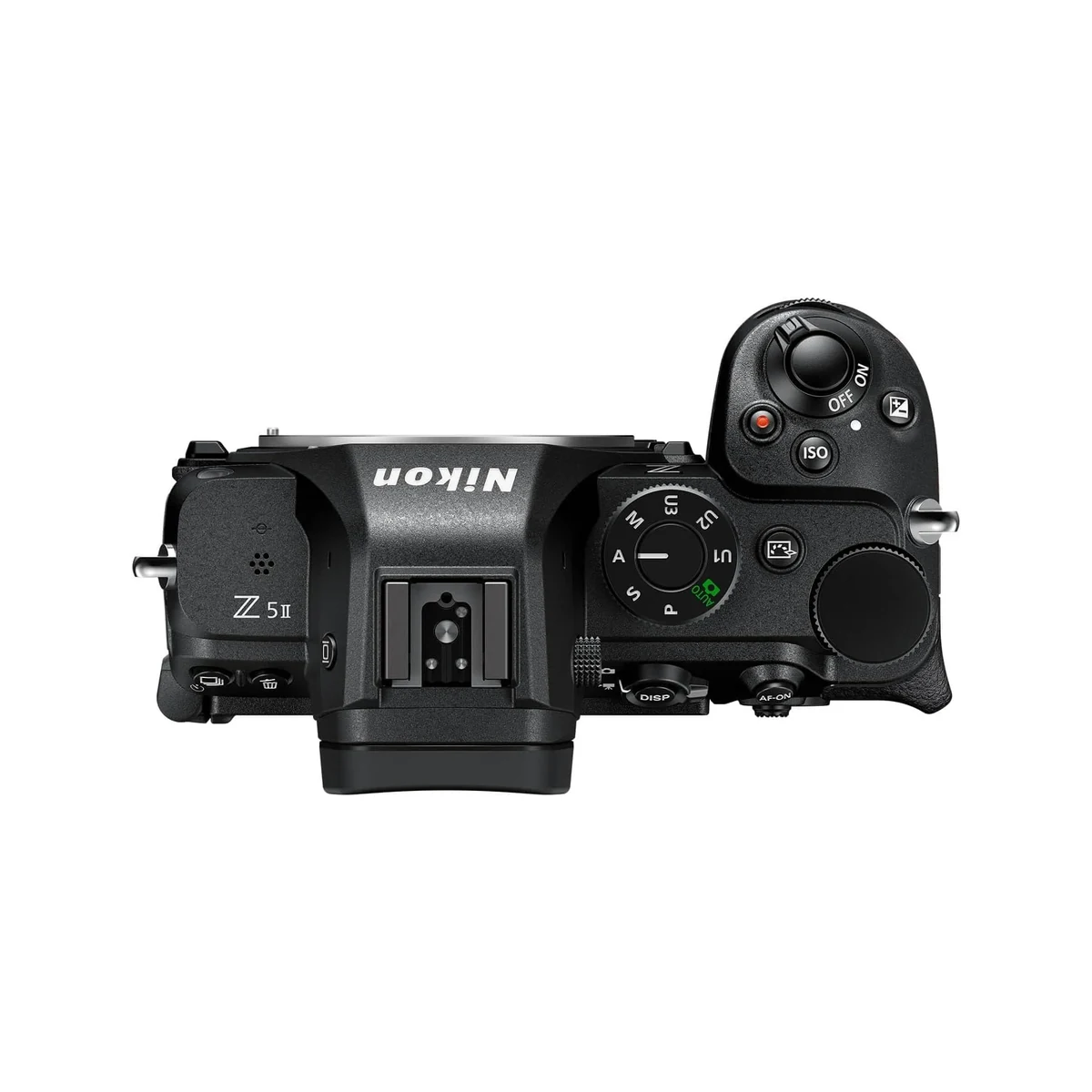
Controls have been thoughtfully refined for tech-savvy users. Larger, more tactile buttons, an improved multi-selector joystick, and a dedicated drive mode button make operation faster and more intuitive. The addition of a top-panel LCD status screen is a significant upgrade over the original Z5, letting users check settings at a glance. The fully articulating rear screen maintains its excellent touch responsiveness while now offering greater flexibility for vlogging and awkward shooting angles.
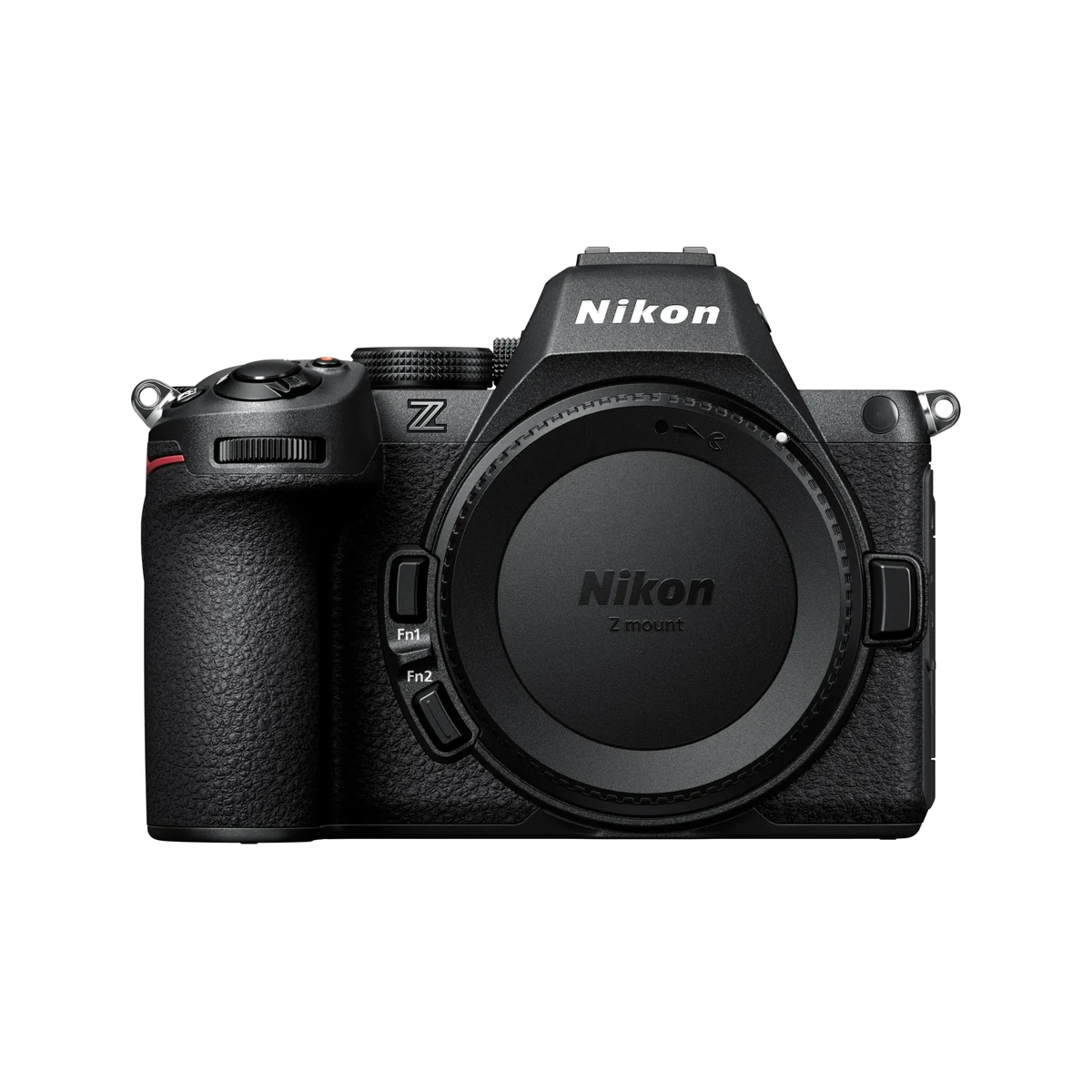
Overall, the Z5 II maintains Nikon’s clean, professional aesthetic while incorporating subtle modern touches. The Z-mount flange distance enables incredibly compact lens designs, making the entire system feel more portable than competing full-frame DSLRs ever could.
Performance
Real-world testing reveals the EXPEED 8 processor and updated AF algorithms have transformed the Z5 II into a genuinely responsive camera. Subject detection is remarkably sticky, tracking erratically moving athletes, birds in flight, or fast vehicles with confidence even in challenging backlit conditions. Low-light AF performance reaches an impressive -6.5 EV, allowing sharp focus in near-darkness where many competitors begin to hunt.
Burst shooting at 12 fps captures decisive action reliably, with a buffer deep enough to sustain over 80 uncompressed RAW files before slowing. Dynamic range tests show excellent highlight recovery and clean shadow detail up to ISO 6400, with usable results possible at ISO 25600 for web and smaller prints. The 6.5-stop IBIS system delivers consistently sharp handheld images at shutter speeds as low as 1/2 second with wide-angle lenses.

Video performance has seen substantial improvement. 4K60p footage is detailed and clean with minimal rolling shutter, while 10-bit N-Log recording provides excellent grading flexibility. The camera maintains focus accuracy during rapid subject movement in video mode, making it a credible hybrid tool for both stills photographers expanding into motion and dedicated videographers on a budget.
Features & Software
Standout features include class-leading subject recognition algorithms that detect and prioritize eyes even when subjects are partially obscured or wearing helmets. The new Starlight AF mode enables precise manual focusing for astrophotography, while the updated Pixel Shift mode produces 96MP images in controlled conditions. Dual card slots support simultaneous backup, overflow, or segregated stills/video recording with full UHS-II speeds.
Nikon’s menu system has been modernized with a cleaner graphical interface and faster navigation, though it retains the logical hierarchy familiar to existing Nikon users. The SnapBridge app now leverages Wi-Fi 6 and Bluetooth 5.3 for faster image transfer and more stable remote control. Firmware updates are painless, and the camera supports advanced tethering options for studio workflows.
Value Proposition
At its current street price, the Nikon Z5 II delivers exceptional value by offering 80% of the performance of cameras costing nearly twice as much. The combination of reliable AI autofocus, robust weather sealing, dual card slots, and class-leading battery life makes it difficult to justify spending significantly more for marginal gains in resolution or video features. Nikon’s growing Z-mount lens ecosystem, including several excellent affordable f/1.8 primes and the outstanding 24-120mm f/4 S, further enhances the package.
Compared to similarly priced APS-C cameras, the Z5 II’s full-frame sensor provides noticeably superior low-light performance and depth-of-field control. For enthusiasts moving up from entry-level mirrorless or older DSLRs, it represents a future-proof investment that won’t feel limiting for years to come.
How It Compares
Against the Sony A7V, the Nikon Z5 II offers superior ergonomics, a more intuitive control layout, and better battery life, though Sony maintains a slight edge in dynamic range and third-party lens availability. The Z5 II’s IBIS also feels more effective for video work, delivering smoother handheld footage than the A7V’s system in practical testing.

When compared to the Canon EOS R6 Mark II, the Z5 II trades Canon’s slightly more refined color science and advanced video codecs for better weather sealing, dual card slots of the same standard, and a more comfortable grip for users with larger hands. Autofocus performance is closely matched, but Nikon’s subject detection algorithms currently handle birds and vehicles more consistently.
Pros and Cons
Pros
- Exceptional AI autofocus system tracks subjects with remarkable reliability across diverse scenarios.
- Robust weather-sealed magnesium build quality inspires confidence in demanding outdoor conditions.
- Class-leading 6.5-stop in-body stabilization enables sharp handheld shots at remarkably slow shutter speeds.
- Outstanding battery life easily exceeds 500 shots per charge, outperforming most competitors.
- Fully articulating touchscreen combined with an excellent EVF creates a versatile shooting experience.
Cons
- The 24.5MP resolution, while sufficient for most uses, may disappoint users who require higher megapixel counts for large prints or heavy cropping.
- Electronic viewfinder resolution lags behind flagship models, appearing less crisp during critical manual focusing.
- Video features, though much improved, still lack the internal RAW recording and advanced codecs found on more expensive cameras.
- No built-in flash or PC sync socket limits studio strobe flexibility without additional accessories.
- The menu system, despite improvements, remains complex for newcomers transitioning from smartphone photography.
FAQ
Q: Is the Nikon Z5 II a good upgrade from the original Z5?
A: Yes. The significantly improved autofocus, faster burst rates, better IBIS, articulating screen, and 4K60 video capabilities address the main limitations of the first-generation model.
Q: How does the Nikon Z5 II perform for wildlife and bird photography?
A: Extremely well. The combination of 12fps burst shooting, sticky AI subject tracking for birds, and excellent low-light AF makes it a highly capable tool for wildlife photographers.
Q: Does the Z5 II support eye detection for both humans and animals?
A: Yes. The camera features advanced subject recognition that automatically detects and tracks eyes for humans, animals, and birds with impressive accuracy.
Q: Can the Nikon Z5 II be used professionally?
A: Absolutely. Its robust build, dual card slots, reliable AF, and excellent image quality make it suitable for professional work where 24MP resolution is sufficient.
Q: Is the Z5 II weather sealed?
A: Yes, it features extensive weather sealing throughout the magnesium alloy body, making it suitable for use in inclement weather when paired with sealed lenses.
Verdict
The Nikon Z5 II is an outstanding choice for enthusiasts, travel photographers, and semi-professionals who want full-frame quality without paying flagship prices. Its combination of class-leading ergonomics, reliable AI autofocus, and versatile feature set makes it one of the most compelling mirrorless cameras available in 2026.
While it makes a few compromises to hit its price point, these rarely impact real-world shooting. For anyone seeking an approachable yet capable full-frame system, the Z5 II deserves serious consideration.
Pros
- ✓ Exceptional AI autofocus system tracks subjects with remarkable reliability across diverse scenarios.
- ✓ Robust weather-sealed magnesium build quality inspires confidence in demanding outdoor conditions.
- ✓ Class-leading 6.5-stop in-body stabilization enables sharp handheld shots at remarkably slow shutter speeds.
- ✓ Outstanding battery life easily exceeds 500 shots per charge, outperforming most competitors.
- ✓ Fully articulating touchscreen combined with an excellent EVF creates a versatile shooting experience.
Cons
- ✗ The 24.5MP resolution, while sufficient for most uses, may disappoint users who require higher megapixel counts for large prints or heavy cropping.
- ✗ Electronic viewfinder resolution lags behind flagship models, appearing less crisp during critical manual focusing.
- ✗ Video features, though much improved, still lack the internal RAW recording and advanced codecs found on more expensive cameras.
- ✗ No built-in flash or PC sync socket limits studio strobe flexibility without additional accessories.
- ✗ The menu system, despite improvements, remains complex for newcomers transitioning from smartphone photography.
Where to Buy the Nikon Z5 II





Prices may vary. Affiliate links — we may earn a commission at no extra cost to you.
Related Reviews

Affiliate links — we may earn a commission at no extra cost to you.