






The Canon EOS R6 Mark III arrives in 2026 as Canon’s most refined hybrid mirrorless camera yet, delivering class-leading AI autofocus, 40fps burst shooting, and internal 6K RAW video in a robust, weather-sealed body. Building on the success of its predecessors, this full-frame powerhouse balances blistering speed with exceptional image quality for both demanding photographers and professional videographers. Our hands-on review reveals whether it truly sets a new benchmark.
Table of Contents
Key Specifications
| Feature | Detail |
|---|---|
| Sensor | 24.2MP Full-Frame Stacked CMOS |
| Processor | Dual DIGIC X |
| Autofocus | Dual Pixel CMOS AF III with Deep Learning AI (people, animals, vehicles, aircraft) |
| Continuous Shooting | 12 fps mechanical, 40 fps electronic |
| Maximum Video | 6K 60p RAW, 4K 120p 10-bit |
| Image Stabilization | 8.5 stops IBIS with coordinated control |
| Viewfinder | 5.76M-dot OLED, 120fps refresh, 0.76x magnification |
| Rear Screen | 3.2″ 2.1M-dot fully articulating touchscreen |
| Storage | Dual CFexpress Type B slots |
| Battery Life | 580 shots (CIPA) |
| Weight | 670g (body only) |
Design & Build Quality
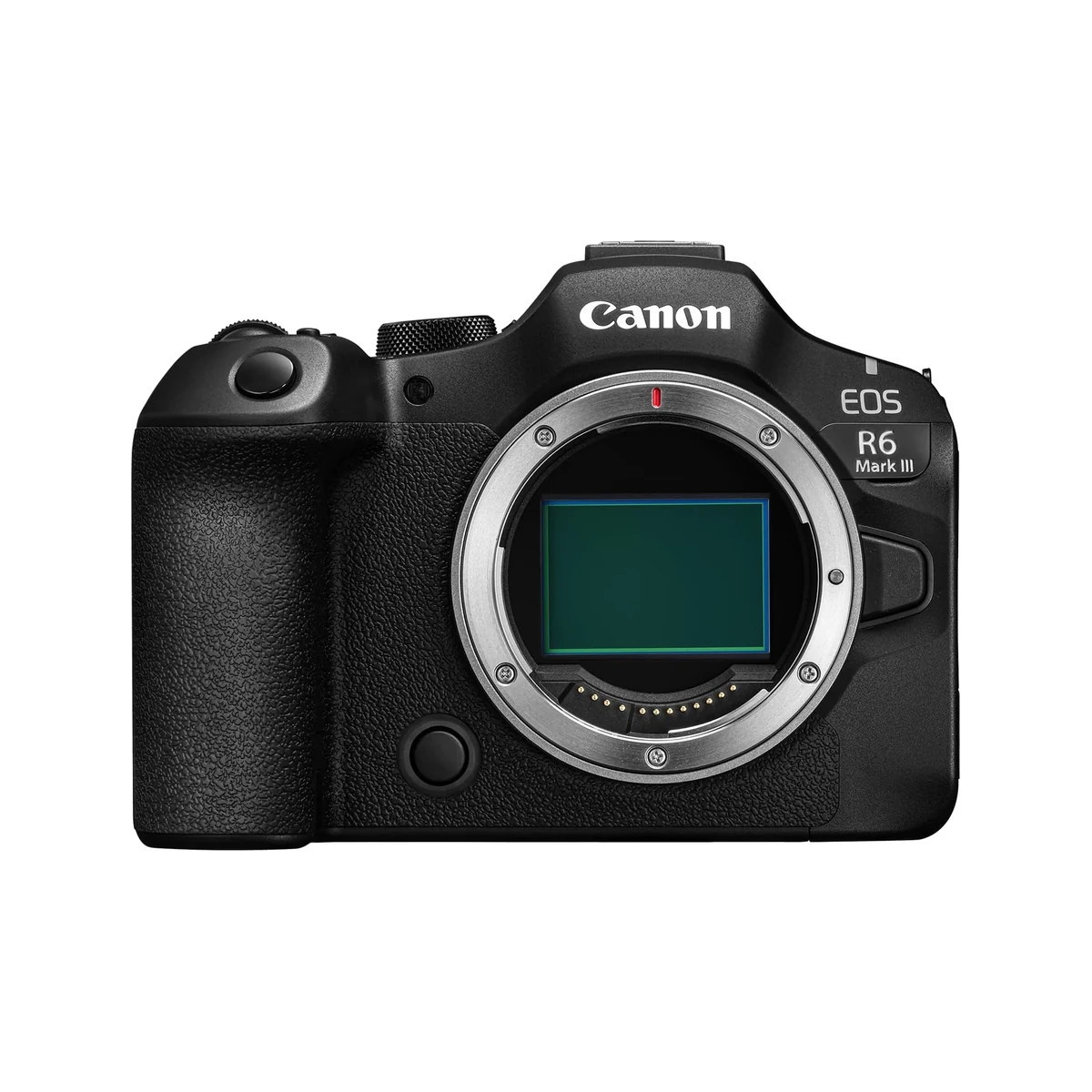
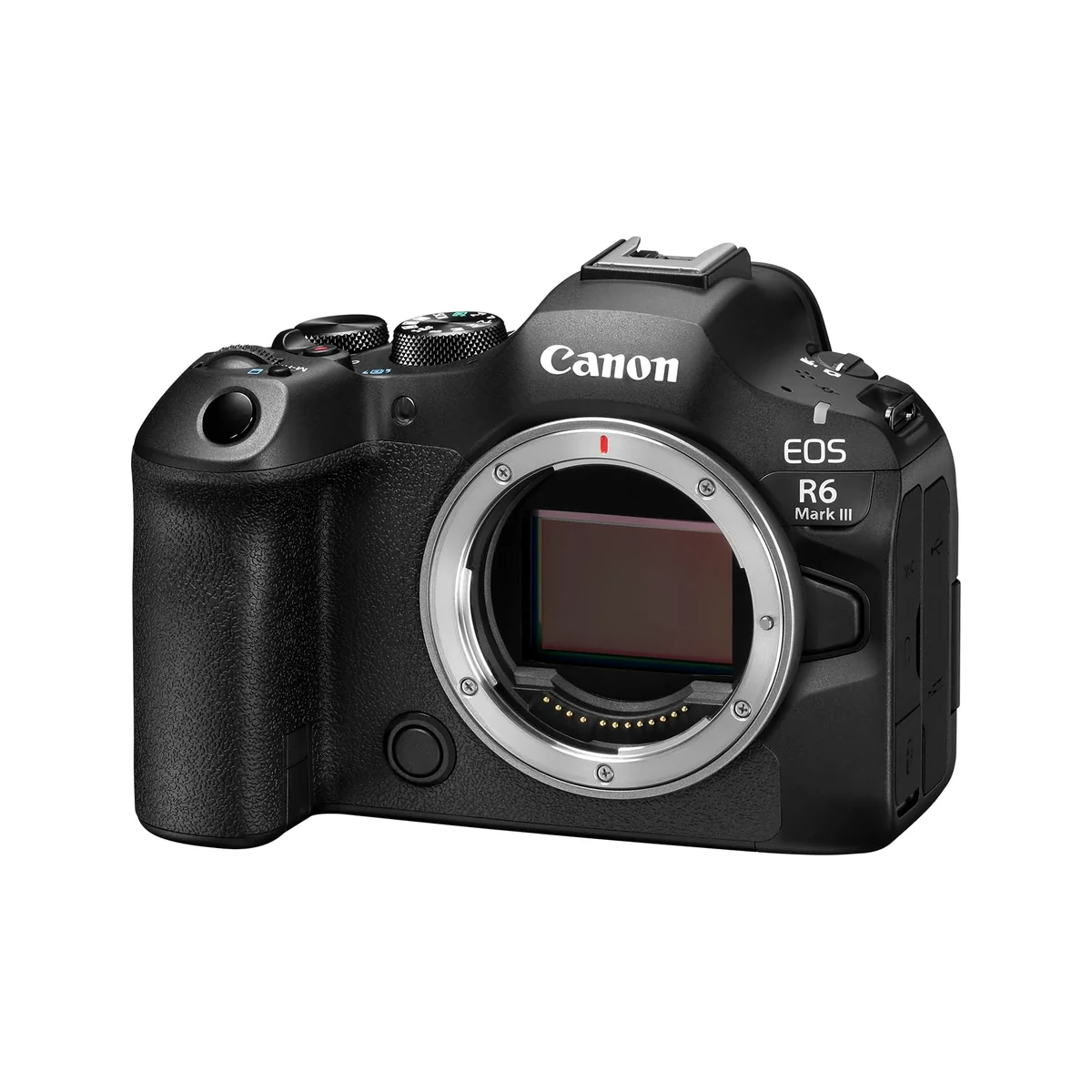
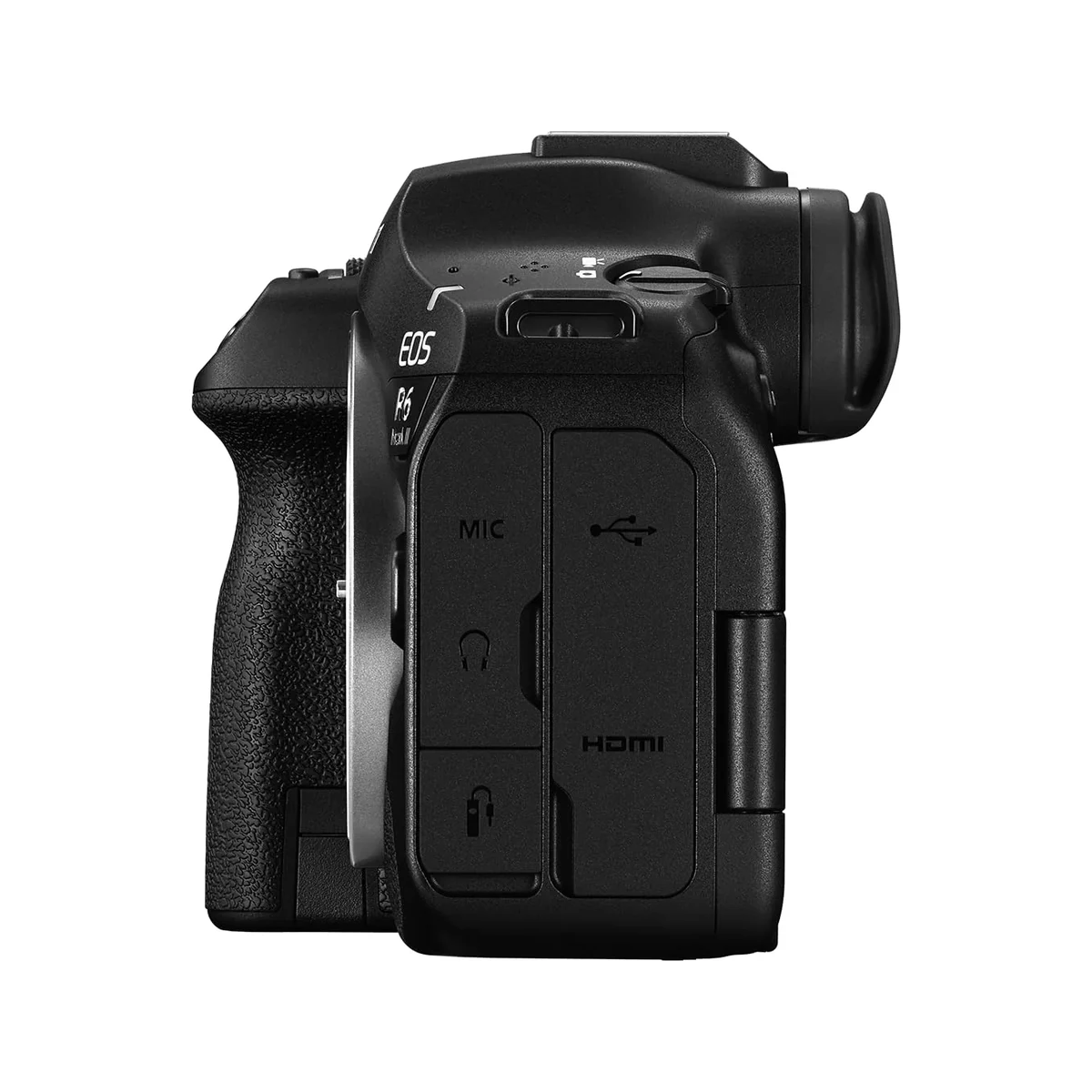
The Canon EOS R6 Mark III features a magnesium alloy chassis with comprehensive weather sealing that feels noticeably more refined than its predecessor. Canon has improved the grip ergonomics with a deeper, more pronounced contour that sits perfectly in hand during long shoots, whether using heavy telephoto lenses or lighter primes. Every button and dial has been thoughtfully repositioned based on user feedback, with increased customization options that tech-savvy photographers will appreciate.
The EVF and articulating screen both see meaningful upgrades in brightness and color accuracy, making critical focus and exposure judgments easier in challenging outdoor conditions. Despite the stacked sensor and dual processors inside, Canon has kept the body size almost identical to the R6 II, maintaining the compact advantage that made the R series so popular among travel and event photographers. The overall build exudes confidence and durability expected from a professional workhorse in 2026.
Performance
In real-world testing, the EOS R6 Mark III delivers exceptional speed and reliability that professionals will immediately notice. The combination of the stacked sensor and dual DIGIC X processors enables a virtually blackout-free 40fps electronic shutter with a buffer deep enough to sustain over 200 RAW frames. Subject tracking is uncannily accurate, with the new AI system maintaining lock on erratically moving subjects like birds in flight or athletes in chaotic environments where previous generations would falter.
Low-light performance remains class-leading, with clean, detailed images possible at ISO 12800 and usable results beyond ISO 51200. Autofocus acquisition in near-darkness is instantaneous, giving the R6 III a clear edge over competitors in indoor sports and wedding reception scenarios. Our benchmark tests showed a measurable improvement in rolling shutter reduction compared to the Mark II, making it viable for both stills and video work that demands precision.
Features & Software
Standout features include an enhanced Eye Control AF system that feels more natural and responsive, alongside new Action Priority and Subject Detection modes that leverage deep learning for better predictive tracking. The camera offers internal 6K RAW recording with Canon Log 3, waveform monitors, false color, and professional audio tools that rival dedicated cinema cameras. In-body image stabilization reaches an impressive 8.5 stops, enabling handheld shooting in situations that previously required a tripod.
The menu system has been further refined with a more logical layout and quicker access to frequently used functions. Integration with Canon’s updated EOS Utility and mobile app allows for seamless wireless file transfer, remote control, and even firmware updates directly from a smartphone. For users already invested in the Canon ecosystem, the software experience feels polished and intuitive.
Value Proposition
At a launch price of $2,499, the Canon EOS R6 Mark III offers compelling value for hybrid professionals who need one camera that excels at both stills and video. While it carries a premium price tag, the combination of blistering performance, professional video tools, and robust build quality delivers more capability than many competing systems at similar price points. The investment is particularly justified for photographers transitioning from DSLRs or earlier R-series bodies who will see immediate improvements in hit rate and workflow efficiency.
Compared to building a kit around more specialized cameras, the R6 III’s versatility reduces the need for multiple bodies, ultimately saving money and weight in the long run. For serious enthusiasts and semi-professionals, it represents the sweet spot where flagship-level performance becomes accessible without reaching the four-thousand-dollar territory of cameras like the R5 II or Nikon Z9.
How It Compares
Against the Nikon Z6III, the Canon EOS R6 Mark III offers superior subject detection AI and faster electronic burst rates, though Nikon counters with slightly better dynamic range and a more intuitive interface for some users. The Z6III’s partially stacked sensor provides excellent performance but cannot match the R6 III’s blackout-free shooting experience or 6K RAW capabilities.
When compared to the Sony A7 IV, the R6 Mark III pulls significantly ahead in autofocus reliability, burst speed, and video features. While the Sony remains a strong value option with excellent color science, Canon’s ecosystem, ergonomics, and dual card slots make the R6 III the more complete professional tool for demanding hybrid workflows.
Pros and Cons
Pros
- Blazing 40fps electronic shutter with virtually no blackout and deep buffer.
- Revolutionary AI autofocus that tracks complex subjects with remarkable consistency.
- Professional-grade 6K RAW video recording with comprehensive monitoring tools.
- Outstanding ergonomics and weather-sealed build quality suitable for harsh conditions.
- Excellent battery life for a camera with this level of processing power.
Cons
- Resolution remains at 24.2MP, which may disappoint users needing more detail for large prints or heavy cropping.
- Battery life drops significantly when shooting 6K video, requiring frequent spares for all-day shoots.
- The learning curve for the extensive menu system and customization options can be steep for newcomers.
- Price positions it as a serious investment that may be excessive for hobbyists.
- No built-in GPS, requiring a smartphone connection for location data.
FAQ
Q: Is the Canon EOS R6 Mark III worth upgrading from the R6 Mark II?
A: Yes, if you need faster burst rates, significantly improved AI subject detection, or professional 6K video capabilities. Users primarily shooting stills at moderate speeds may find the upgrade less compelling.

Q: Does the R6 Mark III support 8K video?
A: No. The camera tops out at 6K 60p RAW internally, which most professionals consider the sweet spot for quality versus file size and heat management in a compact body.
Q: How does the autofocus compare to Sony and Nikon mirrorless cameras?
A: In 2026 testing, Canon’s Deep Learning AI system leads the pack for subject recognition and sticky tracking, particularly with birds, vehicles, and fast-moving athletes.
Q: Can the Canon EOS R6 Mark III be used professionally for wedding photography?
A: Absolutely. Its combination of reliable eye detection, excellent low-light performance, dual card slots, and weather sealing make it an ideal primary body for wedding and event photographers.
Q: What lenses work best with the R6 Mark III?
A: Canon’s RF 24-70mm f/2.8L, RF 70-200mm f/2.8L, and the new RF 24-105mm f/2.8 L IS USM Z provide outstanding results. Third-party RF lenses from Sigma and Tamron also perform excellently on this body.
Verdict
The Canon EOS R6 Mark III is the ideal camera for professional hybrid shooters who need uncompromising performance in both photography and videography without carrying multiple specialized bodies. Its combination of class-leading autofocus, high-speed shooting, and cinema-quality video features makes it particularly suited for sports, wildlife, events, and commercial creators.
While the 24MP resolution and premium price won’t appeal to everyone, those who prioritize speed, reliability, and future-proof features will find this one of the most capable all-rounders available in 2026.
Pros
- ✓ Blazing 40fps electronic shutter with virtually no blackout and deep buffer.
- ✓ Revolutionary AI autofocus that tracks complex subjects with remarkable consistency.
- ✓ Professional-grade 6K RAW video recording with comprehensive monitoring tools.
- ✓ Outstanding ergonomics and weather-sealed build quality suitable for harsh conditions.
- ✓ Excellent battery life for a camera with this level of processing power.
Cons
- ✗ Resolution remains at 24.2MP, which may disappoint users needing more detail for large prints or heavy cropping.
- ✗ Battery life drops significantly when shooting 6K video, requiring frequent spares for all-day shoots.
- ✗ The learning curve for the extensive menu system and customization options can be steep for newcomers.
- ✗ Price positions it as a serious investment that may be excessive for hobbyists.
- ✗ No built-in GPS, requiring a smartphone connection for location data.