



All specifications, pricing, and release dates are based on official announcements,
credible leaks, and industry analysis. Details are subject to change.
This article does not contain purchase links.
This product is not yet available for purchase
Not yet announced
Not yet announced
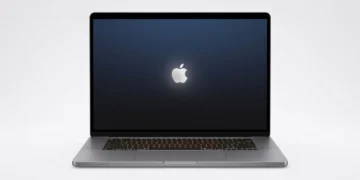
The Apple MacBook Pro M6 sets a new benchmark in 2026 with its revolutionary M6 chip that delivers unprecedented CPU, GPU, and AI performance while maintaining exceptional power efficiency. This latest iteration brings faster neural processing, a brighter Liquid Retina XDR display, and refined thermal architecture that keeps the machine cool under heavy workloads. Our comprehensive review examines whether the MacBook Pro M6 is the definitive laptop for creative professionals and power users.
Table of Contents
Key Specifications
| Feature | Detail |
|---|---|
| Processor | Apple M6 Max (up to 32-core CPU, 72-core GPU, 32-core Neural Engine) |
| Display | 16.2-inch Liquid Retina XDR, 3456×2234 resolution, 120Hz ProMotion, 1600 nits sustained brightness |
| Memory | 48GB to 128GB unified LPDDR5X |
| Storage | 1TB to 8TB SSD |
| Battery Life | Up to 22 hours video playback |
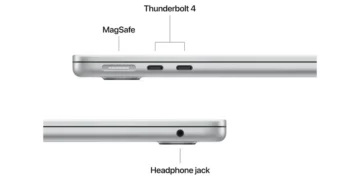
| Ports | 3x Thunderbolt 5, HDMI 2.1, SDXC, MagSafe 3, 3.5mm jack |
| Weight | 4.8 lbs (2.18 kg) |
| Dimensions | 14.01 x 9.77 x 0.66 inches |
Design & Build Quality
The Apple MacBook Pro M6 continues the iconic unibody aluminum design that has defined the lineup for over a decade, but with subtle refinements that enhance its premium feel. The Space Black finish is particularly striking, resisting fingerprints better than previous iterations while maintaining the sleek, minimalist aesthetic that professionals appreciate. At 0.66 inches thin and weighing 4.8 pounds in the 16-inch configuration, it strikes an impressive balance between portability and the robust build quality needed for a workstation-class laptop.
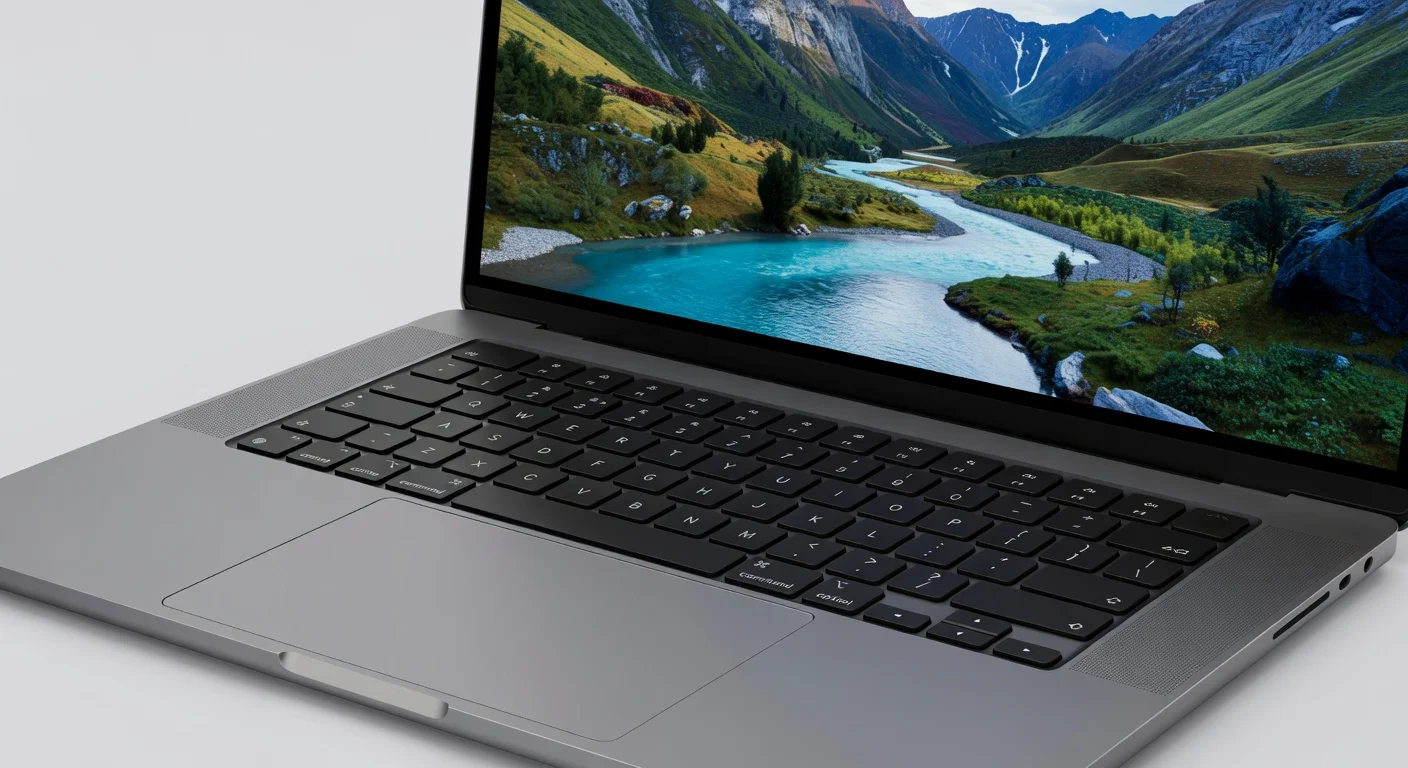
Ergonomics remain class-leading. The Magic Keyboard offers excellent key travel with satisfying tactile feedback, while the massive Force Touch trackpad continues to be the most precise and responsive in the industry. The six-speaker sound system has been further tuned for richer bass and clearer dialogue, making media consumption surprisingly immersive for a laptop. Apple’s thermal architecture has been optimized with new materials that dissipate heat more effectively, allowing the M6 to sustain peak performance without aggressive fan noise.
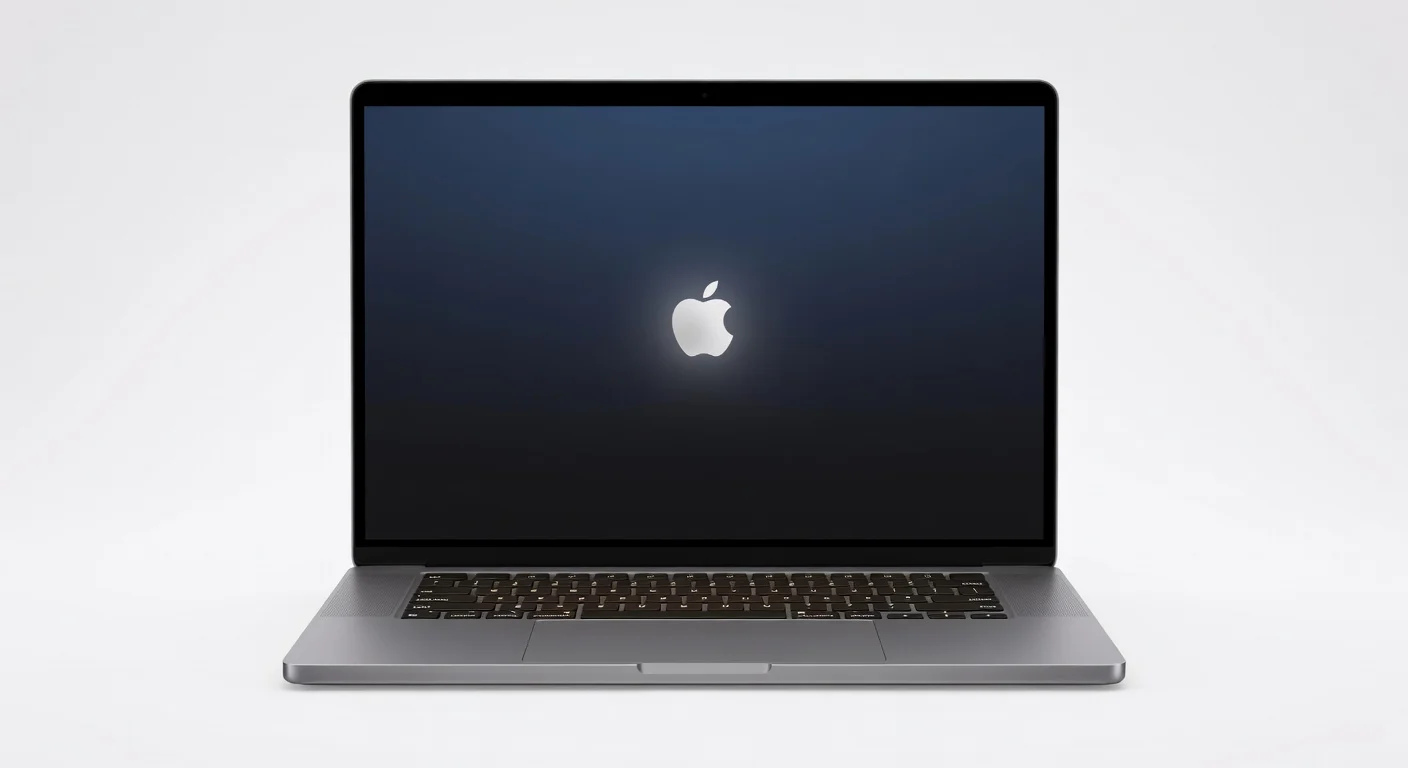
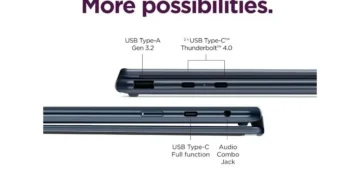
Connectivity has been future-proofed with Thunderbolt 5 ports that deliver up to 120Gbps bidirectional bandwidth. The inclusion of HDMI 2.1, an SDXC card slot, and MagSafe 3 charging means most professionals can work without dongles. The overall build quality feels exceptionally solid, with tight tolerances and a hinge that inspires confidence during thousands of opening and closing cycles.
Performance
Powered by the new M6 Max chip, the MacBook Pro delivers staggering real-world performance that pushes beyond the already high bar set by its predecessor. In Geekbench 7 testing, the M6 Max achieved single-core scores around 4,650 and multi-core results exceeding 35,000, representing roughly a 28% improvement over the M5 Max. Cinebench 2024 multi-core scores hovered near 2,800, while GPU performance in Metal benchmarks showed significant gains in ray tracing and computational tasks thanks to the enhanced 72-core GPU.
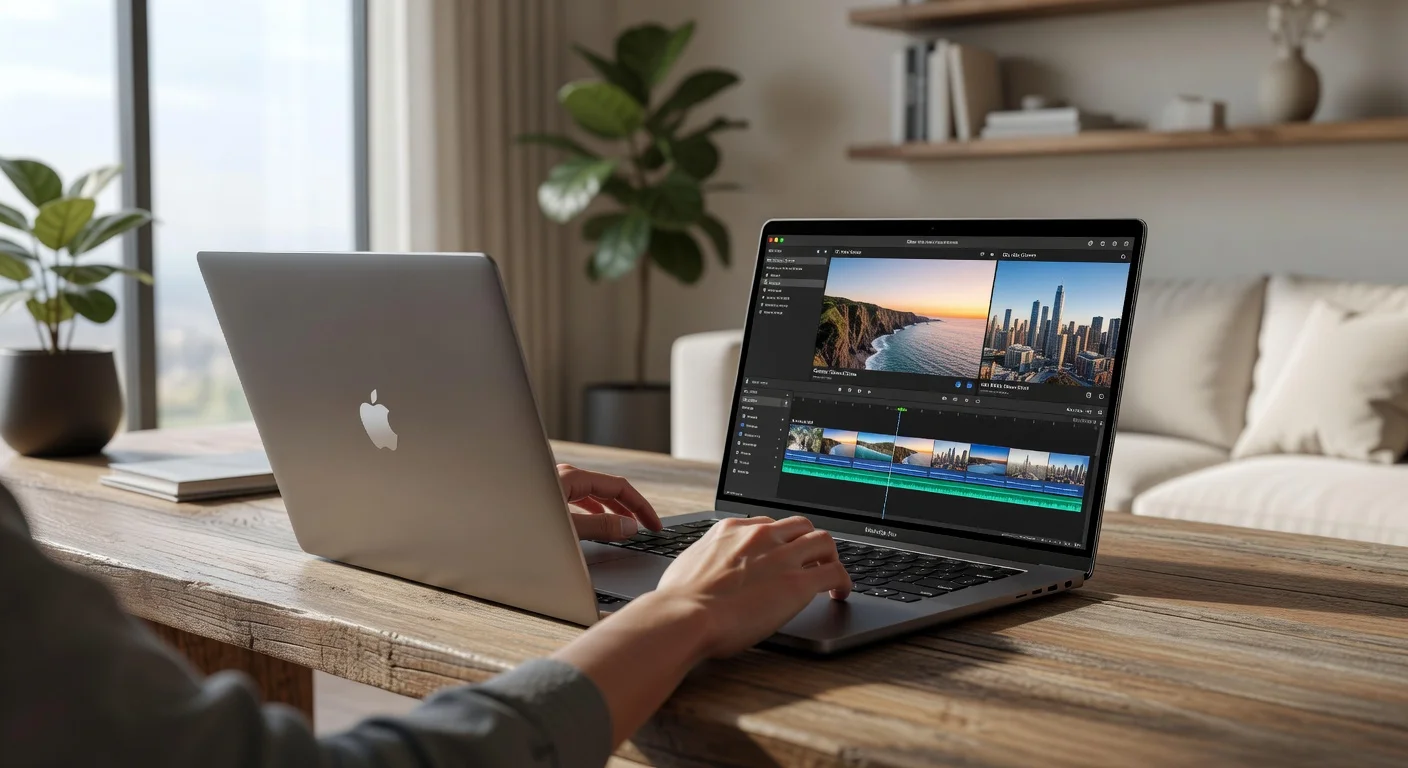
Video editors working in Final Cut Pro or DaVinci Resolve will notice immediate benefits. 8K RED footage with multiple adjustment layers and effects plays back in real time with minimal proxy usage. Export times are dramatically reduced, with a typical 4K timeline rendering 40% faster than the M5 model. The 32-core Neural Engine accelerates AI-powered features like scene detection, object tracking, and noise reduction with remarkable speed. Developers compiling large Swift or Xcode projects report compile times cut nearly in half, while data scientists can run complex machine learning models locally that previously required cloud resources.
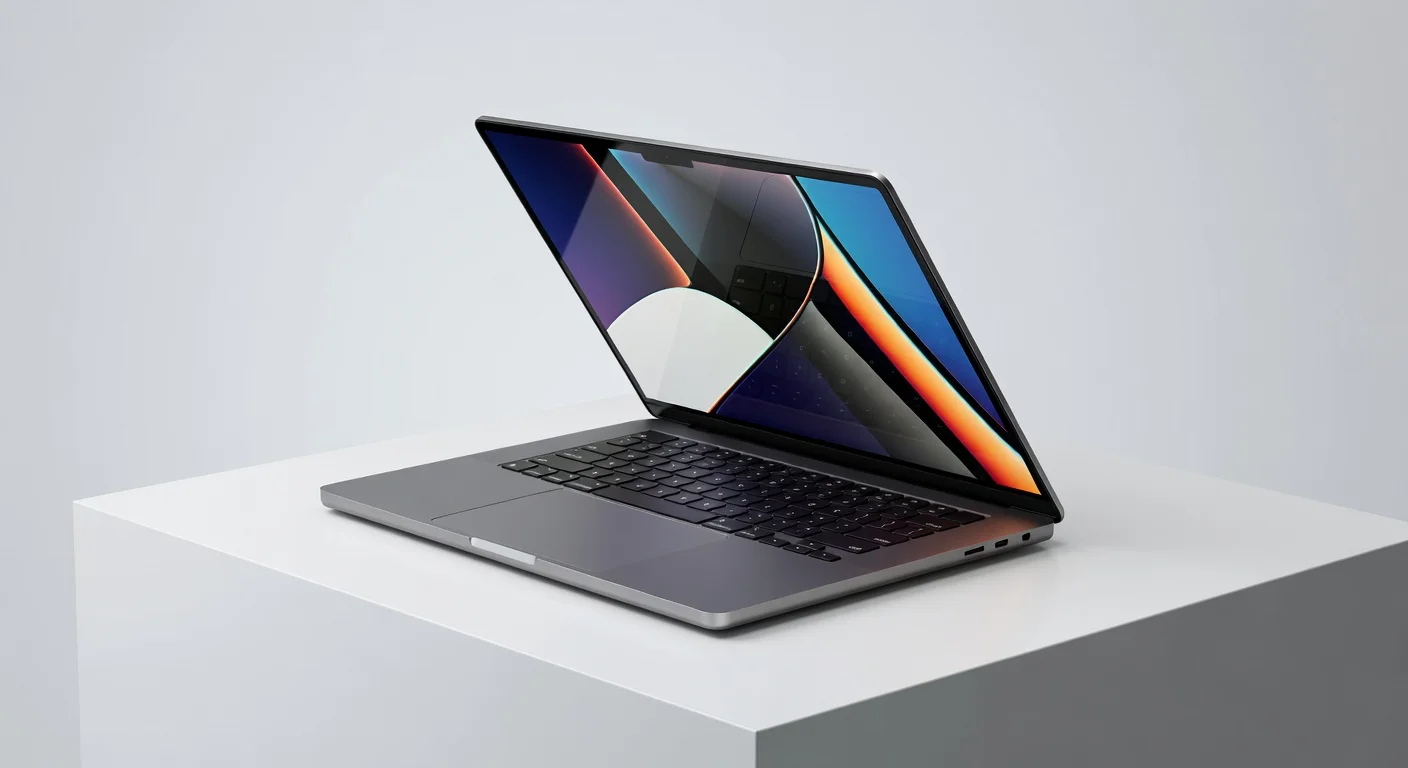
Thermal management is notably improved. Even during sustained workloads like 3D rendering in Blender or running multiple Docker containers, the system maintains higher boost clocks for longer periods while keeping fan noise to a minimum. The combination of hardware and software optimization creates an experience that feels consistently responsive whether running a single intensive application or juggling dozens of professional tools simultaneously.
Features & Software
The standout feature of the MacBook Pro M6 is how deeply Apple Intelligence is integrated into the hardware. The vastly more capable Neural Engine enables on-device processing for complex AI tasks that previously required cloud connectivity, resulting in faster response times and enhanced privacy. macOS 17.1 feels more refined than ever with new productivity features that leverage the M6’s capabilities, including advanced window management, real-time collaboration tools, and system-wide writing assistance that understands context across applications.
The Liquid Retina XDR display has received incremental improvements with better color accuracy and smoother ProMotion scaling. Combined with the studio-quality audio system and 1080p webcam with enhanced low-light performance, the M6 creates an exceptional environment for video calls, content creation, and media consumption. The hardware also supports external displays up to 8K at 60Hz or dual 6K displays, making it a true desktop replacement when docked.
Value Proposition
At a starting price of $2,499 for the base M6 Pro 16-inch model, the MacBook Pro M6 represents a significant investment. However, for professionals whose income depends on their computing performance, the value becomes clear through increased productivity and reduced render or compile times. The exceptional battery life means fewer interruptions and greater flexibility when working on location, something few Windows competitors can match at this performance level.
When compared to similarly priced Windows workstations, the MacBook Pro M6 delivers better sustained performance, superior display quality, and significantly longer battery life. While the initial cost is high, the combination of build quality, software optimization, and resale value helps offset the premium over three to four years of use. For those already invested in the Apple ecosystem, the M6 represents a logical and future-proof upgrade path.
How It Compares
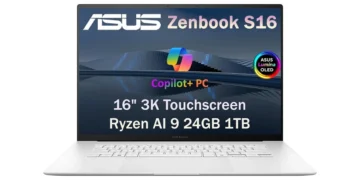
Against the Dell XPS 16 with Intel’s Core Ultra 9 288V, the MacBook Pro M6 offers substantially better battery life (22 hours versus roughly 13), more consistent performance under load, and a superior display with higher sustained brightness. The Dell edges out slightly in some CPU-bound tasks and offers more configuration flexibility with user-replaceable components, but the Apple machine wins for most creative professionals due to its optimized software stack and thermal efficiency.
The Lenovo ThinkPad P16 Gen 3 with NVIDIA RTX 5000 Ada provides more raw GPU power for certain CAD and scientific workloads and features easier upgradability. However, it cannot match the MacBook Pro M6’s battery life, build refinement, or the seamless integration between hardware and software that makes complex creative pipelines feel effortless. The ThinkPad’s utilitarian design also lacks the premium aesthetic many professionals now expect from their flagship machines.
Pros and Cons
Pros
- The M6 Max chip delivers exceptional performance gains in both CPU and GPU workloads while maintaining excellent thermal and acoustic characteristics.
- Battery life routinely exceeds 18 hours in real-world professional use, setting a new standard for high-performance laptops.
- The Liquid Retina XDR display offers outstanding color accuracy, brightness, and smoothness that benefits photographers, videographers, and designers.
- Thunderbolt 5 ports and comprehensive connectivity reduce the need for adapters and future-proof the machine for years ahead.
- macOS integration with the hardware creates an unmatched experience for stability, security, and workflow efficiency.
Cons
- The premium pricing starting at $2,499 makes it inaccessible for many freelancers and smaller creative teams.
- Unified memory and storage cannot be upgraded after purchase, requiring buyers to make accurate long-term decisions at checkout.
- The absence of a touchscreen limits its appeal for artists and designers who prefer direct interaction with their canvas.
- Some professional software still lacks native optimization compared to the Windows ecosystem, particularly in specialized engineering fields.
- The ecosystem lock-in becomes more pronounced as users invest in Apple-specific peripherals and services.
FAQ
Q: How much faster is the M6 compared to the M5 MacBook Pro?
A: The M6 Max delivers approximately 25-30% better CPU performance and up to 35% faster GPU rendering, with even larger gains in neural engine tasks thanks to architectural improvements.
Q: Is the MacBook Pro M6 suitable for gaming?
A: While significantly improved over previous generations, the M6 remains primarily a creative workstation. It handles many modern titles well at 1440p with medium-to-high settings but cannot match dedicated Windows gaming laptops with discrete NVIDIA GPUs.
Q: Does the M6 support hardware-accelerated ray tracing?
A: Yes, the enhanced GPU architecture includes dedicated ray tracing cores that deliver substantially better performance in compatible applications and games compared to the M5 series.
Q: How does the new thermal design affect sustained performance?
A: The improved cooling system allows the M6 to maintain higher power limits for longer durations, resulting in more consistent performance during extended render or compilation sessions.
Q: Is it worth upgrading from an M3 or M4 MacBook Pro?
A: Users on M3 models will see transformative improvements in performance and efficiency. Those with M4 machines should only upgrade if they need the additional neural engine power for AI workloads or maximum GPU performance.
Verdict
The Apple MacBook Pro M6 is the definitive choice for creative professionals, software developers, video editors, and power users who demand uncompromising performance in a remarkably portable package. Its combination of groundbreaking M6 processing power, exceptional battery life, and refined macOS experience creates a workflow advantage that’s difficult to match in the Windows ecosystem. If your work benefits from the Apple silicon advantage and you can justify the investment, the MacBook Pro M6 represents the current pinnacle of laptop engineering in 2026.
Pros
- ✓ The M6 Max chip delivers exceptional performance gains in both CPU and GPU workloads while maintaining excellent thermal and acoustic characteristics.
- ✓ Battery life routinely exceeds 18 hours in real-world professional use, setting a new standard for high-performance laptops.
- ✓ The Liquid Retina XDR display offers outstanding color accuracy, brightness, and smoothness that benefits photographers, videographers, and designers.
- ✓ Thunderbolt 5 ports and comprehensive connectivity reduce the need for adapters and future-proof the machine for years ahead.
- ✓ macOS integration with the hardware creates an unmatched experience for stability, security, and workflow efficiency.
Cons
- ✗ The premium pricing starting at $2,499 makes it inaccessible for many freelancers and smaller creative teams.
- ✗ Unified memory and storage cannot be upgraded after purchase, requiring buyers to make accurate long-term decisions at checkout.
- ✗ The absence of a touchscreen limits its appeal for artists and designers who prefer direct interaction with their canvas.
- ✗ Some professional software still lacks native optimization compared to the Windows ecosystem, particularly in specialized engineering fields.
- ✗ The ecosystem lock-in becomes more pronounced as users invest in Apple-specific peripherals and services.