





Discover why the Ricoh GR IIIx remains the ultimate pocket-sized powerhouse for street photographers in 2026. With its razor-sharp 40mm equivalent lens and APS-C sensor, this minimalist compact camera punches way above its weight class. Read our comprehensive review to see if it deserves a spot in your everyday carry setup.
Table of Contents
Key Specifications
| Feature | Detail |
|---|---|
| Sensor | 24.2MP APS-C CMOS (Without Anti-Aliasing Filter) |
| Lens | 26.1mm (40mm full-frame equivalent) f/2.8 |
| Image Stabilization | 3-axis sensor-shift (Shake Reduction) |
| Screen | 3.0-inch, 1.04m-dot fixed touch LCD |
| Autofocus | Hybrid phase/contrast detection |
| Video Capability | 1080p up to 60fps (No 4K) |
| Connectivity | Wi-Fi, Bluetooth, USB-C |
| Weight | 262g (with battery and SD card) |
Design & Build Quality
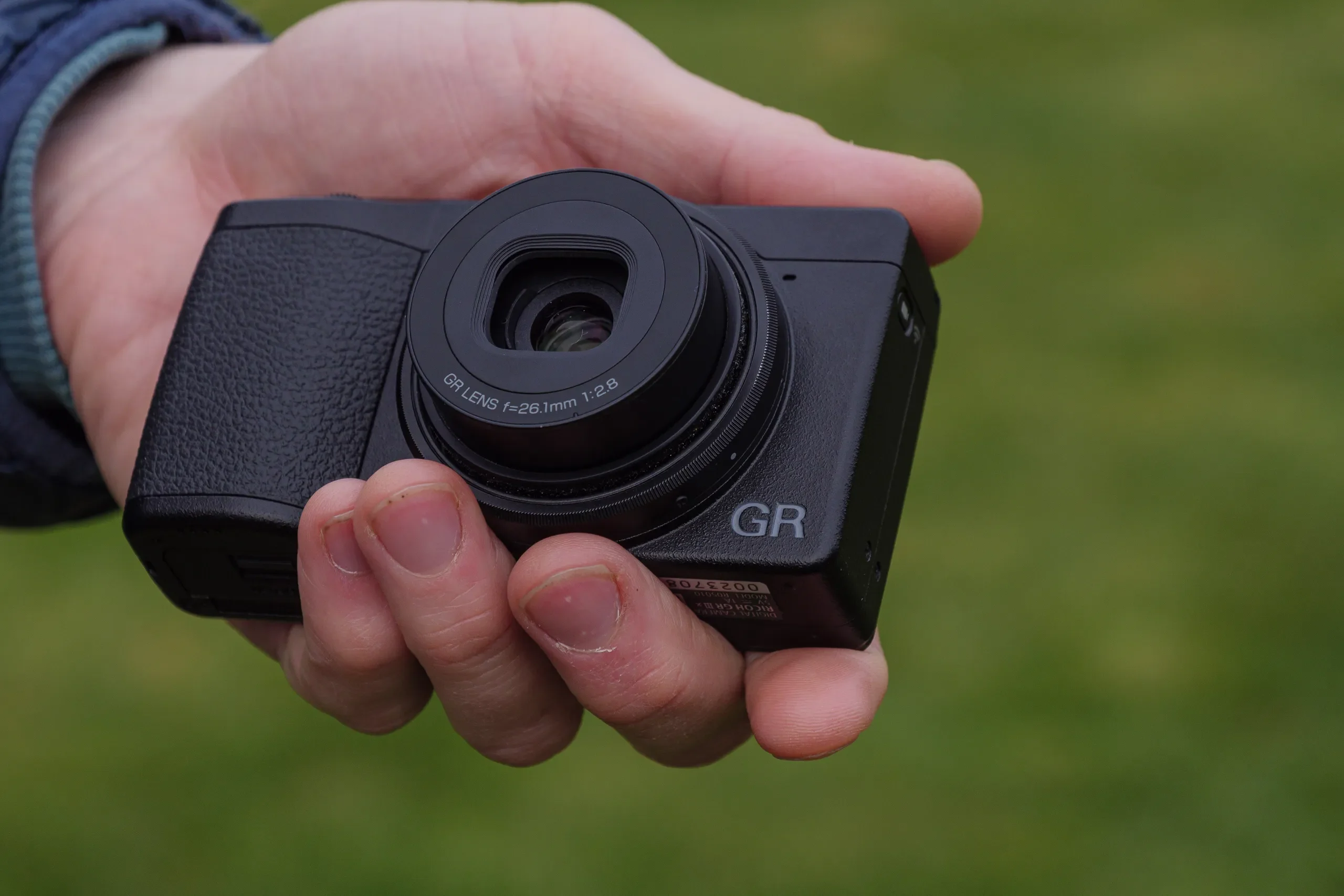
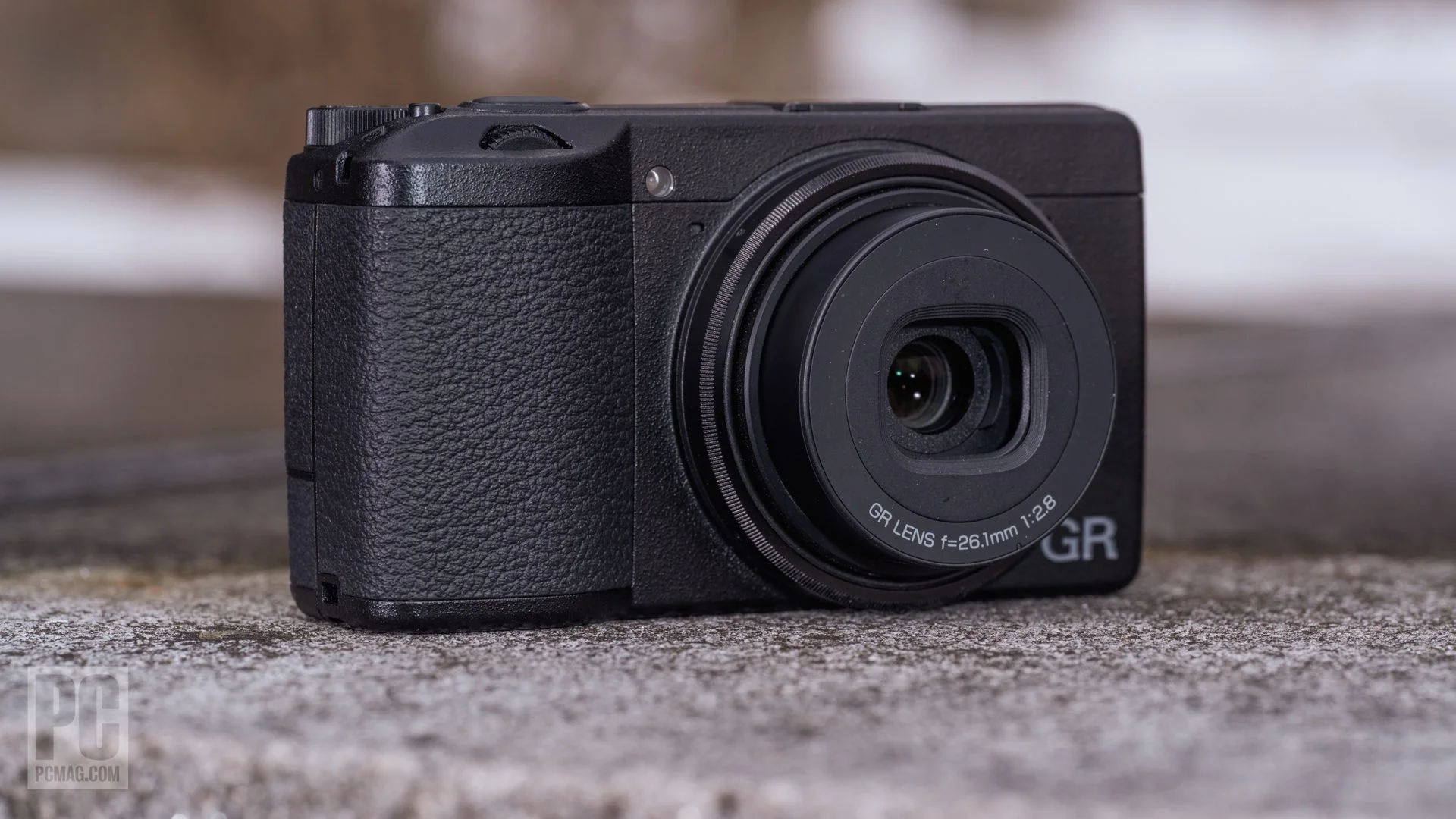
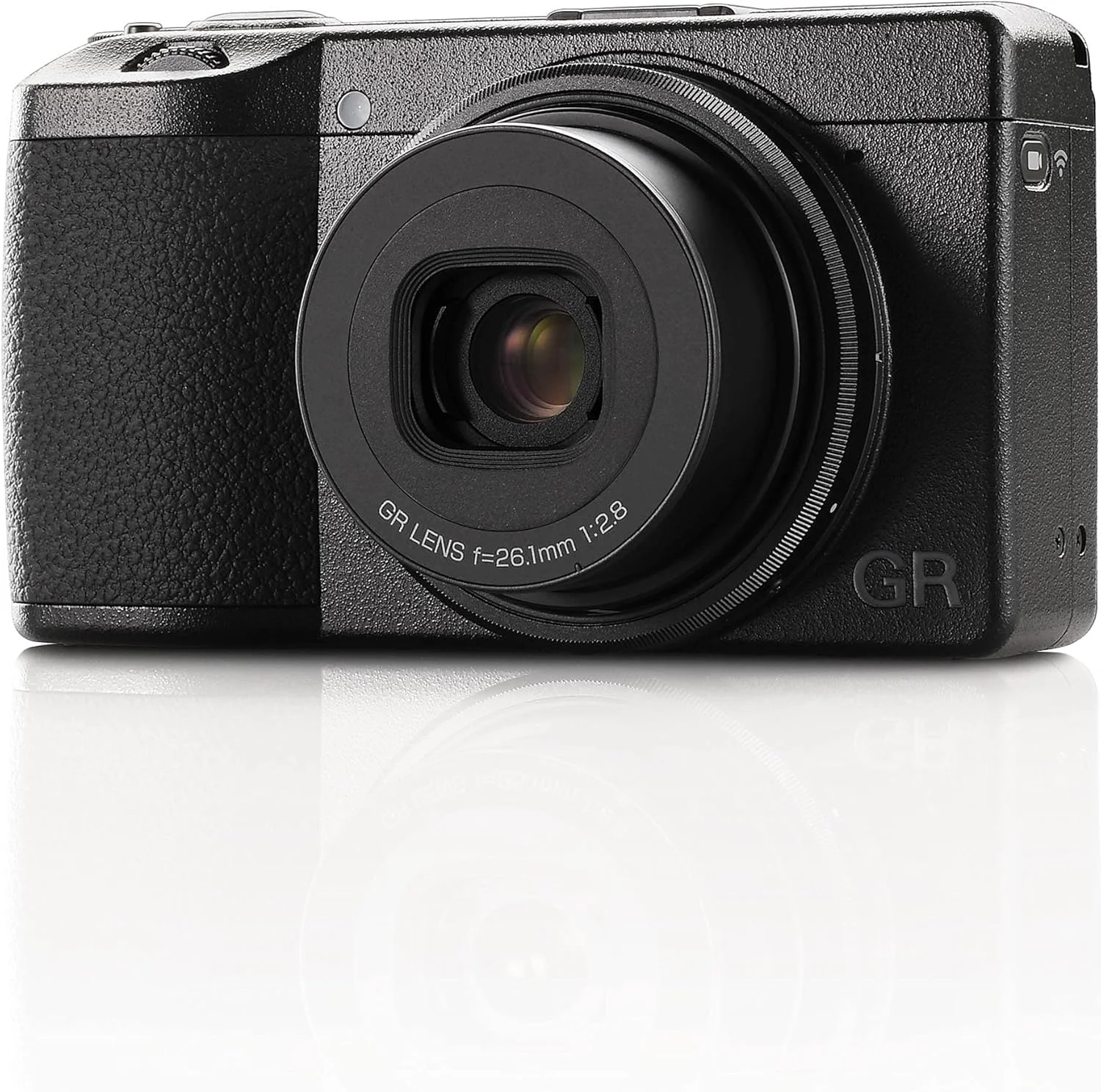
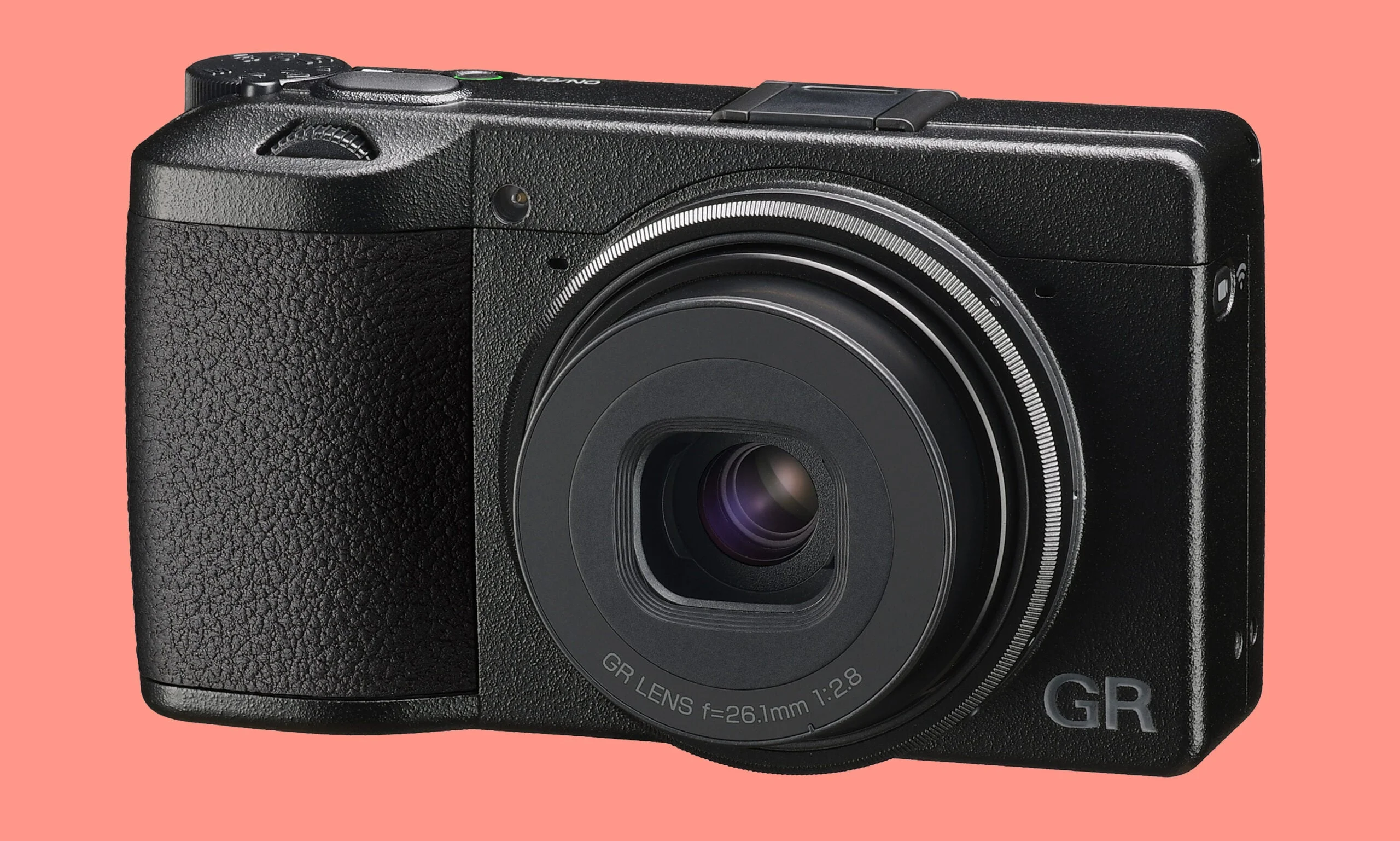
The Ricoh GR IIIx retains the stealthy, minimalist aesthetic that the GR series has been famous for over the decades. Constructed from a durable yet incredibly lightweight magnesium alloy, the camera tips the scales at just 262 grams. Its most impressive physical feat is that it easily slips into a standard jeans pocket, a rarity for any modern camera housing a massive APS-C sensor. The matte black finish and absence of flashy logos make it the perfect unassuming tool for candid street photography.
Ergonomically, the GR IIIx is a masterclass in single-handed operation. The deep, rubberized grip ensures a secure hold, while the layout of the dials and buttons allows your thumb and index finger to access exposure compensation, ISO, and focus modes without ever needing your left hand. The tactile feedback of the control dials is highly satisfying, offering precisely the right amount of resistance to prevent accidental adjustments while on the move.
However, this ultra-compact form factor does come with physical compromises. The camera lacks any form of weather sealing, making it vulnerable during unexpected rainstorms or in dusty environments. Additionally, the 3.0-inch LCD touchscreen, while sharp, responsive, and bright enough for outdoor use, is entirely fixed. The absence of a tilting mechanism can make shooting from the hip or grabbing low-angle architectural shots unnecessarily challenging.
Performance
When it comes to real-world image quality, the Ricoh GR IIIx is nothing short of breathtaking. The 26.1mm f/2.8 lens—yielding a 40mm full-frame equivalent field of view—is newly designed specifically for this body, and the corner-to-corner sharpness is phenomenal even wide open. Paired with the 24.2MP APS-C sensor (which lacks an anti-aliasing filter for maximum detail retrieval), the camera produces files with superb dynamic range, rich micro-contrast, and excellent low-light performance up to ISO 6400.
Autofocus speed is competent for everyday scenarios, though it admittedly trails behind the AI-driven subject tracking found in contemporary competitors. However, autofocus speed becomes practically irrelevant thanks to Ricoh’s legendary “Snap Focus” feature. By allowing you to pre-define a focus distance (e.g., 2 meters or 5 meters) and fully depressing the shutter to bypass the AF system entirely, the GR IIIx enables genuine zero-lag shooting. This feature remains the ultimate cheat code for capturing split-second, decisive moments on the street.
The built-in 3-axis Shake Reduction (IBIS) provides up to 4 stops of compensation, allowing for sharp handheld shots at shutter speeds as low as 1/10th of a second. Unfortunately, the internal processing power and sensor stabilization severely tax the tiny DB-110 battery. Real-world performance rarely exceeds 200 shots per charge. If you plan on a full day of shooting, carrying at least two spare batteries or a portable power bank is absolutely mandatory.
Features & Software
The GR IIIx shines brightest when you dive into its in-camera software, specifically its highly acclaimed “Image Control” profiles. Modes like Positive Film, Hard Monotone, and High-Contrast Black & White yield stunning, ready-to-share JPEGs with a distinctly cinematic, organic aesthetic. For creators who despise sitting in front of Lightroom, the camera’s built-in RAW development engine allows you to tweak exposure, white balance, and film simulations after the fact, exporting perfect JPEGs directly to your smartphone via the Ricoh Image Sync app.
While the stills experience is top-tier, the camera’s feature set is aggressively single-minded. There is no 4K video recording, and the 1080p footage it does capture is rudimentary at best, lacking the bitrates and autofocus tracking modern videographers require. In 2026, the GR IIIx stands proudly as a dedicated purist’s tool; it doesn’t pretend to be a hybrid content creation device.
Value Proposition
Priced squarely in the premium compact segment, the Ricoh GR IIIx demands a significant investment for a camera with a fixed lens and no video capabilities. If you evaluate cameras strictly on a spec-sheet basis, the price-to-performance ratio might seem skewed. You are essentially paying for the miniaturization of high-end optical and sensor technology.
However, for its target demographic, the value proposition is unmatched. The old adage dictates that “the best camera is the one you have with you.” Because the GR IIIx fits effortlessly into a pocket, it is the camera you will realistically carry every single day. The ability to capture DSLR-quality images without lugging around a heavy camera bag makes it worth every penny for dedicated enthusiasts and professional photographers looking for a reliable daily carry.
How It Compares
When pitted against the formidable Fujifilm X100VI, the GR IIIx presents a stark contrast in philosophy. The Fujifilm offers a slightly wider 35mm equivalent lens, exceptional 4K video, an incredible hybrid electronic/optical viewfinder, and superior battery life. However, the X100VI is significantly larger, heavier, and completely un-pocketable. If portability is your primary metric, the Ricoh wins effortlessly.
Compared to the Sony RX100 VII, the Ricoh sacrifices focal versatility. The Sony features a 24-200mm zoom lens, lightning-fast autofocus, and robust video features inside a similarly pocketable chassis. But the Sony utilizes a much smaller 1-inch sensor. The GR IIIx’s massive APS-C sensor completely outclasses the RX100 VII in low-light performance, depth of field control, and overall dynamic range.
Pros and Cons
Pros
- Delivers exceptional APS-C image quality and edge-to-edge sharpness in a genuinely pocketable form factor.
- The intuitive Snap Focus system remains an unparalleled tool for zero-lag, split-second street photography.
- Features excellent one-handed ergonomics and highly customizable physical control dials.
- Produces beautiful straight-out-of-camera JPEGs via its iconic built-in film simulation profiles.
Cons
- The severely limited battery life requires carrying multiple spares for a full day of shooting.
- Completely lacks 4K video recording capabilities, making it unsuitable for hybrid creators.
- Does not feature any built-in electronic viewfinder (EVF) or weather sealing.
- The fixed, non-articulating LCD screen limits shooting from challenging high or low angles.
FAQ
Q: Is the 40mm focal length better than the standard 28mm on the regular GR III?
A: It depends entirely on your shooting style. The 40mm equivalent lens offers a tighter, more natural field of view that is excellent for isolating subjects, portraits, and capturing details, whereas the 28mm is better for wide architectural shots and sweeping street scenes.
Q: Can the Ricoh GR IIIx be used for vlogging or video production?
A: No. Video is the camera’s weakest point. It tops out at 1080p at 60fps and lacks the autofocus tracking, microphone input, and articulating screen required for modern video content.
Q: Does the GR IIIx suffer from the notorious dust-on-sensor issue?
A: While Ricoh includes an ultrasonic dust removal feature, the extending lens design means it is still theoretically susceptible to drawing in dust over time. Keeping the camera in a clean pocket or a small pouch is highly recommended.
Q: Can you charge the camera on the go?
A: Yes, the camera features a modern USB-C port that supports charging from power banks, which is incredibly useful for topping up the battery between locations.
Verdict
The Ricoh GR IIIx is the quintessential tool for street photographers and everyday carry enthusiasts who demand uncompromised image quality in a genuinely pocketable chassis. While it ignores video creators entirely and suffers from weak battery life, its phenomenal 40mm f/2.8 lens, intuitive Snap Focus system, and gorgeous film profiles make it a triumph of minimalist camera design in 2026.
Where to Buy
Pros
- ✓ Delivers exceptional APS-C image quality and edge-to-edge sharpness in a genuinely pocketable form factor.
- ✓ The intuitive Snap Focus system remains an unparalleled tool for zero-lag, split-second street photography.
- ✓ Features excellent one-handed ergonomics and highly customizable physical control dials.
- ✓ Produces beautiful straight-out-of-camera JPEGs via its iconic built-in film simulation profiles.
Cons
- ✗ The severely limited battery life requires carrying multiple spares for a full day of shooting.
- ✗ Completely lacks 4K video recording capabilities, making it unsuitable for hybrid creators.
- ✗ Does not feature any built-in electronic viewfinder (EVF) or weather sealing.
- ✗ The fixed, non-articulating LCD screen limits shooting from challenging high or low angles.
Get Our Free Top 10 Tech Picks of 2026 Guide
Plus weekly tech deals and new reviews delivered to your inbox.
[cp_email_signup]
No spam. Unsubscribe anytime.
Ready to buy the Ricoh GR IIIx?
Affiliate link — we may earn a commission at no extra cost to you.