

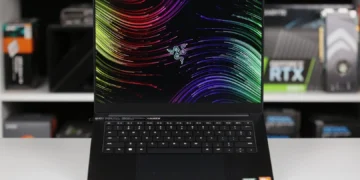



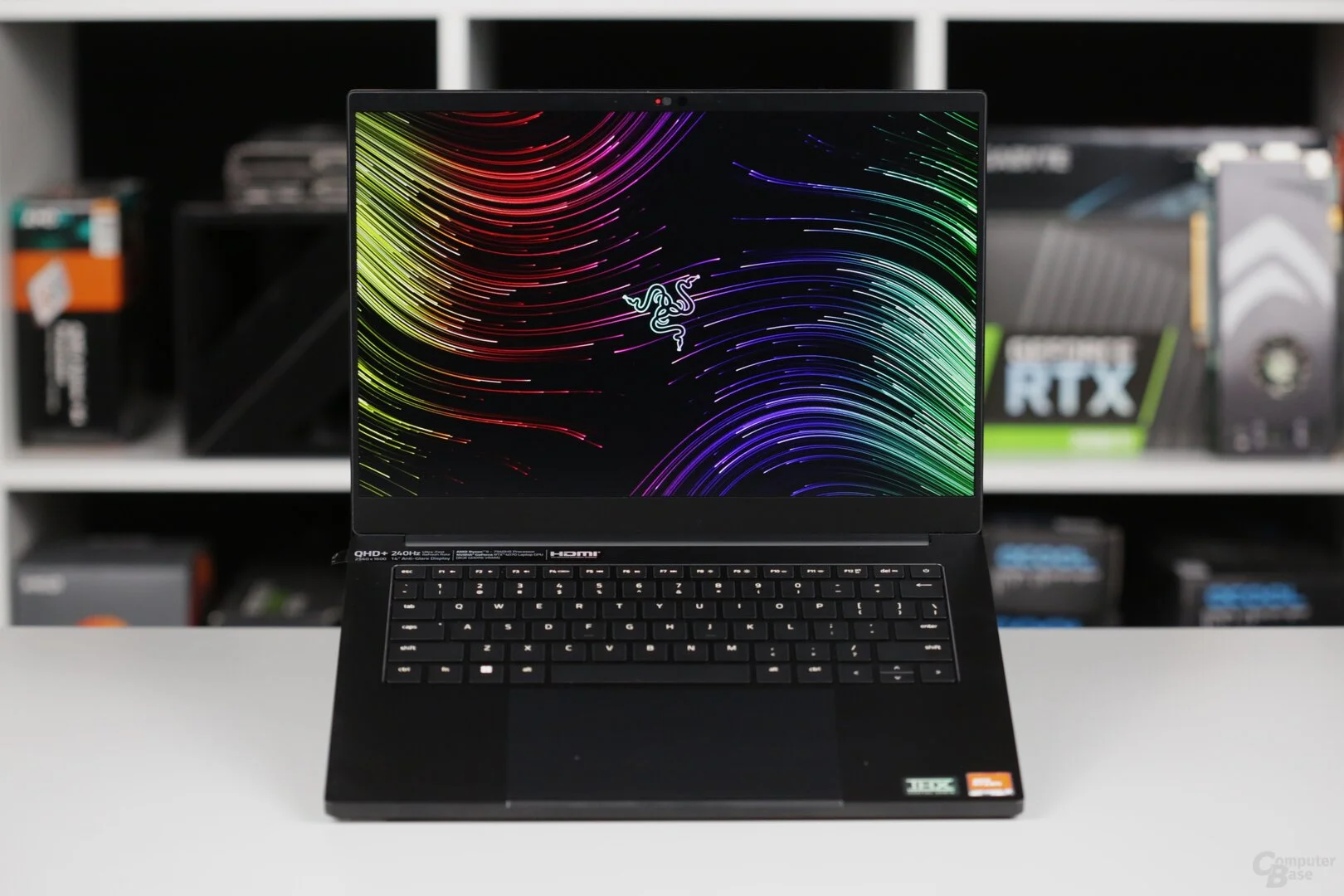
The Razer Blade 14 remains a masterclass in ultra-portable gaming, packing desktop-tier power into a stunningly thin chassis. Even a few years post-launch, its combination of AMD Ryzen processors and NVIDIA RTX 40-series graphics continues to impress both gamers and creators alike. Discover if this premium 14-inch powerhouse is still the ultimate on-the-go battle station for your needs.
Table of Contents
Key Specifications
| Feature | Detail |
|---|---|
| Processor | AMD Ryzen 9 7940HS |
| Graphics | Up to NVIDIA GeForce RTX 4070 (140W TGP) |
| RAM | 16GB / 32GB DDR5-5600MHz (User Upgradable) |
| Storage | 1TB PCIe 4.0 NVMe SSD |
| Display | 14-inch QHD+ (2560 x 1600) 16:10, 240Hz |
| Battery | 68.1 WHr |
| Weight | 4.05 lbs (1.84 kg) |
Design & Build Quality
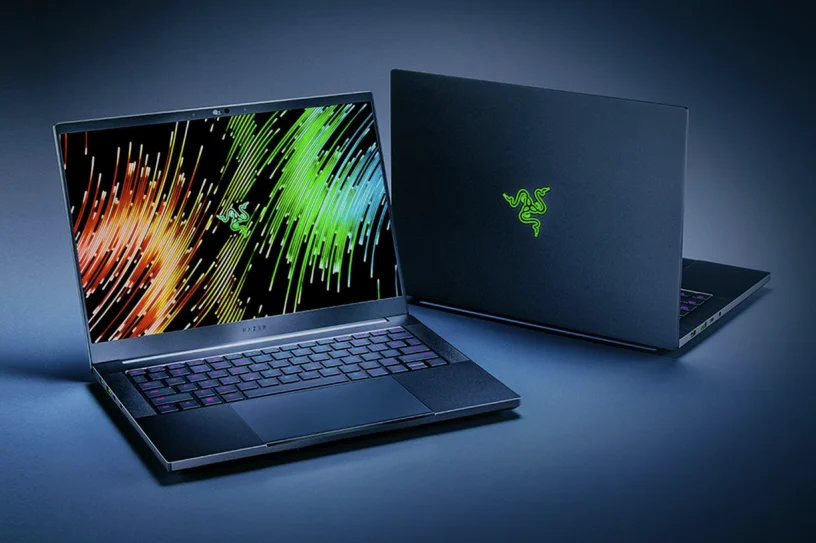
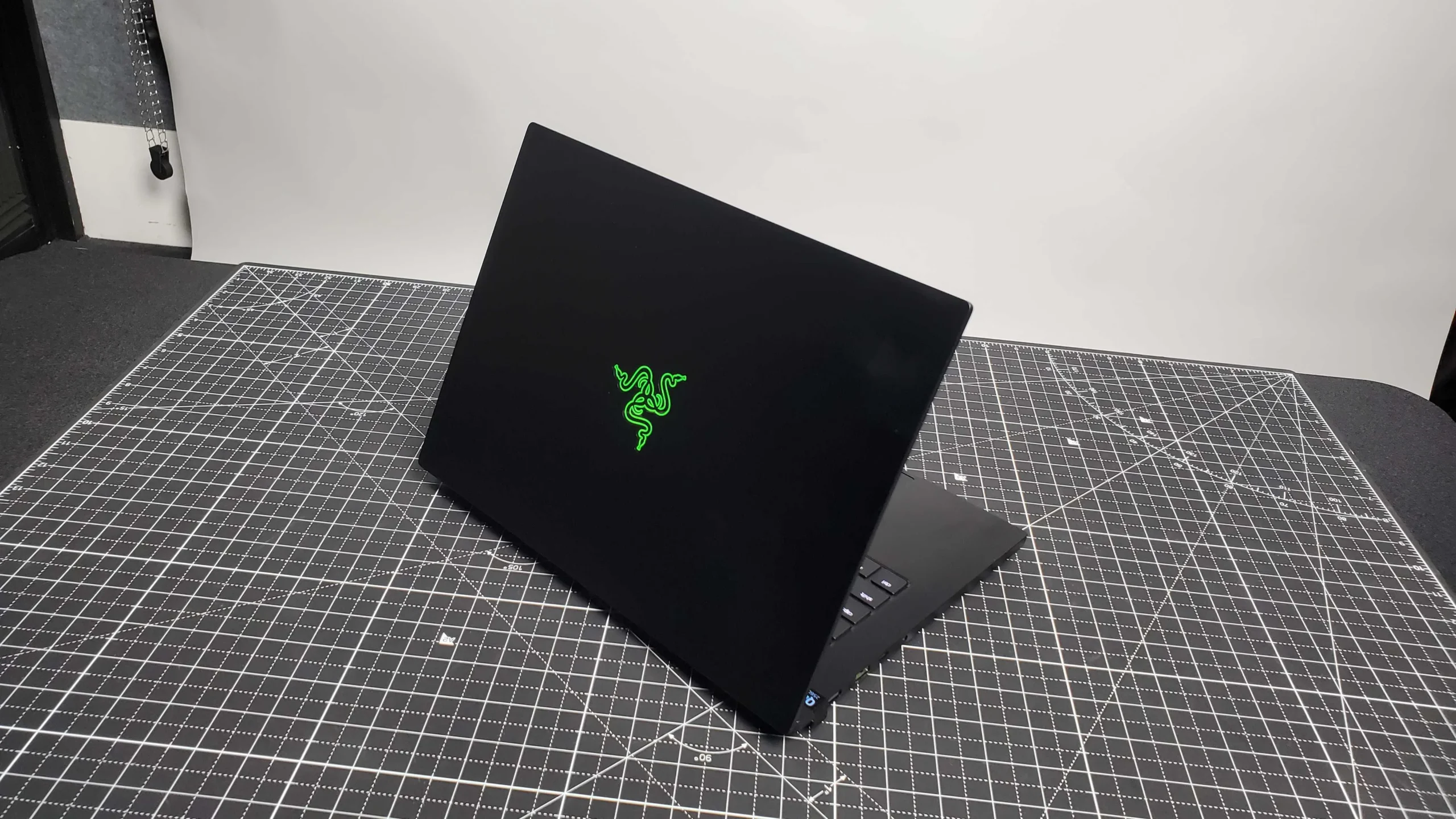
Razer has long been considered the Apple of the Windows gaming laptop world, and the Blade 14 (2023) is a testament to that enduring reputation. Crafted from a single block of CNC-milled aluminum, the chassis exudes a premium, minimalist aesthetic that looks just as appropriate in a corporate boardroom as it does at an esports tournament. The anodized matte black finish is undeniably sleek, though tech-savvy users will note that it still attracts fingerprints despite Razer’s incremental anti-smudge coating improvements.
Ergonomically, the 2023 iteration perfected the 14-inch form factor by adopting the highly requested 16:10 aspect ratio, expanding the vertical screen real estate for productivity tasks. Weighing in at just over four pounds and measuring a mere 0.7 inches thick, it strikes an impeccable balance between portability and structural rigidity. There is zero flex in the keyboard deck, and the hinge operates with a smooth, one-handed glide that speaks volumes about the meticulous engineering inside.
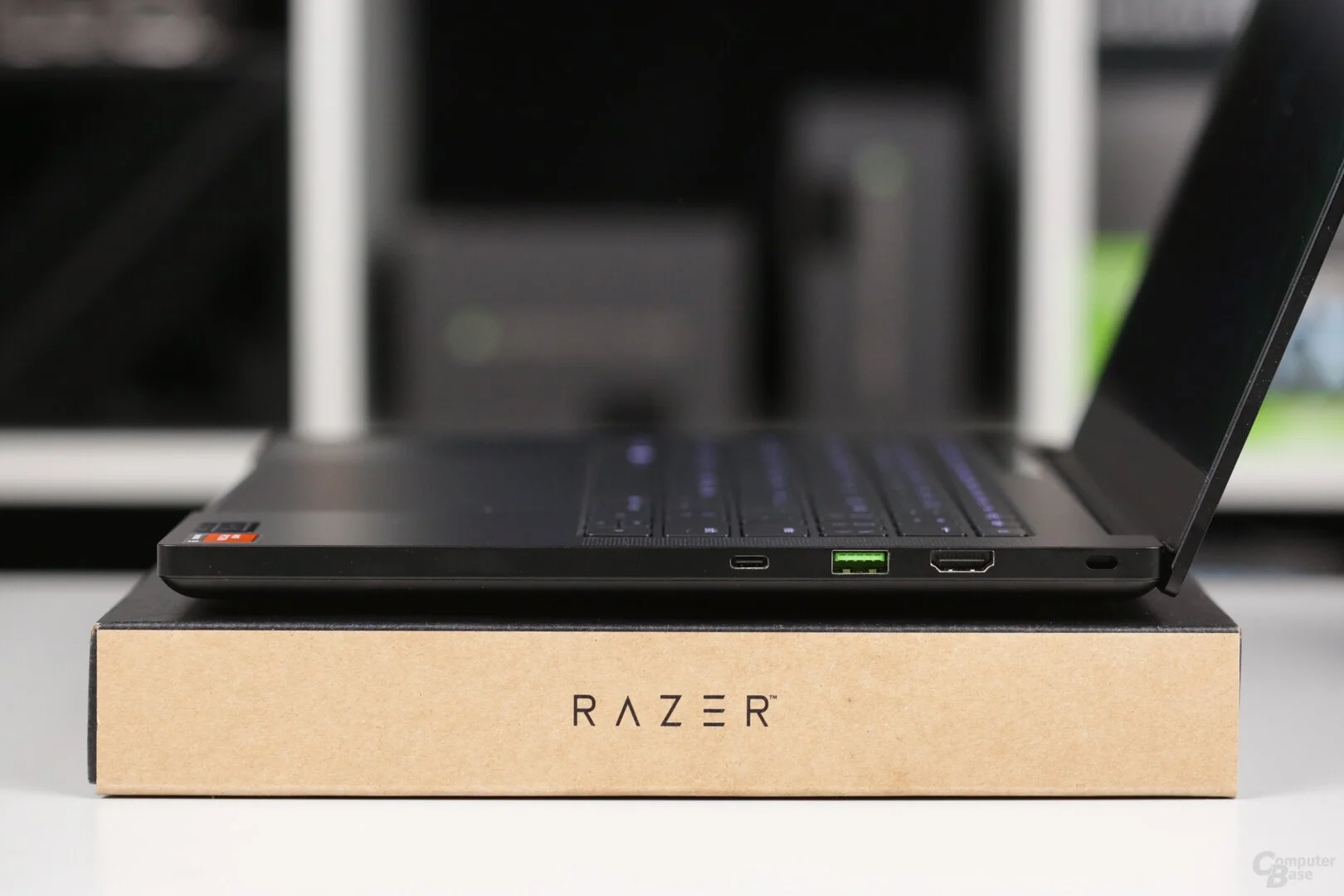
The connectivity suite is surprisingly robust for such a slim profile. Featuring two USB 4 Type-C ports, two USB-A 3.2 Gen 2 ports, and an HDMI 2.1 output, it natively supports complex multi-monitor setups and high-speed external storage arrays without forcing you into frustrating dongle purgatory.
Performance
At the heart of the Razer Blade 14 (2023) lies the formidable combination of the AMD Ryzen 9 7940HS processor and NVIDIA’s RTX 40-series graphics—topping out at an RTX 4070 with a full 140W Total Graphics Power (TGP). Even now in 2026, this silicon pairing delivers blistering real-world performance. Modern AAA titles run flawlessly at native QHD+ resolution, with technologies like DLSS 3 and Frame Generation ensuring buttery-smooth frame rates well north of 100 FPS in demanding games like Cyberpunk 2077 and Alan Wake 2.
For creative professionals, this machine is an absolute workhorse. The Zen 4 architecture of the Ryzen 9 chip effortlessly chews through 4K video rendering and intensive 3D modeling tasks in Premiere Pro and Blender. Furthermore, the inclusion of upgradable DDR5-5600MHz RAM—an extreme rarity in the modern 14-inch laptop segment—means you can push the system memory up to 64GB, effectively future-proofing the laptop for memory-hungry production workloads.
Thermal management is where Razer’s vapor chamber cooling technology earns its keep. Packing 140 watts of GPU power into a chassis this thin defies traditional physics, and while the aluminum shell does get noticeably warm under sustained load, the internal components successfully avoid aggressive thermal throttling. The dual fans can get quite loud in the maximum ‘Boost’ mode, but they maintain a consistent pitch rather than a high-frequency whine, keeping frame times stable during marathon gaming sessions.
Features & Software
The standout feature of the Blade 14 is undoubtedly its stunning 14-inch QHD+ 240Hz display. With 100% DCI-P3 color gamut coverage, AMD FreeSync Premium, and a peak brightness of 500 nits, the panel is incredibly vibrant and tear-free, making both twitch-reaction gaming and color-accurate photo editing a joy. Above the display sits an upgraded 1080p webcam equipped with a physical privacy shutter and Windows Hello facial recognition, ensuring fast, secure, and convenient logins.
On the software side, Razer Synapse remains the primary command center. While historically divisive among PC enthusiasts, the modern iteration of the software runs lean and efficiently, allowing deep customization of the per-key Chroma RGB lighting, fan curves, and performance profiles. The system seamlessly switches between integrated AMD Radeon graphics for battery longevity and the discrete RTX GPU when gaming, maximizing the 68.1 WHr battery to squeeze out roughly 7 to 8 hours of light productivity.
Value Proposition
The “Razer Tax” is a well-documented phenomenon, and the Blade 14 (2023) undeniably commanded a premium price tag at launch. However, the value proposition here isn’t just about raw frames-per-second-per-dollar; it’s about the holistic user experience. You are paying for desktop-replacement power miniaturized into an uncompromised, CNC-milled aluminum chassis with an elite display and upgradable memory.
When viewed through the lens of longevity in 2026, the 2023 Blade 14 holds its value remarkably well. Now that a few years have passed, savvy buyers can often find this specific model at a notable discount on the secondary market or during clearance sales, making it an incredibly compelling alternative to current-generation mid-range laptops that still struggle to match its premium build quality and dense feature set.
How It Compares
When stacked against the ASUS ROG Zephyrus G14, the Blade 14 feels decidedly more premium. While the G14 often wins out on raw affordability and slightly better battery life, the Razer Blade counters with superior build materials, a higher-wattage GPU implementation for better gaming frame rates, and user-upgradable RAM (a highly coveted feature ASUS abandoned in its more recent ultra-portable redesigns).
Compared to the Apple MacBook Pro 14 (M3 Pro), the Blade 14 is the definitive choice for the gaming-focused user. While Apple’s silicon reigns supreme in battery efficiency and specific specialized creator workflows, the MacBook simply cannot run the vast majority of the PC gaming library. The Blade 14 bridges the gap flawlessly, offering comparable CNC-machined build quality to the MacBook while delivering the unrivaled 3D rendering prowess of an NVIDIA RTX graphics card.
Pros and Cons
Pros
- The CNC-milled aluminum chassis offers class-leading, premium build quality that rivals Apple.
- It delivers incredible gaming performance thanks to the high-TGP NVIDIA RTX 4070 GPU.
- The QHD+ 240Hz 16:10 display is stunningly vibrant and perfectly suited for both gaming and creation.
- Unlike most modern 14-inch laptops, it features user-upgradable DDR5 memory slots.
Cons
- The thin aluminum chassis gets noticeably hot on the lap during intense gaming sessions.
- Even discounted, it carries a steep premium price tag compared to similarly spec’d plastic laptops.
- The matte black finish remains a major fingerprint magnet that requires frequent wiping.
FAQ
Q: Can you upgrade the RAM in the Razer Blade 14 (2023)?
A: Yes, the 2023 model features two accessible SO-DIMM slots, allowing users to upgrade the high-speed DDR5-5600MHz memory up to a maximum of 64GB.
Q: Does the Razer Blade 14 (2023) support USB-C charging?
A: Yes, the laptop supports USB-C Power Delivery up to 100W, which is excellent for travel and office work, though you will need the included 230W proprietary power brick to unlock full performance during gaming.
Q: Is the display on the Blade 14 OLED or IPS?
A: The Blade 14 (2023) uses a high-quality, factory-calibrated IPS-level panel. This ensures high peak brightness and blistering 240Hz refresh rates without the long-term risk of OLED burn-in.
Q: How is the battery life for non-gaming tasks?
A: For standard productivity tasks like web browsing, media consumption, and word processing, you can expect around 7 to 8 hours of battery life when the system falls back on the integrated AMD graphics.
Verdict
The Razer Blade 14 (2023) is the ultimate choice for uncompromising gamers and traveling creative professionals who demand desktop-class performance in a highly portable, premium shell. If you prioritize impeccable build quality, robust connectivity, and top-tier frame rates in a compact form factor, this laptop remains one of the finest 14-inch machines on the market today.
Where to Buy
Pros
- ✓ The CNC-milled aluminum chassis offers class-leading, premium build quality that rivals Apple.
- ✓ It delivers incredible gaming performance thanks to the high-TGP NVIDIA RTX 4070 GPU.
- ✓ The QHD+ 240Hz 16:10 display is stunningly vibrant and perfectly suited for both gaming and creation.
- ✓ Unlike most modern 14-inch laptops, it features user-upgradable DDR5 memory slots.
Cons
- ✗ The thin aluminum chassis gets noticeably hot on the lap during intense gaming sessions.
- ✗ Even discounted, it carries a steep premium price tag compared to similarly spec’d plastic laptops.
- ✗ The matte black finish remains a major fingerprint magnet that requires frequent wiping.
Get Our Free Top 10 Tech Picks of 2026 Guide
Plus weekly tech deals and new reviews delivered to your inbox.
[cp_email_signup]
No spam. Unsubscribe anytime.
Ready to buy the Razer Blade 14 (2023)?
Affiliate link — we may earn a commission at no extra cost to you.