









The Fujifilm X-T50 brings the massive 40.2-megapixel resolution and advanced autofocus of its flagship siblings into a beautifully compact, travel-friendly body. With the inclusion of in-body image stabilization and a dedicated film simulation dial, this mirrorless camera bridges the gap between retro charm and cutting-edge performance. Whether you are a dedicated street photographer or an everyday creator, the X-T50 proves that you do not need to compromise on power to travel light.
Table of Contents
Key Specifications
| Feature | Detail |
|---|---|
| Sensor | 40.2MP APS-C X-Trans CMOS 5 HR |
| Processor | X-Processor 5 |
| Image Stabilization | Up to 7.0 stops In-Body Image Stabilization (IBIS) |
| Video Recording | 6.2K at 30p, 4K at 60p, 10-bit 4:2:2 internally |
| Autofocus | AI-assisted subject detection (humans, animals, vehicles, birds) |
| Display | 3.0-inch tilting touchscreen (1.84m-dot resolution) |
| Viewfinder | 0.39-inch OLED EVF (2.36m-dot, 0.62x magnification) |
| Weight | 438g (including battery and single memory card) |
Design & Build Quality
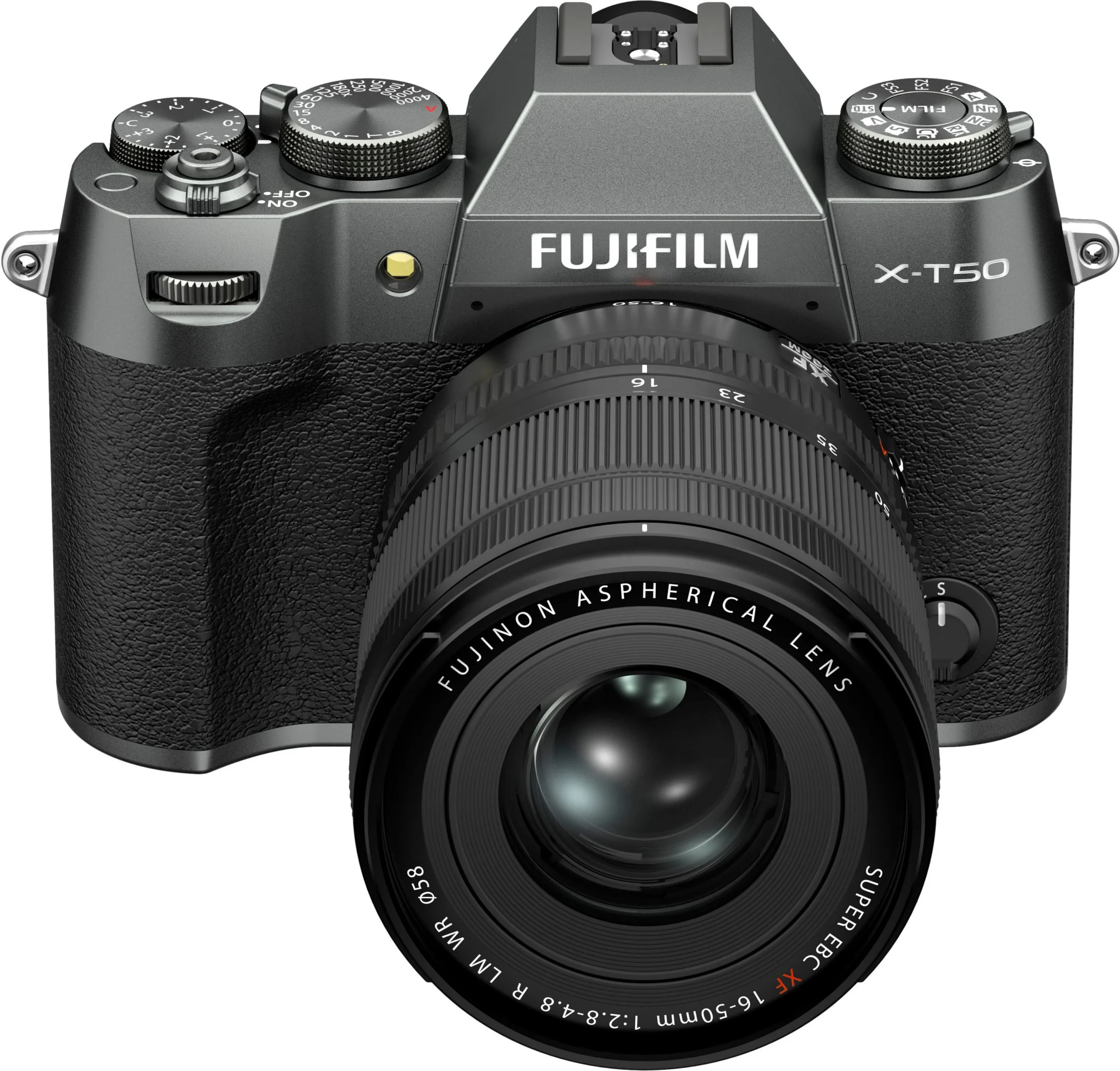
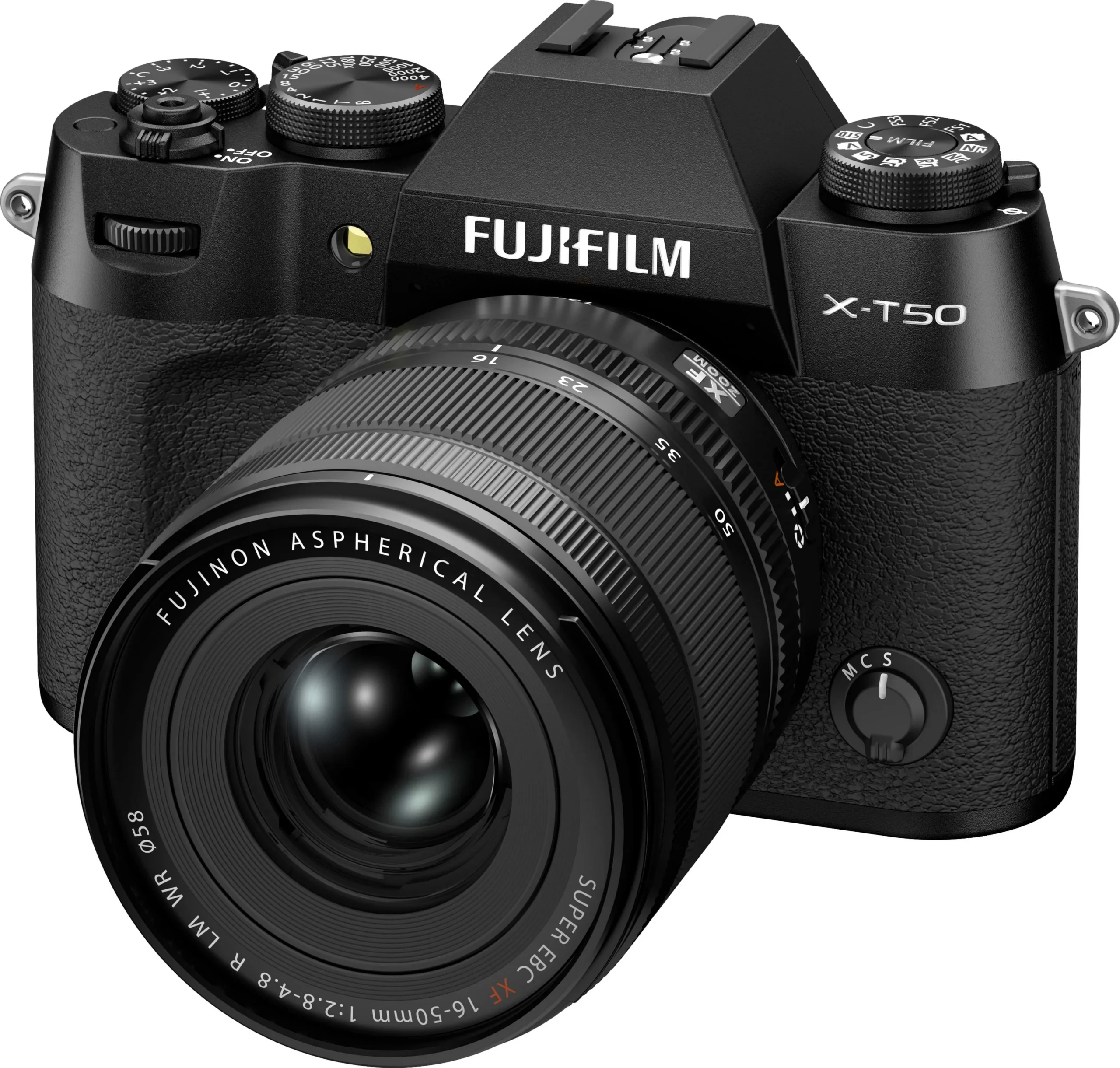
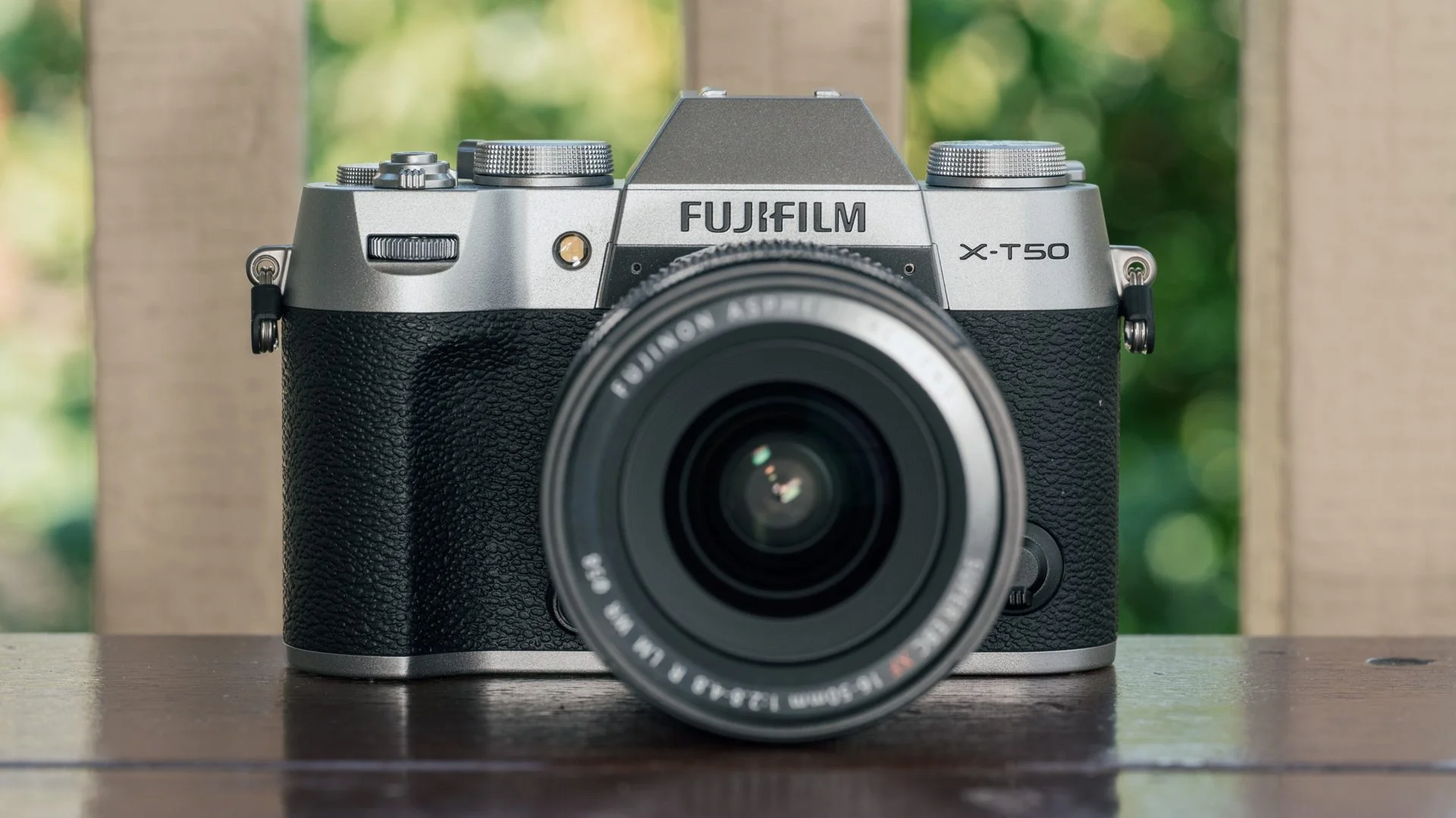
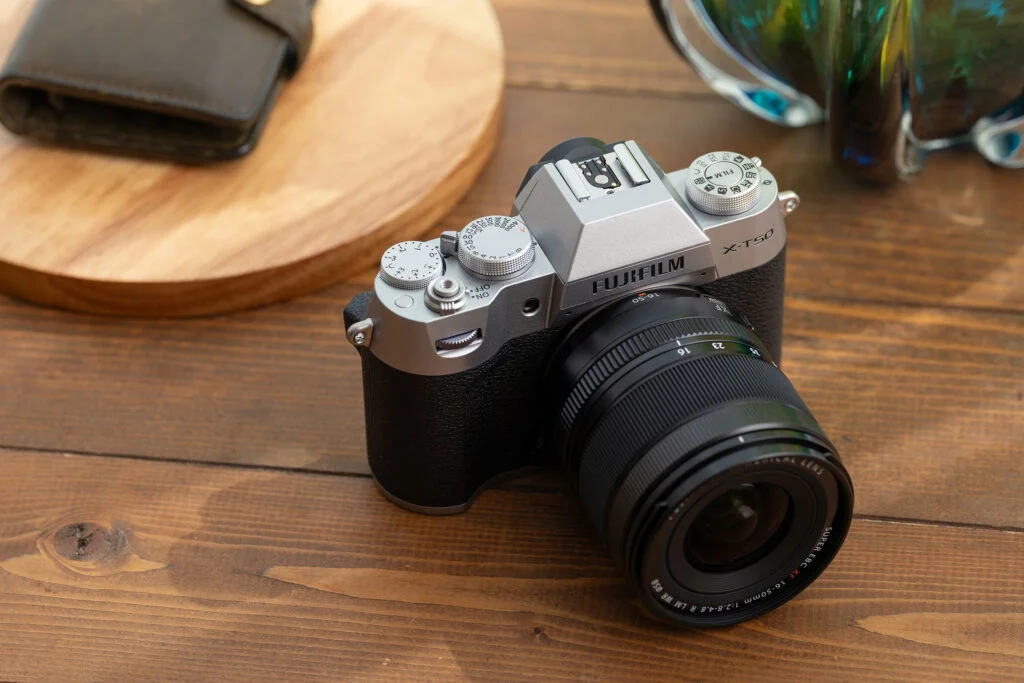
Fujifilm has masterfully refined its signature retro aesthetic with the X-T50, introducing subtler, more rounded shoulders that make the camera feel slightly more modern and comfortable in hand compared to its predecessor. Despite housing sophisticated internal hardware, the body remains incredibly lightweight at just 438 grams. The magnesium alloy top and bottom plates provide a premium, robust feel that tech-savvy photographers expect, while the modestly redesigned grip offers better purchase for those carrying it on long street photography walks.
The most polarizing yet innovative design choice is the replacement of the traditional drive dial with a dedicated Film Simulation dial on the top left plate. For creators who love Fujifilm’s legendary color science, this provides instant, tactile access to beloved looks like Classic Chrome, Reala Ace, and Acros without diving into digital menus. However, traditionalists might mourn the loss of quick drive mode adjustments. Alongside this new dial, the classic shutter speed and exposure compensation dials remain beautifully machined, preserving that tactile, mechanical joy that Fuji shooters adore.
Performance
Under the hood, the Fujifilm X-T50 is an absolute powerhouse, inheriting the flagship 40.2-megapixel X-Trans CMOS 5 HR sensor and X-Processor 5 from the high-end X-T5. In real-world testing throughout 2026, this translates to breathtakingly sharp images with remarkable dynamic range and cropping flexibility previously unheard of in mid-tier travel bodies. The sheer amount of detail resolved by the 40MP sensor is staggering, provided you pair it with the latest iteration of Fuji’s sharpest prime lenses. Burst shooting handles well, delivering up to 13 frames per second with the electronic shutter, though the buffer fills up relatively quickly given the massive file sizes.
Crucially, Fujifilm has managed to squeeze a 5-axis In-Body Image Stabilization (IBIS) system into this diminutive frame, offering up to 7.0 stops of compensation. This addition is a game-changer for handheld low-light photography and significantly smooths out casual video recording. When benchmarked against non-stabilized predecessors, the X-T50 consistently yielded sharp shots at shutter speeds as slow as 1/8th of a second, drastically lowering the need for high ISO values in dim settings.
Autofocus performance also sees a massive leap forward. The AI-driven subject detection algorithms inherited from the flagship line swiftly identify and lock onto human eyes, animals, birds, and even fast-moving vehicles. While the continuous tracking is highly dependable in good lighting, it can occasionally hunt in deeply backlit or low-contrast situations, though it remains highly competitive within its current APS-C class.
Features & Software
Beyond still photography, the X-T50 is surprisingly capable as a hybrid content creation tool. It captures gorgeous 6.2K video at 30p and oversampled 4K at 60p in 10-bit 4:2:2 color internally. The software experience is bolstered by the inclusion of Reala Ace, the latest highly coveted film simulation, bringing the total to 20 built-in analog film looks. The menus remain classically Fujifilm—dense but deeply customizable.
For creators looking to streamline their workflow in 2026, the native Frame.io Camera to Cloud integration is a standout software feature. Without needing any extra dongles or accessories, you can automatically upload high-res RAW files or proxies directly to the cloud via Wi-Fi as you shoot. This transforms the X-T50 from a casual travel camera into a highly connected tool for professionals wanting immediate offsite backup and instant client review capabilities.
Value Proposition
Priced as a premium mid-range mirrorless camera, the Fujifilm X-T50 occupies a fascinating sweet spot in the 2026 camera market. It brings flagship-level resolution and processing power down to an enthusiast price bracket. While it demands a higher entry fee than entry-level APS-C bodies, the inclusion of IBIS, the 40MP sensor, and AI autofocus make the price tag easily justifiable for creators who want high-end performance without the bulk of professional gear.
When evaluating its value proposition, the X-T50 forces buyers to ask if they truly need weather sealing or dual card slots. If the answer is no, this camera offers 90% of the flagship X-T5’s capabilities for a fraction of the cost, making it an extraordinarily high-value proposition for travel, street, and everyday lifestyle photography.
How It Compares
When placed against the Sony a6700, the X-T50 wins out on sheer resolution (40.2MP vs 26MP) and undeniable aesthetic charm, as well as an arguably superior straight-out-of-camera JPEG experience thanks to its built-in film simulations. However, the Sony a6700 still edges ahead in pure autofocus tracking reliability for high-speed sports and offers a larger grip that accommodates heavier telephoto lenses much more comfortably.
Compared to its bigger sibling, the Fujifilm X-T5, the X-T50 sacrifices weather sealing, a larger electronic viewfinder, a bigger battery, and dual SD card slots in favor of a smaller footprint and a more accessible price point. While professional wedding or event shooters will still prefer the ruggedness and redundancy of the X-T5, the X-T50 is arguably the better everyday carry camera for enthusiasts prioritizing portability.
Pros and Cons
Pros
- Delivers exceptional 40.2MP image quality in a highly compact, travel-friendly body.
- Includes highly effective 7-stop In-Body Image Stabilization (IBIS) for sharp low-light shots.
- Features a dedicated Film Simulation dial for quick, tactile creative adjustments.
- Native Frame.io Camera to Cloud integration vastly speeds up modern professional workflows.
Cons
- Lacks any form of weather sealing, limiting its use in harsh or rainy environments.
- Relies on the older, lower-capacity NP-W126S battery which drains quickly under heavy use.
- The electronic viewfinder is somewhat small and features a lower magnification rate compared to rivals.
- High-resolution 40MP RAW files will rapidly fill up the single UHS-II SD card slot and demand significant hard drive storage.
FAQ
Q: Does the Fujifilm X-T50 have weather sealing?
A: No, the X-T50 does not feature weather resistance. If you plan to shoot frequently in heavy rain, snow, or dusty environments, you may want to look at the Fujifilm X-T5 instead.
Q: What battery does the X-T50 use, and how is the battery life?
A: It uses the older, smaller NP-W126S battery rather than the newer high-capacity NP-W235. Because of the power-hungry 40MP sensor and active IBIS, battery life is relatively short, so carrying a spare on long shoots is highly recommended.
Q: Can I use the X-T50 for professional video work?
A: Yes, it is quite capable for video, offering impressive 6.2K/30p and 4K/60p in 10-bit 4:2:2 internally. However, the lack of dual card slots for redundancy and a smaller battery makes it better suited for B-roll or quick content creation rather than long-form professional video shoots.
Q: Are my older XF lenses capable of resolving the 40-megapixel sensor?
A: While older lenses will still work and produce great images, Fujifilm recommends using their newer iterations (like the updated f/1.4 primes) to fully resolve the extreme detail of the 40.2MP sensor from edge to edge.
Verdict
The Fujifilm X-T50 is an exceptional choice for travel photographers, street shooters, and everyday enthusiasts who want flagship-level 40MP image quality and IBIS in a beautifully compact body. While the lack of weather sealing and smaller battery are notable compromises, its tactile controls and dedicated Film Simulation dial make it one of the most creatively enjoyable cameras to shoot with in 2026. If you want uncompromising resolution without the bulk of a professional rig, this is the perfect everyday carry camera.
Where to Buy
Pros
- ✓ Delivers exceptional 40.2MP image quality in a highly compact, travel-friendly body.
- ✓ Includes highly effective 7-stop In-Body Image Stabilization (IBIS) for sharp low-light shots.
- ✓ Features a dedicated Film Simulation dial for quick, tactile creative adjustments.
- ✓ Native Frame.io Camera to Cloud integration vastly speeds up modern professional workflows.
Cons
- ✗ Lacks any form of weather sealing, limiting its use in harsh or rainy environments.
- ✗ Relies on the older, lower-capacity NP-W126S battery which drains quickly under heavy use.
- ✗ The electronic viewfinder is somewhat small and features a lower magnification rate compared to rivals.
- ✗ High-resolution 40MP RAW files will rapidly fill up the single UHS-II SD card slot and demand significant hard drive storage.
Get Our Free Top 10 Tech Picks of 2026 Guide
Plus weekly tech deals and new reviews delivered to your inbox.
[cp_email_signup]
No spam. Unsubscribe anytime.
Ready to buy the Fujifilm X-T50?
Affiliate link — we may earn a commission at no extra cost to you.