








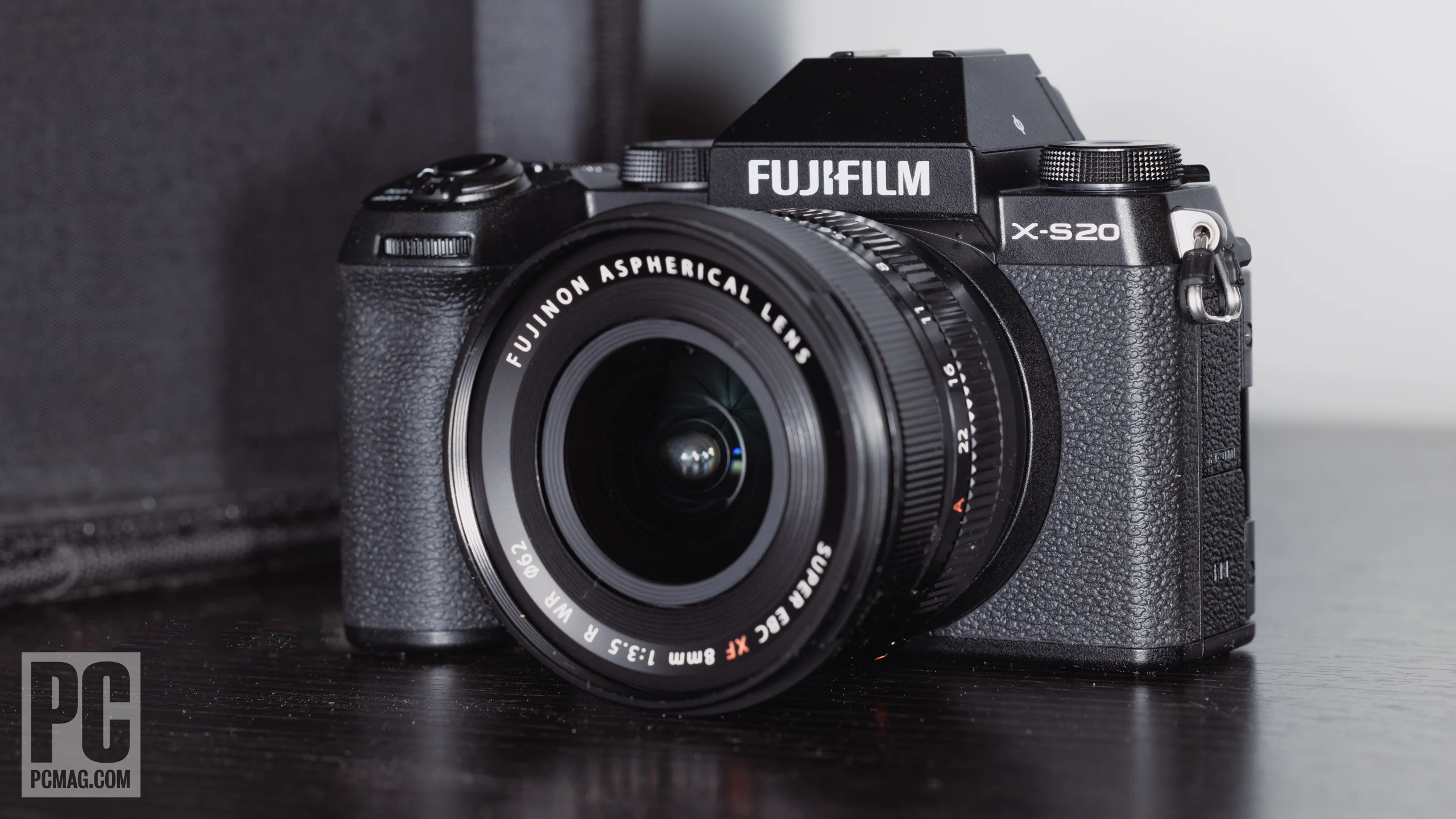
The Fujifilm X-S20 bridges the gap between casual content creation and professional hybrid shooting with its massive battery life and advanced AI autofocus. Whether you are upgrading from a smartphone or looking for a lightweight travel companion, this APS-C powerhouse demands attention in 2026. Read our full review to see if it deserves a permanent spot in your gear bag.
Table of Contents
Key Specifications
| Feature | Detail |
|---|---|
| Sensor | 26.1MP APS-C X-Trans CMOS 4 |
| Processor | X-Processor 5 |
| Autofocus | Intelligent AI Subject-Detection AF |
| Video Resolution | Up to 6.2K/30p Open Gate, 4K/60p, 1080/240p |
| IBIS | In-Body Image Stabilization (up to 7.0 stops) |
| Battery | NP-W235 (approx. 750-800 frames per charge) |
| Weight | 491g (including battery and memory card) |
Design & Build Quality
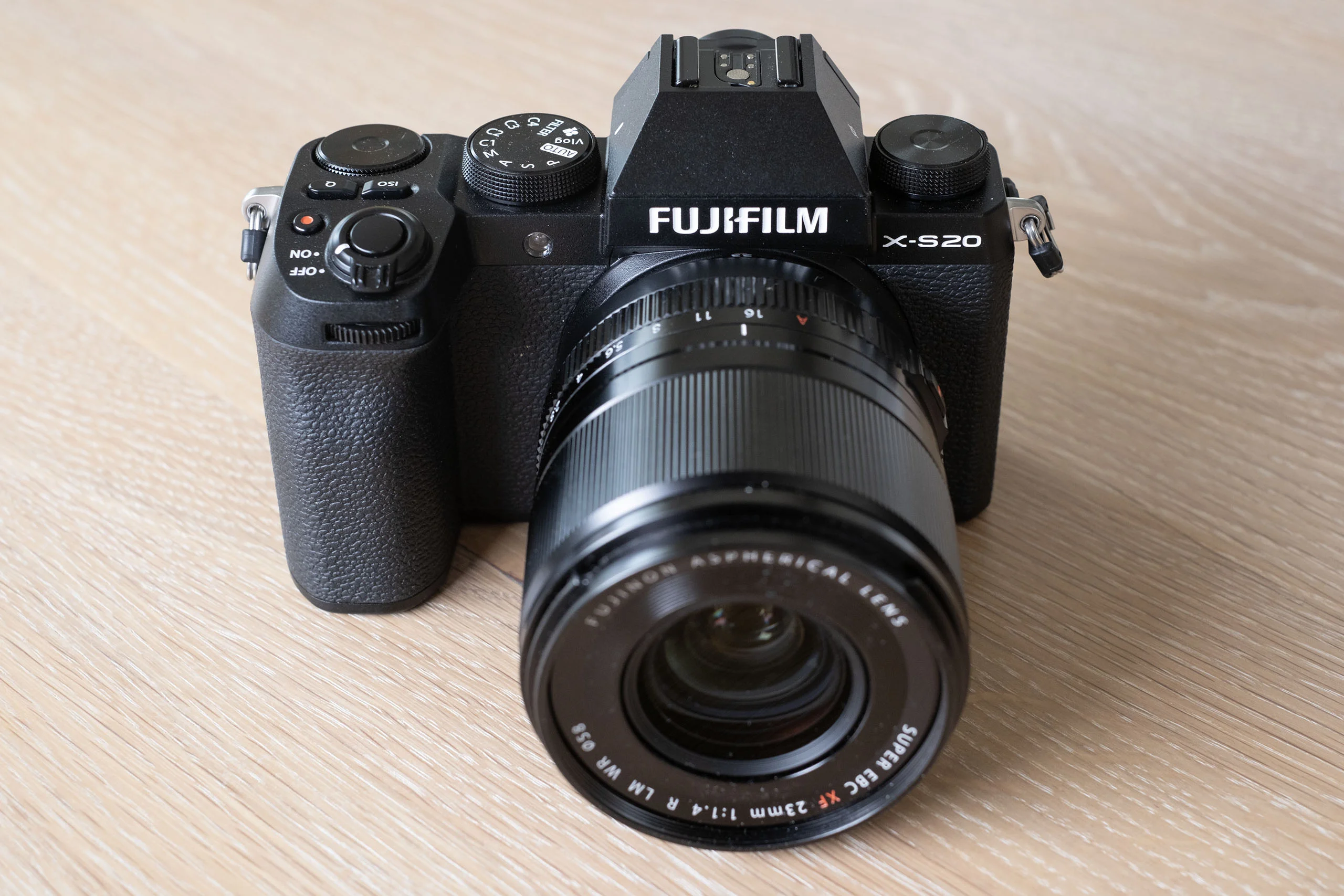
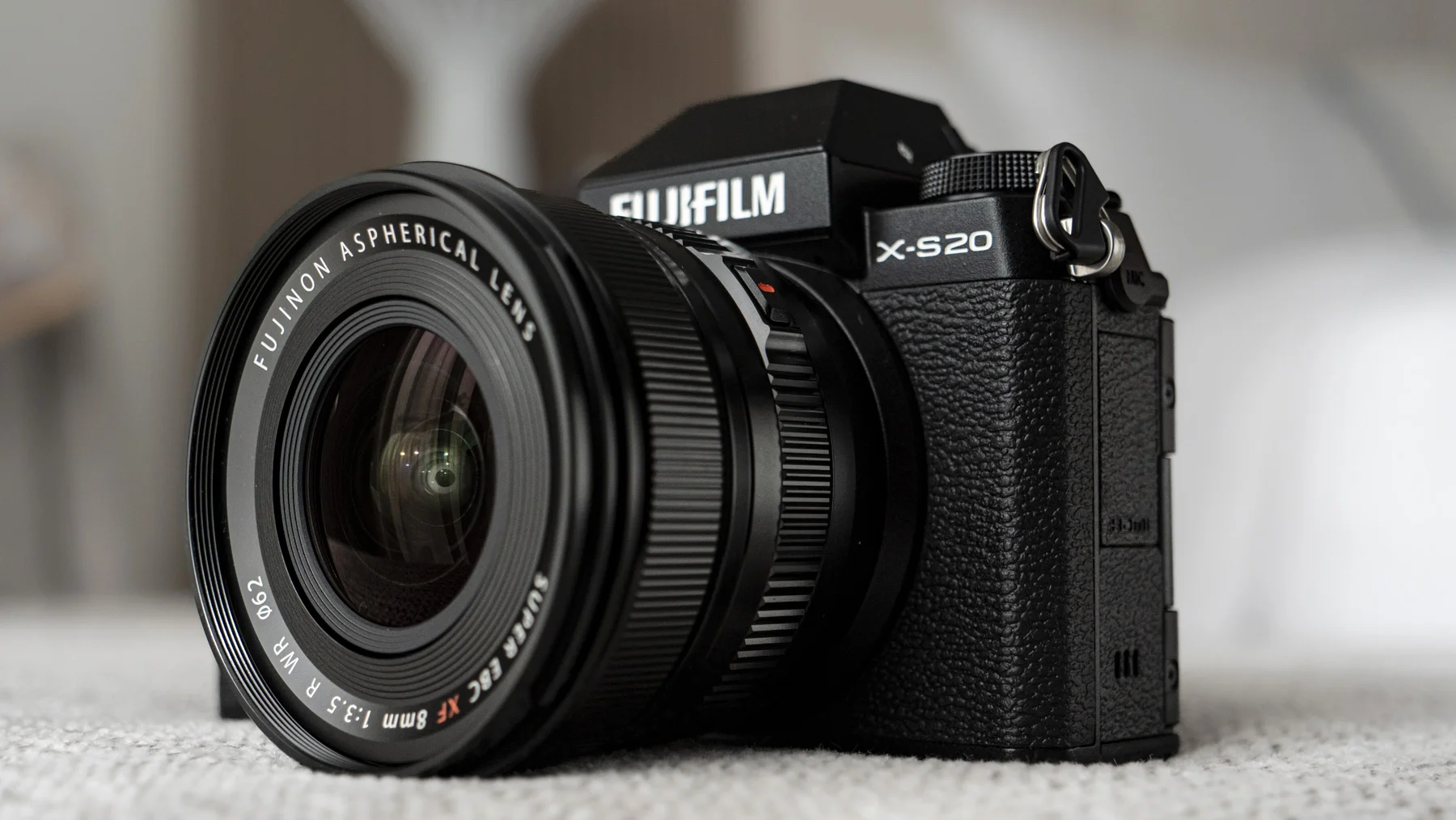
The Fujifilm X-S20 retains the accessible, modern design philosophy of its predecessor, abandoning Fujifilm’s traditional retro exposure dials in favour of a standard PASM (Program, Aperture, Shutter, Manual) mode dial. This design choice makes the camera incredibly approachable for users migrating from other camera ecosystems or stepping up from a smartphone. Despite its compact footprint, the X-S20 features a surprisingly deep, ergonomic grip that allows for comfortable one-handed shooting, even when paired with heavier telephoto lenses.
A major reason for this robust grip is the inclusion of the high-capacity NP-W235 battery. Despite housing a significantly larger power source, Fujifilm managed to keep the camera’s weight down to a highly portable 491 grams. The chassis is constructed from high-quality magnesium alloy, providing a premium, sturdy feel that belies its mid-range categorization. The fully articulating 3.0-inch touchscreen is bright and responsive, making it an ideal tool for vloggers and high-angle photography.
Ergonomically, the button layout is clean and uncluttered. The tactile joystick provides swift AF point selection, and the twin command dials are perfectly placed for rapid adjustments. While it lacks the dedicated ISO and shutter speed dials beloved by Fuji purists, the X-S20 prioritizes streamlined, efficient operation that caters brilliantly to modern hybrid shooters.
Performance
Under the hood, the integration of the X-Processor 5 transforms the X-S20 into a formidable performance machine. This is the exact same silicon found in the flagship X-T5 and X-H2S, bringing with it Fujifilm’s latest AI-driven subject-detection autofocus. In real-world testing, the camera locks onto human eyes, animals, birds, and even vehicles with remarkable tenacity. While older Fuji models occasionally hunted in low light, the X-S20’s AF remains sticky and reliable, dramatically increasing your hit rate during fast-paced events or wildlife shoots.
Image quality from the proven 26.1MP X-Trans CMOS 4 sensor is nothing short of exceptional. Even in 2026, this sensor continues to deliver excellent dynamic range and impressively clean files at high ISOs up to 6400. Combined with an upgraded In-Body Image Stabilization (IBIS) system that provides up to 7.0 stops of compensation, shooting crisp handheld exposures in dimly lit environments is remarkably effortless.
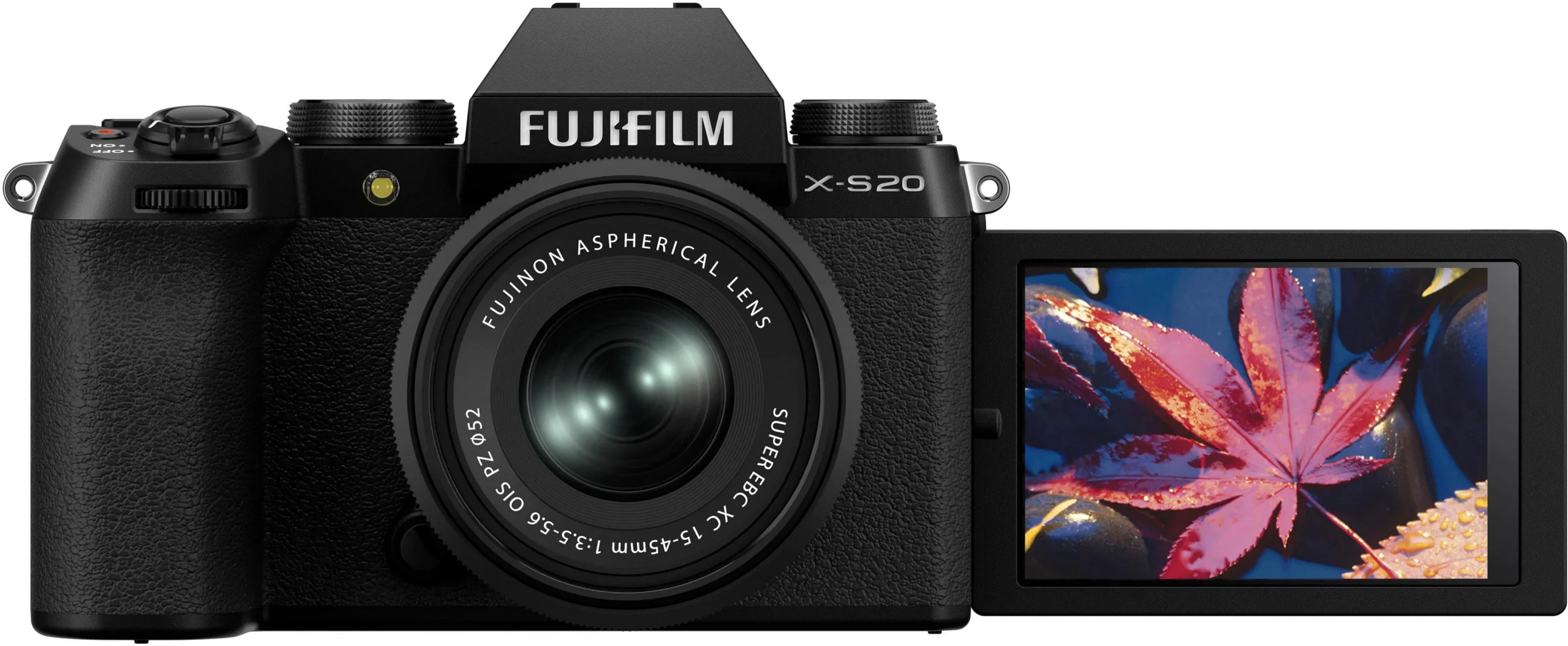
On the video front, the X-S20 punches well above its weight class. It offers 6.2K/30p “open gate” recording (utilizing the entire 3:2 sensor), giving creators immense flexibility to crop vertically for social media or horizontally for traditional widescreen formats without losing resolution. It also supports 4K/60p and 10-bit 4:2:2 internal recording with F-Log2, capturing up to 13+ stops of dynamic range. While prolonged recording in 6.2K can introduce thermal limits, the camera features mounting points for Fujifilm’s optional external cooling fan to mitigate overheating during long-form takes.
Features & Software
Fujifilm has tailored the X-S20 to modern creators by introducing a dedicated “Vlog” setting right on the mode dial. Selecting this mode transforms the touchscreen interface, presenting large, easy-to-tap buttons for essential vlogging functions like Product Priority AF, Background Defocus, and Self-Timer. This eliminates the need to dive deep into menus while filming yourself, streamlining the solo-creator workflow.
Additionally, the camera includes 19 of Fujifilm’s beloved Film Simulations, including Nostalgic Neg, allowing you to achieve beautiful, colour-graded aesthetics straight out of the camera without touching editing software. Paired with seamless USB-C plug-and-play webcam functionality and robust wireless connectivity via the updated Fujifilm XApp, getting high-quality images from the camera to the internet is completely frictionless.
Value Proposition
Positioned as an upper-mid-range APS-C camera, the X-S20 offers flagship-level computational power at a highly competitive price point. The most significant value add is the inclusion of the NP-W235 battery. Delivering nearly 800 shots per charge, it completely eliminates the “battery anxiety” that plagued earlier compact mirrorless models, saving buyers the cost and hassle of carrying multiple spare batteries on a shoot.
When you factor in the 6.2K open gate video, advanced AI autofocus, and best-in-class out-of-camera colours, the X-S20 represents a phenomenal return on investment. It acts as a perfect “do-it-all” body that can comfortably serve as an A-cam for an enthusiast or a highly capable B-cam for a working professional heavily invested in the Fujifilm ecosystem.
How It Compares
When pitted against the Sony a6700, the X-S20 holds its own beautifully. While the Sony arguably edges out the Fuji in absolute autofocus tracking reliability and boasts a vast third-party lens ecosystem, the X-S20 counters with a far superior LCD screen, superior straight-out-of-camera JPEG colours, and the highly desirable 6.2K open gate video feature that the a6700 lacks.
Compared to the Canon EOS R7, the Fuji is significantly smaller and more travel-friendly. The R7 offers a higher resolution 32.5MP sensor and faster mechanical burst rates geared towards sports shooters. However, the X-S20 benefits from Fujifilm’s extensive, mature lineup of native APS-C lenses, whereas Canon’s native APS-C RF-S lens selection remains somewhat limited in comparison, often forcing users to adapt larger full-frame glass.
Pros and Cons
Pros
- Outstanding battery life (up to 800 frames per charge)
- Superb 6.2K open gate video capabilities for flexible cropping
- Deep, ergonomic grip on a remarkably compact body
- Flagship-level AI subject-detection autofocus
- Beautiful straight-out-of-camera colours via Film Simulations
Cons
- Lacks official weather-sealing, requiring caution in harsh conditions
- Only features a single UHS-II SD card slot
- Cooling fan for extended high-res video recording is sold separately
- Electronic viewfinder (EVF) is relatively small compared to flagship models
FAQ
Q: Does the Fujifilm X-S20 overheat when recording video?
A: In 4K/30p, the camera handles heat very well. However, when recording in 6.2K or 4K/60p for extended continuous periods, it can overheat. Fujifilm sells an attachable cooling fan specifically to solve this issue for long-form videographers.
Q: Is the Fujifilm X-S20 weather-sealed?
A: No, unlike the higher-end X-T5 or X-H2, the X-S20 does not feature comprehensive weather sealing. You should take precautions when shooting in heavy rain or dusty environments.
Q: Can I use the X-S20 as a webcam for streaming?
A: Yes. You can connect the X-S20 directly to your computer via a standard USB-C cable and it will be recognized as a high-quality webcam instantly, without the need for additional capture cards or software.
Q: Does the X-S20 have a built-in flash?
A: Yes, it features a small pop-up flash built into the viewfinder hump, which is handy for casual fill-flash in backlit situations.
Verdict
The Fujifilm X-S20 is an absolute triumph of balance, offering the perfect blend of portability, stellar battery life, and high-end hybrid performance. It is the ultimate recommendation for travel photographers, content creators, and vloggers who want premium video and photo capabilities without the bulk of a full-frame system.
Pros
- ✓ Outstanding battery life (up to 800 frames per charge)
- ✓ Superb 6.2K open gate video capabilities for flexible cropping
- ✓ Deep, ergonomic grip on a remarkably compact body
- ✓ Flagship-level AI subject-detection autofocus
- ✓ Beautiful straight-out-of-camera colours via Film Simulations
Cons
- ✗ Lacks official weather-sealing, requiring caution in harsh conditions
- ✗ Only features a single UHS-II SD card slot
- ✗ Cooling fan for extended high-res video recording is sold separately
- ✗ Electronic viewfinder (EVF) is relatively small compared to flagship models