








The Canon EOS R6 Mark II remains a powerhouse hybrid camera in 2026, offering blistering speeds and exceptional autofocus for both photographers and videographers. With significant upgrades over its predecessor, it strikes the perfect balance between professional performance and everyday usability. Let’s dive into why this mirrorless marvel continues to dominate the enthusiast market.
Table of Contents
Key Specifications
| Feature | Detail |
|---|---|
| Sensor | 24.2MP Full-Frame CMOS |
| Processor | DIGIC X |
| Autofocus | Dual Pixel CMOS AF II (1,053 points) |
| Continuous Shooting | 12 fps Mechanical / 40 fps Electronic |
| Video Resolution | Oversampled 4K up to 60p, 6K RAW (External) |
| Image Stabilization | In-Body (IBIS) up to 8 stops |
| Viewfinder | 3.69m-Dot OLED EVF (120 fps refresh) |
| Storage | Dual UHS-II SD Card Slots |
| Weight | 670g (with battery and memory card) |
Design & Build Quality
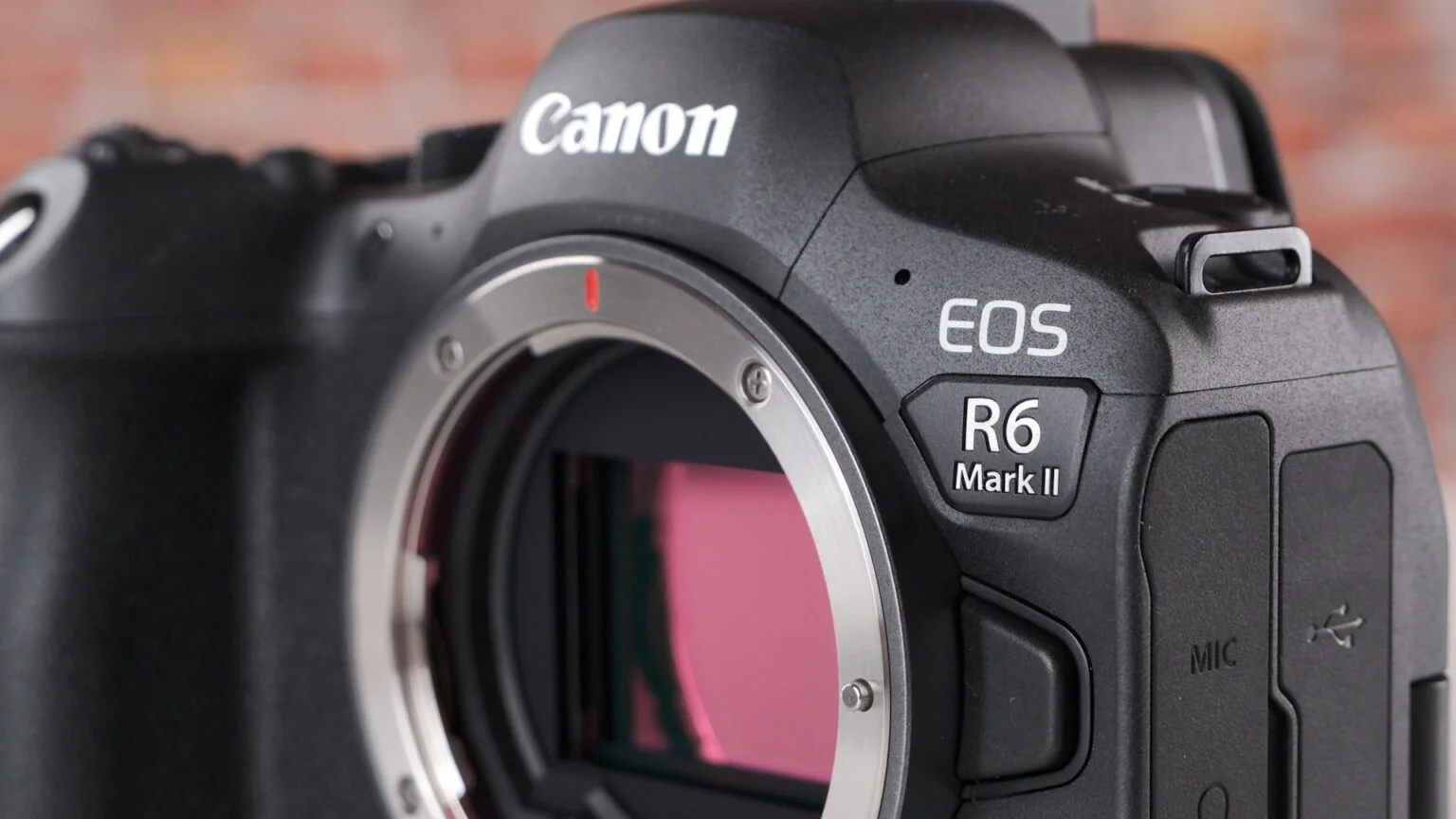
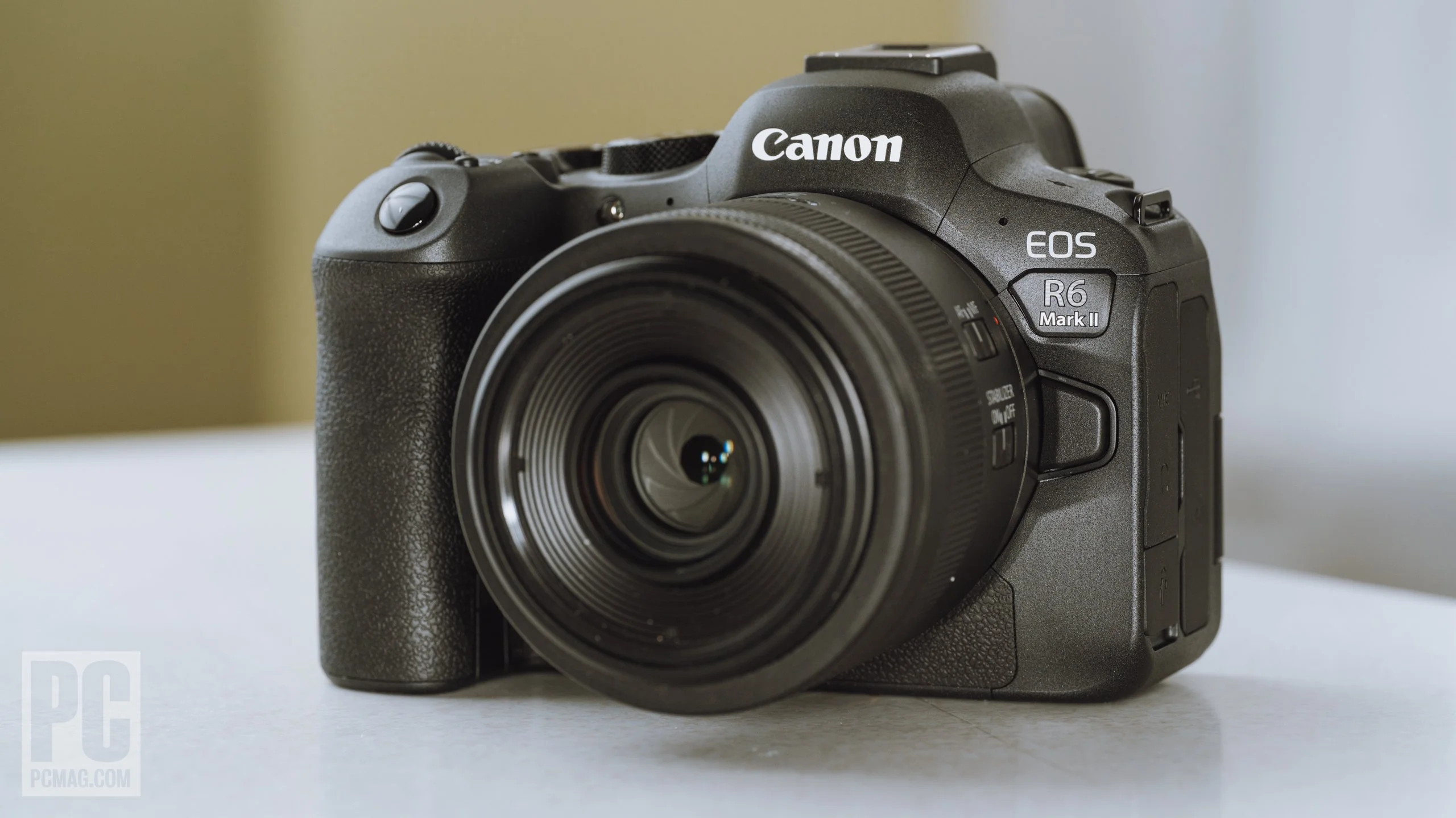
Canon has long been the gold standard for camera ergonomics, and the EOS R6 Mark II proudly carries that torch. Constructed from a robust magnesium alloy chassis layered with polycarbonate resin, the camera feels incredibly durable without being overly heavy. At 670 grams, it provides substantial grip depth, ensuring absolute comfort during long shooting sessions even when paired with heavy L-series RF glass.
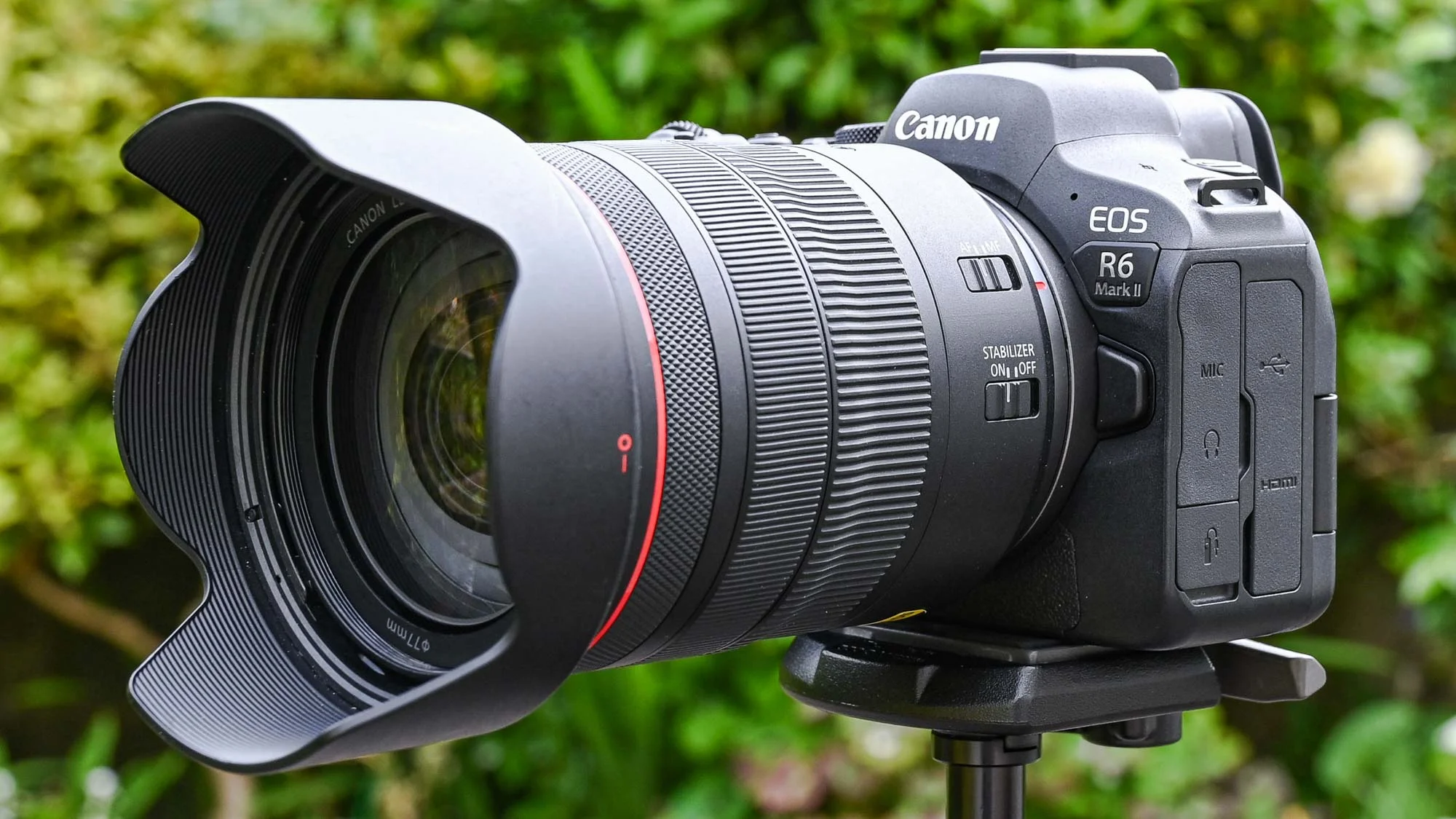
The physical layout has seen subtle but impactful refinements compared to the original R6. The power switch has been intelligently relocated to the right side, allowing for true one-handed operation. Meanwhile, a dedicated photo/video toggle now occupies the left shoulder, catering perfectly to modern hybrid shooters who need to switch workflows at a moment’s notice. The extensive weather sealing remains top-notch, offering peace of mind when shooting in adverse or dusty conditions.
On the back, the fully articulating 3-inch, 1.62m-dot touchscreen is bright, responsive, and highly functional for vloggers or awkward shooting angles. Paired with a crisp 3.69m-dot OLED electronic viewfinder (EVF) that refreshes at a buttery 120 fps, the R6 Mark II provides an optical-like viewing experience that drastically minimizes lag and blackout during fast action.
Performance
When it comes to real-world performance, the EOS R6 Mark II is nothing short of a speed demon. Powered by the DIGIC X processor and a 24.2-megapixel sensor, it captures exceptionally clean files with superb dynamic range. While 24.2MP might seem modest in an era of 60MP behemoths, it hits the sweet spot for file manageability, storage efficiency, and staggering low-light performance. ISO ranges up to 102,400 are remarkably usable, retaining impressive detail and color fidelity even in dimly lit environments like wedding receptions or twilight wildlife shoots.
The true crown jewel of this camera is Canon’s Dual Pixel CMOS AF II. Leveraging deep learning AI, the autofocus system reliably recognizes and tracks humans, animals, and vehicles with frightening accuracy. Whether you are photographing unpredictable birds in flight or fast-paced motorsports, the eye-tracking algorithms stick to subjects flawlessly, rarely hunting or dropping focus even when obstacles momentarily block the frame.
Coupled with this AF system is an astonishing 40 frames-per-second electronic burst shooting mode. Even more impressive is the pre-release capture feature, which records a half-second of action before you fully depress the shutter, ensuring you never miss a critical, fleeting moment. Buffer depths are generous, easily clearing rapid bursts to the dual UHS-II SD card slots without freezing the camera’s operation.
Features & Software
Videographers will find a lot to love in the R6 Mark II’s software and feature set. It resolves the notorious overheating issues of its predecessor, allowing for essentially unlimited recording of stunning oversampled 4K/60p video utilizing the entire width of the full-frame sensor. Professional touches like Canon Log 3, false color monitoring, and the ability to output 6K ProRes RAW to an external Atomos recorder make it a formidable B-cam for high-end cinema setups.
Canon’s menu system remains an industry benchmark for intuitive navigation. Color-coded tabs and a logical, touch-friendly layout mean even newcomers can quickly customize their control dials. Furthermore, the camera’s seamless Wi-Fi and Bluetooth connectivity, paired with the Canon Camera Connect app, facilitates speedy file transfers to smartphones and stable remote-control capabilities—an absolute necessity for content creators in 2026.
Value Proposition
Positioned firmly in the enthusiast tier, the Canon EOS R6 Mark II demands a premium but absolutely justifies its price tag. For your investment, you are essentially getting a mini flagship camera, minus the stacked sensor and integrated vertical grip. It blends high-end professional specifications—like an 8-stop In-Body Image Stabilization (IBIS) system and uncropped 4K video—with an approachable, user-friendly form factor.
While casual hobbyists might find its extensive feature set to be overkill, working professionals and serious enthusiasts will find it to be an incredible return on investment. The native RF lens ecosystem has matured beautifully by 2026, offering an array of top-tier glass that fully exploits the R6 Mark II’s resolving power and lightning-fast autofocus speed.
How It Compares
The fiercest rival to the EOS R6 Mark II is the Sony a7 IV. While the Sony boasts a higher 33MP resolution—giving it a slight edge in aggressive cropping and highly detailed studio work—the Canon completely eclipses it in sheer speed, offering 40fps versus Sony’s 10fps. Additionally, Canon’s rolling shutter is much better controlled in electronic shutter mode. When pitted against the Panasonic Lumix S5 II, the Canon wins decisively on raw autofocus performance for fast action, though the Panasonic remains a highly competitive option for pure video-centric creators thanks to its built-in cooling fan and waveform monitors.
Pros and Cons
Pros
- Offers best-in-class Dual Pixel CMOS AF II with exceptional AI subject tracking.
- Blistering 40 fps continuous electronic burst shooting capabilities.
- Delivers stunning, oversampled uncropped 4K/60p video with no strict recording limits.
- Exceptional ergonomics with a highly intuitive menu system and a dedicated photo/video switch.
Cons
- Rolling shutter effect is still noticeable during very fast panning in electronic shutter mode.
- Does not support CFexpress cards, limiting maximum buffer clearance speeds compared to higher-end models.
- Third-party RF lens options remain somewhat limited compared to Sony’s open E-mount ecosystem.
- The micro-HDMI port feels fragile and less secure than a full-size HDMI for professional video rigging.
FAQ
Q: Does the Canon EOS R6 Mark II overheat during video recording?
A: Canon has vastly improved thermal management in the Mark II. Overheating is largely a thing of the past for standard oversampled 4K up to 60p, allowing for essentially unlimited recording times in most ambient conditions.
Q: Can I use my older EF lenses on this camera?
A: Yes, you can flawlessly mount older EF DSLR lenses using the official Canon EF-EOS R Mount Adapter. In many cases, the autofocus accuracy and speed of older lenses will actually improve on this mirrorless body.
Q: Does the camera feature a stacked sensor?
A: No, the R6 Mark II uses a standard, front-illuminated CMOS sensor. If you require a stacked sensor for absolute zero blackout and zero rolling shutter, you will need to look at flagship models like the EOS R3 or R1.
Q: How is the battery life on the R6 Mark II?
A: Utilizing the LP-E6NH battery, it performs exceptionally well for a mirrorless camera. Depending on your EVF and screen usage, you can expect anywhere from 450 to well over 760 shots per charge.
Verdict
The Canon EOS R6 Mark II is an exceptional, do-it-all hybrid camera that hits the sweet spot for wedding, event, and wildlife photographers who also need robust video features. Its class-leading autofocus and blistering burst speeds make it incredibly reliable in high-pressure situations. If you need a versatile, professional-grade tool without stepping up to a flagship price point, this remains the most compelling hybrid camera in Canon’s lineup today.
Where to Buy
Pros
- ✓ Offers best-in-class Dual Pixel CMOS AF II with exceptional AI subject tracking.
- ✓ Blistering 40 fps continuous electronic burst shooting capabilities.
- ✓ Delivers stunning, oversampled uncropped 4K/60p video with no strict recording limits.
- ✓ Exceptional ergonomics with a highly intuitive menu system and a dedicated photo/video switch.
Cons
- ✗ Rolling shutter effect is still noticeable during very fast panning in electronic shutter mode.
- ✗ Does not support CFexpress cards, limiting maximum buffer clearance speeds compared to higher-end models.
- ✗ Third-party RF lens options remain somewhat limited compared to Sony’s open E-mount ecosystem.
- ✗ The micro-HDMI port feels fragile and less secure than a full-size HDMI for professional video rigging.
Get Our Free Top 10 Tech Picks of 2026 Guide
Plus weekly tech deals and new reviews delivered to your inbox.
[cp_email_signup]
No spam. Unsubscribe anytime.
Ready to buy the Canon EOS R6 Mark II?
Affiliate link — we may earn a commission at no extra cost to you.