





















The Canon EOS R5 Mark II takes everything that made its predecessor a hybrid shooting legend and pushes it to the absolute limit. With an entirely new stacked sensor, mind-bending autofocus capabilities, and refined thermal management, this 2026 release redefines what professional creators can expect from a full-frame mirrorless camera.
Table of Contents
Key Specifications
| Feature | Detail |
|---|---|
| Sensor | 45MP Full-Frame Stacked BSI CMOS |
| Processor | DIGIC Accelerator + DIGIC X |
| Autofocus | Dual Pixel Intelligent AF with Eye Control |
| Continuous Shooting | Up to 30 fps (electronic), 12 fps (mechanical) |
| Video | 8K 60p RAW, 4K up to 120p |
| Image Stabilization | In-body IS up to 8.5 stops |
| EVF | 5.76m-dot OLED, 120 fps refresh |
| Storage | 1x CFexpress Type B, 1x SD UHS-II |
Design & Build Quality
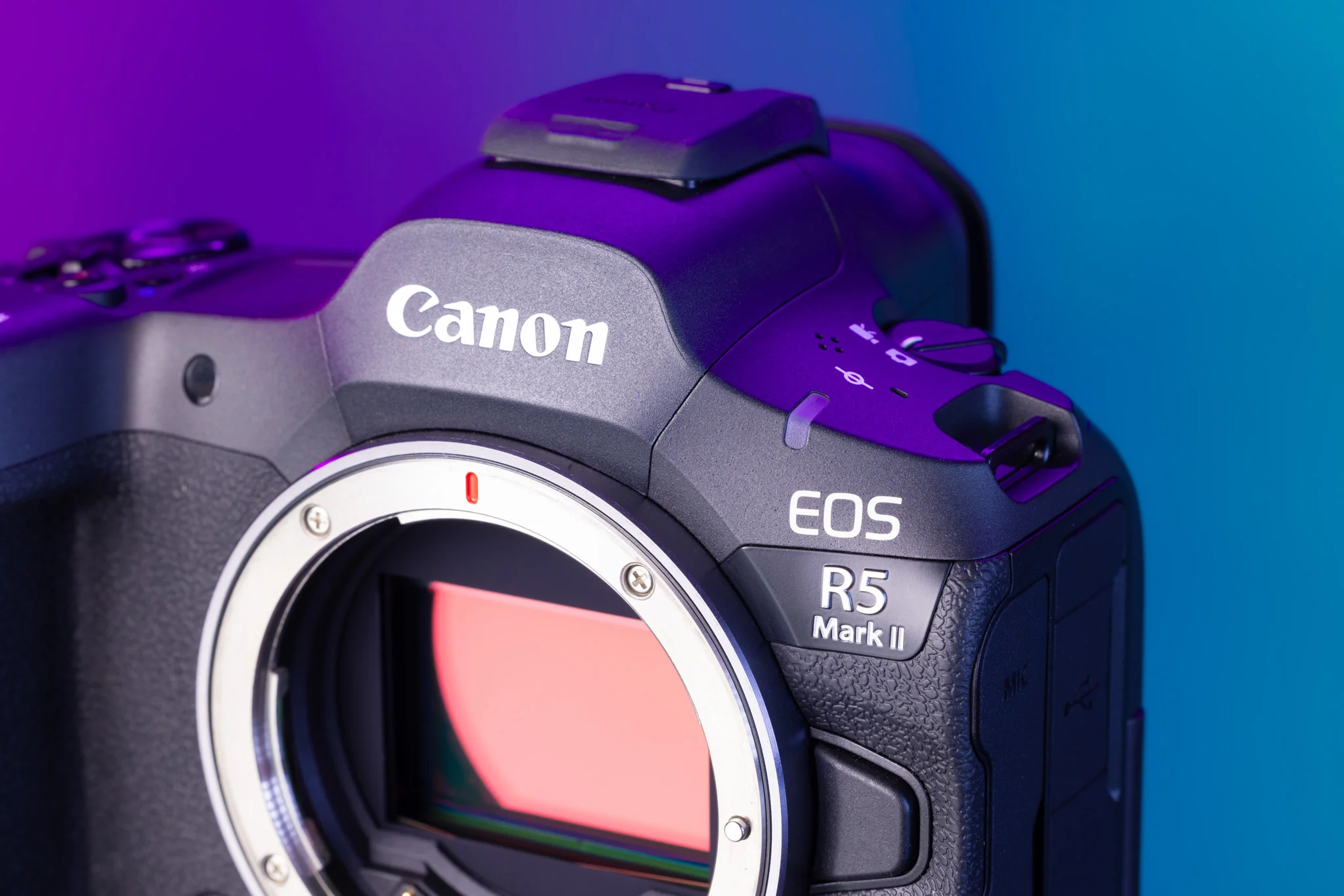
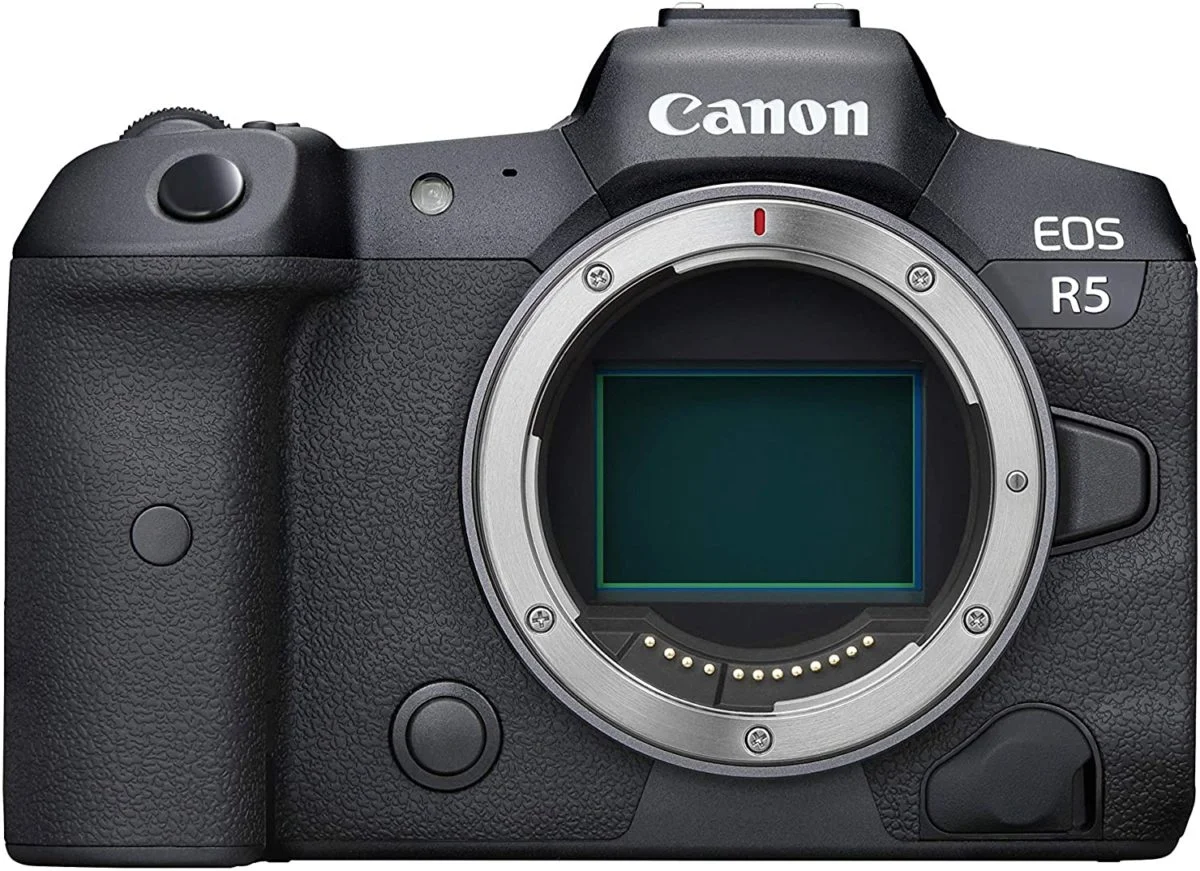
Canon has always excelled at ergonomics, and the EOS R5 Mark II maintains that proud legacy with a familiar yet refined chassis. Constructed from a robust magnesium alloy, the camera feels incredibly durable in the hand, offering extensive weather sealing that instils confidence when shooting in harsh environments. While the footprint remains largely identical to the original R5, subtle tweaks to the grip make it noticeably more comfortable during prolonged 8K video shoots or heavy telephoto lens use.
The physical control layout will be instantly familiar to Canon veterans, but it features a newly integrated photo/video switch beneath the mode dial—a highly requested quality-of-life update that drastically speeds up hybrid workflows. On the back, the fully articulating 3.2-inch touchscreen remains as responsive as ever, complemented by a gorgeous 5.76-million-dot OLED electronic viewfinder. The EVF is blackout-free thanks to the new stacked sensor, offering a fluid 120fps refresh rate that is a joy to look through.

Another major physical upgrade addresses the elephant in the room from the previous generation: thermal management. Canon has implemented passive cooling vents integrated discreetly into the body design, and an optional cooling fan grip is available for hardcore video shooters. This redesign proves that Canon listened to user feedback, resulting in a camera built for uninterrupted professional deployment.
Performance
The beating heart of the EOS R5 Mark II is its new 45-megapixel stacked BSI CMOS sensor paired with a dual-tier processing engine (the new DIGIC Accelerator alongside the proven DIGIC X). This combination delivers breathtaking speed, allowing the camera to shoot at a blistering 30 frames per second using the electronic shutter with virtually zero rolling shutter distortion. Whether you are tracking erratic wildlife or capturing high-speed action, the camera locks onto subjects with an almost unnerving level of precision.
Autofocus performance has been supercharged by the new Dual Pixel Intelligent AF system, which brings the innovative Eye Control AF feature inherited from the flagship EOS R3. By simply looking at a subject in the viewfinder, the camera shifts focus instantly. Machine-learning algorithms accurately identify and track people, animals, and vehicles, but the real magic in 2026 is the new Action Priority mode. This feature actively predicts ball movements in sports like football, basketball, and volleyball, automatically shifting focus to the player making the play.
Video performance is equally stellar, officially shedding the overheating stigma of its predecessor. The R5 Mark II captures pristine 8K 60p RAW video internally and offers oversampled 4K up to 120p without a crop. The dynamic range in C-Log2 is phenomenal, providing colorists with immense latitude in post-production. Image stabilization has also seen a bump, now offering up to 8.5 stops of compensation, making handheld 8K recording surprisingly viable.
Features & Software
Beyond raw speed and resolution, the EOS R5 Mark II introduces a suite of AI-driven software features that streamline the modern creator’s workflow. The most impressive addition is the in-camera neural network noise reduction and image upscaling. You can now crop aggressively into a 45MP file and let the camera intelligently upscale the image back to full resolution in seconds, or clean up high-ISO shots before seamlessly transferring them to your smartphone via Wi-Fi 6E.
The menu system has been slightly revamped to accommodate the dizzying array of video and autofocus settings, yet it retains Canon’s logical, color-coded structure. Additionally, the camera now supports pre-continuous shooting, capturing up to 15 frames before you even fully press the shutter, ensuring you never miss a decisive moment due to human reaction time.
Value Proposition
Retailing at a premium price point, the Canon EOS R5 Mark II asks for a significant financial commitment, but the return on investment is undeniable. It essentially merges the high-resolution capabilities of a studio camera, the blistering speed of a sports body, and the advanced codecs of a dedicated cinema camera into a single, cohesive unit. For professional photographers and hybrid shooters, this consolidates the need for multiple bodies into one highly capable tool.
When evaluating its value, you must factor in the longevity provided by the stacked sensor architecture and the robust 2026 feature set. While casual hobbyists may find the price prohibitive and the features overwhelming, working professionals whose livelihoods depend on uncompromised reliability, autofocus accuracy, and fast turnaround times will find the R5 Mark II to be worth every penny.
How It Compares
When placed head-to-head with the Sony a8R (a leading high-resolution competitor in 2026) and the Nikon Z8, the Canon EOS R5 Mark II holds a distinct advantage in hybrid workflow fluidity and autofocus intuitiveness. The Nikon Z8 shares the stacked sensor technology and excellent video specs, but Canon’s Eye Control AF and Action Priority tracking offer a noticeably faster subject acquisition experience for sports shooters. Against the Sony a8R, the Canon delivers vastly superior rolling shutter performance and more robust in-body image stabilization. However, Sony still maintains a slight edge in native third-party lens selection and raw battery life.

Pros and Cons
Pros
- The new 45MP stacked sensor completely eliminates rolling shutter during high-speed electronic bursts.
- Eye Control AF and Action Priority modes provide an unparalleled autofocus experience for sports and wildlife.
- Internal 8K 60p and oversampled 4K 120p video recording feature excellent thermal management.
- In-body image stabilization delivers up to 8.5 stops, allowing for incredibly sharp handheld shots.
Cons
- The battery life depletes rapidly when heavily utilising the 120fps EVF and continuous 8K recording.
- The asking price represents a significant barrier to entry for enthusiast and semi-pro creators.
- Utilizing the maximum frame rates and video bitrates requires expensive, high-capacity CFexpress Type B cards.
- The camera can still grow warm to the touch during extended video use unless paired with the bulky optional cooling grip.
FAQ
Q: Does the Canon EOS R5 Mark II still suffer from overheating issues?
A: No, Canon has vastly improved thermal management with a new chassis design and passive cooling vents, virtually eliminating overheating in standard professional workflows.
Q: Can I use my old LP-E6NH batteries from the original R5?
A: Yes, older LP-E6NH batteries are compatible, but you need the new LP-E6P battery to unlock the camera’s highest frame rates and 8K 60p video capabilities.
Q: Is the Eye Control AF actually useful for professional work?
A: Absolutely. It has been significantly refined since its introduction on the R3, making it a highly reliable and lightning-fast tool for selecting subjects in crowded environments.
Q: What memory cards does the R5 Mark II take?
A: The camera features dual card slots: one for a CFexpress Type B card (required for 8K video and fast burst clearing) and one for a UHS-II SD card.
Verdict
The Canon EOS R5 Mark II is an absolute powerhouse designed for uncompromising professionals who demand elite performance in both high-resolution photography and cinema-quality video. If your workflow requires flawless autofocus, blazing-fast stacked sensor speeds, and reliable 8K recording, this is arguably the most complete hybrid mirrorless camera on the market today.
Where to Buy
Pros
- ✓ The new 45MP stacked sensor completely eliminates rolling shutter during high-speed electronic bursts.
- ✓ Eye Control AF and Action Priority modes provide an unparalleled autofocus experience for sports and wildlife.
- ✓ Internal 8K 60p and oversampled 4K 120p video recording feature excellent thermal management.
- ✓ In-body image stabilization delivers up to 8.5 stops, allowing for incredibly sharp handheld shots.
Cons
- ✗ The battery life depletes rapidly when heavily utilising the 120fps EVF and continuous 8K recording.
- ✗ The asking price represents a significant barrier to entry for enthusiast and semi-pro creators.
- ✗ Utilizing the maximum frame rates and video bitrates requires expensive, high-capacity CFexpress Type B cards.
- ✗ The camera can still grow warm to the touch during extended video use unless paired with the bulky optional cooling grip.
Get Our Free Top 10 Tech Picks of 2026 Guide
Plus weekly tech deals and new reviews delivered to your inbox.
[cp_email_signup]
No spam. Unsubscribe anytime.
Ready to buy the Canon EOS R5 Mark II?
Affiliate link — we may earn a commission at no extra cost to you.