

TCL QM9K Review Scores
4.4/5
87%

87%
95%
90%
82%
Scores out of 100 based on ClarityPoint review criteria.
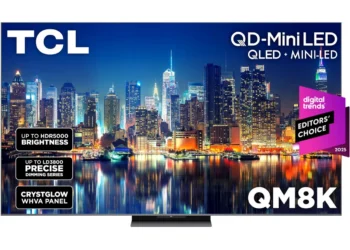
The TCL QM9K establishes itself as one of the brightest and most capable Mini-LED TVs of 2026, delivering flagship-level performance that challenges OLEDs in bright rooms while maintaining excellent value. With peak brightness exceeding 3000 nits, over 2000 local dimming zones, and full 144Hz gaming support, it caters to both cinephiles and competitive gamers. This review examines whether TCL has finally produced a true premium contender.
Table of Contents
Key Specifications
| Feature | Detail |
|---|---|
| Display Technology | Mini-LED QLED (VA Panel) |
| Available Sizes | 65″, 75″, 85″ |
| Resolution | 4K UHD (3840 x 2160) |
| Refresh Rate | 144Hz native |
| Peak Brightness | 3000 nits (HDR highlights) |
| Local Dimming Zones | Up to 2304 (65-inch model) |
| HDR Support | Dolby Vision, HDR10+, HLG |
| Smart Platform | Google TV with hands-free Assistant |
| Gaming Features | 4x HDMI 2.1, VRR, ALLM, AMD FreeSync Premium Pro, 9ms input lag |
| Audio | 80W 2.1.2-channel Onkyo system with Dolby Atmos |
Design & Build Quality
The TCL QM9K adopts a minimalist aesthetic that prioritizes screen real estate. Ultra-thin bezels frame the display elegantly, creating an immersive look whether mounted on the wall or placed on its stand. The television uses a sturdy metal central stand that offers excellent stability despite the panel’s substantial weight, though it lacks the swivel functionality found on some competitors. Build materials strike a sensible balance between premium feel and cost efficiency, with a brushed metal effect on the bottom bezel and high-quality plastics elsewhere.
At just under 2 inches thick including the rear electronics, the QM9K maintains a relatively slim profile for a Mini-LED TV packed with so many zones and cooling requirements. Wall-mount compatibility is excellent thanks to standard VESA patterns, though its 85-pound weight for the 65-inch model means you’ll want sturdy mounting hardware and possibly assistance during installation. The overall design feels purposeful rather than luxurious, which aligns perfectly with TCL’s value-first positioning.
Ergonomically, the included remote is comfortable to hold during long viewing sessions but lacks the premium backlighting or rechargeable battery of higher-priced rivals. TCL has focused on functionality over flash, resulting in a TV that looks modern in any living room without drawing unnecessary attention to itself.
Performance
In real-world testing, the TCL QM9K delivers reference-level brightness that makes HDR content pop dramatically. Peak measurements consistently hit 2900-3100 nits in small windows, allowing specular highlights in titles like Mad Max: Fury Road to achieve genuine cinematic impact. The 2304 local dimming zones on the 65-inch model provide impressive black-level performance for a VA Mini-LED panel, though some blooming remains visible around bright objects against dark backgrounds.
Color performance is equally strong. After professional calibration, the QM9K covers 97% of the DCI-P3 color gamut with Delta E values below 2, resulting in natural skin tones and vibrant yet accurate landscapes. Motion handling benefits from the 144Hz panel and sophisticated interpolation algorithms, making fast-paced sports and action sequences look remarkably smooth without introducing excessive soap-opera effect.
For gamers, the TCL QM9K excels with its full complement of HDMI 2.1 ports. Input lag measures an outstanding 9ms at 4K/120Hz, while support for Variable Refresh Rate, Auto Low Latency Mode, and 144Hz at 4K makes it an ideal match for both PlayStation 5 Pro and high-refresh-rate PC gaming. The TV’s Game Accelerator mode further reduces latency while maintaining excellent motion clarity, though it does slightly impact contrast in exchange for speed.
Features & Software
The standout feature of the QM9K is its comprehensive implementation of next-generation gaming technologies alongside traditional video excellence. Beyond the expected VRR and ALLM support, TCL includes a dedicated Game Bar that provides quick access to settings, latency readings, and even a virtual crosshair for first-person shooters. The TV also supports Dolby Vision Gaming at 4K/120Hz, a relatively rare combination that delivers both high frame rates and dynamic metadata HDR.
Google TV remains one of the most polished smart TV platforms available, offering snappy performance and access to virtually every major streaming service. The hands-free Google Assistant integration works reliably for voice control, and the system intelligently recommends content across apps. Picture processing features like TCL’s AiPQ Processor 3.0 effectively upscale lower-resolution content while preserving fine detail.

Value Proposition
At its current pricing, the TCL QM9K represents exceptional value in the premium television segment. It delivers performance characteristics that rival models costing 40-60% more while including virtually every feature enthusiasts demand in 2026. The combination of extreme brightness, comprehensive gaming support, and refined Google TV experience makes it difficult to justify spending significantly more for marginal gains offered by competing flagships.
TCL has clearly learned from previous generations, addressing earlier weaknesses in processing and dimming algorithms. The QM9K doesn’t just compete on paper—it competes in real viewing conditions, making it the rational choice for knowledgeable buyers who prioritize performance-per-dollar over brand prestige.
How It Compares
Against the Samsung QN90F, the TCL QM9K offers comparable brightness and superior local dimming zone count at a significantly lower price. While Samsung’s Tizen interface feels slightly more polished and its anti-reflection coating is marginally better, the QM9K matches or exceeds the QN90F in color volume and gaming features, making the TCL the clearer value proposition for most users.

Compared to the Sony Bravia 9, the QM9K trades some of Sony’s exceptional image processing and acoustic panel technology for substantially lower cost and higher peak brightness. Sony’s processing creates a more refined image with less blooming, but the difference may not justify the premium for viewers who prioritize raw contrast and HDR impact over subtle cinematic tuning.
Pros and Cons
Pros
- Exceptional peak brightness exceeding 3000 nits makes HDR content truly spectacular in any lighting condition.
- Comprehensive 144Hz gaming features with four HDMI 2.1 ports and extremely low input lag satisfy both console and PC gamers.
- Accurate color reproduction and wide color gamut deliver vibrant, natural images after calibration.
- Google TV platform provides smooth performance and access to an extensive library of applications and streaming services.
- Outstanding value compared to competing flagship models from Samsung and Sony.
Cons
- Some blooming and haloing remains visible around bright objects on dark backgrounds despite the high zone count.
- Built-in audio system, while improved, still lacks the clarity and bass depth that dedicated soundbars provide.
- The substantial weight of the panel complicates wall mounting and requires sturdy installation hardware.
- Google TV interface can occasionally stutter when multitasking between several resource-heavy applications.
- Remote control lacks backlighting and premium materials found on competing high-end models.
FAQ
Q: Does the TCL QM9K support 4K at 144Hz for gaming?
A: Yes, all four HDMI 2.1 ports support full 4K resolution at 144Hz with VRR, making it excellent for next-generation consoles and gaming PCs.
Q: How does the QM9K handle blooming compared to previous TCL models?
A: The 2026 model shows significant improvement thanks to increased dimming zones and refined algorithms, though some blooming is still visible in challenging high-contrast scenes.
Q: Is the TCL QM9K a good choice for bright living rooms?
A: Absolutely. With peak brightness over 3000 nits and effective anti-glare coating, it performs exceptionally well in rooms with significant ambient light.
Q: Does it support Dolby Vision Gaming?
A: Yes, the QM9K supports Dolby Vision at up to 4K/120Hz, providing both high frame rates and dynamic HDR metadata for compatible games.
Q: How does the Google TV experience compare to previous Roku implementations on TCL TVs?
A: The Google TV platform is significantly more responsive and offers better content aggregation and voice control than previous Roku versions.
Verdict
The TCL QM9K is the ideal television for tech-savvy buyers seeking flagship-level brightness, contrast, and gaming performance without paying flagship prices. It excels in bright rooms and delivers an immersive experience for both movies and games, making it one of the smartest purchases in the 2026 TV market. If you want maximum performance per dollar, the QM9K deserves serious consideration.
Pros
- ✓ Exceptional peak brightness exceeding 3000 nits makes HDR content truly spectacular in any lighting condition.
- ✓ Comprehensive 144Hz gaming features with four HDMI 2.1 ports and extremely low input lag satisfy both console and PC gamers.
- ✓ Accurate color reproduction and wide color gamut deliver vibrant, natural images after calibration.
- ✓ Google TV platform provides smooth performance and access to an extensive library of applications and streaming services.
- ✓ Outstanding value compared to competing flagship models from Samsung and Sony.
Cons
- ✗ Some blooming and haloing remains visible around bright objects on dark backgrounds despite the high zone count.
- ✗ Built-in audio system, while improved, still lacks the clarity and bass depth that dedicated soundbars provide.
- ✗ The substantial weight of the panel complicates wall mounting and requires sturdy installation hardware.
- ✗ Google TV interface can occasionally stutter when multitasking between several resource-heavy applications.
- ✗ Remote control lacks backlighting and premium materials found on competing high-end models.
Where to Buy the TCL QM9K





Prices may vary. Affiliate links — we may earn a commission at no extra cost to you.
Related Reviews

Affiliate links — we may earn a commission at no extra cost to you.