





The Razer Blade 16 (2025 Edition) pushes the boundaries of portable gaming and creator performance with its next-generation silicon and jaw-dropping dual-mode OLED display. While it demands a premium price, this sleek powerhouse remains the ultimate benchmark for uncompromising laptop enthusiasts.
Table of Contents
Key Specifications
| Feature | Detail |
|---|---|
| Processor | Intel Core Ultra 9 285H |
| Graphics | NVIDIA GeForce RTX 5090 Laptop GPU (175W TGP) |
| Memory | 32GB / 64GB DDR5-6400MHz (Upgradeable) |
| Storage | Up to 4TB PCIe Gen 5 NVMe SSD (Dual Slots) |
| Display | 16-inch Dual-Mode OLED (UHD+ 120Hz / FHD+ 360Hz) |
| Battery | 95.2 WHr with 330W GaN Adapter |
| Weight | 5.4 lbs (2.45 kg) |
Design & Build Quality
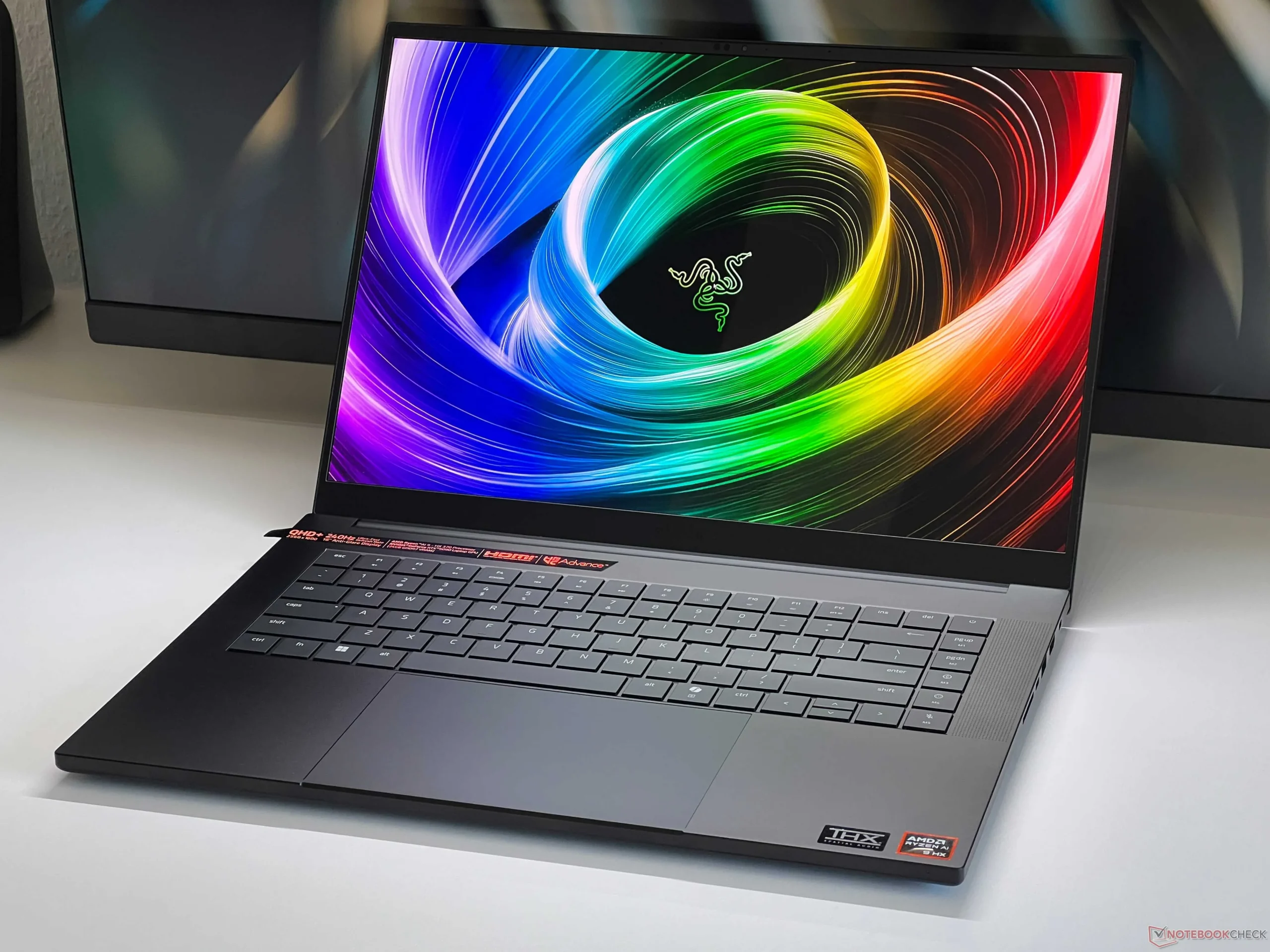
Razer’s design philosophy has always leaned into the minimalist, monolithic aesthetic, and the Razer Blade 16 (2025 Edition) continues this proud tradition. Carved from a single block of CNC-milled aluminum, the chassis exudes a premium feel that rivals Apple’s finest hardware. Available in both the classic Matte Black and the striking Mercury White, the 2025 iteration finally perfects the anti-fingerprint coating. Handling the device no longer results in an immediate smudgy mess, preserving its sleek, stealth-bomber look even after a long workday.
Ergonomically, the laptop strikes a delicate balance between portable footprint and desktop-replacement heft. At 5.4 lbs, it is certainly not an ultraportable, but the weight is remarkably well-distributed. The glass touchpad is massive and offers a satisfyingly clicky dive-board mechanism, while the per-key RGB optical keyboard remains crisp and responsive. Razer has also managed to maintain a surprisingly slim profile despite outfitting the machine with a massive vapor chamber cooling solution, proving that you don’t need a bulky chassis to house bleeding-edge silicon.
Performance
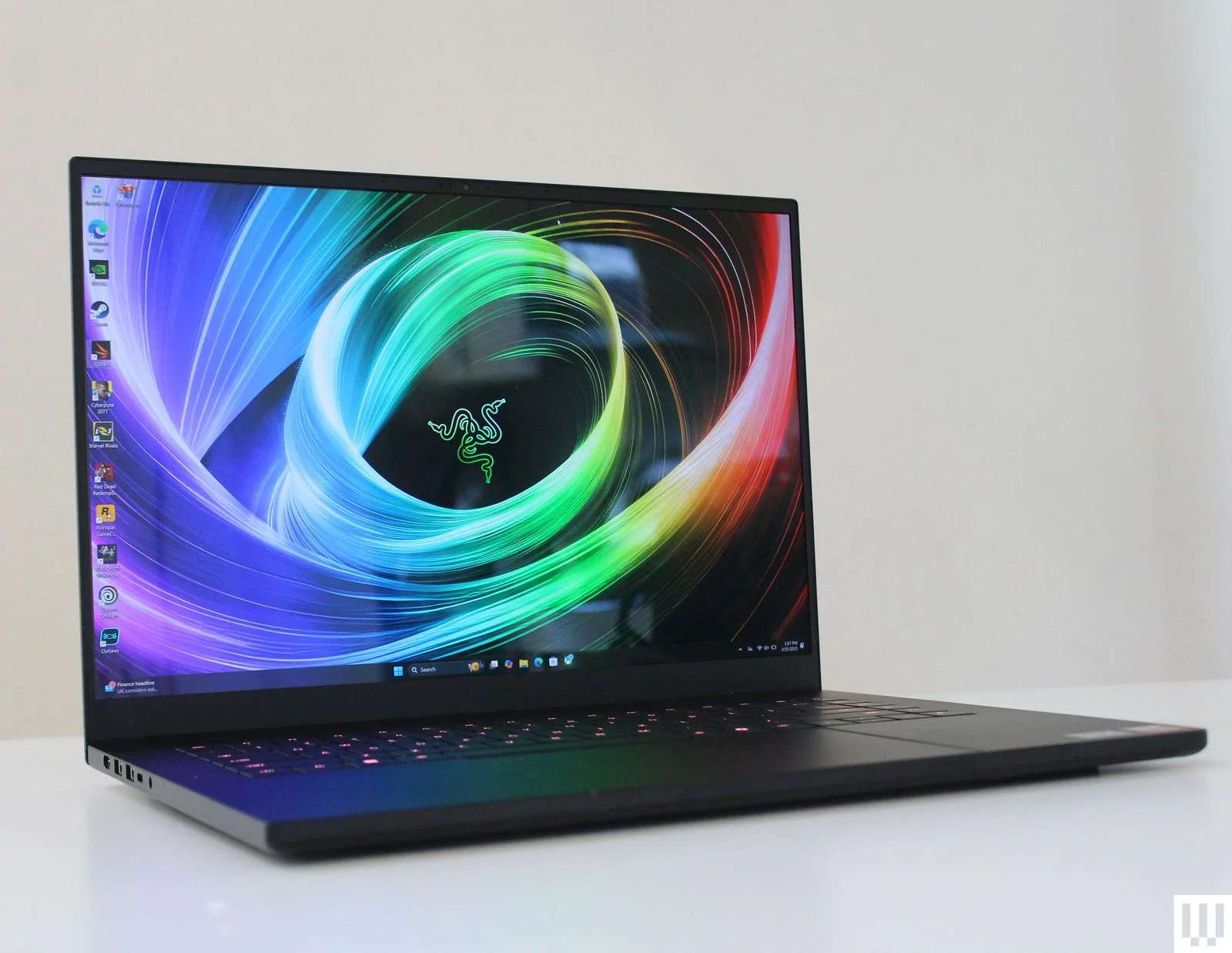
When it comes to raw processing power, the Razer Blade 16 (2025 Edition) is an absolute monster. Armed with the latest Intel Core Ultra 9 285H processor and an NVIDIA GeForce RTX 5090 Laptop GPU running at a fully unthrottled 175W TGP, this machine demolishes every synthetic benchmark you throw at it. In real-world gaming, this translates to maxed-out settings with ray tracing enabled in titles like Cyberpunk 2077 and Alan Wake 2, consistently hovering comfortably above the 90 frames-per-second mark at 4K.
For creative professionals, the performance is equally staggering. The inclusion of PCIe Gen 5 SSDs and DDR5-6400MHz memory means scrubbing through 8K timeline footage in Premiere Pro or running complex 3D renders in Blender is virtually frictionless. The neural processing unit (NPU) inside the Intel Core Ultra 9 chip also offloads AI-driven tasks remarkably well, accelerating workflows in Adobe Lightroom and local generative AI applications without spinning up the power-hungry GPU.
However, housing this much power in a 0.86-inch thick chassis comes with inevitable thermal realities. While the dual-fan vapor chamber system does a heroic job of preventing thermal throttling and maintaining sustained clock speeds, the fans get noticeably loud under load. More importantly, the aluminum chassis acts as a giant heat sink; the area right above the keyboard and the bottom panel can get uncomfortably hot to the touch during marathon gaming sessions, practically mandating the use of a desk rather than your lap.
Features & Software
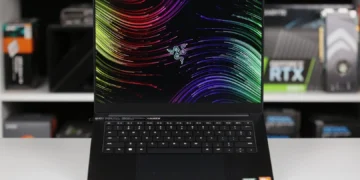
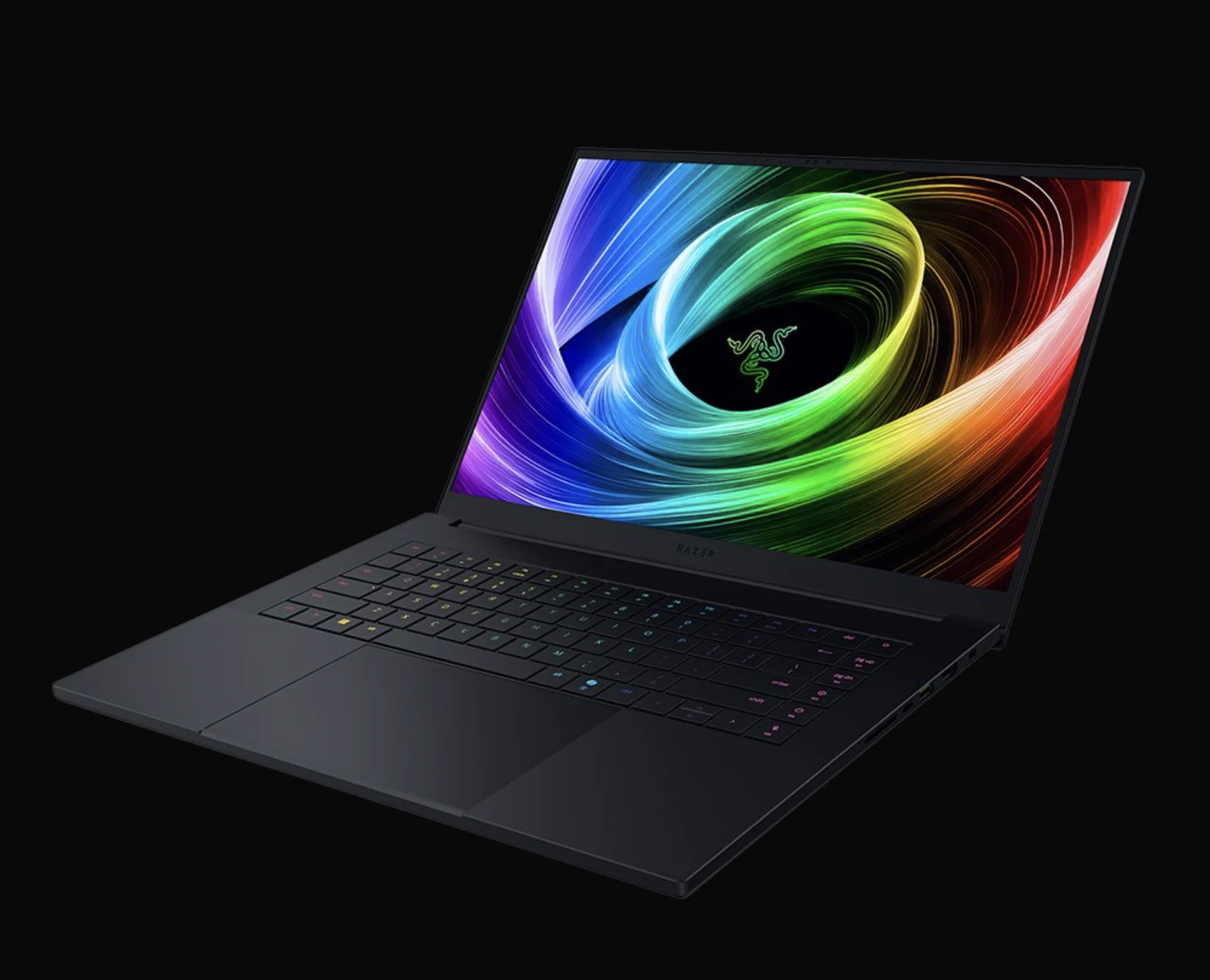
The undisputed crown jewel of the Razer Blade 16 (2025 Edition) is its proprietary dual-mode OLED display. Developed in partnership with Samsung Display, a simple software toggle reboots the screen to natively switch between a cinematic UHD+ (4K) resolution at 120Hz and an ultra-competitive FHD+ (1080p) resolution at a blistering 360Hz. The color accuracy covers 100% of the DCI-P3 gamut with perfect OLED blacks, making it just as capable for professional color grading as it is for hitting flick-shots in Valorant.
On the software side, Razer Synapse 4 manages the ecosystem with a much cleaner and faster interface than its predecessor. The software allows for granular control over fan curves, GPU power limits, and the laptop’s MUX switch. Additional modern conveniences include Wi-Fi 7 compatibility, a 1080p Windows Hello IR webcam complete with a physical privacy shutter, and a six-speaker array supporting THX Spatial Audio that gets impressively loud and distinct.
Value Proposition
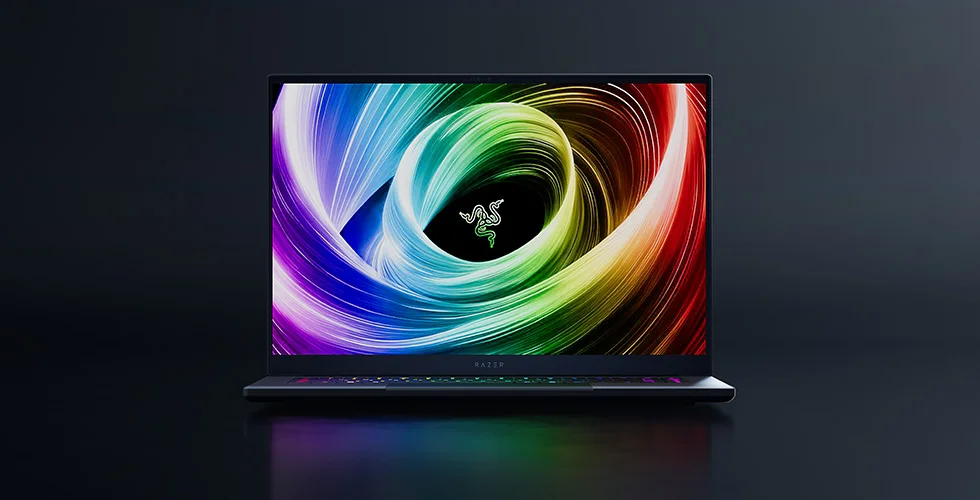
Value is inherently subjective, but it is impossible to ignore the “Razer Tax” attached to this machine. Sitting at the absolute top of the premium pricing tier, the Razer Blade 16 (2025 Edition) demands a hefty investment that easily surpasses a custom-built, high-end desktop PC. You are paying a premium for the engineering required to condense this level of uncompromised power into such a sleek, refined form factor.
If you are a casual gamer or a student looking for a productivity machine, this laptop is massive overkill. However, for elite creators, game developers, or enthusiasts who want a singular machine that flawlessly bridges the gap between a portable workstation and a no-compromises gaming rig, the Blade 16 justifies its exorbitant cost. It is an investment in top-tier build quality, boundary-pushing display technology, and sheer silicon dominance.
How It Compares
When stacked against the Asus ROG Zephyrus G16 (2025), the Blade 16 trades portability for raw power. While the Asus is noticeably lighter and features an incredible design, it limits its GPU wattage to keep temperatures down, making the Razer Blade 16 the superior choice for sheer frame rates. Compared to the Apple MacBook Pro 16 (M4 Max), the Razer wins hands-down for gaming and 3D rendering versatility due to the robust Windows PC gaming library and NVIDIA’s CUDA ecosystem, though Apple still retains a massive lead in battery life and silent operation under load.
Pros and Cons
Pros
- The revolutionary dual-mode OLED display offers the perfect hybrid experience for high-resolution content creation and high-refresh-rate competitive gaming.
- Build quality remains unmatched in the Windows ecosystem, featuring a rigid CNC-milled aluminum chassis that feels incredibly premium.
- Unthrottled 175W TGP graphics deliver desktop-class gaming frame rates and lightning-fast rendering times for 3D workloads.
- The newly formulated anti-fingerprint coating significantly reduces the smudges that plagued previous generations.
Cons
- The astronomical price tag places this laptop out of reach for the vast majority of mainstream gamers.
- The chassis still gets uncomfortably warm to the touch during extended, graphically intense gaming sessions.
- Despite having a massive battery, real-world longevity maxes out at roughly five hours for basic web browsing.
- The massive 330W GaN power brick adds significant travel weight to an already hefty machine.
FAQ
Q: Can I upgrade the RAM and storage on the Razer Blade 16?
A: Yes, both the DDR5 RAM and the dual PCIe Gen 5 NVMe SSD slots are user-accessible and fully upgradeable by removing the bottom panel.
Q: How does the dual-mode display work?
A: A simple toggle in the Razer Synapse software physically reboots the display controller, allowing the screen to switch natively between UHD+ 120Hz and FHD+ 360Hz without software scaling artifacts.
Q: Is the battery life good enough for a full workday?
A: You can expect around 4 to 5 hours of light productivity tasks like web browsing and word processing. However, any graphically intensive work or gaming requires the laptop to be plugged into the wall.
Q: Does the laptop support USB-C charging?
A: Yes, it supports up to 100W Power Delivery via the Thunderbolt 4 ports for light productivity, but you will need the included 330W proprietary charger to utilize the GPU’s full power.
Verdict
The Razer Blade 16 (2025 Edition) is an uncompromising triumph of engineering, aimed squarely at hardcore gamers and creative professionals who refuse to settle for second best. If your budget can accommodate its astronomical price tag, it is unequivocally the most premium, capable Windows laptop on the market today.
Where to Buy

- FAST 16” OLED QHD+ 240Hz DISPLAY — Truly designed for the competitive gamer with 0.2 ms response time, featuring a VESA ClearMR 11000 rating and DisplayHDR 500 certified to ensure minimal blurring and vivid colors (1M:1 contrast ration and 100% DCI-P3)
- NVIDIA GEFORCE RTX 40 SERIES GRAPHICS — Packed for pure performance with 1.50 gPD (Graphics Power Density) and delivers up to 30% more graphic power per cubic inch than any other 16” gaming laptop
- INTEL CORE I9-14900HX PROCESSOR — Featuring 24 cores and 5.8 GHz max clock speed, game and create flawlessly with the most powerful mobile processor leveraging desktop-grade silicon — push performance even further with Overclock Mode in Razer Synapse
- VAPOR CHAMBER COOLING SYSTEM — Enjoy optimal thermal performance with a unique single-piece vapor chamber design, featuring 0.5 mm exhaust fins and special NASBIS insulating sheets that cool keyboard temperatures by up to 12%
- RAZER SNAP TAP — Enjoy truly responsive in-game movement via Razer Synapse 4 by prioritizing the latest input between a pair of assigned keys; Snap Tap is OFF by default and can be toggled ON/OFF in Razer Synapse
Pros
- ✓ The revolutionary dual-mode OLED display offers the perfect hybrid experience for high-resolution content creation and high-refresh-rate competitive gaming.
- ✓ Build quality remains unmatched in the Windows ecosystem, featuring a rigid CNC-milled aluminum chassis that feels incredibly premium.
- ✓ Unthrottled 175W TGP graphics deliver desktop-class gaming frame rates and lightning-fast rendering times for 3D workloads.
- ✓ The newly formulated anti-fingerprint coating significantly reduces the smudges that plagued previous generations.
Cons
- ✗ The astronomical price tag places this laptop out of reach for the vast majority of mainstream gamers.
- ✗ The chassis still gets uncomfortably warm to the touch during extended, graphically intense gaming sessions.
- ✗ Despite having a massive battery, real-world longevity maxes out at roughly five hours for basic web browsing.
- ✗ The massive 330W GaN power brick adds significant travel weight to an already hefty machine.