





As we navigate through 2026, the Microsoft Xbox Series X remains a towering achievement in console gaming. With its whisper-quiet operation and immense raw power, it continues to set the benchmark for high-fidelity living room entertainment. Discover if Microsoft’s flagship monolith is still the right upgrade for your 4K gaming setup.
Table of Contents
Key Specifications
| Feature | Detail |
|---|---|
| Processor | Custom 8-Core AMD Zen 2 CPU @ 3.8 GHz |
| Graphics | Custom AMD RDNA 2 GPU (12 TFLOPs) |
| Memory | 16 GB GDDR6 RAM |
| Storage | 1 TB Custom NVMe SSD (Expandable) |
| Target Resolution | True 4K @ up to 120 FPS, 8K HDR Ready |
| Optical Drive | 4K UHD Blu-ray Drive |
| Dimensions | 15.1 x 15.1 x 30.1 cm (5.9 x 5.9 x 11.9 in) |
Design & Build Quality
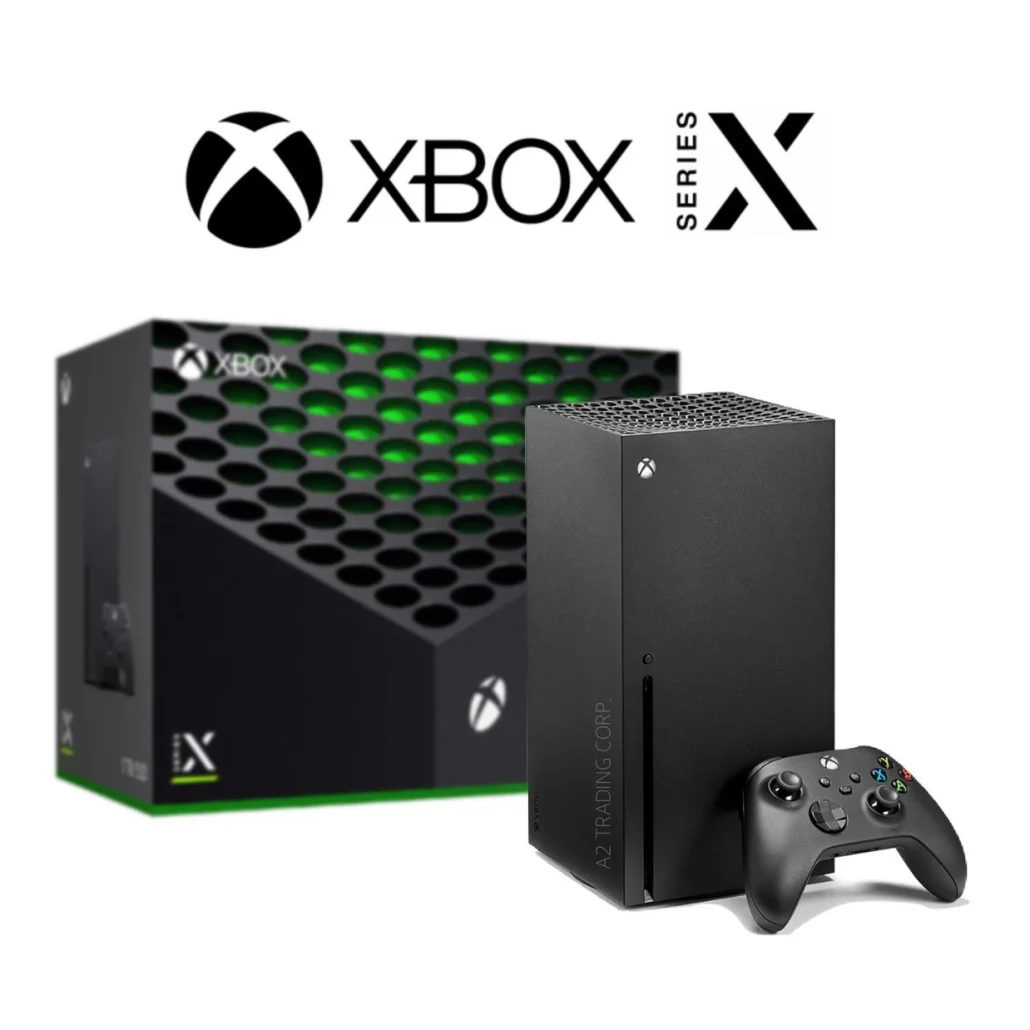
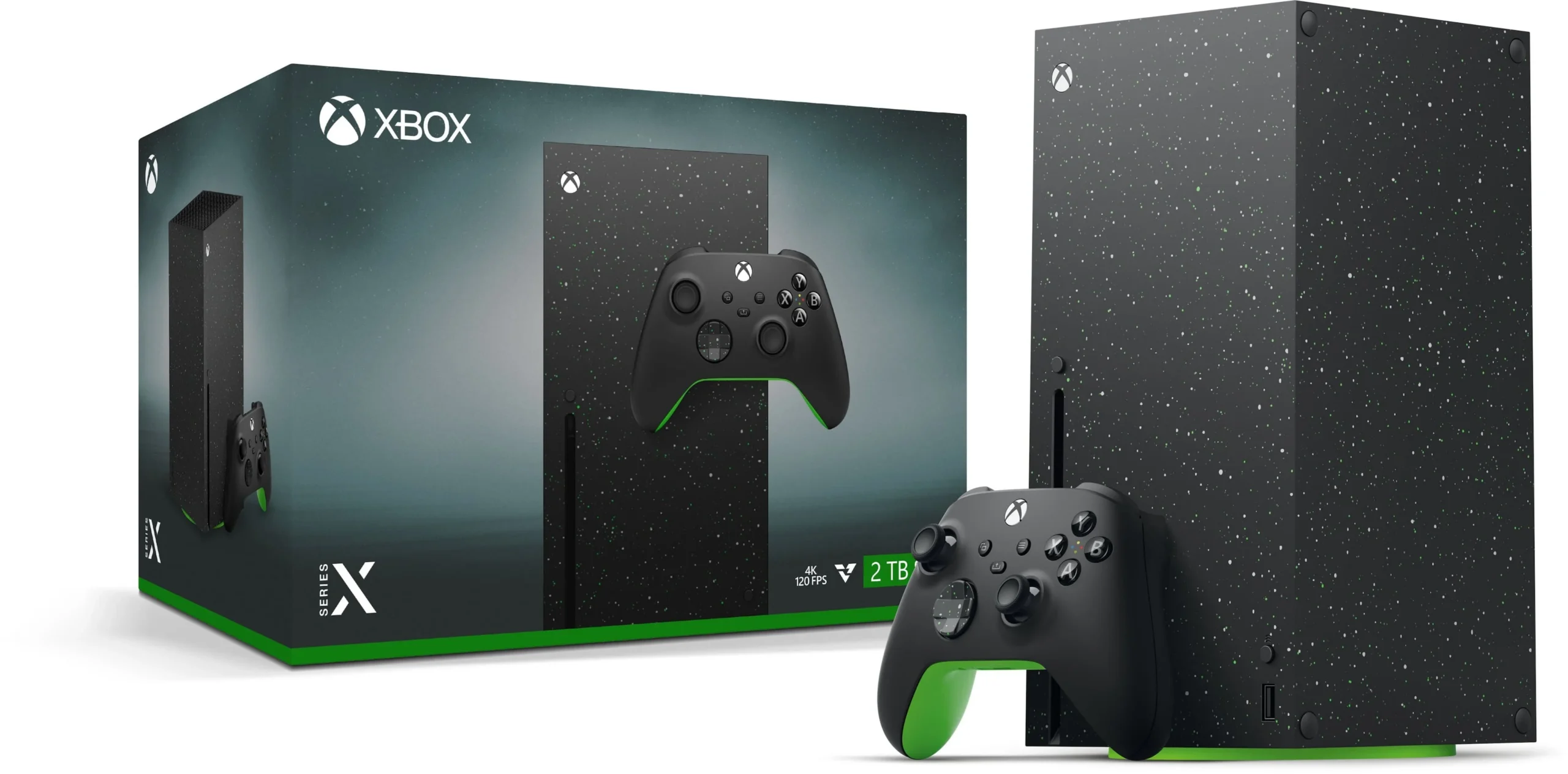
The Microsoft Xbox Series X boasts a brutalist, monolithic design that continues to stand out in modern entertainment centers. Measuring 15.1 by 15.1 by 30.1 centimeters, its matte black chassis is a masterclass in minimalist industrial engineering. Unlike the sweeping, futuristic curves of some of its competitors, the Series X is unapologetically shaped like a PC tower, designed to blend seamlessly into your living room decor rather than dominate it. The iconic concave vent at the top, accented by a subtle optical-illusion green hue, adds just enough gamer flair without feeling ostentatious.
From an engineering perspective, this chassis shape is highly functional, serving as a highly efficient wind tunnel. Cool air is pulled from the bottom vents and expelled cleanly through the top via a massive 130mm fan. Even under heavy 4K gaming loads in 2026, the console remains whisper-quiet, practically inaudible from a couch just a few feet away. Materials feel incredibly premium, with dense plastics that exhibit absolutely no flex, though the matte finish is notoriously prone to holding onto fingerprint smudges if you move it frequently.
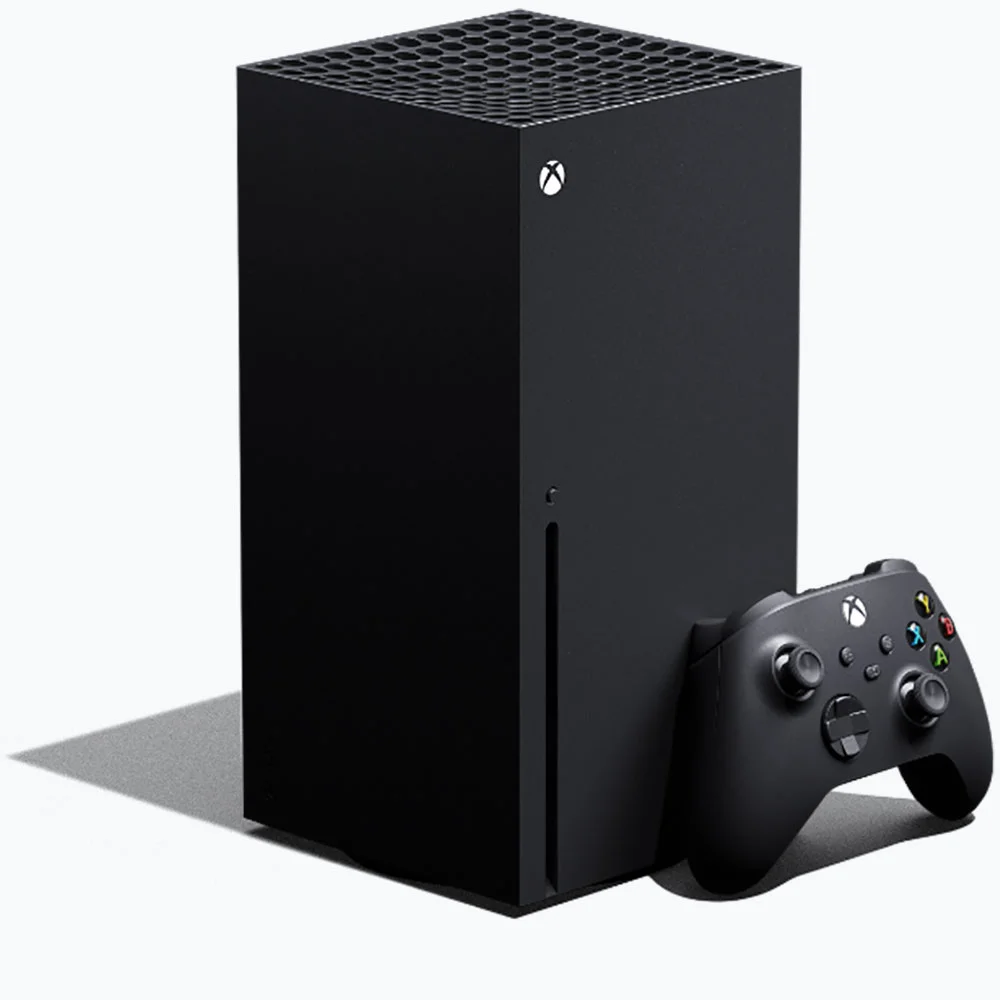
Ergonomics extend to the controller, which Microsoft opted to refine rather than reinvent. The Xbox Wireless Controller features enhanced tactile textures on the triggers and bumpers, a modernized hybrid D-pad for precise inputs, and a slightly reduced overall profile to accommodate a wider range of hand sizes. While it still relies on AA batteries out of the box—a point of contention for some—its build quality remains virtually flawless.
Performance
Under the hood, the Xbox Series X is an absolute powerhouse, leveraging a custom 8-core AMD Zen 2 processor and a formidable 12-teraflop RDNA 2 GPU. In practice, this translates to uncompromising real-world performance. Games optimized for the Series X routinely hit native 4K resolutions at a rock-solid 60 frames per second, with an increasing library of competitive shooters and racing simulators offering blistering 120 FPS modes. The visual fidelity is heavily bolstered by hardware-accelerated ray tracing, bringing remarkably realistic lighting, shadows, and reflections to supported titles.
Speed is perhaps the most defining characteristic of this generation, and the custom 1TB NVMe SSD ensures that load times are practically eliminated. Fast travel within massive open-world RPGs happens in a matter of seconds, fundamentally changing how players interact with game environments. Furthermore, the proprietary Xbox Velocity Architecture streamlines asset streaming, virtually eradicating the notorious texture pop-in that plagued previous console generations.
Even as we evaluate the console in 2026 against increasingly demanding game engines like Unreal Engine 5, the Series X holds its ground beautifully. Heavy-hitting titles maintain robust frame pacing, and the console shows no signs of thermal throttling even during extended marathon sessions. It operates with a level of stability and consistency that mirrors high-end PC gaming, minus the driver updates and configuration headaches.
Features & Software
The standout feature of the Xbox Series X is undoubtedly Quick Resume. This incredibly innovative system allocates SSD cache to freeze multiple games in their exact current state, allowing you to seamlessly swap between a demanding RPG, a racing game, and a platformer in under ten seconds without sitting through splash screens or loading menus. Coupled with Microsoft’s universally praised Xbox Game Pass Ultimate subscription, the Series X functions as the ultimate gaming buffet, giving players instant, frictionless access to hundreds of high-quality titles.
On the software front, the dashboard is snappy, intuitive, and frequently updated. Microsoft has deeply integrated features like Auto HDR and FPS Boost, which breathe new life into older Xbox One and Xbox 360 titles without requiring developers to release patches. The UI feels incredibly cohesive, offering robust integration with Discord, cloud gaming, and seamless cross-progression with PC, solidifying Microsoft’s ecosystem-first approach to modern gaming.
Value Proposition
When it comes to value, the Xbox Series X offers an unmatched cost-to-performance ratio in the high-end gaming market. Building a comparable gaming PC with a 1TB NVMe SSD, 16GB of GDDR6 memory, and a GPU capable of 4K/60fps with ray tracing would cost significantly more than the retail price of this console.
However, the true value of the hardware is intrinsically tied to the Xbox Game Pass ecosystem. While the initial hardware investment is substantial, the ability to play day-one first-party releases and a massive back catalog for a flat monthly fee offsets the traditional cost of buying individual high-priced games. For gamers looking for premium performance combined with the most economical way to access a vast library of software, the Series X is a remarkable investment.
How It Compares
The most obvious comparison is the Sony PlayStation 5. While both consoles boast remarkably similar raw specifications and target 4K resolution, their approaches differ greatly. The PS5 leans heavily into its innovative DualSense controller and a strong lineup of prestige first-party exclusives. In contrast, the Xbox Series X offers slightly more raw graphical compute power, a more subdued, space-efficient design, and the unmatched value of Game Pass.
Compared to the lower-tier Xbox Series S, the Series X is strictly for the performance purist. The Series S is an excellent 1440p machine for budget-conscious gamers, but it lacks the physical disc drive, features less than half the internal storage, and doesn’t possess the GPU overhead required for uncompromised 4K/60fps gaming. If you own a high-end 4K OLED TV, the Series X is the undisputed choice over its smaller sibling.
Pros and Cons
Pros
- It delivers exceptional true 4K performance with whisper-quiet cooling.
- The Quick Resume feature allows instantaneous switching between multiple active games.
- It provides unparalleled backwards compatibility with enhancements like FPS Boost and Auto HDR.
- The design is minimalist and fits seamlessly into almost any entertainment center.
Cons
- The proprietary storage expansion cards remain notably expensive compared to standard PC NVMe drives.
- The controller still relies on standard AA batteries rather than an integrated rechargeable battery out of the box.
- The matte black exterior is highly susceptible to fingerprint smudges and dust accumulation.
- It lacks the truly revolutionary haptic feedback features found in competing next-gen controllers.
FAQ
Q: Does the Xbox Series X play physical discs?
A: Yes, it includes a 4K UHD Blu-ray drive, allowing you to play physical Xbox games as well as DVD and Blu-ray movies.
Q: Can I use my old Xbox One controllers with the Series X?
A: Absolutely, all official Xbox One controllers and the vast majority of licensed third-party accessories are fully forward-compatible with the Series X.
Q: Do I need a 4K TV to use the Xbox Series X?
A: No, while the console is optimized for 4K displays, it will super-sample images on 1080p and 1440p displays, resulting in crisper visuals and smoother frame rates regardless of your screen.
Q: How do I expand the storage on the console?
A: You can expand the internal storage to play current-gen games by purchasing proprietary Expansion Cards from Seagate or Western Digital, which plug directly into the dedicated port on the back of the console.
Verdict
The Microsoft Xbox Series X is the ultimate console for tech enthusiasts who demand top-tier 4K performance, rapid load times, and a whisper-quiet acoustic profile. It is especially recommended for gamers who want to maximize the incredible value of Xbox Game Pass Ultimate on a premium home theater setup. If you want PC-grade power without the PC-grade price tag or configuration hassle, this monolithic machine is an outstanding choice.
Where to Buy
Pros
- ✓ It delivers exceptional true 4K performance with whisper-quiet cooling.
- ✓ The Quick Resume feature allows instantaneous switching between multiple active games.
- ✓ It provides unparalleled backwards compatibility with enhancements like FPS Boost and Auto HDR.
- ✓ The design is minimalist and fits seamlessly into almost any entertainment center.
Cons
- ✗ The proprietary storage expansion cards remain notably expensive compared to standard PC NVMe drives.
- ✗ The controller still relies on standard AA batteries rather than an integrated rechargeable battery out of the box.
- ✗ The matte black exterior is highly susceptible to fingerprint smudges and dust accumulation.
- ✗ It lacks the truly revolutionary haptic feedback features found in competing next-gen controllers.
Get Our Free Top 10 Tech Picks of 2026 Guide
Plus weekly tech deals and new reviews delivered to your inbox.
[cp_email_signup]
No spam. Unsubscribe anytime.
Ready to buy the Microsoft Xbox Series X?
Affiliate link — we may earn a commission at no extra cost to you.