



The Nintendo Switch OLED Model revitalises Nintendo’s hybrid console formula with a stunning display that brings your favourite games to life. Even in 2026, its vibrant screen and refined kickstand make it the definitive way to experience handheld gaming. Discover if this premium upgrade is worth your investment in our comprehensive review.
Table of Contents
Key Specifications
| Feature | Detail |
|---|---|
| Display | 7.0-inch OLED (1280 x 720 resolution) |
| Processor | NVIDIA Custom Tegra X1 |
| RAM | 4GB LPDDR4 |
| Storage | 64GB Internal (Expandable via microSD) |
| Battery Life | 4.5 to 9 hours (4310mAh) |
| Weight | 422g (0.93 lbs) with Joy-Con controllers attached |
| Connectivity | Wi-Fi, Bluetooth 4.1, USB-C, Wired LAN (on dock) |
Design & Build Quality
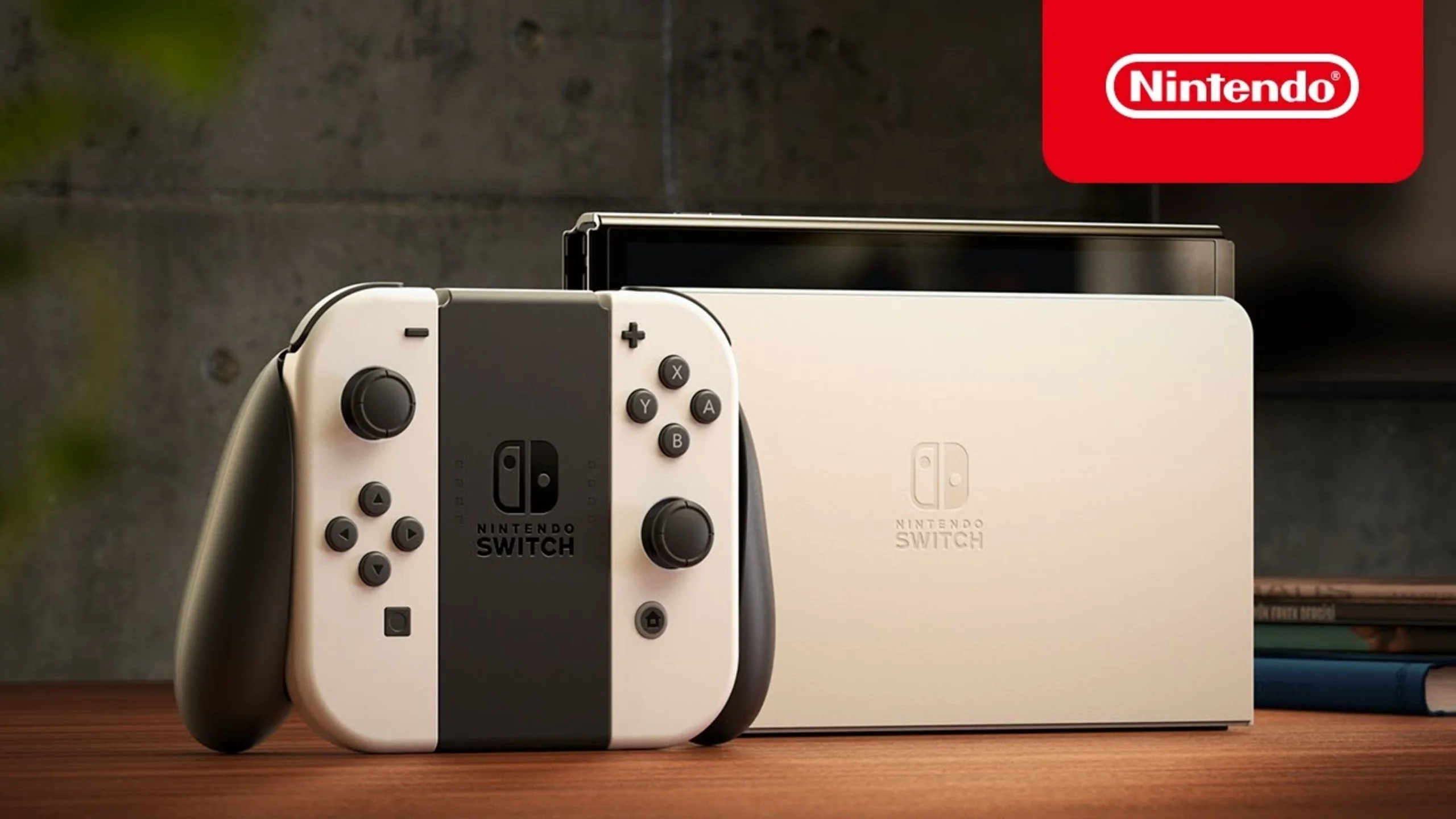
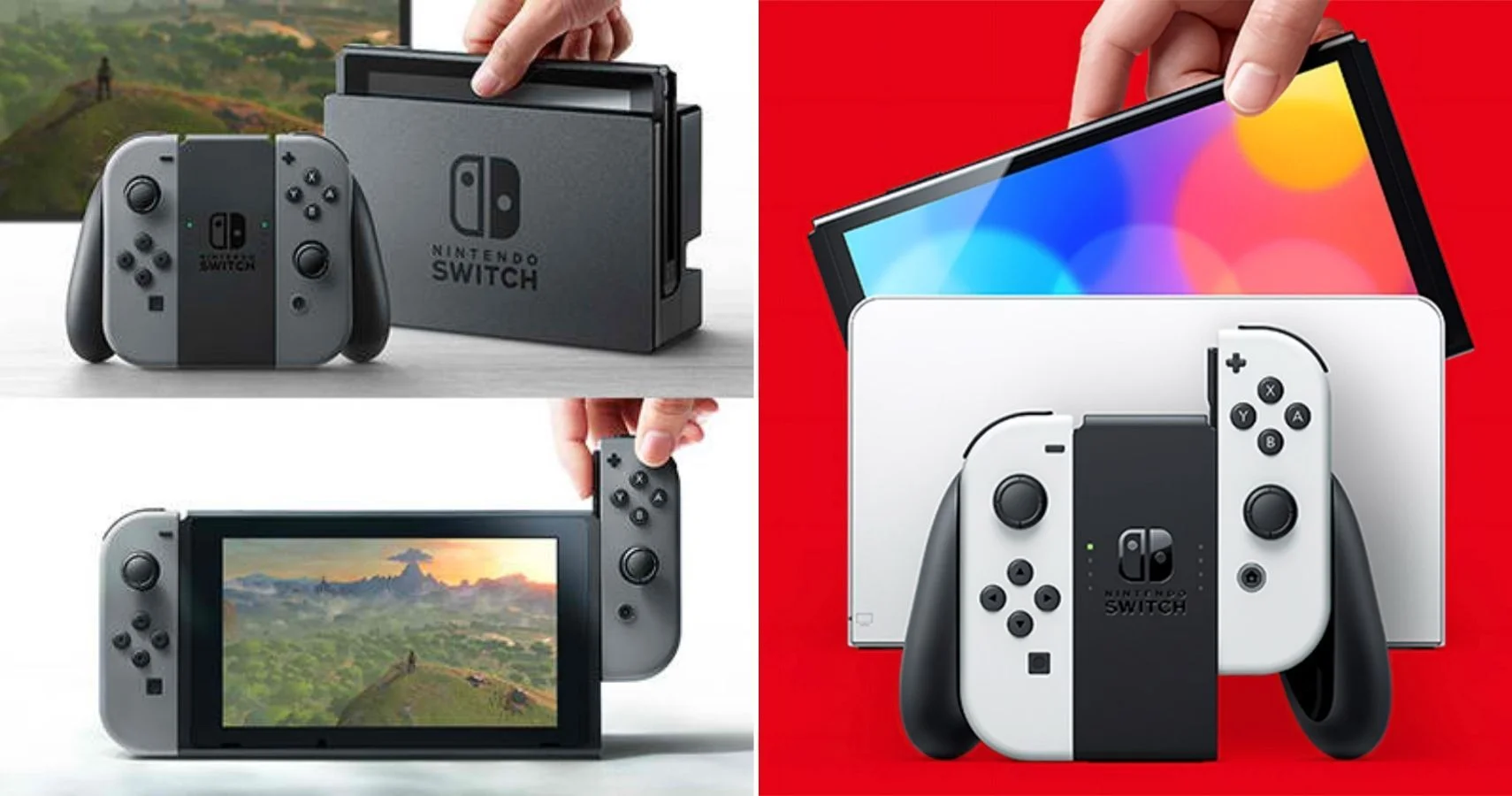
The Nintendo Switch OLED Model represents a masterclass in iterative design, addressing nearly every physical shortcoming of the original 2017 release. The star of the show is undeniably the 7-inch OLED panel. By shrinking the bezels, Nintendo managed to fit a significantly larger and infinitely more vibrant screen into a chassis that is almost identical in footprint to the base model. The glossy finish adds a premium touch, while the display’s perfect blacks and infinite contrast ratio make colourful titles like The Legend of Zelda: Tears of the Kingdom absolutely pop off the screen.
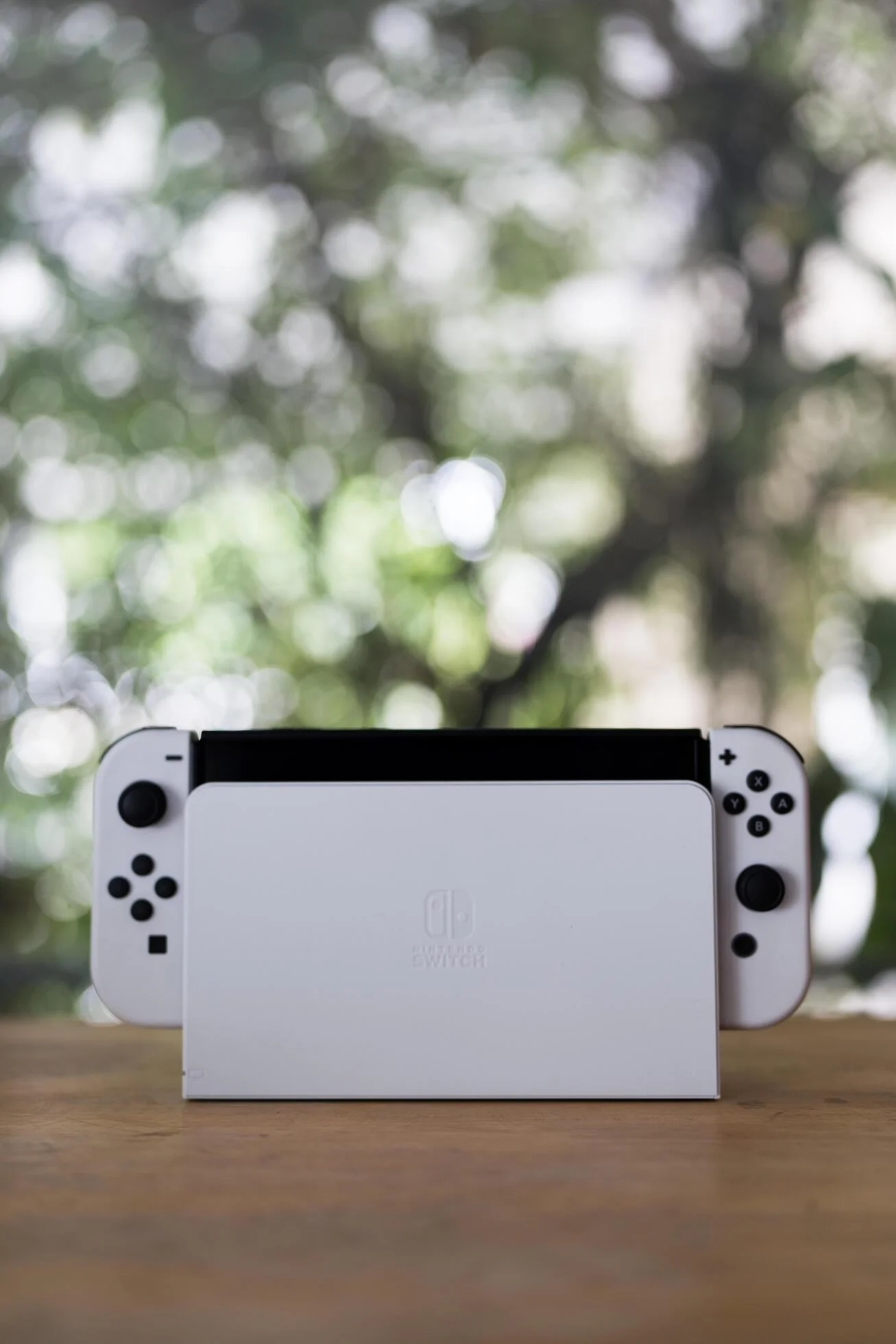
Beyond the display, the build quality sees a substantial leap forward. The original’s flimsy, asymmetrical kickstand has been replaced by a robust, magnesium-alloy wide stand that spans nearly the entire width of the device. This friction-hinge mechanism allows for freely adjustable viewing angles, transforming tabletop mode from a precarious balancing act into a genuinely enjoyable experience. Furthermore, the updated dock now features rounded edges and a built-in wired LAN port, catering directly to competitive players who demand stable connections for online play.
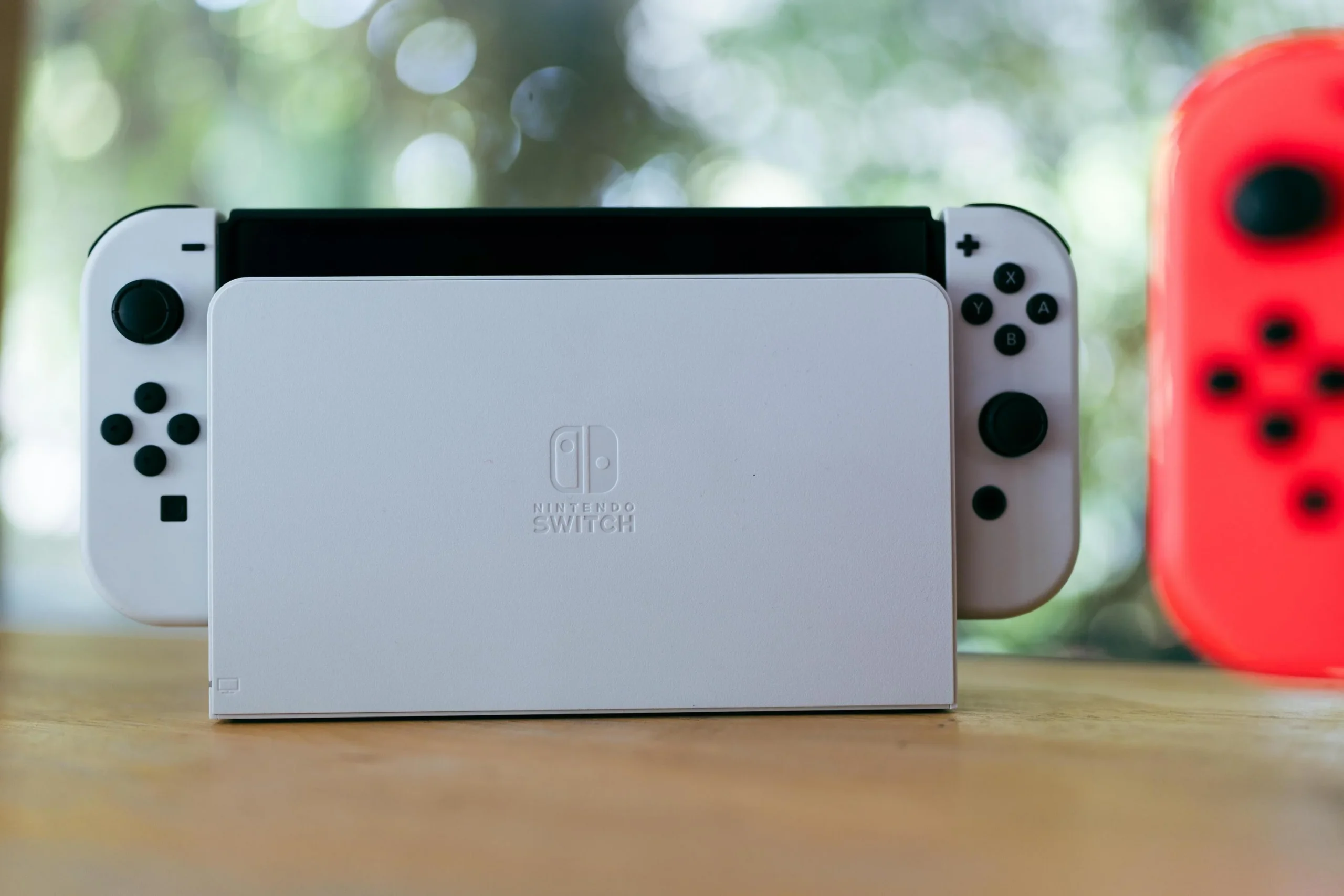
Ergonomically, the device remains largely familiar, which is a double-edged sword. While it retains compatibility with existing Joy-Cons and most accessories, it also means the flat, somewhat unergonomic grip of the original remains unchanged. However, the slightly increased weight of 422 grams feels dense and premium in the hands without causing undue fatigue during extended commutes or couch sessions.
Performance
If you were hoping for a “Switch Pro” with 4K output and boosted framerates, the OLED Model’s performance profile will be familiar territory. Under the hood, it utilises the exact same custom NVIDIA Tegra X1 system-on-chip and 4GB of RAM as the standard Switch and the Switch Lite. This means real-world processing speed, game loading times, and benchmark metrics remain identical to the base models. In 2026, as games grow increasingly demanding, the aging hardware does occasionally struggle to maintain stable 30fps targets in graphically intense, open-world titles.
However, performance isn’t solely about raw graphical horsepower; it’s also about the sensory delivery of that power. The OLED panel inherently improves pixel response times compared to traditional LCD screens, resulting in slightly smoother motion clarity during fast-paced platformers and racing games. The onboard audio has also seen a noticeable upgrade. The redesigned bottom-firing stereo speakers offer a wider soundstage and richer acoustics, meaning you no longer need to immediately reach for headphones to enjoy clear, distortion-free game audio.
Battery performance remains excellent, benefiting from the power-efficient Tegra chip revision introduced in 2019 alongside the inherently power-saving nature of OLED technology. Depending on screen brightness and network activity, you can consistently squeeze between 4.5 to 9 hours of playtime from the battery cell. This reliability keeps the Switch OLED at the top of the pack for true, untethered portability.
Features & Software
The Switch OLED runs on Nintendo’s notoriously minimalist operating system, which remains as snappy and uncluttered as ever. While it lacks the robust multimedia applications and deep customisation found on competing platforms, its instant wake-from-sleep functionality and streamlined UI are perfectly tailored for a dedicated gaming machine. The bump to 64GB of internal storage is a welcome feature, doubling the capacity of the original console and allowing you to store a handful of major titles—or dozens of indie games—before needing to invest in a microSD card.
A standout software integration tied to the OLED hardware is the system-level “Console Screen Colors” setting, which lets you toggle between ‘Vivid’ and ‘Standard’ modes. Vivid pushes the OLED panel to its maximum colour saturation for that signature Nintendo pop, while Standard dials it back for more accurate colour reproduction. Paired with native Bluetooth audio support baked right into the firmware, the software experience is highly refined, delivering exactly what mobile gamers need with zero bloatware.
Value Proposition
Evaluating the value of the Switch OLED in 2026 requires looking at the broader handheld ecosystem. It typically retails at a premium over the standard Switch, begging the question of whether a better screen and kickstand justify the price hike. For first-time Switch buyers, the answer is a resounding yes; the OLED model is undoubtedly the definitive way to experience the console’s massive library. The visual leap in handheld mode is so profound that it makes the LCD variants look instantly dated.
However, for existing Switch owners who play primarily docked, the value proposition plummets, as docked performance is indistinguishable from older models. When compared to the broader market, the Switch OLED relies heavily on Nintendo’s exclusive first-party library to justify its price tag, especially when raw compute power can be found cheaper elsewhere. Yet, for pure plug-and-play convenience and local multiplayer magic, its value remains ironclad.
How It Compares
When placed next to the Valve Steam Deck OLED, the Nintendo Switch OLED highlights a stark contrast in handheld philosophies. The Steam Deck offers massively superior PC-grade performance, high refresh rates, and an open ecosystem, making it the choice for hardcore tinkerers. However, the Switch OLED counters with a significantly lighter, more travel-friendly footprint, detachable controllers, and peerless battery efficiency.
Compared to the ASUS ROG Ally, the Switch OLED lacks the sheer 1080p, 120Hz processing grunt of the Windows-based handheld. Yet, the Switch wins effortlessly in user experience. Where the ROG Ally wrestles with cumbersome Windows 11 navigation on a small screen, the Switch offers a frictionless, instant-on gaming experience supported by legendary exclusives like Super Mario Bros. Wonder and Mario Kart 8 Deluxe, which you simply cannot play natively anywhere else.
Pros and Cons
Pros
- The 7-inch OLED display delivers breathtaking colours, infinite contrast, and deep perfect blacks.
- The redesigned magnesium-alloy kickstand provides unparalleled stability for tabletop gaming.
- Upgraded onboard stereo speakers offer crisp, immersive audio without the need for headphones.
- The included dock features a built-in wired LAN port for stable competitive online connectivity.
Cons
- The internal hardware remains identical to the 2017 model, leading to performance bottlenecks in newer demanding games.
- Joy-Con controllers still suffer from unergonomic flat grips and potential long-term stick drift issues.
- It offers no graphical enhancements, framerate boosts, or 4K upscaling when played in docked mode on a television.
- The 64GB of internal storage, while doubled from the original, is still inadequate for modern digital game libraries.
FAQ
Q: Does the Switch OLED have better performance or graphics than the original Switch?
A: No, the internal processor and RAM are identical to previous models. It will not run games at higher framerates or resolutions, though the OLED screen makes the games look significantly better in handheld mode.
Q: Can I use my old Joy-Cons and accessories with the OLED model?
A: Yes, the Switch OLED is fully compatible with existing Joy-Cons, Pro Controllers, and most accessories, though it may not fit in certain tight-fitting cases designed specifically for the original model.
Q: Is the Switch OLED prone to screen burn-in?
A: While all OLED screens carry a slight risk of burn-in, Nintendo has implemented mitigations like auto-brightness and screen auto-sleep. Independent testing has shown that burn-in is highly unlikely under normal gaming conditions.
Q: Does the new dock work with older Switch consoles?
A: Yes, the new dock with the built-in LAN port is fully compatible with the standard Nintendo Switch, and the OLED console can also be used seamlessly in the older docks.
Verdict
The Nintendo Switch OLED Model is the ultimate iteration of Nintendo’s hybrid console, tailor-made for gamers who spend the majority of their time in handheld or tabletop mode. While it won’t satisfy those seeking a next-gen performance leap for the television, its breathtaking display and refined build quality make it an absolute must-buy for first-time Switch adopters. If you want your favourite Nintendo worlds delivered with unmatched visual vibrancy on the go, this is the handheld to own.
Where to Buy
Pros
- ✓ The 7-inch OLED display delivers breathtaking colours, infinite contrast, and deep perfect blacks.
- ✓ The redesigned magnesium-alloy kickstand provides unparalleled stability for tabletop gaming.
- ✓ Upgraded onboard stereo speakers offer crisp, immersive audio without the need for headphones.
- ✓ The included dock features a built-in wired LAN port for stable competitive online connectivity.
Cons
- ✗ The internal hardware remains identical to the 2017 model, leading to performance bottlenecks in newer demanding games.
- ✗ Joy-Con controllers still suffer from unergonomic flat grips and potential long-term stick drift issues.
- ✗ It offers no graphical enhancements, framerate boosts, or 4K upscaling when played in docked mode on a television.
- ✗ The 64GB of internal storage, while doubled from the original, is still inadequate for modern digital game libraries.
Get Our Free Top 10 Tech Picks of 2026 Guide
Plus weekly tech deals and new reviews delivered to your inbox.
[cp_email_signup]
No spam. Unsubscribe anytime.
Ready to buy the Nintendo Switch OLED Model?
Affiliate link — we may earn a commission at no extra cost to you.