





The Canon EOS R50 continues to hold its ground in 2026 as a formidable entry-level mirrorless camera for content creators and hybrid shooters. Blending a highly compact form factor with robust autofocus capabilities, it bridges the gap between smartphone photography and professional gear. Read our comprehensive review to see if this APS-C powerhouse deserves a spot in your kit.
Table of Contents
Key Specifications
| Feature | Detail |
|---|---|
| Sensor | 24.2MP APS-C CMOS |
| Processor | DIGIC X |
| Autofocus | Dual Pixel CMOS AF II with subject tracking |
| Video | Uncropped 4K up to 30fps (oversampled from 6K) |
| Display | 3.0-inch vari-angle touchscreen LCD |
| Viewfinder | 2.36M-dot OLED EVF |
| Burst Shooting | 12 fps (electronic first curtain), 15 fps (electronic) |
| Weight | Approx. 375g with battery and memory card |
Design & Build Quality
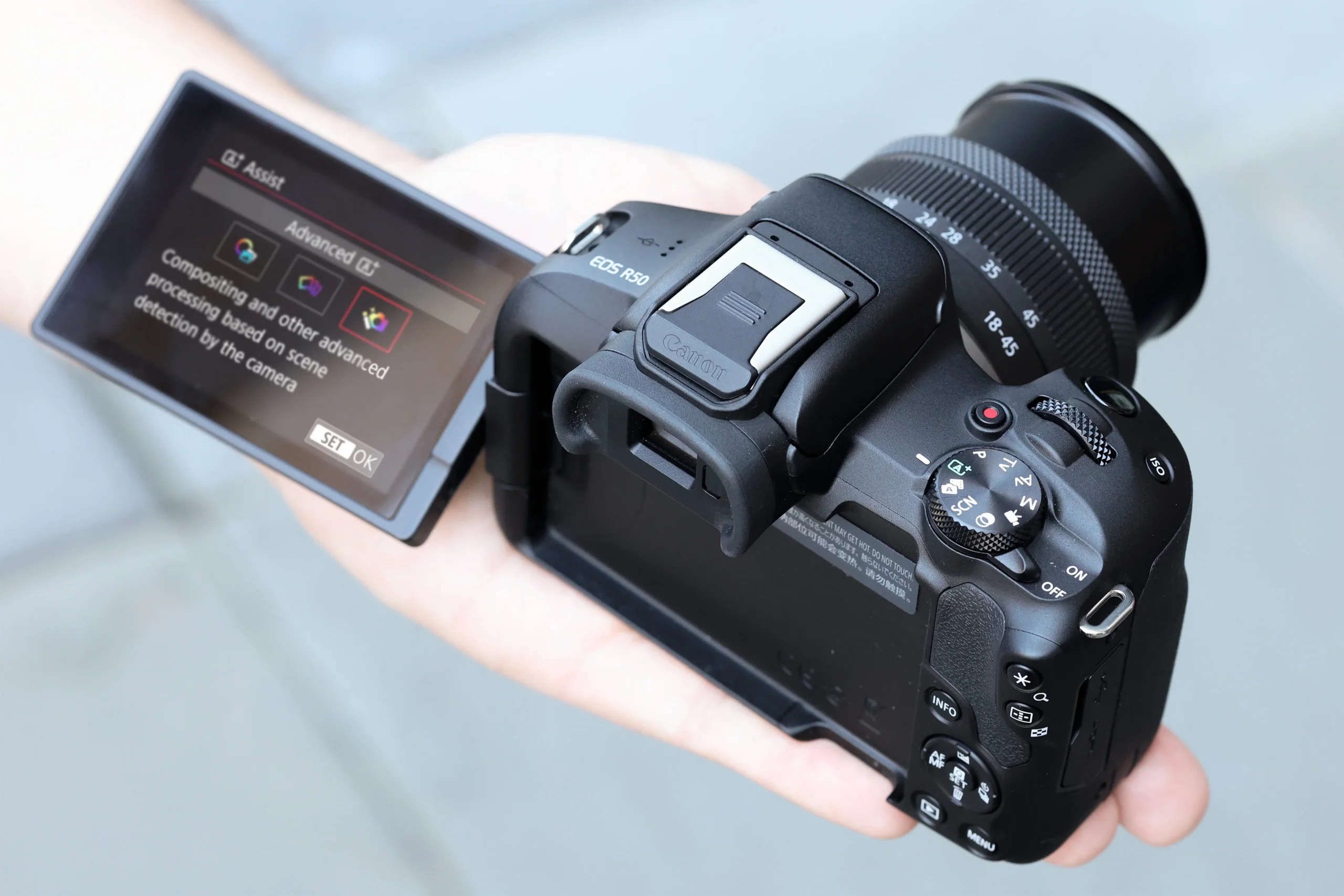
The Canon EOS R50 was engineered with supreme portability in mind, weighing a mere 375 grams fully loaded. Its compact chassis feels like a spiritual successor to the beloved EOS M50 line, but it confidently adopts the modern RF mount, allowing users to tap into Canon’s vast and growing ecosystem of next-generation lenses. Despite its featherweight footprint, the camera feels surprisingly robust, utilising a durable polycarbonate exterior that withstands the rigors of daily vlogging and travel photography.
Ergonomically, Canon has struck an impressive balance. The grip is deep enough to provide a secure hold even for those with slightly larger hands, though pairing it with heavy telephoto lenses can predictably make the setup front-heavy. Control placement is minimal and heavily tailored toward touch-interface users, acknowledging its smartphone-upgrader demographic.
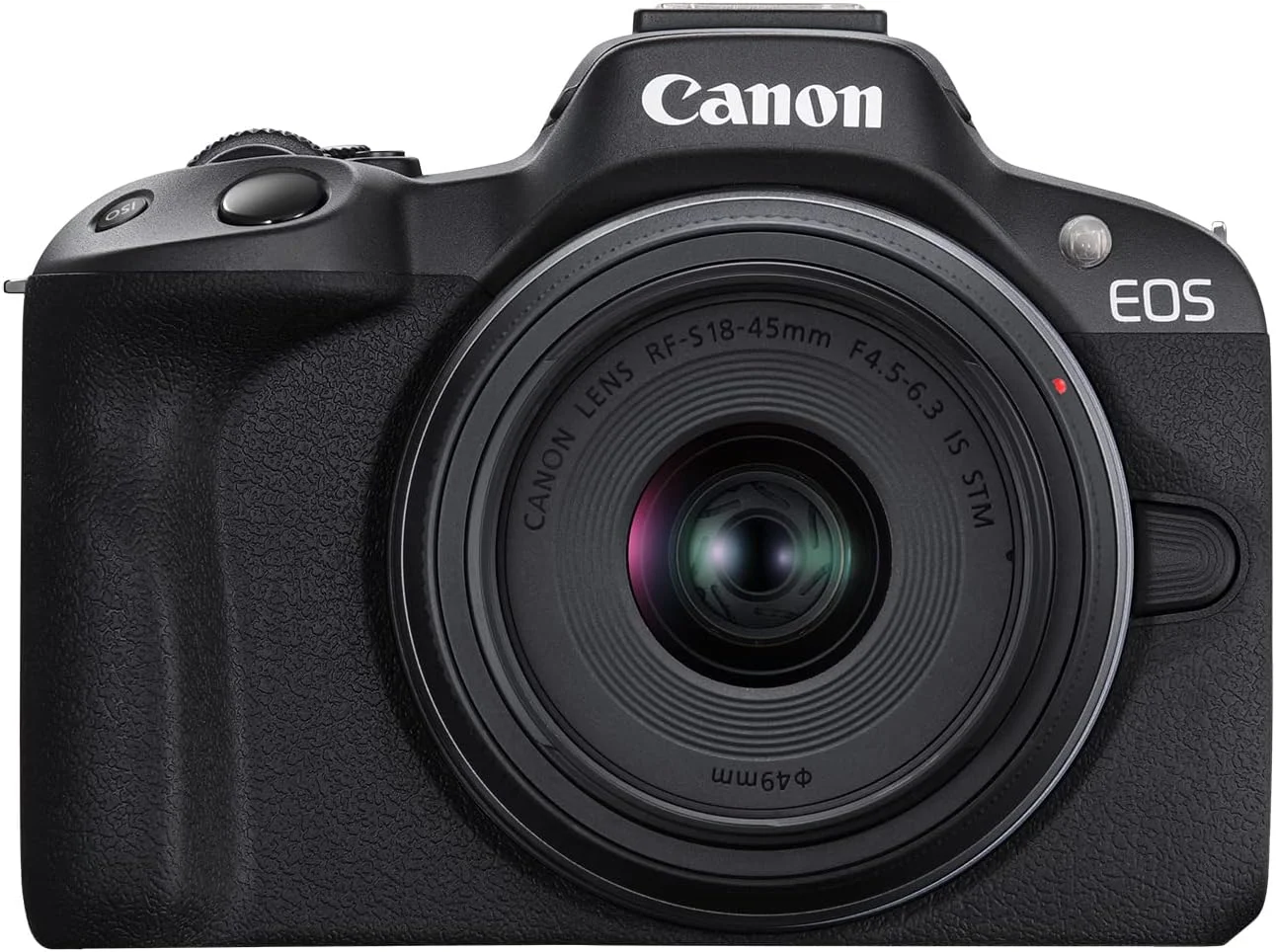
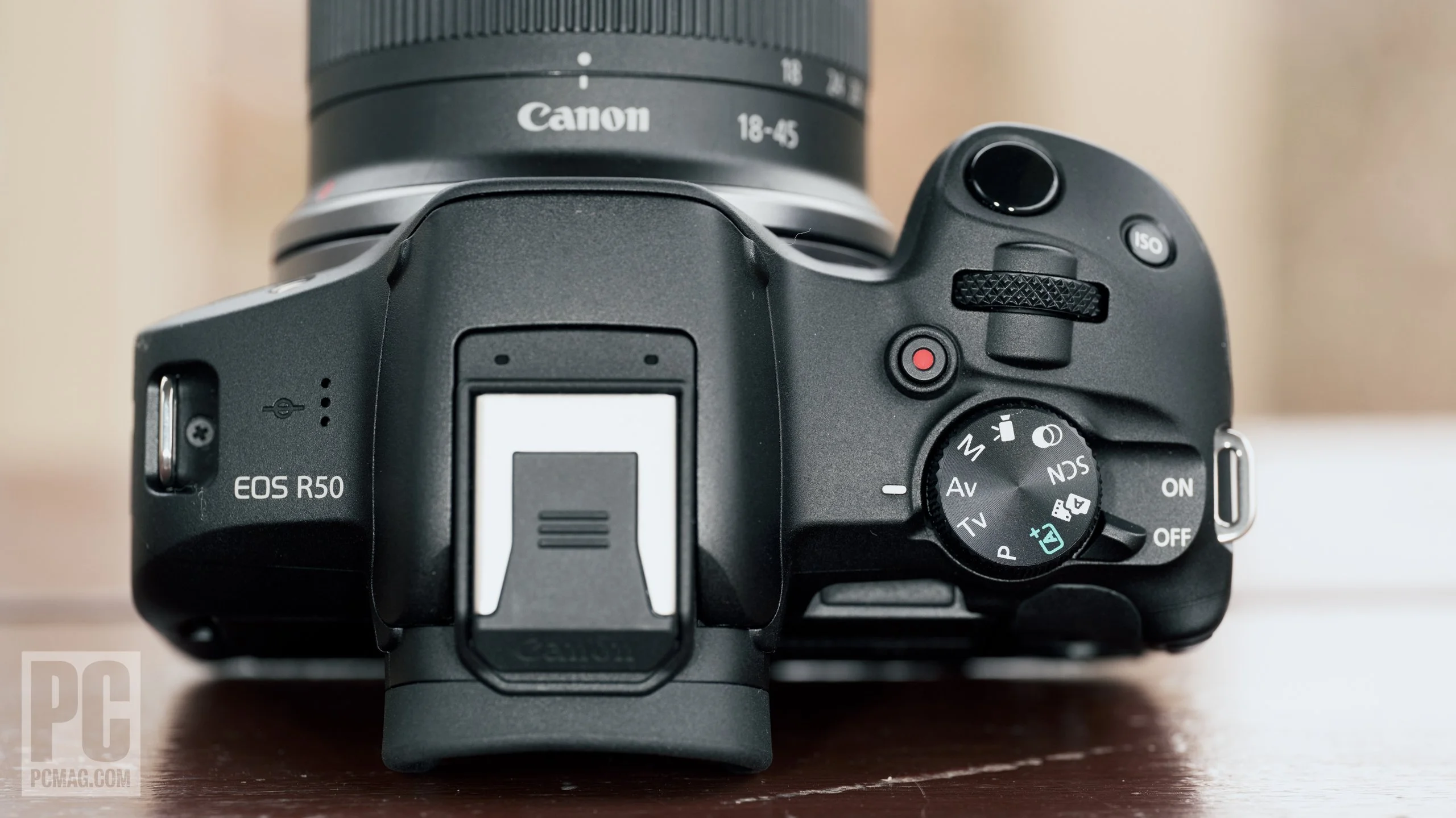
The tactile feedback on the mode dial and shutter button retains that premium Canon feel, preventing the body from feeling like a budget device. Additionally, the fully articulating 3.0-inch touchscreen remains sharp, highly responsive, and an absolute necessity for self-recording and capturing tricky low-angle shots.
Performance
Under the hood, the EOS R50 leverages a 24.2-megapixel APS-C CMOS sensor paired with the formidable DIGIC X processor. In real-world testing throughout 2026, this combination continues to deliver outstanding image quality with excellent dynamic range and Canon’s signature color science. The true star of the show, however, is the Dual Pixel CMOS AF II. Inheriting intelligent tracking algorithms from high-end models, the R50 effortlessly locks onto human eyes, animals, and vehicles with a stickiness that punches well above its price bracket.
For videographers and hybrid shooters, the camera offers uncropped 4K video at up to 30 frames per second, heavily oversampled from 6K to produce incredibly sharp footage. While it lacks 4K/60p—a feature increasingly common in newer midrange bodies—the 10-bit HDR PQ mode provides robust grading flexibility for creators wanting to push their post-production limits.
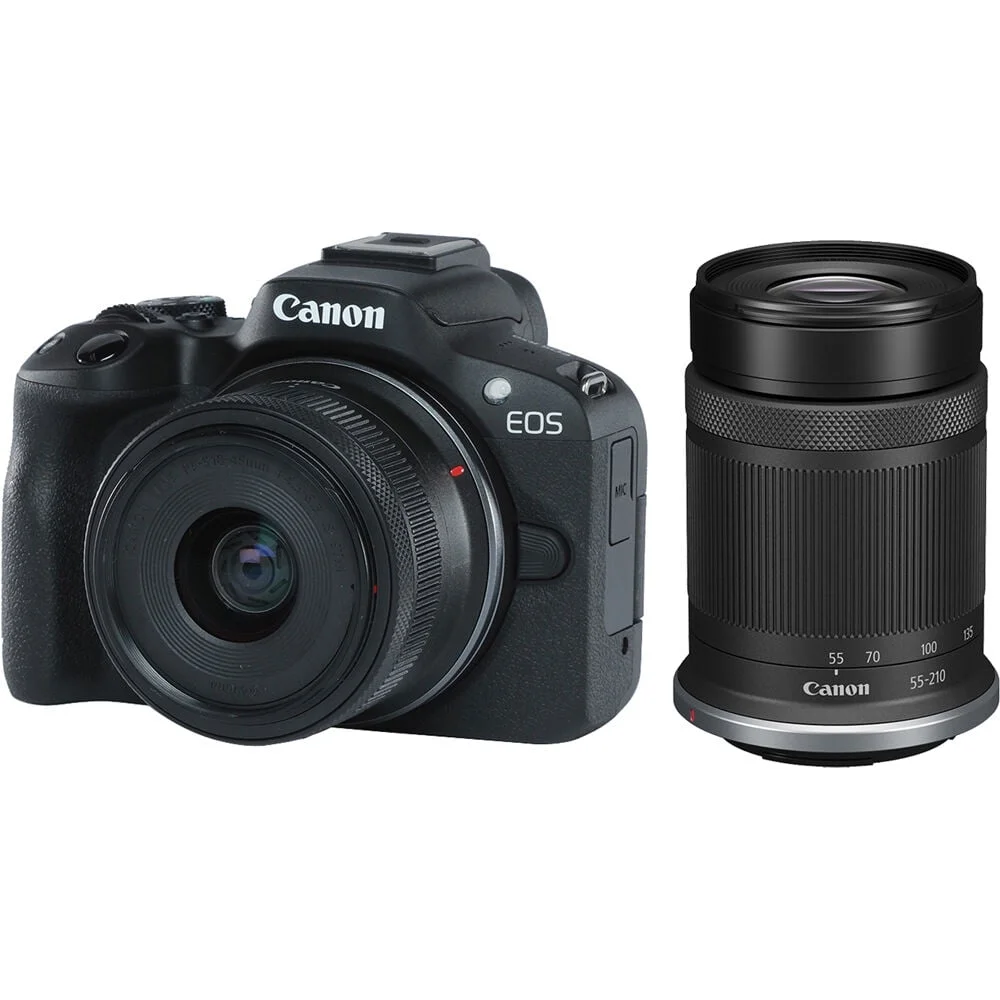
When it comes to speed, burst shooting maxes out at an impressive 15 fps with the electronic shutter. This makes the R50 entirely capable of capturing fast-moving action, energetic pets, and casual sports photography, ensuring that beginners are rarely held back by the hardware’s internal limits.
Features & Software
Canon’s software experience remains an industry benchmark for usability. The EOS R50 features an intuitive, guided menu system that actively helps beginners learn the exposure triangle and camera settings natively, though advanced users can easily toggle back to the standard Canon menus. On the connectivity front, Bluetooth and Wi-Fi performance are rock-solid, syncing seamlessly with the Canon Camera Connect app for rapid file transfers to smartphones. Furthermore, native UVC/UAC support allows the R50 to act as a high-end plug-and-play webcam via USB-C without requiring any proprietary desktop software.
Value Proposition
Even a few years post-launch, the Canon EOS R50 represents one of the strongest value propositions in the entry-level APS-C market. By packing flagship-tier autofocus and oversampled 4K video into an ultra-affordable and portable body, Canon has created a highly accessible gateway into the RF ecosystem. It perfectly satisfies the needs of hobbyists and vloggers who have outgrown their smartphone sensors but aren’t quite ready to invest in costly full-frame professional rigs.
How It Compares
When pitted against the Sony ZV-E10, the Canon EOS R50 holds a distinct advantage in hybrid usability. While the Sony is a dedicated vlogging powerhouse with a larger native APS-C lens ecosystem, the R50 includes a crisp electronic viewfinder (EVF) and superior mechanical shutter capabilities, making it a much better choice for traditional photography. Against the Nikon Z30, the R50’s Dual Pixel AF II consistently outpaces Nikon’s autofocus in low-light tracking and high-speed subject recognition, although the Z30 does boast a slightly more premium feel and better rolling shutter control in video.
Pros and Cons
Pros
- Delivers exceptional autofocus with highly reliable subject tracking for its class.
- Highly compact and lightweight design makes it perfect for travel and daily carry.
- Produces sharp, oversampled 4K/30p video with excellent Canon color science.
- Features a bright and responsive fully articulating touchscreen ideal for vlogging.
Cons
- Lacks in-body image stabilization (IBIS), requiring reliance on optically stabilized lenses.
- The current lineup of native, affordable RF-S APS-C lenses remains relatively limited in 2026.
- Noticeable rolling shutter effect when panning quickly during 4K video recording.
- Small battery capacity requires carrying spare batteries for full-day shooting schedules.
FAQ
Q: Does the Canon EOS R50 have in-body image stabilization (IBIS)?
A: No, the EOS R50 does not feature IBIS. You will need to rely on Canon lenses with built-in Optical Image Stabilization (IS) and the camera’s digital stabilization for smooth video.
Q: Can the EOS R50 shoot 4K video at 60fps?
A: Unfortunately, it cannot. The camera maxes out at 4K resolution at 30 frames per second, though the footage is oversampled from 6K for maximum sharpness and clarity.
Q: Is the Canon EOS R50 weather-sealed?
A: The R50 is not officially weather-sealed. While it has a solid and durable build, you should avoid exposing it to heavy rain, dust storms, or extreme environmental conditions.
Q: Can I use this camera as a webcam for streaming?
A: Yes, the EOS R50 supports standard UVC/UAC protocols, allowing you to plug it directly into your computer via a USB-C cable to use as a high-quality webcam without needing extra capture cards or software.
Verdict
The Canon EOS R50 remains the ultimate entry-level mirrorless camera for content creators, smartphone upgraders, and budget-conscious hybrid shooters in 2026. If you want flagship-tier autofocus, compact portability, and brilliant oversampled 4K video without breaking the bank, this camera is highly recommended. However, dedicated professional videographers may want to look at higher-end models due to the lack of IBIS and 4K/60p capabilities.
Where to Buy
Pros
- ✓ Delivers exceptional autofocus with highly reliable subject tracking for its class.
- ✓ Highly compact and lightweight design makes it perfect for travel and daily carry.
- ✓ Produces sharp, oversampled 4K/30p video with excellent Canon color science.
- ✓ Features a bright and responsive fully articulating touchscreen ideal for vlogging.
Cons
- ✗ Lacks in-body image stabilization (IBIS), requiring reliance on optically stabilized lenses.
- ✗ The current lineup of native, affordable RF-S APS-C lenses remains relatively limited in 2026.
- ✗ Noticeable rolling shutter effect when panning quickly during 4K video recording.
- ✗ Small battery capacity requires carrying spare batteries for full-day shooting schedules.
Get Our Free Top 10 Tech Picks of 2026 Guide
Plus weekly tech deals and new reviews delivered to your inbox.
[cp_email_signup]
No spam. Unsubscribe anytime.
Ready to buy the Canon EOS R50?
Affiliate link — we may earn a commission at no extra cost to you.