





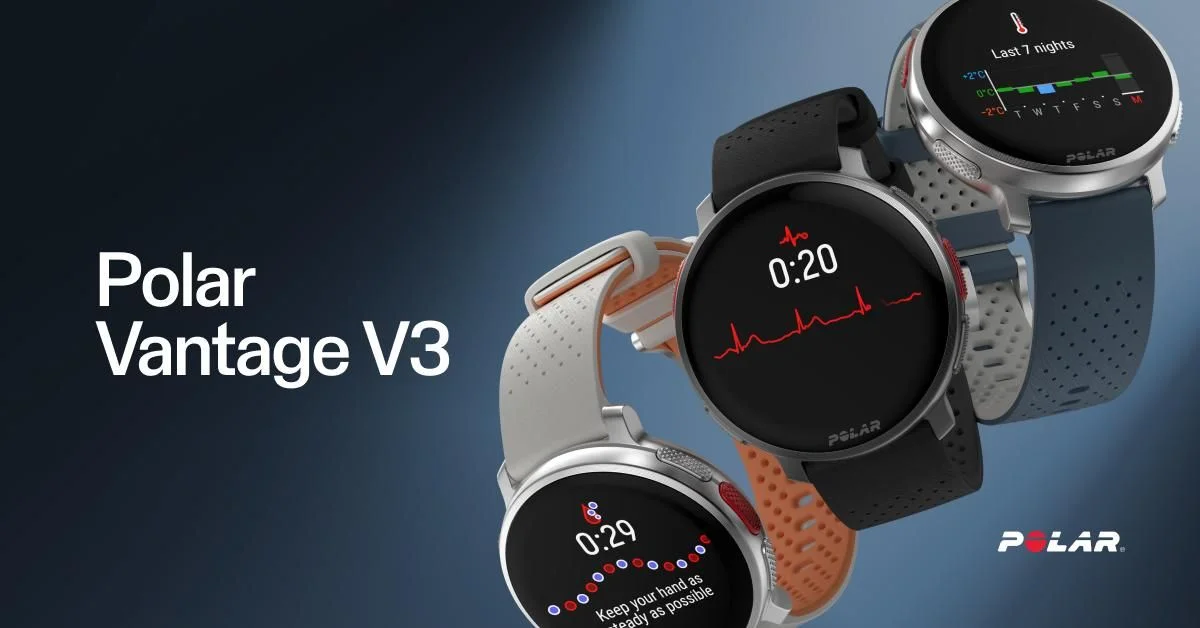
The Polar Vantage V3 represents a massive leap forward for the Finnish brand, swapping its notoriously dim memory-in-pixel display for a stunning AMOLED screen. Packed with cutting-edge biosensing technology and dual-frequency GPS, it aims to reclaim the multisport crown. Read our comprehensive 2026 review to see if it finally outpaces the heavyweights from Garmin and Suunto.
Table of Contents
Key Specifications
| Feature | Detail |
|---|---|
| Display | 1.39″ AMOLED (454 x 454 pixels) |
| Processor | 275MHz (129% faster than previous generation) |
| Sensors | Polar Elixir (Optical HR, ECG, SpO2, Skin Temp) |
| GPS | Dual-frequency (L1/L5) GNSS |
| Battery Life | Up to 53 hours (training), 8 days (smartwatch) |
| Weight | 57g (with wristband) |
| Water Resistance | WR50 (50 meters) |
| Connectivity | Bluetooth 5.1 |
Design & Build Quality
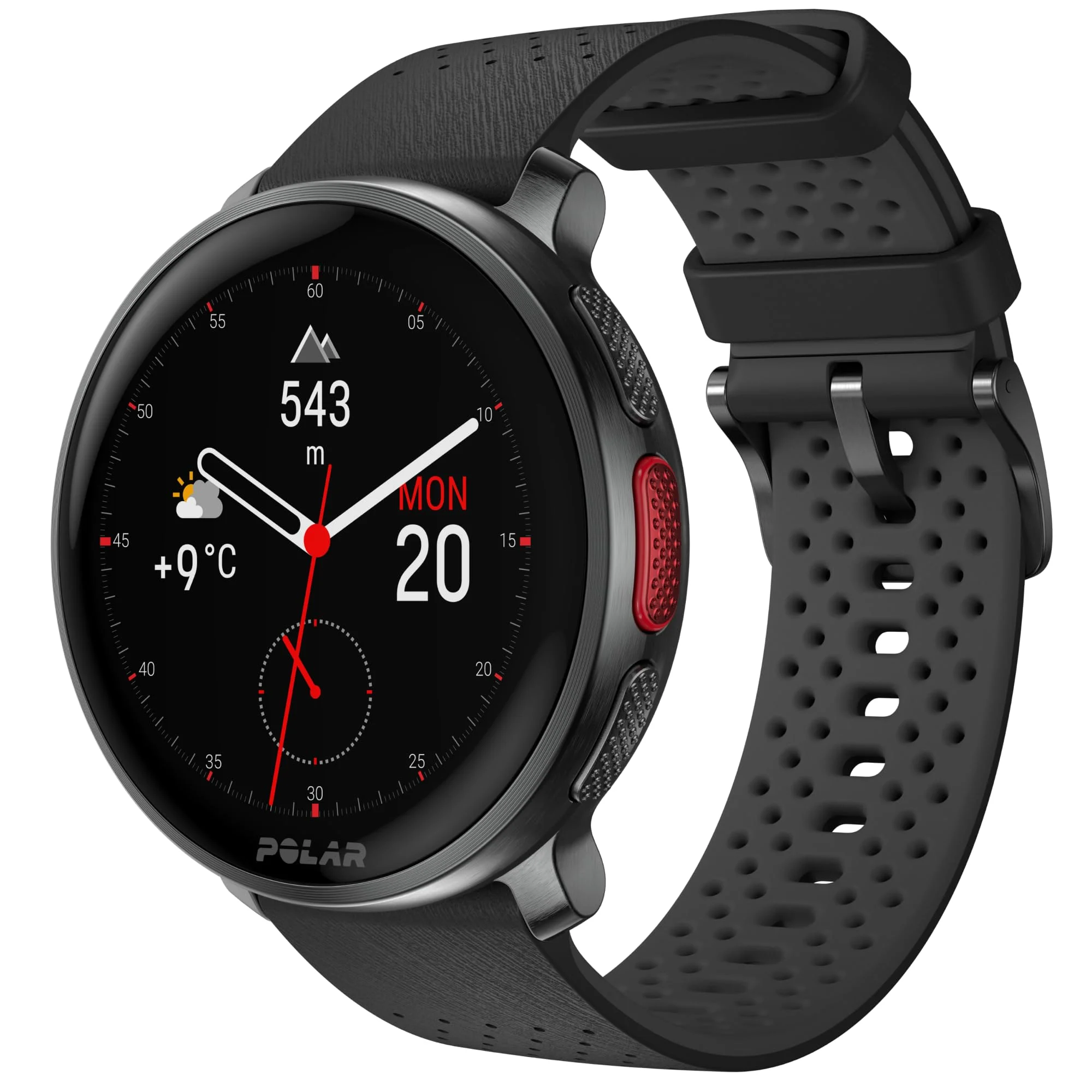
Polar has finally joined the modern era, ditching the muted Memory-in-Pixel (MIP) display of its predecessors for a glorious, high-resolution 1.39-inch AMOLED touchscreen. Encased in an aerospace-grade aluminum bezel with a sleek, minimalist profile, the Vantage V3 is remarkably lightweight at just 57 grams. It hugs the wrist seamlessly, making it comfortable enough for 24/7 wear—a critical factor given Polar’s heavy emphasis on sleep and recovery tracking.
The ergonomics are classic Polar, featuring a tactile five-button layout that remains incredibly functional. For tech-savvy athletes who hate fiddling with sweaty touchscreens during intervals, these textured metallic buttons offer satisfying, responsive feedback. The watch uses standard 22mm quick-release bands, a welcome upgrade that gives users the freedom to swap out the stock silicone strap for third-party options without needing proprietary adapters.
Protecting that vibrant AMOLED display is a curved Gorilla Glass 3 lens. While some purists might lament the absence of sapphire crystal at this premium price point, the glass offers excellent clarity and adequate scratch resistance for daily wear. The underside houses the new Elixir biosensing cluster, which sits flush against the skin without the annoying physical bump often found on older multisport watches.
Performance
Under the hood, the Polar Vantage V3 is powered by a new 275MHz processor and boasts expanded memory, making the overall user interface dramatically smoother than the sluggish Vantage V2. Swiping through widgets, loading dense topographical maps, and syncing post-workout data feels decidedly snappy. While it might not rival the buttery-smooth refresh rates of a dedicated smartwatch like the Apple Watch Ultra 2, it performs admirably within the dedicated sports watch category.
GPS and heart rate tracking are the beating heart of any multisport watch, and the V3 delivers on both fronts. The inclusion of dual-frequency (L1/L5) GNSS chips drastically improves satellite lock times and tracking accuracy, especially in dense urban canyons or thick forest canopies. We mapped several highly technical trail runs, and the V3’s recorded tracks perfectly aligned with the actual paths, practically eliminating the “drunk runner” effect common with older single-band watches.
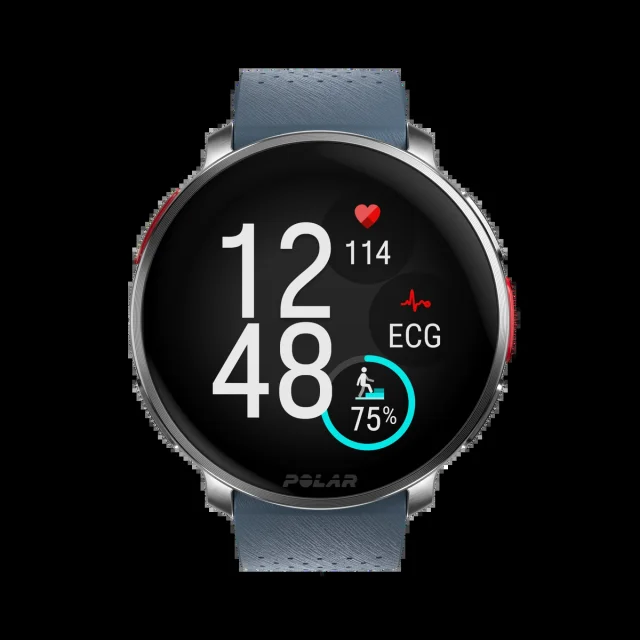
The new Polar Elixir sensor suite—which combines optical heart rate, an on-wrist ECG, pulse oximetry (SpO2), and nighttime skin temperature tracking—is highly accurate. During rigorous interval sessions, the optical HR sensor responded rapidly to sudden spikes in exertion, closely matching chest strap data. Battery life is also formidable; despite the power-hungry AMOLED screen, you can reliably squeeze out 53 hours of continuous dual-band GPS tracking, or roughly 6 to 8 days in standard smartwatch mode with typical training volumes.
Features & Software
Polar has long been the industry gold standard for training and recovery analytics, and the Vantage V3 continues this legacy via the stellar Polar Flow ecosystem. Features like Training Load Pro, Nightly Recharge, and the new Orthostatic Test (which now utilizes the on-wrist ECG without needing a chest strap) provide incredibly actionable insights into your physiological readiness. It takes complex biosensor data and translates it into straightforward, digestible advice, telling you exactly when to push hard and when to rest.
Offline topographical mapping is another standout addition, offered globally and free of charge. Users can download detailed regional maps directly to the watch’s 32GB of internal storage. While the navigation lacks turn-by-turn spoken directions, the visual routing is crisp and easy to follow on the vibrant display. However, the smartwatch features remain strictly utilitarian; you get basic notifications and music playback controls, but there is no onboard music storage or NFC contactless payment functionality.
Value Proposition
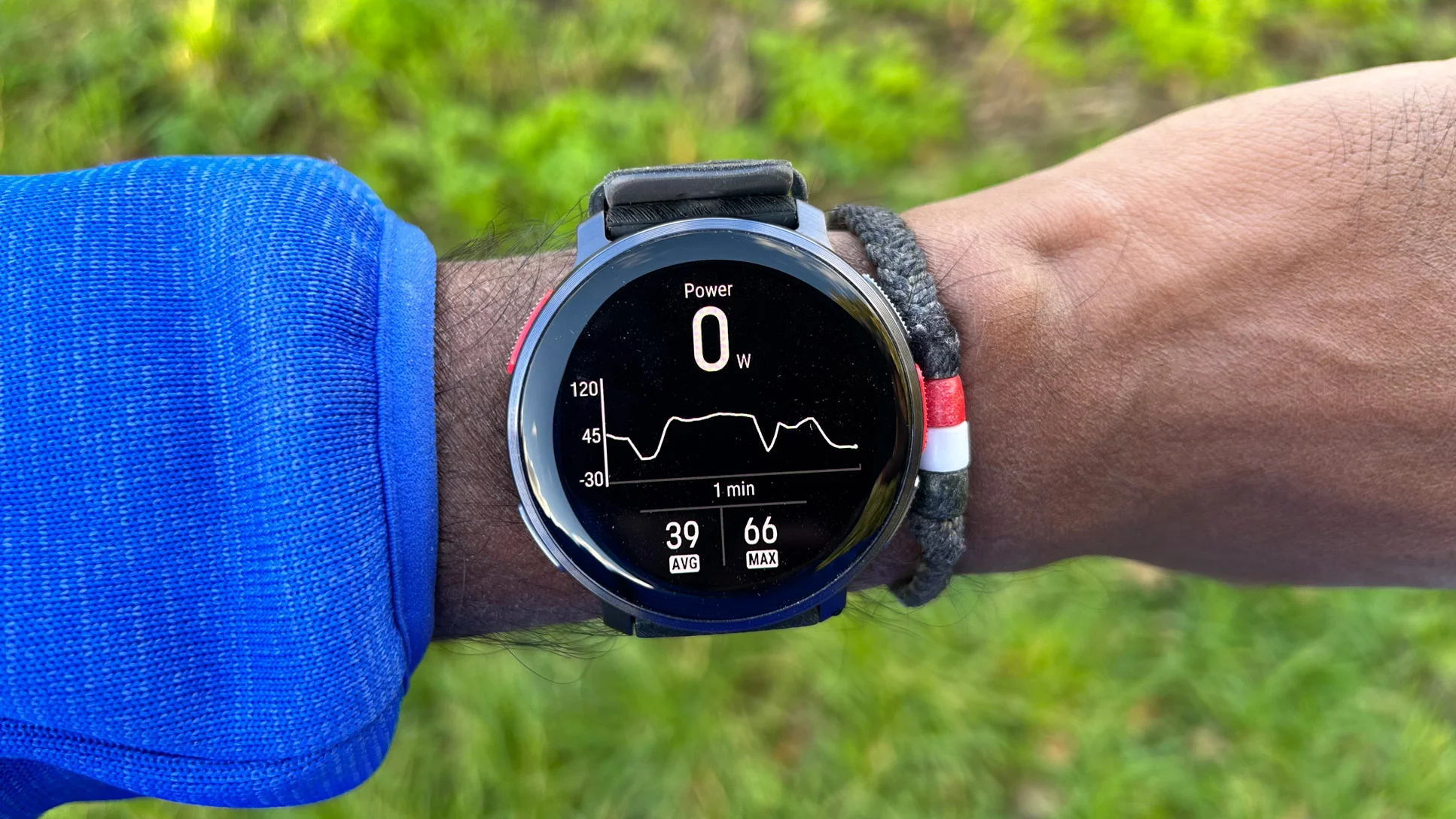
Retailing in the premium tier, the Polar Vantage V3 commands a high price tag, but it justifies the cost with its sheer volume of elite-level training metrics and the long-awaited AMOLED upgrade. For data-driven athletes who care more about actionable physiological insights and accurate GPS than replying to texts from their wrist, the V3 offers immense long-term value.
That being said, the value proposition shrinks slightly if you are looking for a true “lifestyle” smartwatch. By omitting features like onboard Spotify and contactless payments—conveniences that are largely standard on equally priced competitors—Polar forces a hard compromise. You are paying purely for high-end sports science hardware and analytics rather than daily urban conveniences.
How It Compares
When positioned against the Garmin Forerunner 965, the Vantage V3 holds its own in display quality and recovery analytics, but Garmin wins outright on lifestyle features (Garmin Pay, offline music) and broader third-party app integration. However, Polar’s sleep tracking and simplified user interface arguably offer a more intuitive experience for athletes prone to overtraining. Compared to the Suunto Race, the Vantage V3 is significantly lighter and features a more advanced suite of biosensors, particularly the on-wrist ECG. Suunto counters with a slightly more premium sapphire build and a digital crown, but Polar’s training ecosystem via the Flow app remains far superior in depth and presentation.
Pros and Cons
Pros
- Boasts a stunning, high-resolution AMOLED display that remains visible even in direct sunlight.
- Dual-frequency GPS provides incredibly accurate route tracking in challenging environments.
- Polar Flow ecosystem offers the most comprehensive sleep and recovery analytics on the market.
- The Elixir sensor suite brings wrist-based ECG and SpO2 without needing external hardware.
- Exceptionally lightweight and comfortable for 24/7 wear at just 57 grams.
Cons
- Lacks essential lifestyle features like offline music storage and NFC contactless payments.
- The display glass is Gorilla Glass 3 rather than the more durable sapphire crystal found on rivals.
- Third-party app support is virtually non-existent compared to mainstream smartwatches.
FAQ
Q: Does the Polar Vantage V3 have offline music storage?
A: No, the V3 only offers music playback controls for media playing on your connected smartphone. It does not have internal storage for Spotify or MP3 files.
Q: Can I use standard watch bands with the Vantage V3?
A: Yes, the Vantage V3 uses standard 22mm quick-release bands, allowing you to easily swap the strap with any compatible third-party option.
Q: How does the battery perform with the Always-On Display (AOD) enabled?
A: If you enable the AOD feature, the 8-day smartwatch battery life roughly halves, giving you about 3 to 4 days between charges depending on your training volume.
Q: Do I need a chest strap to perform the Orthostatic Test?
A: No. Thanks to the new Elixir sensor suite, the Vantage V3 can perform the Orthostatic Test using the built-in wrist ECG, eliminating the need for a separate chest strap.
Verdict
The Polar Vantage V3 is an exceptional, data-rich training tool designed specifically for serious athletes who prioritize advanced recovery metrics and precise tracking over mainstream smartwatch gimmicks. While the lack of onboard music and payments might deter casual users, its brilliant AMOLED screen, elite biosensors, and lightweight comfort make it a formidable top-tier multisport watch. If you want the deepest physiological insights available in 2026, the Vantage V3 demands a spot on your wrist.
Where to Buy
Pros
- ✓ Boasts a stunning, high-resolution AMOLED display that remains visible even in direct sunlight.
- ✓ Dual-frequency GPS provides incredibly accurate route tracking in challenging environments.
- ✓ Polar Flow ecosystem offers the most comprehensive sleep and recovery analytics on the market.
- ✓ The Elixir sensor suite brings wrist-based ECG and SpO2 without needing external hardware.
- ✓ Exceptionally lightweight and comfortable for 24/7 wear at just 57 grams.
Cons
- ✗ Lacks essential lifestyle features like offline music storage and NFC contactless payments.
- ✗ The display glass is Gorilla Glass 3 rather than the more durable sapphire crystal found on rivals.
- ✗ Third-party app support is virtually non-existent compared to mainstream smartwatches.
Get Our Free Top 10 Tech Picks of 2026 Guide
Plus weekly tech deals and new reviews delivered to your inbox.
[cp_email_signup]
No spam. Unsubscribe anytime.
Ready to buy the Polar Vantage V3?
Affiliate link — we may earn a commission at no extra cost to you.