

The Samsung QN80F brings Mini LED precision, strong gaming performance, and Samsung’s polished smart TV platform into a premium 2026 4K package. It sits in a highly competitive mid-to-upper-tier segment, but its bright HDR image, fast response times, and sleek design make it one of the more versatile TVs for mixed use. For buyers who want a modern Neo QLED without stepping into flagship pricing, the QN80F makes a compelling case.
Table of Contents
Key Specifications
| Feature | Detail |
|---|---|
| Model | Samsung QN80F |
| Display Type | Neo QLED with Mini LED backlighting |
| Resolution | 4K UHD (3840 x 2160) |
| HDR Support | HDR10, HDR10+, HLG |
| Refresh Rate | Up to 144Hz, size and input dependent |
| Gaming Features | VRR, ALLM, Game Bar, AMD FreeSync Premium Pro |
| Processor | Samsung AI-enhanced 4K processor |
| Smart TV Platform | Tizen OS |
| Audio | Object Tracking Sound Lite, Q-Symphony support |
| Connectivity | HDMI 2.1, USB, Wi-Fi, Bluetooth, Ethernet |
| Voice Assistants | Bixby, Alexa support |
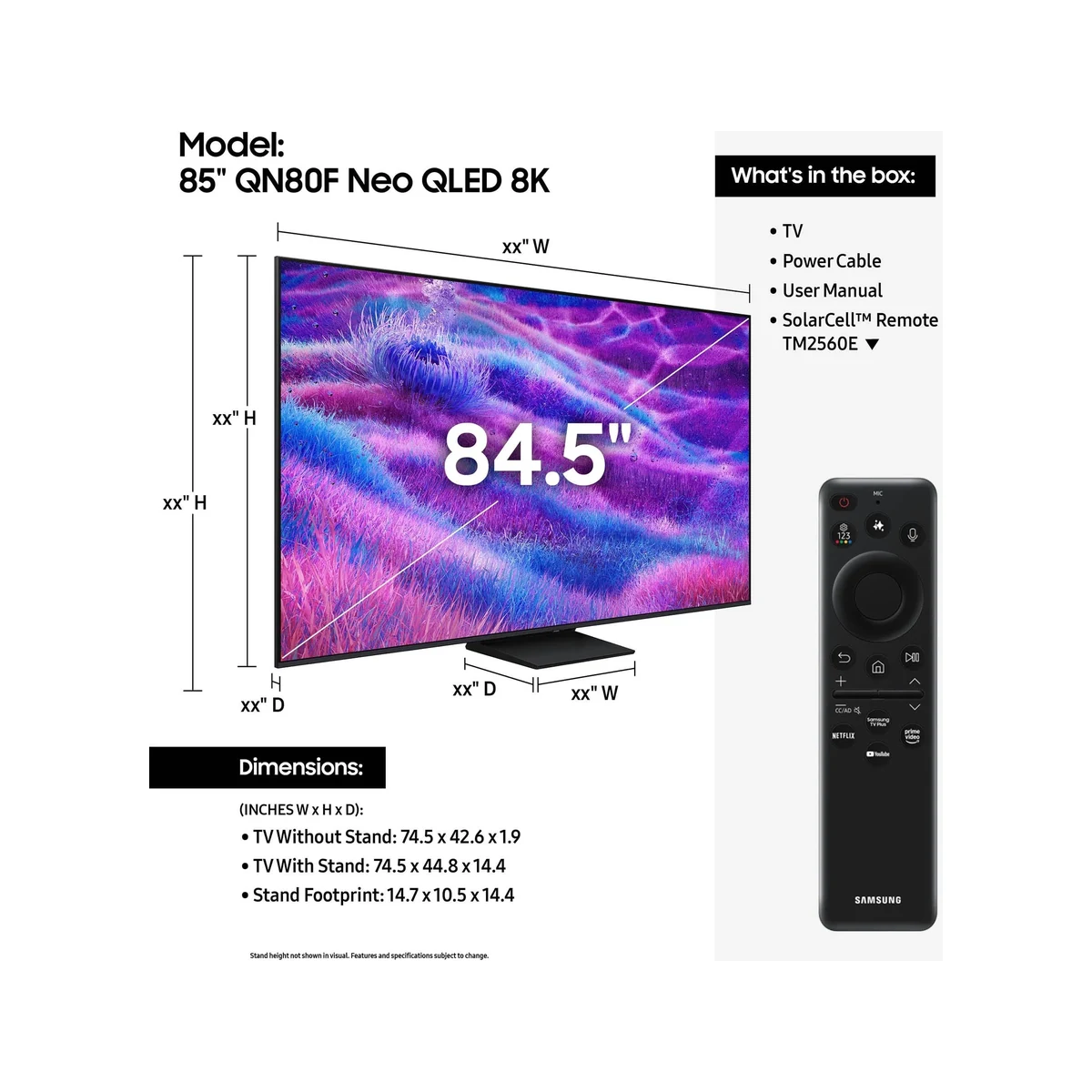
| Design | Slim bezel design with central stand or size-dependent stand configuration |
Design & Build Quality
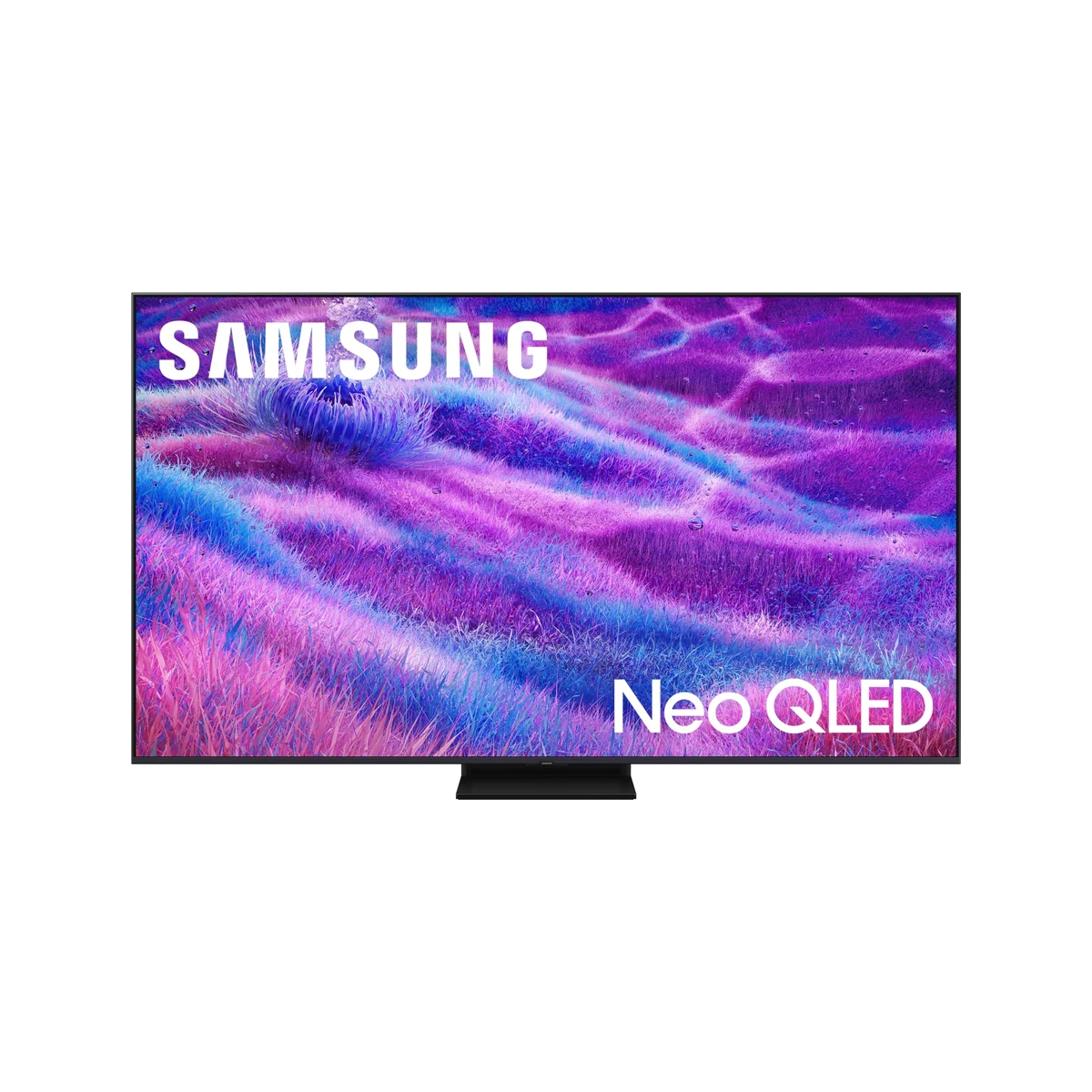
Samsung continues to refine its Neo QLED design language, and the QN80F looks every bit like a premium 2026 TV. The panel is framed by slim bezels that keep attention on the image, while the chassis remains relatively tidy for a Mini LED set. It is not as impossibly thin as Samsung’s OLED models, but for a backlit TV with this level of brightness, the depth is well managed and still feels modern on a media console or wall mount.
Build quality is strong throughout. The rear panel feels sturdy, cable management is thoughtfully handled, and the stand system provides a stable footprint without looking bulky. Depending on screen size, Samsung may vary the stand design, but the overall fit and finish remain consistent with the brand’s upper-midrange positioning. The materials do not feel cheap, and the TV has the reassuring rigidity you want when setting up a larger screen.
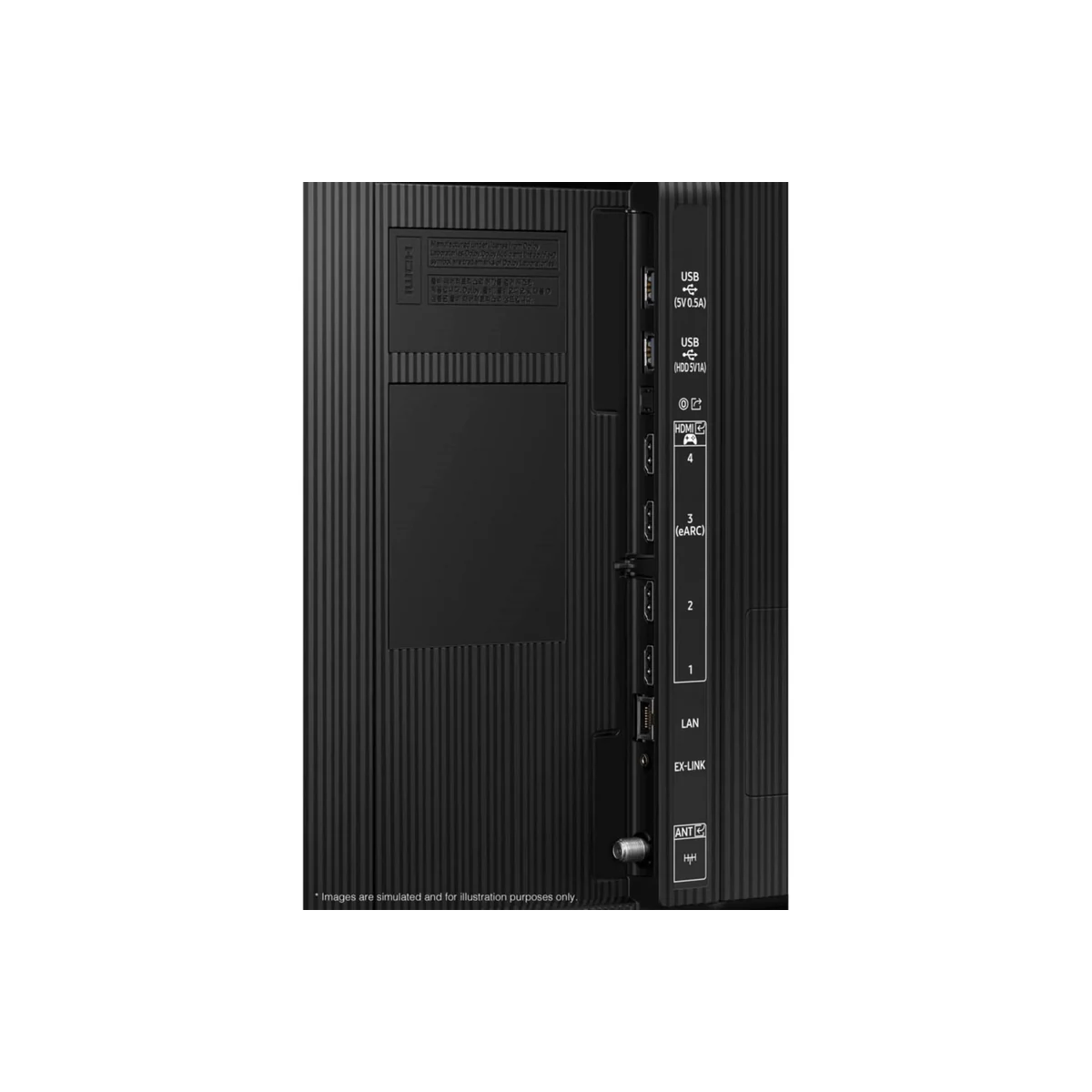
In day-to-day use, the QN80F is also ergonomically sound. Port access is straightforward, the included remote remains one of the cleaner and more intuitive options on the market, and the TV’s menu layout is easy to navigate once installed. For buyers who care about living-room aesthetics as much as raw specs, the QN80F strikes a very appealing balance between understated and premium.
Performance
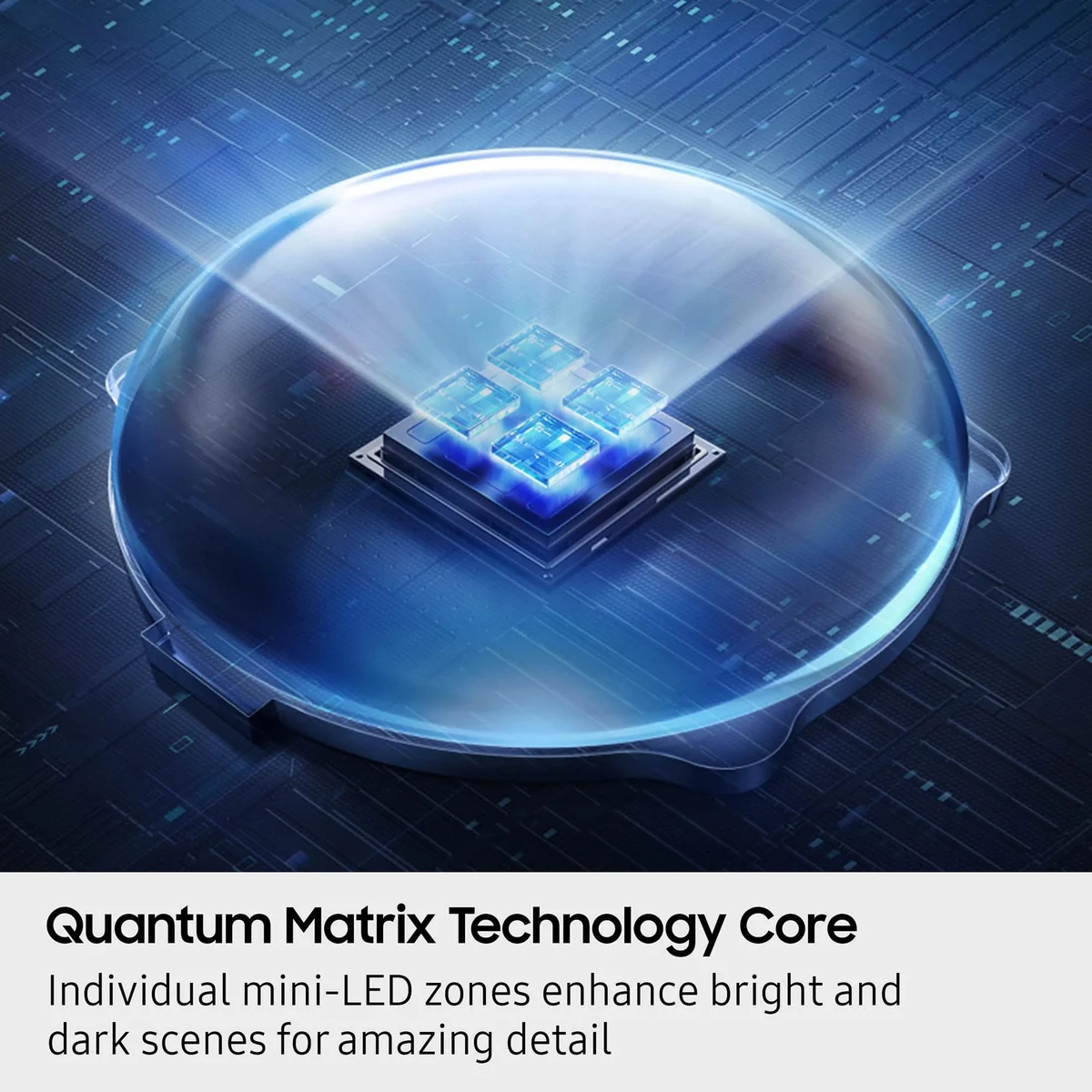
The QN80F’s biggest strength is its all-round picture performance. Mini LED backlighting gives it a clear advantage over conventional LED TVs, particularly in HDR content where peak brightness, specular highlights, and local dimming control all matter. In real-world viewing, the set delivers punchy highlights, strong contrast for its class, and enough brightness to hold up well in sunlit rooms. Sports and live TV also benefit from the panel’s brightness and motion handling, which help preserve clarity without making the image look overly processed.
Samsung’s image processing remains one of the strongest in the 4K TV market. Upscaling for HD broadcasts and streaming content is generally very good, with sharp detail recovery and controlled noise reduction. Motion interpolation and blur handling are also well tuned, though as always, enthusiasts may want to dial back some processing for a more natural cinematic presentation. Black levels are respectable for a Mini LED LCD, although some blooming can still appear around bright objects on dark backgrounds, especially in challenging scenes.
For gaming, the QN80F is a very capable display. Input lag is low, response times are fast, and support for high refresh rates makes it a strong match for PlayStation 5, Xbox Series X, and gaming PCs. Features like VRR and ALLM work as expected, while Samsung’s Game Bar continues to be genuinely useful for checking frame rate, aspect ratio settings, and gaming-specific picture adjustments. If you want a TV that can handle movies at night and competitive gaming during the day, this model is built for that dual role.
Features & Software
Samsung’s Tizen platform on the QN80F is polished, feature-rich, and mature. Major streaming apps are well supported, navigation is snappy, and the home interface offers a broad smart-home and content ecosystem. Samsung TV Plus, multi-device casting options, voice assistant support, and SmartThings integration all add to the TV’s broader utility beyond basic streaming. The software experience is not perfect, as the home screen can still feel a bit crowded, but it remains one of the more complete smart TV systems available.
On the AV side, Samsung includes a solid feature set for enthusiasts. HDR10+ support is welcome, even if Dolby Vision remains absent, and Q-Symphony can improve audio performance when paired with compatible Samsung soundbars. Object Tracking Sound Lite is better than typical flat-panel TV audio for positional cues, though serious home cinema users will still want an external speaker setup. Overall, the QN80F is packed with practical features rather than gimmicks, which helps justify its place in the lineup.
Value Proposition
The Samsung QN80F occupies an important sweet spot in the 2026 TV market. It offers much of what buyers want from a premium TV, including Mini LED backlighting, strong HDR brightness, advanced gaming support, and a refined smart platform, without pushing all the way into flagship pricing. That makes it especially attractive for users who want a tangible upgrade over standard QLED or basic LED models.
Its value becomes clearer when viewed as a mixed-use TV. Not every buyer needs OLED-level black depth, and not every room is ideal for OLED anyway. For bright living rooms, varied family viewing, sports, and gaming, the QN80F often makes more practical sense than some similarly priced alternatives. As long as you can live without Dolby Vision and accept LCD’s limitations in dark-room blooming control, it delivers a very competitive feature-to-price ratio.
How It Compares
Against the Sony Bravia 7, the Samsung QN80F feels more gaming-focused and generally offers a more feature-rich experience for players thanks to its Game Bar, broad HDMI 2.1 feature set, and strong low-latency performance. Sony still tends to have an edge in out-of-the-box film accuracy and motion processing nuance, but Samsung counters with a brighter, more flexible all-round package for mixed entertainment use.
Compared with the LG QNED90T successor class models, the QN80F stands out with Samsung’s more mature Tizen software, stronger gaming integration, and typically better overall processing. LG may appeal more to users already invested in its ecosystem, but Samsung’s combination of brightness, usability, and broad mainstream appeal gives the QN80F a stronger position for most buyers shopping in this segment.
Pros and Cons
Pros
- The Mini LED backlight delivers strong brightness and convincing HDR impact for movies, sports, and daytime viewing.
- Gaming performance is excellent, with low input lag, VRR, ALLM, and high refresh rate support.
- Build quality and industrial design feel premium without becoming overly flashy.
- Tizen remains a fast, feature-rich smart TV platform with broad app support.
- Upscaling and general image processing are consistently strong across varied content sources.
Cons
- Dolby Vision support is still missing, which may matter to home cinema enthusiasts.
- Some blooming is visible in difficult high-contrast scenes despite the Mini LED local dimming system.
- The smart interface can feel cluttered compared with simpler TV operating systems.
- Built-in audio is decent but not impressive enough to replace a soundbar or dedicated speakers.
FAQ
Q: Is the Samsung QN80F good for gaming?
A: Yes. The QN80F is one of the stronger gaming TVs in its class thanks to low input lag, HDMI 2.1 features, VRR, ALLM, and up to 144Hz support on compatible setups.
Q: Does the Samsung QN80F support Dolby Vision?
A: No. Samsung continues to support HDR10, HDR10+, and HLG instead of Dolby Vision.
Q: Is the Samsung QN80F better than OLED for bright rooms?
A: For many bright-room setups, yes. Its high brightness and strong reflection handling can make it a better practical choice than some OLEDs, though OLED still leads in black levels and dark-room contrast.
Q: Is the Samsung QN80F worth buying in 2026?
A: Yes, especially if you want a premium 4K Mini LED TV with strong gaming features and versatile everyday performance without paying flagship prices.
Q: Do I need a soundbar with the Samsung QN80F?
A: For casual viewing, the built-in speakers are serviceable, but a soundbar is recommended if you want fuller bass, clearer dialogue, and a more cinematic experience.
Verdict
The Samsung QN80F is best for buyers who want a bright, premium-feeling 4K TV that excels at gaming, sports, and everyday streaming in real-world living rooms. It is not the last word in dark-room cinematic purity, but as a versatile Mini LED all-rounder in 2026, it is one of Samsung’s most sensible and appealing options.
Pros
- ✓ The Mini LED backlight delivers strong brightness and convincing HDR impact for movies, sports, and daytime viewing.
- ✓ Gaming performance is excellent, with low input lag, VRR, ALLM, and high refresh rate support.
- ✓ Build quality and industrial design feel premium without becoming overly flashy.
- ✓ Tizen remains a fast, feature-rich smart TV platform with broad app support.
- ✓ Upscaling and general image processing are consistently strong across varied content sources.
Cons
- ✗ Dolby Vision support is still missing, which may matter to home cinema enthusiasts.
- ✗ Some blooming is visible in difficult high-contrast scenes despite the Mini LED local dimming system.
- ✗ The smart interface can feel cluttered compared with simpler TV operating systems.
- ✗ Built-in audio is decent but not impressive enough to replace a soundbar or dedicated speakers.
Where to Buy the Samsung QN80F





Prices may vary. Affiliate links — we may earn a commission at no extra cost to you.
Related Reviews

Affiliate links — we may earn a commission at no extra cost to you.