






Canon EOS R50 Review Scores

4.3/5
95%
82%
80%
83%
91%
Scores out of 100 based on ClarityPoint review criteria.
The Canon EOS R50 stands out as one of the most accessible ways to enter Canon’s RF mirrorless system in 2026. Packing a 24.2MP APS-C sensor, class-leading autofocus, and a lightweight body, it delivers performance that belies its entry-level price. This review dives deep into whether the R50 remains a compelling choice for photographers and creators.
Table of Contents
Key Specifications
| Feature | Detail |
|---|---|
| Sensor | 24.2MP APS-C CMOS |
| Processor | DIGIC X |
| Autofocus | Dual Pixel CMOS AF II (651 zones, subject detection for people, animals, vehicles) |
| Burst Shooting | 12 fps (electronic), 7.5 fps (mechanical) |
| ISO Range | 100-32,000 (expandable to 51,200) |
| Video | 4K UHD 30p (cropped), 1080p up to 120p |
| Viewfinder | 0.39-inch 2.36M-dot OLED EVF |
| Rear Screen | 3.0-inch 1.62M-dot vari-angle touchscreen |
| Battery Life | Approx. 440 shots (CIPA) |
| Weight | 375g (with battery and card) |
| Dimensions | 116.3 × 85.5 × 68.8 mm |
Design & Build Quality
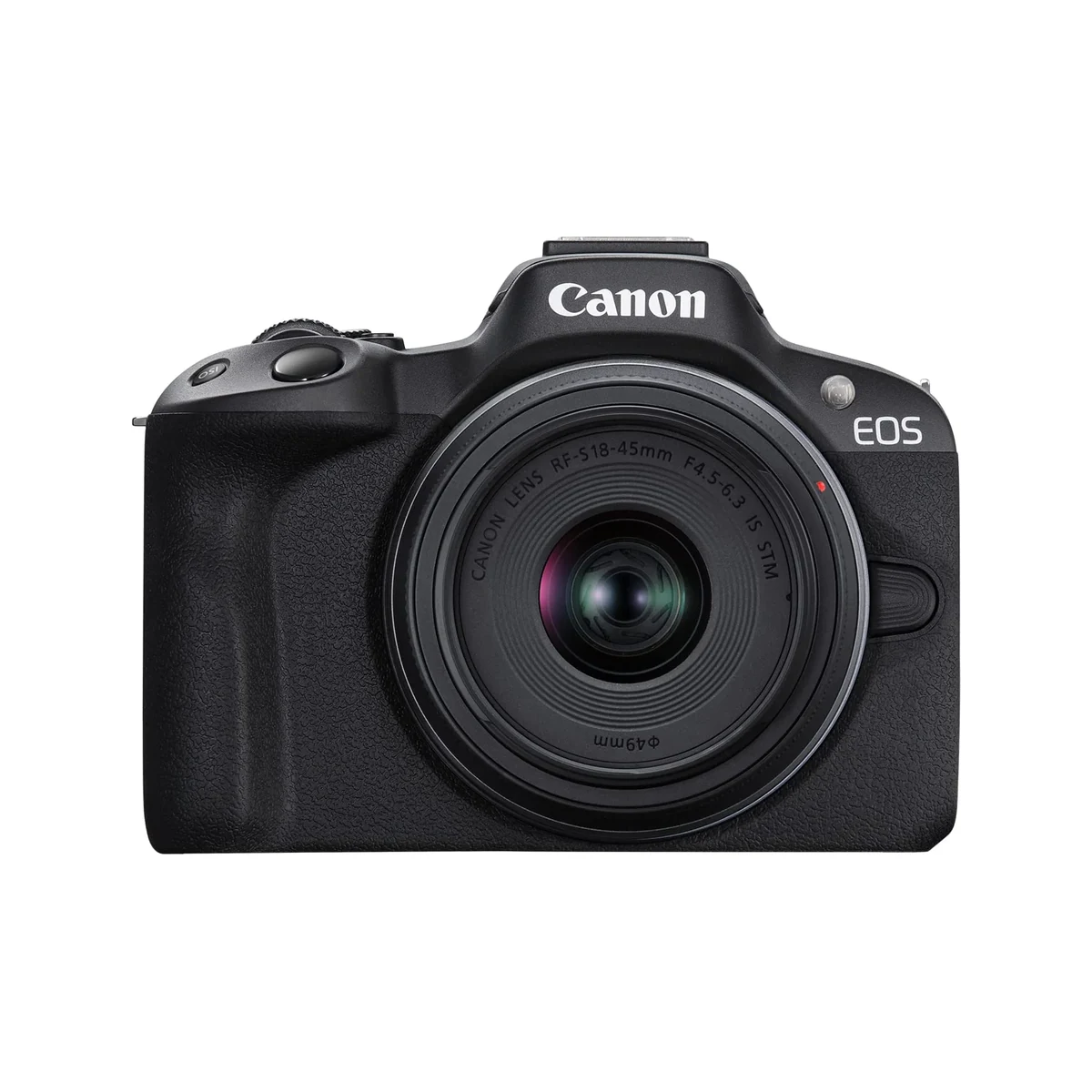
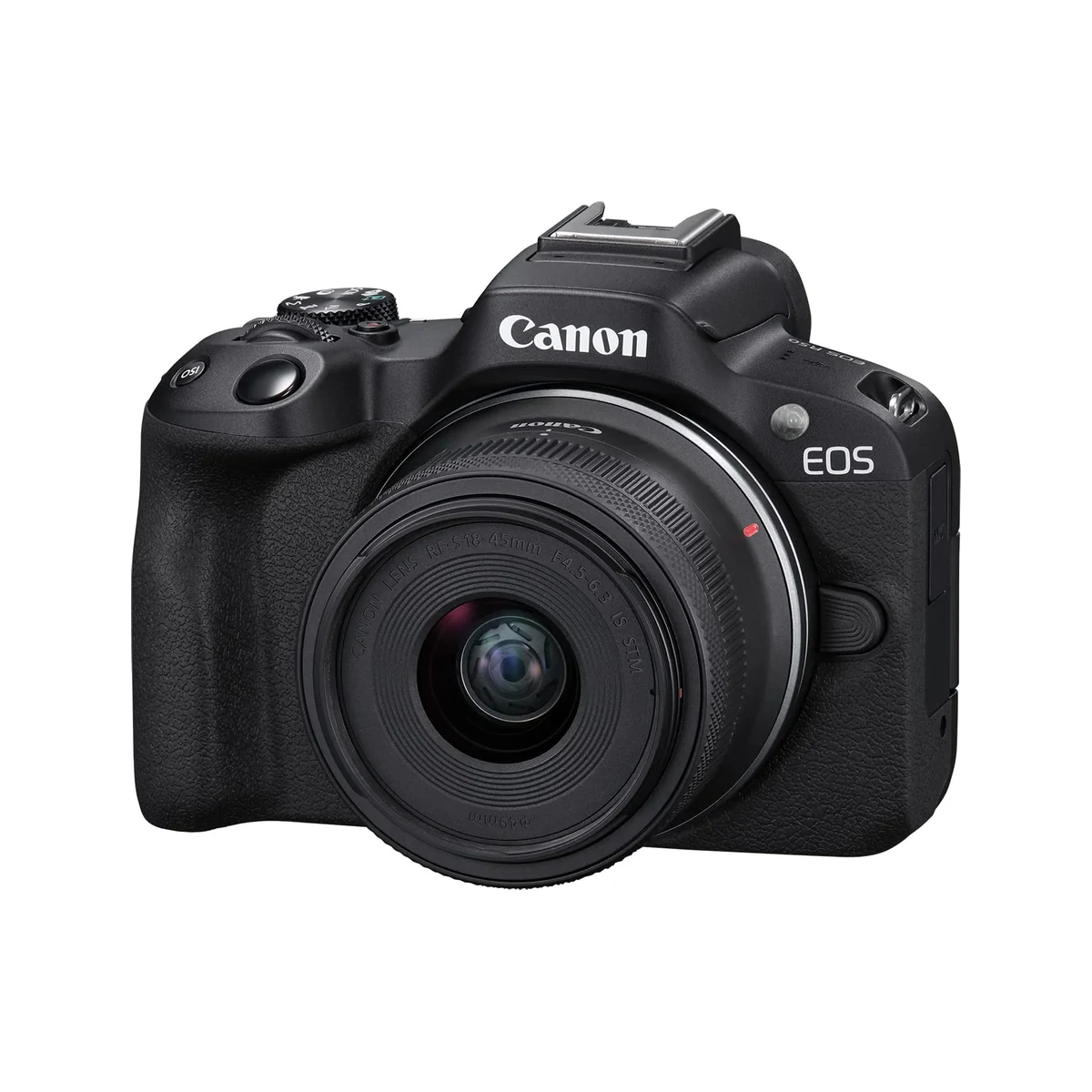
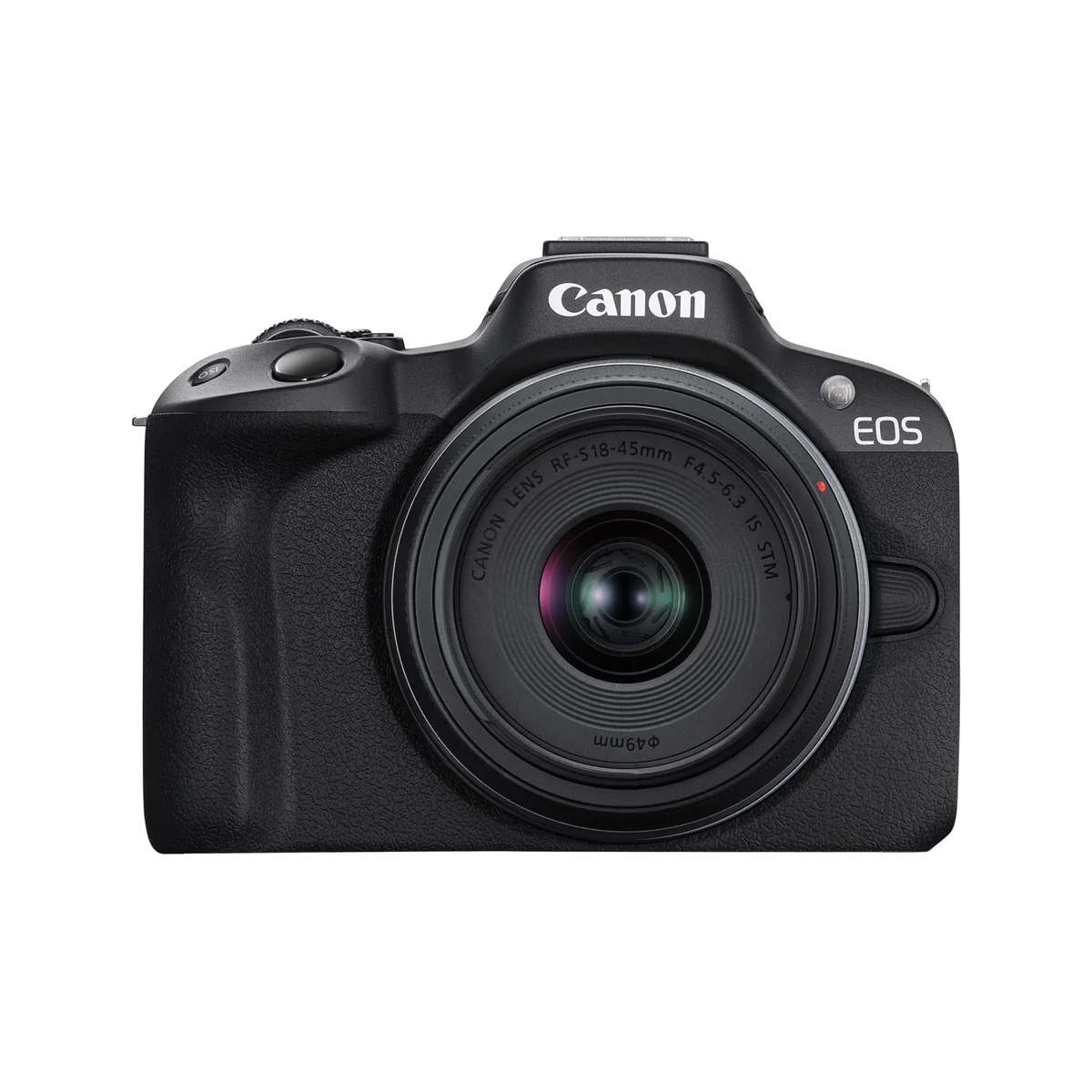
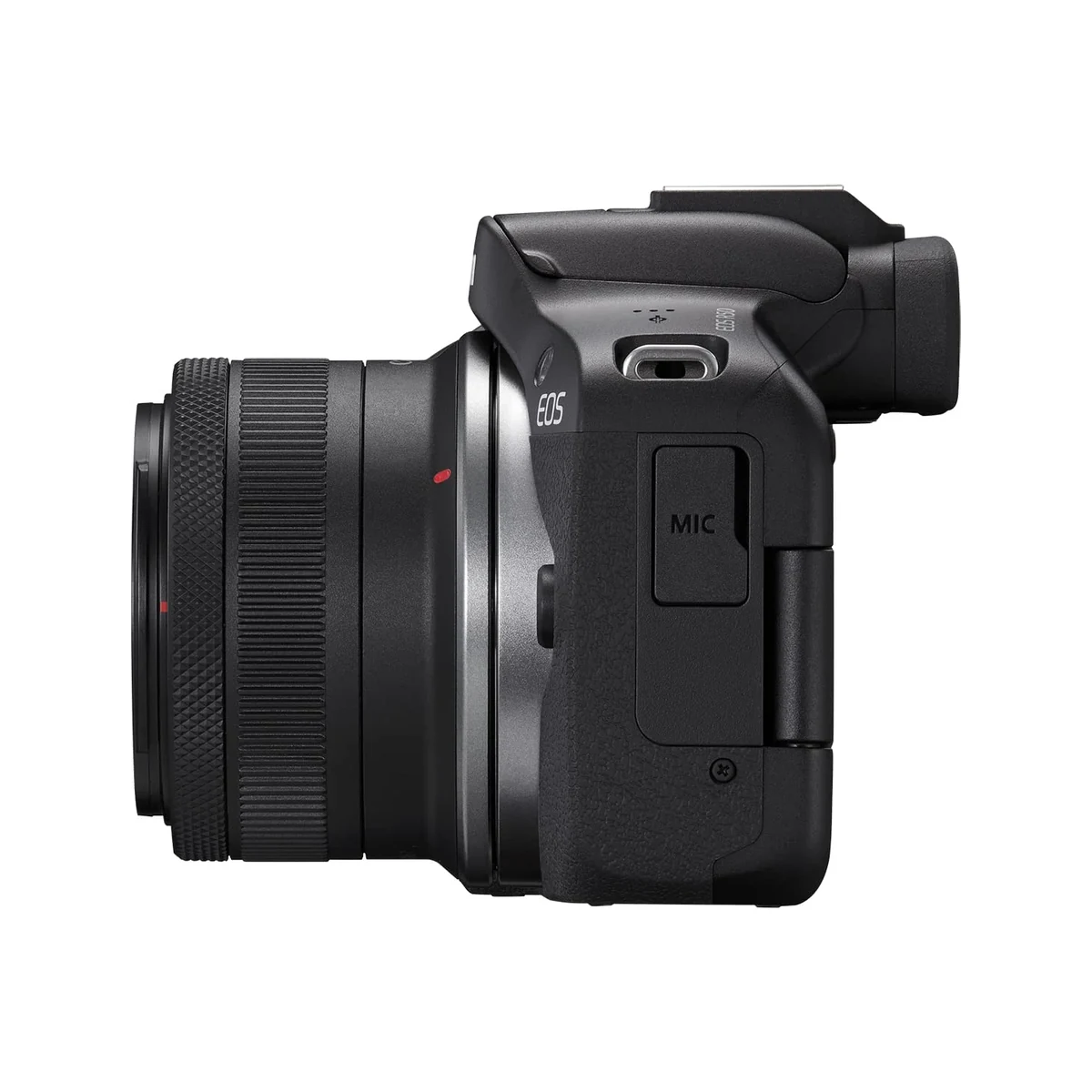
The Canon EOS R50 features a minimalist, compact design that prioritizes portability without sacrificing usability. Constructed primarily from high-quality polycarbonate, the camera body weighs just 375 grams with battery and memory card installed, making it one of the lightest RF-mount cameras available in 2026. Despite the plastic construction, it feels solid in the hand with tight panel gaps and a reassuring heft that belies its small size.
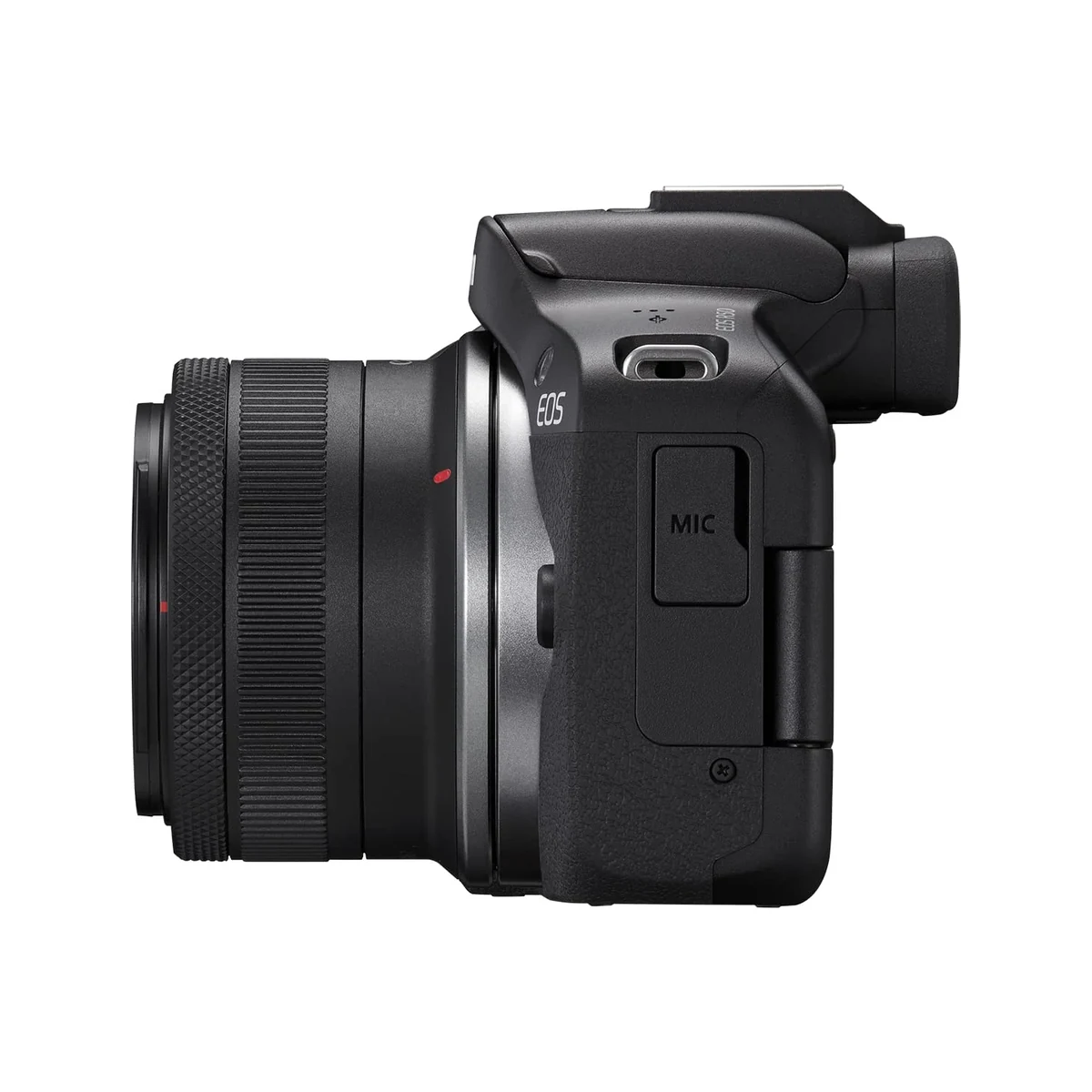
Ergonomics are excellent for a camera this compact. The deep, sculpted grip provides a secure hold even with larger RF lenses attached, while the thoughtfully positioned mode dial and customizable buttons fall naturally under the fingers. The 0.39-inch OLED electronic viewfinder is bright and responsive, and the fully articulated 3-inch touchscreen remains a standout feature for vloggers and those shooting from unconventional angles.
Overall build quality strikes an ideal balance for its target audience. While it lacks the weather sealing and magnesium alloy chassis of Canon’s higher-end models, the R50 feels refined and durable enough for everyday enthusiast use, travel, and content creation.
Performance
In real-world shooting, the EOS R50 consistently impresses with its speed and responsiveness. The DIGIC X processor paired with the 24.2MP sensor enables near-instant startup, minimal buffer delays, and class-leading subject tracking. Dual Pixel CMOS AF II locks onto eyes, faces, animals, and vehicles with uncanny reliability, even in challenging lighting or when subjects move erratically. Burst shooting at 12 frames per second captures decisive action moments that would be impossible with slower cameras.
Image quality exceeds expectations for an APS-C sensor. Colors are vibrant yet natural thanks to Canon’s proven processing algorithms, while dynamic range holds up well in high-contrast scenes. Noise performance remains clean through ISO 6400, with usable results at ISO 12800 for web and social media. Benchmarks place the R50 competitive with cameras costing significantly more, particularly in autofocus acquisition speed and tracking accuracy.
Video performance is equally capable for its class. Oversampled 4K at 30p delivers sharp, detailed footage with excellent color science, while 1080p/120p provides smooth slow-motion options. The camera handles rolling shutter well, though extended 4K recording can trigger thermal limits after approximately 15-20 minutes in warm conditions.
Features & Software
Standout features include sophisticated subject detection AF that works seamlessly across stills and video, a fully articulating touchscreen ideal for vlogging, and UVC/UAC compatibility for high-quality webcam streaming. The camera also supports Canon’s latest Lens Optimization corrections and in-camera RAW processing, streamlining post-production workflows.
The user interface remains one of Canon’s strongest assets. The menu system is logical and beginner-friendly while offering extensive customization for advanced users. In 2026, the Camera Connect app provides stable wireless image transfer, remote control, and firmware updates, creating a cohesive ecosystem experience that feels modern and polished.

Value Proposition
In 2026, the Canon EOS R50 continues to offer exceptional value as an accessible entry point into the RF lens ecosystem. At its current price, it undercuts many competitors while delivering autofocus performance and image quality that rival cameras costing hundreds more. The growing catalog of affordable RF lenses further enhances its long-term appeal for enthusiasts who want to grow with the system.
Compared to similarly priced DSLRs or older mirrorless models, the R50’s electronic viewfinder, vari-angle screen, and advanced AF provide a more future-proof experience. It represents an ideal upgrade path for smartphone photographers and content creators seeking professional results without a professional budget.
How It Compares
Against the Sony ZV-E10 II, the Canon EOS R50 offers a built-in electronic viewfinder and superior subject tracking AF, making it more versatile for hybrid stills-and-video shooters. However, the Sony provides better battery life and a more vlogger-focused design with easier access to certain video controls.
The Nikon Z fc presents a stylish retro alternative with slightly better ergonomics for some users and marginally improved battery performance. Yet the R50 surpasses it with faster burst rates, more reliable animal and vehicle detection, and a more compact overall footprint that appeals to travel photographers.
Pros and Cons
Pros
- Delivers exceptional Dual Pixel AF II tracking that rivals cameras twice the price.
- Extremely compact and lightweight design makes it perfect for travel and all-day shooting.
- Produces beautiful JPEGs with Canon’s signature pleasing color science straight out of camera.
- Fully articulated vari-angle screen excels for vlogging and creative compositions.
- Offers outstanding value with access to Canon’s expanding RF lens ecosystem.
Cons
- Lacks in-body image stabilization, requiring stabilized lenses for optimal low-light handheld shooting.
- 4K video recording applies a noticeable crop factor that limits wide-angle options.
- Battery life is merely average, often requiring spares for full-day events or extended vlogging.
- Plastic build quality feels less premium than higher-tier Canon mirrorless bodies.
- Single card slot may give pause to photographers who need redundant backup in the field.
FAQ
Q: Is the Canon EOS R50 a good camera for beginners in 2026?
A: Yes. Its intuitive interface, excellent autofocus, and helpful guided UI make it one of the best beginner mirrorless cameras available.
Q: Does the Canon EOS R50 have in-body image stabilization?
A: No. The camera relies on optical stabilization provided by compatible RF lenses rather than IBIS.
Q: Can you use the Canon EOS R50 for professional work?
A: It performs admirably for many professional scenarios including portraits, events, and content creation, though it lacks weather sealing and dual card slots preferred by some pros.
Q: How does the Canon EOS R50 perform for video?
A: It records excellent 4K 30p and 1080p 120p footage with great color and autofocus. Note the crop factor in 4K and potential overheating during extended clips.
Q: Is the EOS R50 compatible with all RF lenses?
A: Yes. It works with the full range of RF and RF-S lenses, and EF lenses can be used via Canon’s EF-EOS R adapters.
Verdict
The Canon EOS R50 remains an outstanding choice in 2026 for beginners, enthusiasts, vloggers, and travel photographers who want excellent image quality and class-leading autofocus in an ultra-portable package. Its combination of performance, features, and value makes it one of the smartest entry points into the Canon RF system. If you prioritize compactness, color accuracy, and reliable subject tracking over weather sealing or in-body stabilization, the R50 is highly recommended.
Pros
- ✓ Delivers exceptional Dual Pixel AF II tracking that rivals cameras twice the price.
- ✓ Extremely compact and lightweight design makes it perfect for travel and all-day shooting.
- ✓ Produces beautiful JPEGs with Canon’s signature pleasing color science straight out of camera.
- ✓ Fully articulated vari-angle screen excels for vlogging and creative compositions.
- ✓ Offers outstanding value with access to Canon’s expanding RF lens ecosystem.
Cons
- ✗ Lacks in-body image stabilization, requiring stabilized lenses for optimal low-light handheld shooting.
- ✗ 4K video recording applies a noticeable crop factor that limits wide-angle options.
- ✗ Battery life is merely average, often requiring spares for full-day events or extended vlogging.
- ✗ Plastic build quality feels less premium than higher-tier Canon mirrorless bodies.
- ✗ Single card slot may give pause to photographers who need redundant backup in the field.
Where to Buy the Canon EOS R50





Prices may vary. Affiliate links — we may earn a commission at no extra cost to you.
Related Reviews

Affiliate links — we may earn a commission at no extra cost to you.