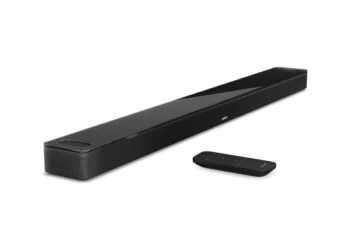


The Roku Pro Series is Roku’s most ambitious TV lineup yet, pairing a polished mini-LED display with the company’s famously simple smart TV platform. For buyers who want strong picture quality, responsive performance, and a clean software experience without paying flagship OLED prices, it makes a compelling case in 2026.
Table of Contents
Key Specifications
| Feature | Detail |
|---|---|
| Display Type | 4K mini-LED LCD with full-array local dimming |
| Resolution | 3840 x 2160 |
| HDR Support | Dolby Vision IQ, HDR10+, HDR10, HLG |
| Refresh Rate | Up to 120Hz |
| Gaming Features | VRR, ALLM, 4K/120 support on compatible HDMI inputs |
| Smart TV Platform | Roku OS |
| Audio | Built-in speakers with enhanced TV sound processing |
| Voice Control | Roku Voice Remote Pro support, hands-free voice options on select configurations |
| Connectivity | HDMI eARC, Wi-Fi, Bluetooth, Ethernet, USB |
| Sizes | Multiple screen sizes available, including large-format options |
| Best For | Streaming, mixed content viewing, casual-to-serious console gaming |
Design & Build Quality
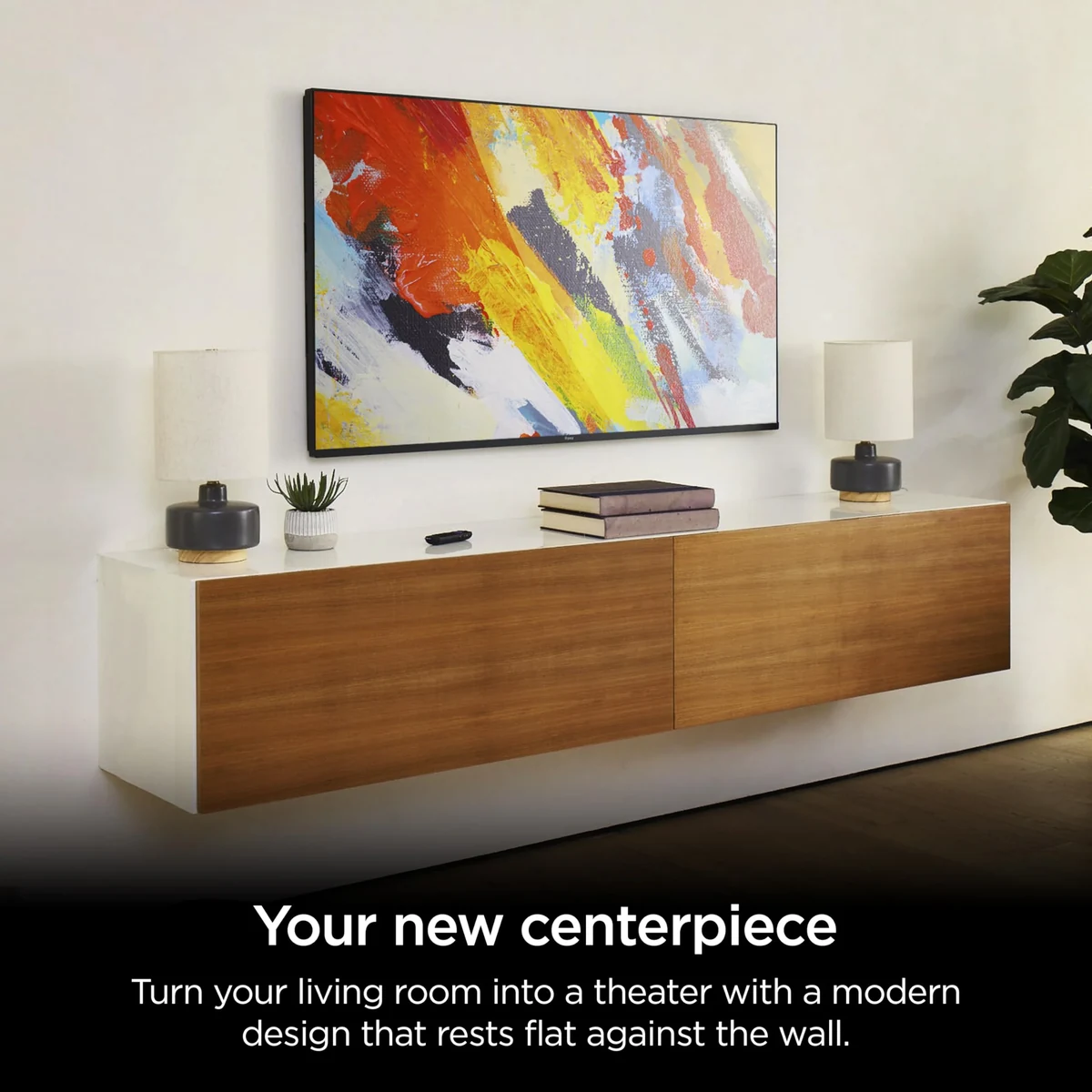
The Roku Pro Series takes a notably more premium approach than earlier Roku-branded televisions. The chassis feels cleaner and more refined, with slim bezels that keep attention on the panel rather than the frame. It is still unmistakably practical in its design language, but there is enough polish here to make it feel at home in a modern living room, media den, or gaming setup.
Build quality is solid overall, with a sturdy stand system and a cabinet that avoids the hollow, budget-TV feel common in this price bracket. The rear panel layout is sensible, making cable routing and wall mounting relatively painless. While it does not chase the ultra-thin aesthetics of premium OLED sets, that extra depth is a fair trade for the mini-LED backlight system and stronger thermal management.
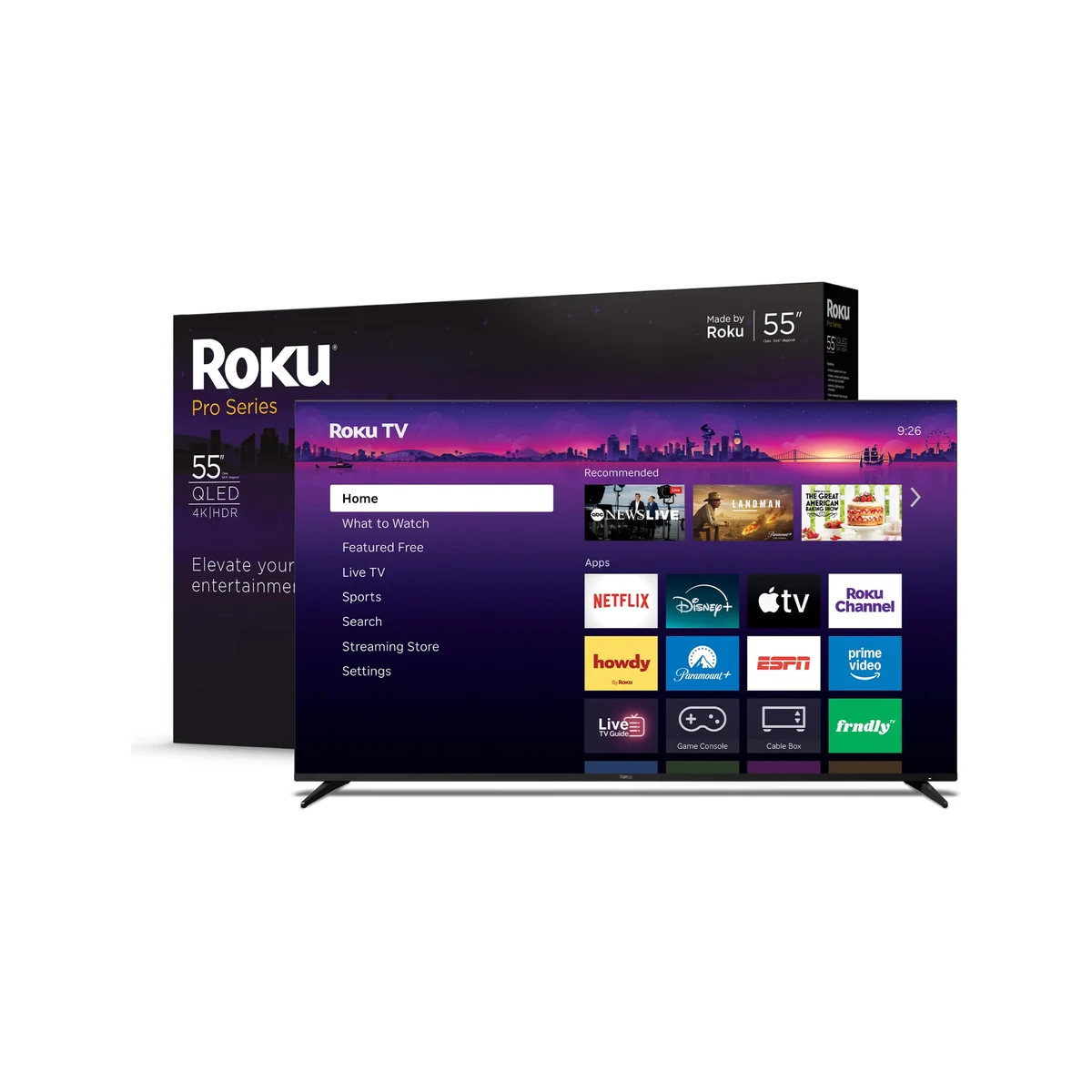
From an ergonomics standpoint, Roku continues to prioritize usability. Setup is straightforward, remote navigation is intuitive, and the TV’s physical design does not get in the way of day-to-day use. For buyers who care more about practical design and durability than flashy industrial styling, the Pro Series strikes a smart balance.
Performance
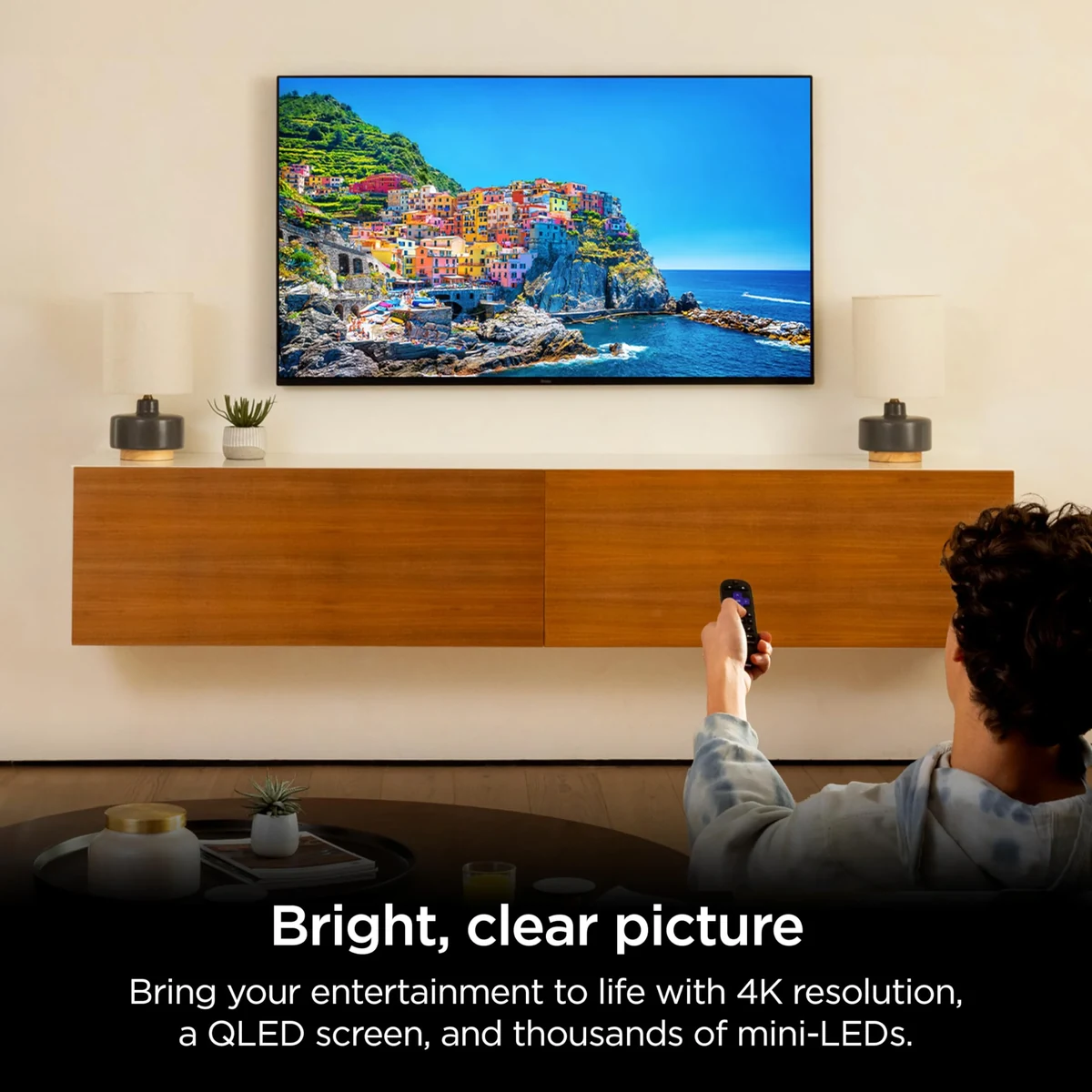
In real-world use, the Roku Pro Series delivers the kind of image quality that makes mini-LED appealing in the upper midrange market. Brightness is one of its strongest assets, giving HDR content real punch in both dim rooms and brighter daytime environments. Highlights in Dolby Vision content look vivid, black levels are impressively deep for an LCD-based set, and local dimming generally does a good job maintaining contrast without crushing too much shadow detail.
Color performance is also strong, with rich but controlled saturation that works well across movies, sports, and streaming content. Motion handling is good, especially with 120Hz content, and the TV feels well suited to fast-moving action scenes and live broadcasts. Upscaling on lower-resolution content is competent rather than class-leading, but 4K streams and current-generation console output look crisp and detailed.
System responsiveness is another area where the Pro Series performs well. Roku OS remains one of the fastest and least cluttered smart TV interfaces, and app launching, input switching, and menu navigation feel snappy. For gaming, low input lag, VRR support, and 4K at 120Hz make this a genuinely capable display for PlayStation 5, Xbox Series X, and gaming PCs, though the most demanding enthusiasts may still prefer higher-end alternatives with more HDMI 2.1 bandwidth and deeper picture controls.
Features & Software
The biggest differentiator here is still Roku OS. In a market where many smart TV platforms feel overloaded with ads, recommendations, and vendor-specific complexity, Roku’s interface remains refreshingly simple. The home screen is easy to customize, major streaming apps are widely supported, and search is fast and effective across services. For users who just want to turn on the TV and get to content quickly, this remains one of the best ecosystems available.
The Roku Pro Series also benefits from a mature feature set, including strong voice search, private listening options through the Roku app, and broad HDR format support. Gamers get meaningful next-gen features, while mainstream users get a TV that is easy to live with every day. It may not offer the same level of enthusiast-grade calibration depth as some rivals, but its software experience is cleaner and more approachable than many competitors.
Value Proposition
The Roku Pro Series sits in a sweet spot for buyers who want premium-adjacent picture quality without jumping to flagship pricing. Its combination of mini-LED brightness, competent local dimming, 120Hz support, and Roku’s polished software platform gives it broad appeal across movie fans, streamers, and gamers. In practical terms, it offers more than enough performance for most households while keeping the user experience simple.
Against similarly priced rivals, the Pro Series stands out because it avoids the usual compromise of pairing good hardware with frustrating software. Some competing TVs may edge it out in raw contrast, processing, or gaming connectivity, but few deliver such a balanced package at this price level. For value-conscious buyers in 2026, that balance is exactly what makes it attractive.
How It Compares
Compared with the TCL QM8, the Roku Pro Series offers a cleaner and more intuitive smart TV experience, especially for users who prefer Roku OS over Google TV. The TCL often pushes higher peak brightness and can be more aggressive in HDR impact, but Roku’s interface feels faster and less cluttered for everyday use.
Against the Hisense U8N, the Roku Pro Series again wins on software simplicity and ease of setup, while the Hisense model may appeal more to buyers chasing maximum brightness and a more spec-heavy value proposition. If you prioritize usability and consistency, the Roku Pro Series is easier to recommend; if you want the most eye-catching HDR performance per dollar, the Hisense remains a strong alternative.
Pros and Cons
Pros
- The mini-LED panel delivers bright, punchy HDR performance with strong contrast for the price.
- Roku OS remains one of the simplest, fastest, and most user-friendly smart TV platforms available.
- Gaming support is solid, with 4K/120, VRR, and low input lag for current-generation consoles.
- Build quality and overall design feel more premium than many midrange competitors.
- Broad HDR format support improves compatibility across streaming services and devices.
Cons
- Black levels and blooming control still cannot fully match a good OLED TV.
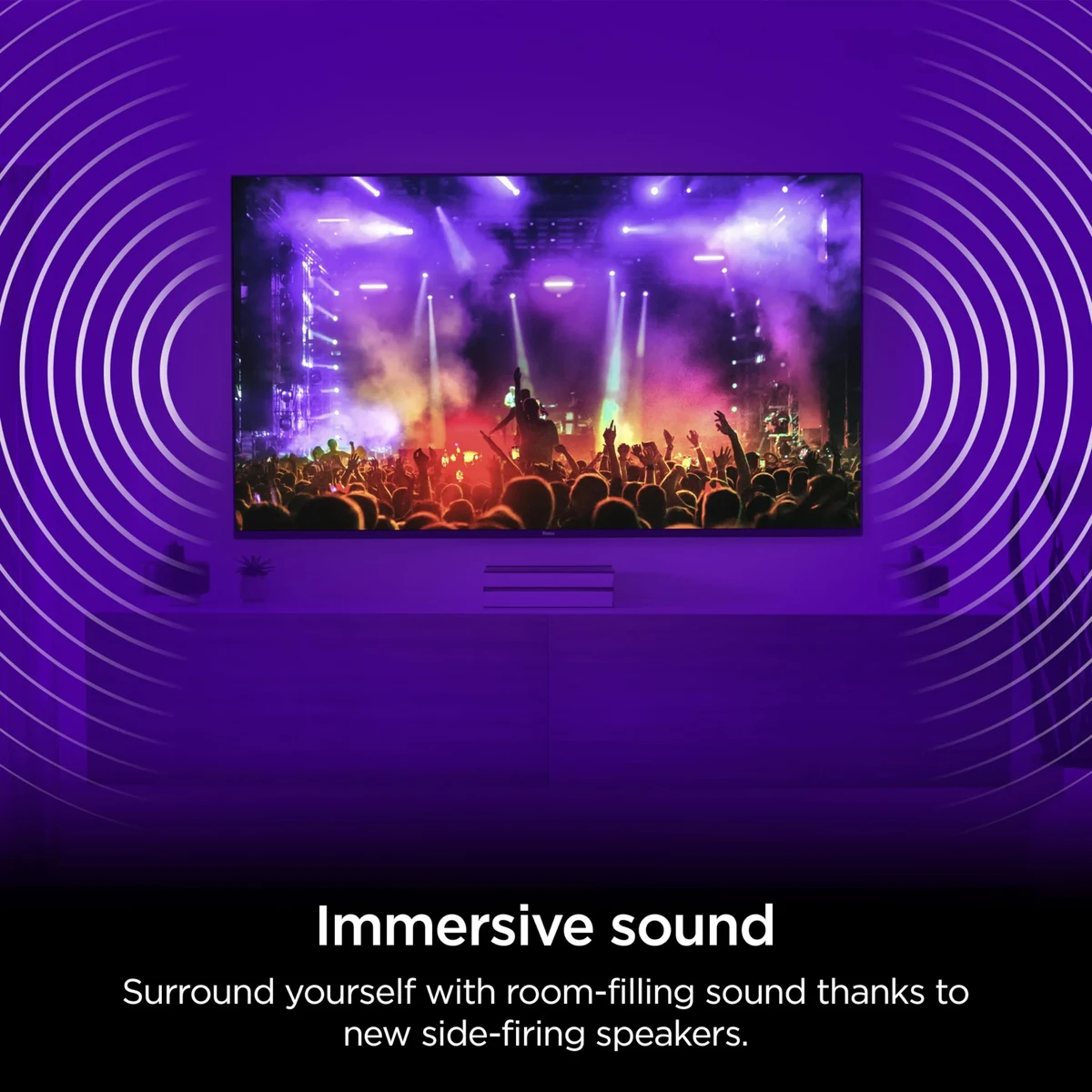
- Audio performance is serviceable, but a soundbar is strongly recommended for a cinematic experience.
- Picture processing and upscaling are good rather than best-in-class with lower-quality sources.
- Enthusiasts may want more advanced calibration controls and deeper image customization.
- Some rivals offer even higher peak brightness or more aggressive gaming specs at similar prices.
FAQ
Q: Is the Roku Pro Series good for gaming in 2026?
A: Yes. With 4K at 120Hz, VRR, ALLM, and low input lag, it is a strong option for PS5, Xbox Series X, and compatible PC gaming.
Q: Does the Roku Pro Series support Dolby Vision?
A: Yes. It supports Dolby Vision IQ along with HDR10+, HDR10, and HLG, making it highly compatible with modern HDR content.
Q: Is Roku OS better than Google TV or Fire TV?
A: That depends on your preferences, but Roku OS is widely praised for its speed, simplicity, and easy navigation, especially for users who want a less cluttered interface.
Q: Does the Roku Pro Series need a soundbar?
A: For casual viewing, the built-in speakers are fine, but for movies, games, and fuller dialogue clarity, a soundbar is a worthwhile upgrade.
Q: Who should buy the Roku Pro Series?
A: It is best for buyers who want a bright 4K mini-LED TV with a clean smart TV experience, strong streaming support, and capable gaming performance at a sensible price.
Verdict
The Roku Pro Series is an easy recommendation for buyers who want a premium-feeling 4K mini-LED TV without stepping into expensive OLED territory. It is especially well suited to streamers, mixed-use households, and gamers who value strong picture quality and a clean, hassle-free interface.
Pros
- ✓ The mini-LED panel delivers bright, punchy HDR performance with strong contrast for the price.
- ✓ Roku OS remains one of the simplest, fastest, and most user-friendly smart TV platforms available.
- ✓ Gaming support is solid, with 4K/120, VRR, and low input lag for current-generation consoles.
- ✓ Build quality and overall design feel more premium than many midrange competitors.
- ✓ Broad HDR format support improves compatibility across streaming services and devices.
Cons
- ✗ Black levels and blooming control still cannot fully match a good OLED TV.
- ✗ Audio performance is serviceable, but a soundbar is strongly recommended for a cinematic experience.
- ✗ Picture processing and upscaling are good rather than best-in-class with lower-quality sources.
- ✗ Enthusiasts may want more advanced calibration controls and deeper image customization.
- ✗ Some rivals offer even higher peak brightness or more aggressive gaming specs at similar prices.
Where to Buy the Roku Pro Series




Prices may vary. Affiliate links — we may earn a commission at no extra cost to you.
Related Reviews

Affiliate links — we may earn a commission at no extra cost to you.