





The EcoFlow Delta 2 remains the gold standard for mid-sized portable power stations in 2026, offering incredibly rapid charging speeds and robust LiFePO4 battery technology. Whether you are prepping for unexpected blackouts or taking your tech off-grid, this powerhouse strikes the perfect balance of capacity, output, and portability. Read our comprehensive review to see why it continues to dominate the portable energy market.
Table of Contents
Key Specifications
| Feature | Detail |
|---|---|
| Battery Capacity | 1024Wh (Expandable up to 3040Wh) |
| Battery Chemistry | LFP (LiFePO4) |
| Cycle Life | 3,000 cycles to 80%+ capacity |
| AC Output | 1800W total (2700W Surge) / X-Boost up to 2200W |
| AC Input (Charging) | 1200W Max (X-Stream Fast Charging) |
| Solar Input | 500W Max (11-60V, 15A) |
| Weight | 27 lbs (12 kg) |
| Dimensions | 15.7 x 8.3 x 11 in |
| Connectivity | Wi-Fi and Bluetooth (EcoFlow App) |
Design & Build Quality
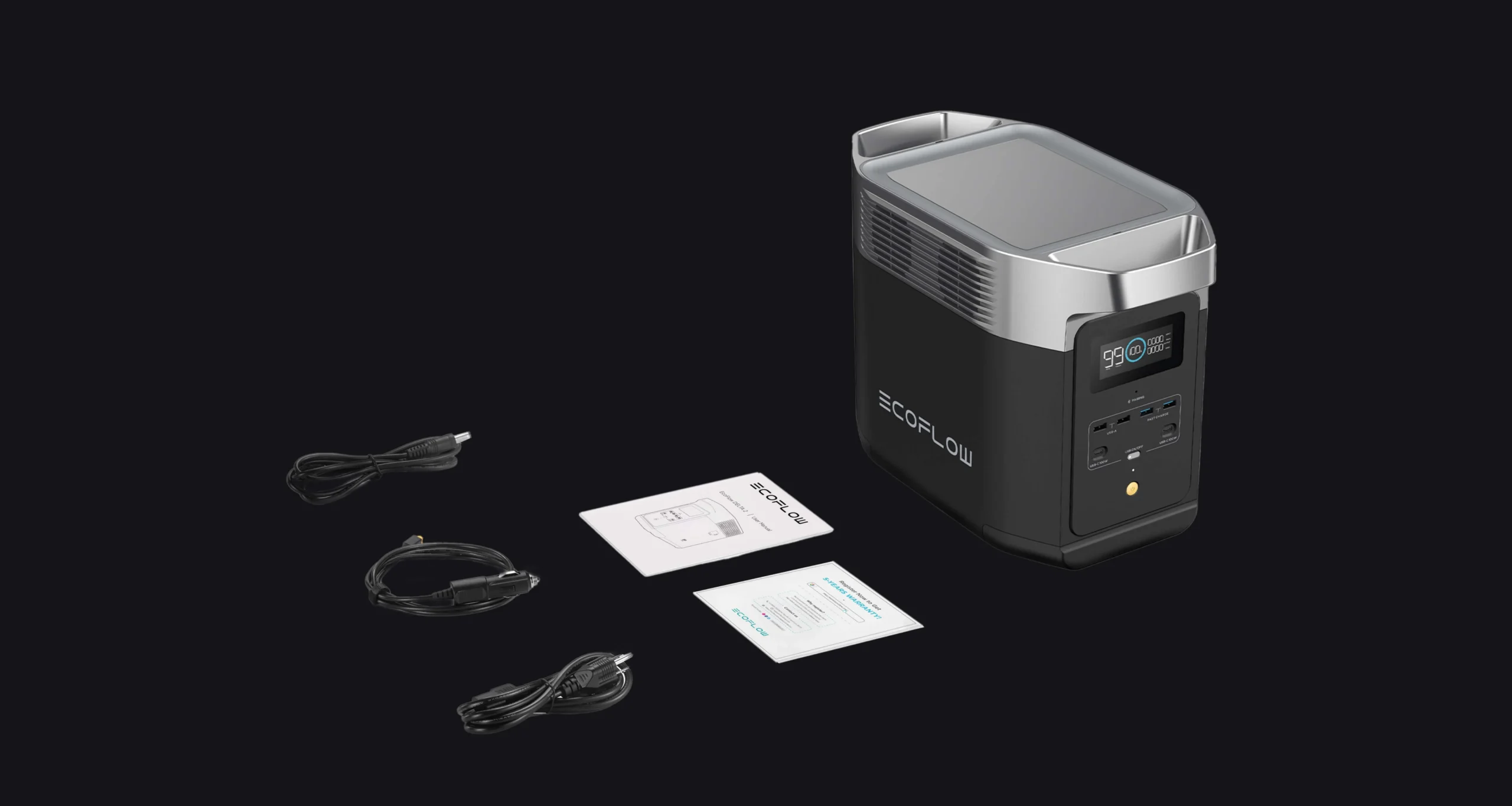
EcoFlow has long favored a utilitarian yet modern aesthetic, and the Delta 2 carries this legacy flawlessly into 2026. The chassis is constructed from high-grade, fire-resistant matte plastic, sporting the brand’s signature two-tone dark grey design. Two robust, molded handles sit at the top of the unit, making it incredibly easy to grab and go. Unlike power stations with folding handles that can feel flimsy, the Delta 2’s unibody handle design inspires confidence when hauling it around a campsite or garage.
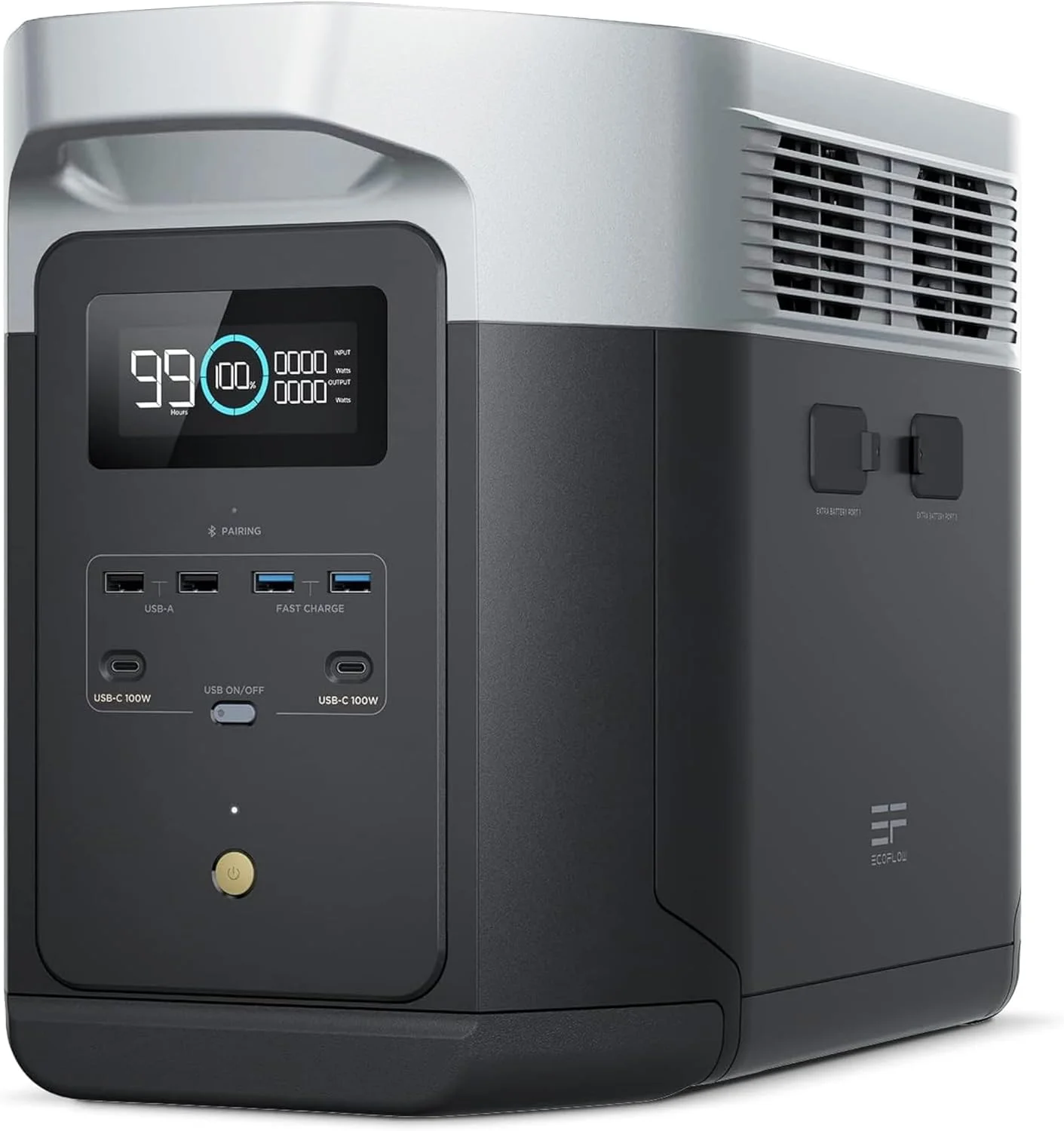
Ergonomically, the Delta 2 hits the sweet spot for portability. Weighing in at 27 lbs (12 kg), it is light enough for a single person to comfortably carry short distances. The port layout is intelligently segmented: the front houses all your low-voltage DC outputs, USB-A, and USB-C ports alongside a bright, high-contrast LCD screen. The rear is dedicated to heavy-duty power delivery, featuring the AC outlets and charging inputs neatly concealed behind a protective flap.
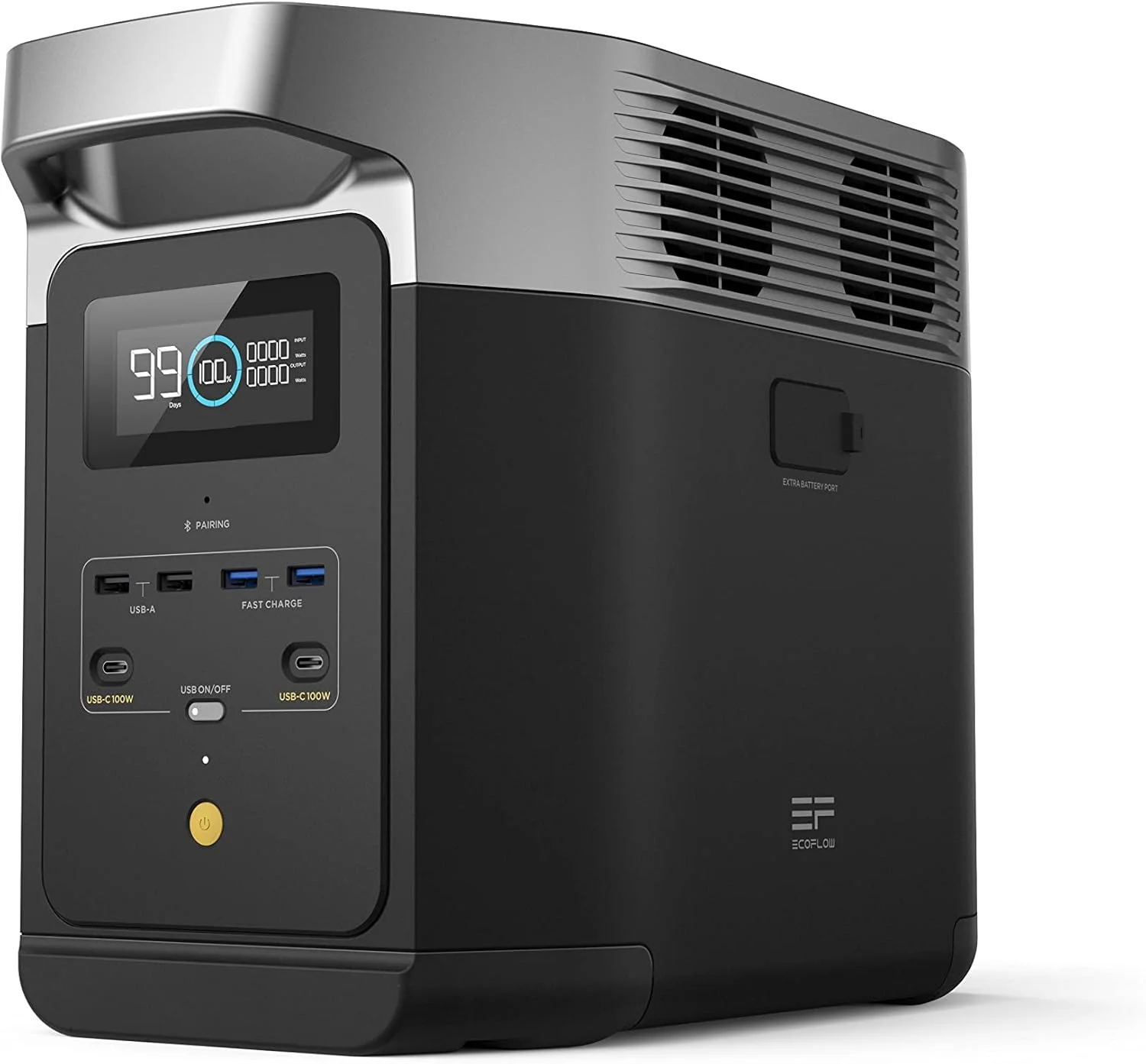
The front LCD deserves special mention. It is incredibly legible even in harsh sunlight, providing real-time data on input/output wattage, estimated time to depletion or full charge, and active connections. It is a masterclass in providing dense technical information without overwhelming the average user.
Performance
When it comes to real-world performance, the transition to LiFePO4 (LFP) battery chemistry is the Delta 2’s defining hardware upgrade. Rated for over 3,000 charge cycles before degrading to 80% of its original capacity, this power station is built to last a decade of daily use. In our benchmarking, the 1800W pure sine wave inverter barely broke a sweat. It easily managed power-hungry appliances like microwaves, coffee makers, and heavy-duty power tools. For resistive loads that exceed 1800W, EcoFlow’s proprietary X-Boost technology intelligently lowers the voltage to keep appliances up to 2200W running without tripping the overload protection.
Charging speed is where EcoFlow leaves most of the competition in the dust. Thanks to their X-Stream fast-charging technology, the Delta 2 can pull up to 1200W directly from a standard wall outlet. In our tests, it went from 0% to 80% in an astonishing 50 minutes, reaching a full 100% charge in just under 80 minutes. This is a game-changer for emergency preparedness; if a storm is approaching, you can fully top off the unit in the time it takes to pack your bags.
For off-grid enthusiasts, the solar performance is equally impressive. Supporting up to 500W of solar input, we were able to fully charge the unit in roughly 3 hours under optimal direct sunlight using a portable solar array. The internal MPPT (Maximum Power Point Tracking) controller is highly efficient, dynamically adjusting to passing clouds to squeeze every possible watt out of your panels.
Features & Software
The EcoFlow companion app remains the absolute best software experience in the portable power industry. Connecting seamlessly via Bluetooth or Wi-Fi, the app allows for deep granular control over the Delta 2. You can monitor individual port outputs, manually throttle the AC charging speed to prolong battery life or reduce noise, set specific charge/discharge limits, and automate behaviors. The UI is sleek, responsive, and consistently updated with firmware patches that enhance stability.
Another standout feature is the EPS (Emergency Power Supply) mode. When plugged into the wall with your devices connected to the Delta 2, power bypasses the battery. If the grid fails, the unit automatically switches to battery power within 30 milliseconds. While not quite a true zero-millisecond UPS (Uninterruptible Power Supply), it is fast enough to keep refrigerators, lights, and most standard electronics running without a hitch during a blackout.
Value Proposition
At its current 2026 price point, the EcoFlow Delta 2 represents exceptional value in the 1kWh category. It sits in a “Goldilocks” zone—offering enough juice to power a campsite for a weekend or keep essential home appliances running during rolling blackouts, without the back-breaking weight or exorbitant cost of 2kWh+ units.
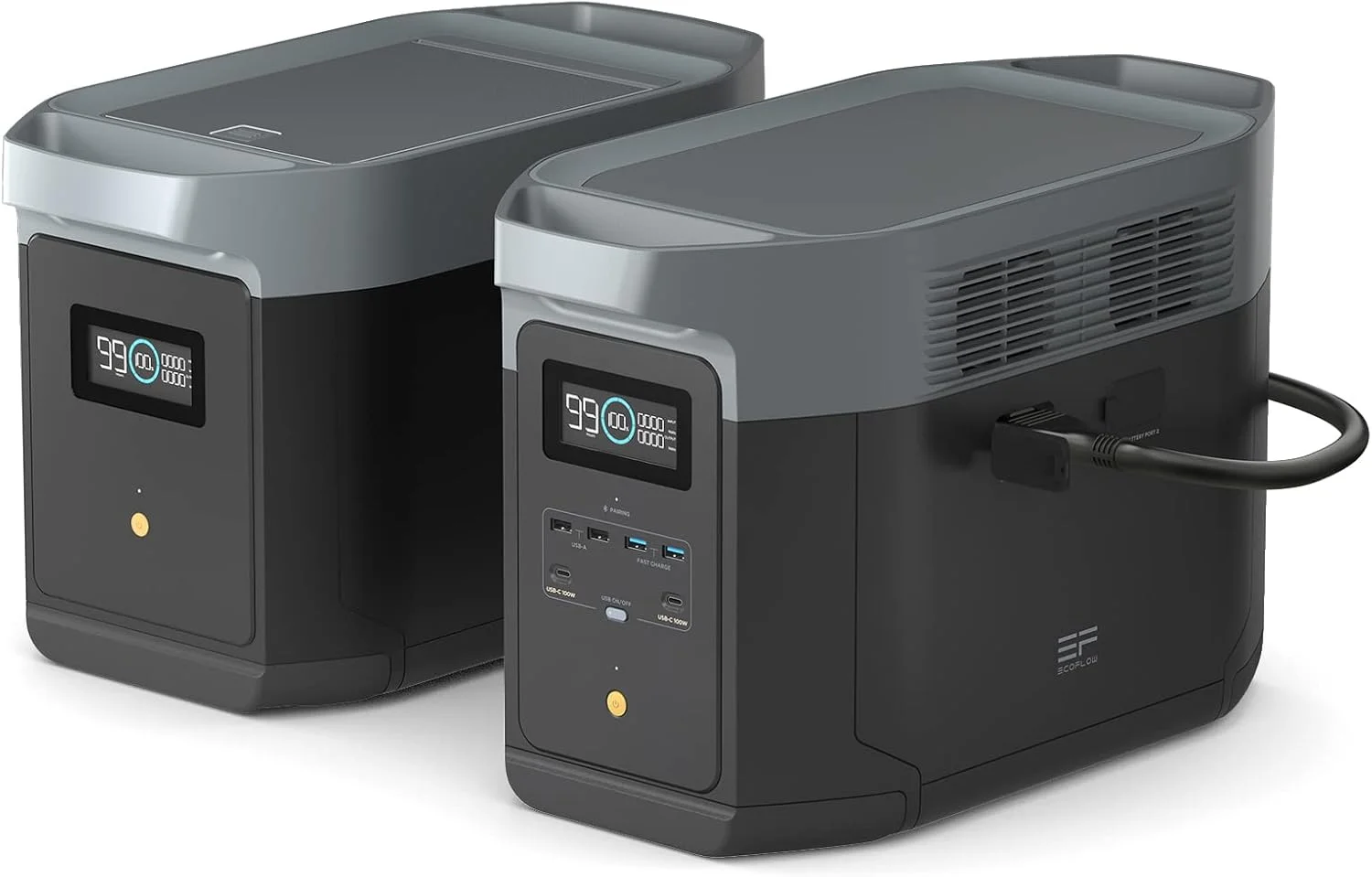
Furthermore, the Delta 2 is highly modular. If your power needs grow, you do not need to buy an entirely new system. You can daisy-chain an EcoFlow Delta 2 Extra Battery to double your capacity to 2048Wh, or connect a Delta Max Extra Battery to push it to a massive 3040Wh. This expandability effectively future-proofs your investment, making the initial purchase price incredibly justifiable for tech-savvy consumers.
How It Compares
When stacked against the Bluetti AC180, the Delta 2 holds a distinct advantage in modularity. While both feature excellent LFP batteries and similar inverter capacities, the Bluetti lacks the ability to add external plug-and-play battery packs, limiting its long-term scalability. However, the Bluetti does feature a built-in wireless charging pad, a minor convenience EcoFlow omitted.
Compared to the Jackery Explorer 1000 v2, the EcoFlow Delta 2 pulls ahead in charging speed and software experience. Jackery makes incredibly durable and simple-to-use power stations, but EcoFlow’s X-Stream 50-minute fast charging utterly eclipses Jackery’s charge times. Additionally, EcoFlow’s robust smartphone app offers a level of power-user customization that Jackery’s software has yet to match.
Pros and Cons
Pros
- It features class-leading AC charging speeds, capable of reaching 80% capacity in just 50 minutes.
- The LiFePO4 battery chemistry ensures exceptional longevity, rated for over 3,000 cycles.
- The companion smartphone app is incredibly intuitive, offering deep customization and remote monitoring.
- The system is easily expandable via plug-and-play extra batteries, future-proofing your investment.
- The 1800W pure sine wave inverter (with 2200W X-Boost) handles almost any household appliance.
Cons
- The cooling fans can become noticeably loud when pushing heavy loads or utilizing maximum fast charging.
- It lacks a built-in wireless charging pad on the top surface, a convenience found on several competing units.
- The 30ms EPS switchover time is slightly too slow to act as a reliable UPS for sensitive desktop computers or critical medical equipment.
FAQ
Q: Can the EcoFlow Delta 2 be used as a UPS?
A: It functions as an EPS (Emergency Power Supply) with a 30-millisecond switchover time. While this is perfectly fine for refrigerators, routers, and most appliances, it may not be fast enough to prevent sensitive desktop PCs from rebooting.
Q: Can I use solar panels from other brands to charge the Delta 2?
A: Yes, absolutely. As long as the third-party solar panels have standard MC4 connectors and their combined output falls within the Delta 2’s solar input range (11-60V, up to 15A), they will work flawlessly.
Q: Is the EcoFlow Delta 2 waterproof?
A: No, the unit is not water-resistant or waterproof. Because of its active cooling fans and exposed ports, it must be kept dry and protected from rain, snow, or extreme humidity.
Q: Can I leave it plugged into the wall all the time?
A: Yes. The built-in Battery Management System (BMS) prevents overcharging. However, if you plan to store it long-term without use, EcoFlow recommends keeping the battery between 30% and 60% to maximize its lifespan.
Verdict
The EcoFlow Delta 2 remains an exceptionally well-rounded portable power station that perfectly balances physical footprint, output capability, and battery longevity. With its rapid charging speeds and smart expandability, it is a premium investment that genuinely delivers. It is highly recommended for RV owners, frequent campers, and homeowners needing a reliable, scalable backup power source for essential appliances.
Where to Buy
Pros
- ✓ It features class-leading AC charging speeds, capable of reaching 80% capacity in just 50 minutes.
- ✓ The LiFePO4 battery chemistry ensures exceptional longevity, rated for over 3,000 cycles.
- ✓ The companion smartphone app is incredibly intuitive, offering deep customization and remote monitoring.
- ✓ The system is easily expandable via plug-and-play extra batteries, future-proofing your investment.
- ✓ The 1800W pure sine wave inverter (with 2200W X-Boost) handles almost any household appliance.
Cons
- ✗ The cooling fans can become noticeably loud when pushing heavy loads or utilizing maximum fast charging.
- ✗ It lacks a built-in wireless charging pad on the top surface, a convenience found on several competing units.
- ✗ The 30ms EPS switchover time is slightly too slow to act as a reliable UPS for sensitive desktop computers or critical medical equipment.
Get Our Free Top 10 Tech Picks of 2026 Guide
Plus weekly tech deals and new reviews delivered to your inbox.
[cp_email_signup]
No spam. Unsubscribe anytime.
Ready to buy the EcoFlow Delta 2?
Affiliate link — we may earn a commission at no extra cost to you.