


The Valve Steam Deck OLED isn’t just a minor refresh; it is a masterclass in handheld gaming evolution. Boasting a breathtaking HDR display, significantly improved battery life, and a lighter chassis, it addresses almost every shortcoming of the original LCD model. If you have been waiting to jump into the portable PC gaming ecosystem, this is the definitive device to own in 2026.
Table of Contents
Key Specifications
| Feature | Detail |
|---|---|
| Display | 7.4-inch HDR OLED, 1280 x 800 resolution, 90Hz refresh rate |
| Processor | 6nm AMD APU (Zen 2 CPU / RDNA 2 GPU) |
| Memory | 16GB LPDDR5 (6400 MT/s) |
| Storage | 512GB or 1TB NVMe SSD |
| Battery | 50Whr (3 to 12 hours of gameplay depending on load) |
| Connectivity | Wi-Fi 6E, Bluetooth 5.3, USB-C (DisplayPort 1.4 alt-mode) |
| Weight | Approx. 640 grams |
Design & Build Quality
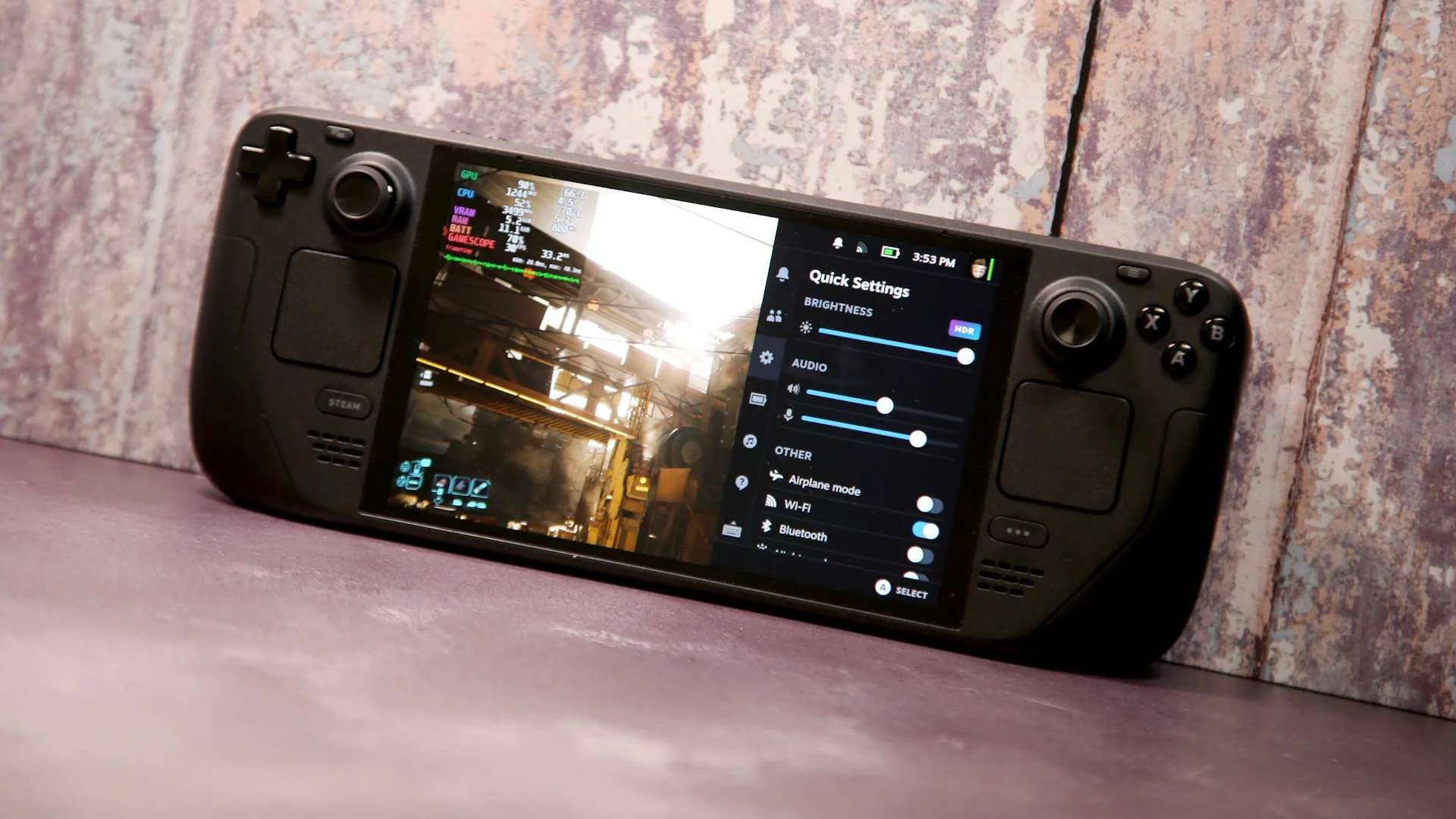
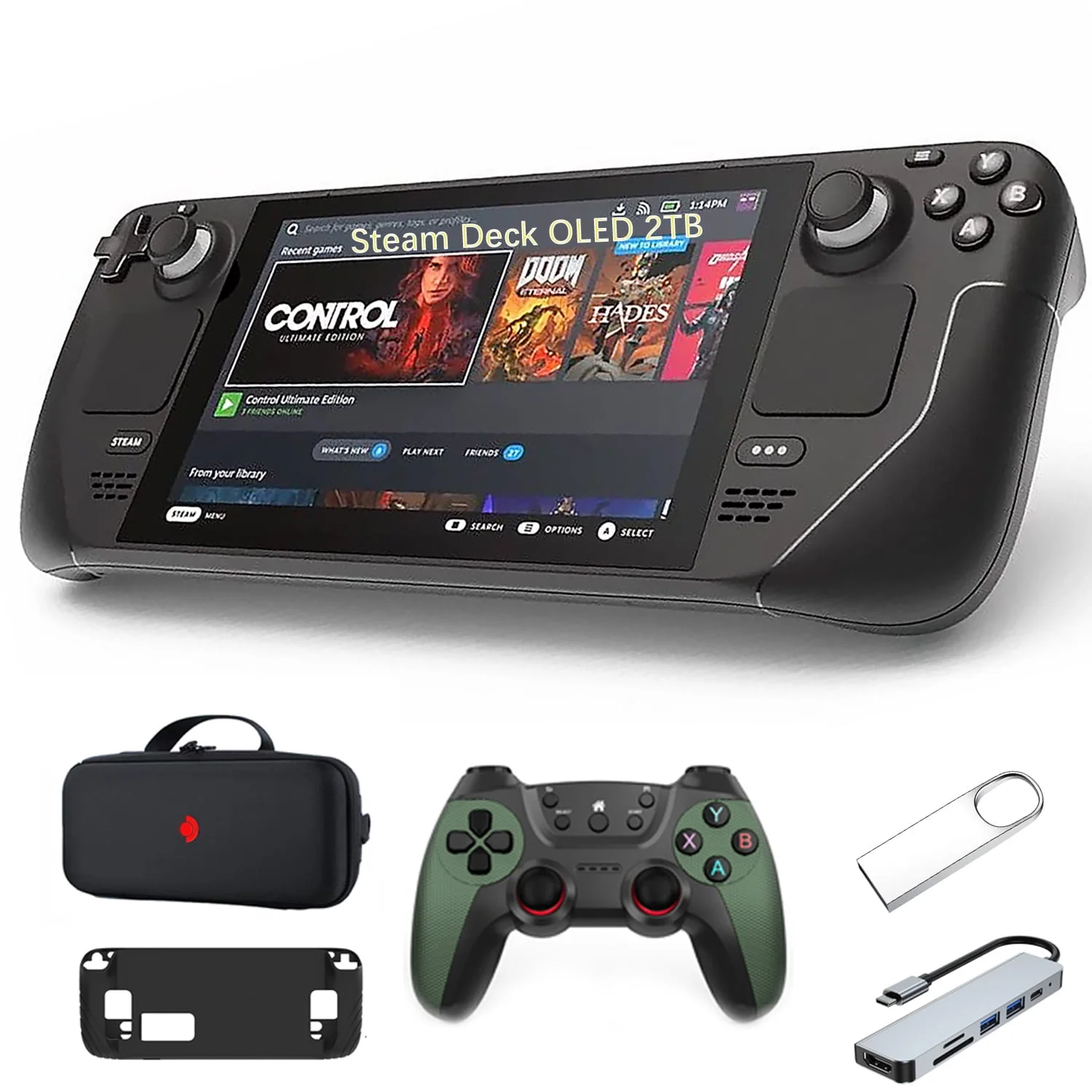
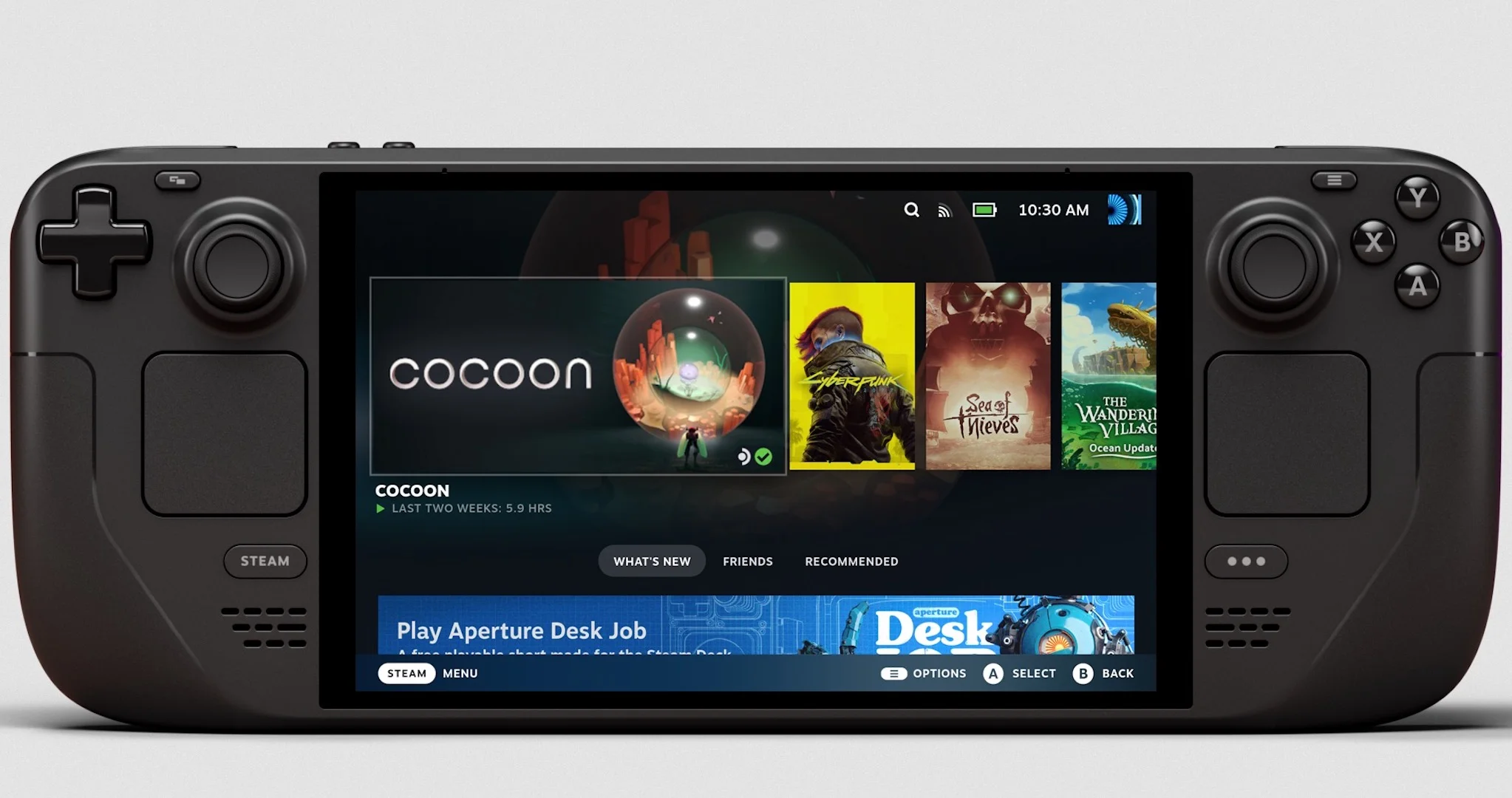
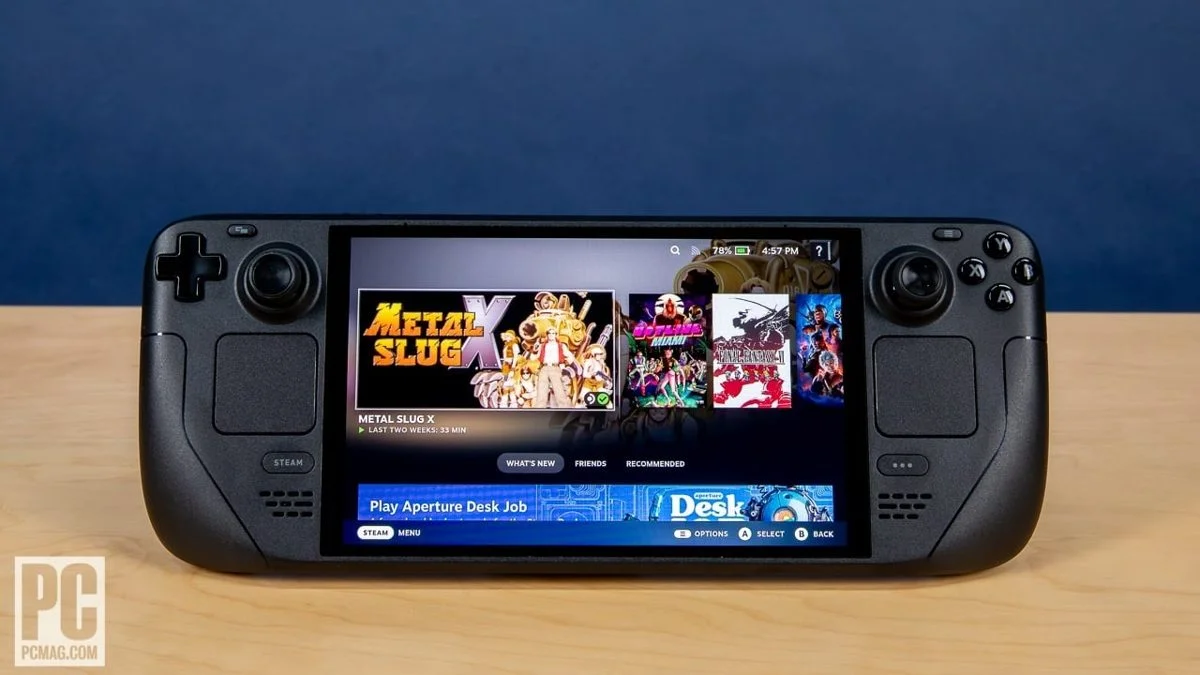
Valve didn’t reinvent the wheel with the design of the Steam Deck OLED, but the subtle refinements make a world of difference in the hands. The shift to a slightly larger 7.4-inch display trims down the unsightly bezels of the original model, allowing the vibrant new panel to take center stage. Weighing in at roughly 640 grams, it is about 5% lighter than its predecessor. This weight reduction, combined with gently updated thumbsticks and grippier textures, drastically improves ergonomics during extended play sessions.
The build quality remains robust and distinctly premium. Valve heavily tweaked the internal thermal module, resulting in a chassis that not only runs cooler but operates noticeably quieter under heavy graphical loads. The iconic dual trackpads, highly responsive face buttons, and precise analog sticks retain their top-tier tactile feedback. Even in the highly competitive landscape of 2026, the Steam Deck OLED’s functional, controller-first layout solidifies it as the most comfortable handheld PC on the market today.
Performance
At its core, the Steam Deck OLED retains the same architectural DNA as the original—an AMD APU featuring Zen 2 and RDNA 2 graphics—but transitions to a much more efficient 6nm manufacturing node. While this doesn’t dramatically increase peak framerates, it provides a noticeably smoother and more consistent gaming experience. Memory speeds have been bumped up to 6400 MT/s, offering a slight edge in memory-bandwidth-starved titles, ensuring highly stable 1% lows across demanding AAA games.
Where the performance truly shines is in the display capabilities. The 90Hz refresh rate combined with true HDR (High Dynamic Range) support transforms the visual fidelity of supported games. Titles like Cyberpunk 2077 and Elden Ring look breathtaking, with inky, infinite blacks and peak brightness reaching up to 1,000 nits. You aren’t pushing 4K textures, but at the native 1280×800 resolution on a 7.4-inch screen, the visual clarity and fluidity feel exceptionally modern and sharp.
The most profound performance upgrade, however, is battery life. Thanks to the larger 50Whr battery, the highly efficient OLED panel, and the 6nm APU, users can expect anywhere from 30% to 50% more playtime compared to the LCD variant. Lighter indie games can easily push past the 8-hour mark, while intensive 3D titles now confidently survive the two-to-three-hour threshold, making it a genuinely reliable companion for long flights and daily commutes.
Features & Software
SteamOS continues to be the undisputed king of handheld operating systems, offering a seamless, console-like experience that Windows-based competitors still struggle to emulate. The deep integration with the Steam storefront, instant suspend/resume functionality, and granular performance overlays give power users incredible control. Features like dynamically adjusting the TDP, locking framerates to fractions of the refresh rate (e.g., 45fps on a 90Hz screen), and system-wide AMD FSR are easily accessible via the Quick Access Menu.
Additionally, the inclusion of Wi-Fi 6E ensures drastically faster game downloads and lower latency for local network game streaming. The improved Bluetooth 5.3 chip natively supports advanced aptX HD and low-latency codecs, making wireless audio a perfectly viable option for rhythm and competitive action games. Combined with Valve’s relentless Proton compatibility updates, the out-of-the-box software experience has never been wider or more refined.
Value Proposition
In the rapidly expanding handheld market of 2026, the Valve Steam Deck OLED holds an enviable position. While it doesn’t boast the raw horsepower of high-end Windows handhelds that push 1080p or 1440p resolutions, it offers unparalleled efficiency and synergy between hardware and software. The entry price for the 512GB OLED model delivers a complete, optimized package without requiring users to spend hours tinkering with driver updates or battling OS bloatware.
Considering the exceptional HDR screen, massive battery improvements, and standard-setting ergonomics, the Steam Deck OLED offers arguably the highest “fun-per-dollar” ratio in mobile PC gaming. It bypasses the pure spec wars to deliver a reliable, cohesive entertainment experience that easily justifies its premium over older LCD hardware.
How It Compares
When pitted against powerful Windows alternatives like the ASUS ROG Ally and the Lenovo Legion Go, the Steam Deck OLED presents a fascinating trade-off. The ROG Ally and Legion Go offer significantly higher raw performance, higher-resolution screens, and native Windows support, which makes them better suited for playing high-end titles docked to a monitor or running games with restrictive anti-cheat engines. However, their reliance on Windows 11 severely compromises battery life and overall user interface fluidity. The Steam Deck OLED effortlessly doubles the battery life of both competitors in most real-world scenarios, and its frictionless SteamOS environment provides a seamless pick-up-and-play experience that ASUS and Lenovo devices still lack.
Pros and Cons
Pros
- Features a stunning 90Hz HDR OLED display with exceptional peak brightness and infinite blacks.
- Delivers vastly improved battery life compared to the original LCD model and direct Windows competitors.
- Runs on the highly optimized, console-like SteamOS with perfect sleep/resume functionality.
- Offers phenomenal ergonomics and significantly quieter, cooler thermals during heavy workloads.
Cons
- Lacks the raw APU processing power found in modern handheld competitors like the ROG Ally.
- Cannot natively play popular multiplayer games with strict anti-cheat software (like Fortnite or Call of Duty) without dual-booting Windows.
- The physical footprint remains incredibly bulky, making it difficult to travel with unless you have a dedicated bag.
FAQ
Q: Can I play non-Steam games on the Steam Deck OLED?
A: Yes. The Steam Deck runs on a modified Linux operating system that allows you to easily install third-party launchers like Epic Games Store, GOG, and various emulators by switching over to its Desktop mode.
Q: Does the Steam Deck OLED suffer from stick drift?
A: Valve uses high-quality ALPS thumbsticks that are durable, though no mechanical stick is entirely immune to drift over years of heavy use. Fortunately, the thumbstick modules are easily replaceable and heavily supported by the iFixit community.
Q: Is the original Steam Deck LCD still worth buying in 2026?
A: While the LCD model is much cheaper on the refurbished and second-hand market, the OLED model’s massive improvements to battery life, screen quality, and thermal performance make it significantly better for daily use if your budget allows for it.
Q: Can the Steam Deck OLED output to a TV or monitor?
A: Yes, via a standard USB-C hub or the official Steam Deck Docking Station, it can output video to external displays. Keep in mind that while it works great as a media center or for indie games, demanding modern 3D games will struggle at native 4K resolutions.
Verdict
The Valve Steam Deck OLED remains the gold standard for portable PC gaming, perfectly balancing beautiful graphical fidelity, unparalleled battery efficiency, and software maturity. It is the ultimate handheld for PC gamers who value a frictionless, console-like experience and want to enjoy their expansive Steam libraries absolutely anywhere. If you want seamless immersion without the constant headaches of a Windows handheld, this is the device to buy.
Where to Buy
Pros
- ✓ Features a stunning 90Hz HDR OLED display with exceptional peak brightness and infinite blacks.
- ✓ Delivers vastly improved battery life compared to the original LCD model and direct Windows competitors.
- ✓ Runs on the highly optimized, console-like SteamOS with perfect sleep/resume functionality.
- ✓ Offers phenomenal ergonomics and significantly quieter, cooler thermals during heavy workloads.
Cons
- ✗ Lacks the raw APU processing power found in modern handheld competitors like the ROG Ally.
- ✗ Cannot natively play popular multiplayer games with strict anti-cheat software (like Fortnite or Call of Duty) without dual-booting Windows.
- ✗ The physical footprint remains incredibly bulky, making it difficult to travel with unless you have a dedicated bag.
Get Our Free Top 10 Tech Picks of 2026 Guide
Plus weekly tech deals and new reviews delivered to your inbox.
[cp_email_signup]
No spam. Unsubscribe anytime.
Ready to buy the Valve Steam Deck OLED?
Affiliate link — we may earn a commission at no extra cost to you.