









The Anker PowerCore III Elite 25600 remains a heavyweight champion in the portable power space for 2026, offering massive capacity and 87W laptop-charging capabilities. Whether you are a remote worker relying on a MacBook Pro or a digital nomad managing multiple devices, this high-capacity power bank promises to keep your tech alive. Read our full review to see if this premium battery pack is still worth the investment.
Table of Contents
Key Specifications
| Feature | Detail |
|---|---|
| Battery Capacity | 25,600 mAh / 94.72Wh |
| Total Max Output | 87W |
| Ports | 2x USB-C (Power Delivery), 2x USB-A |
| Recharge Time | ~2.1 hours (via 65W PD charger) |
| Weight | 600g (1.32 lbs) |
| Dimensions | 183.5 x 82.4 x 24 mm |
Design & Build Quality
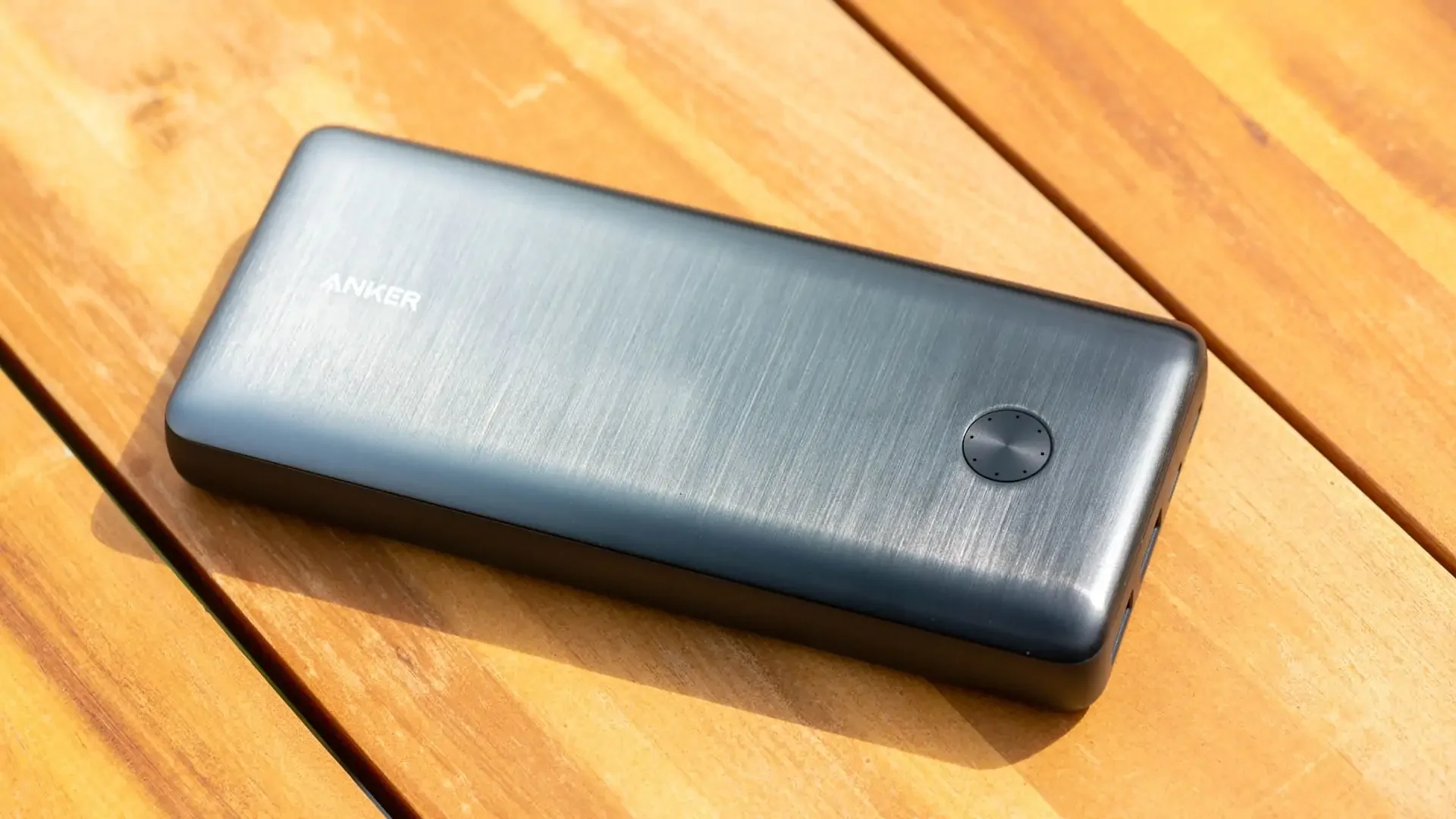
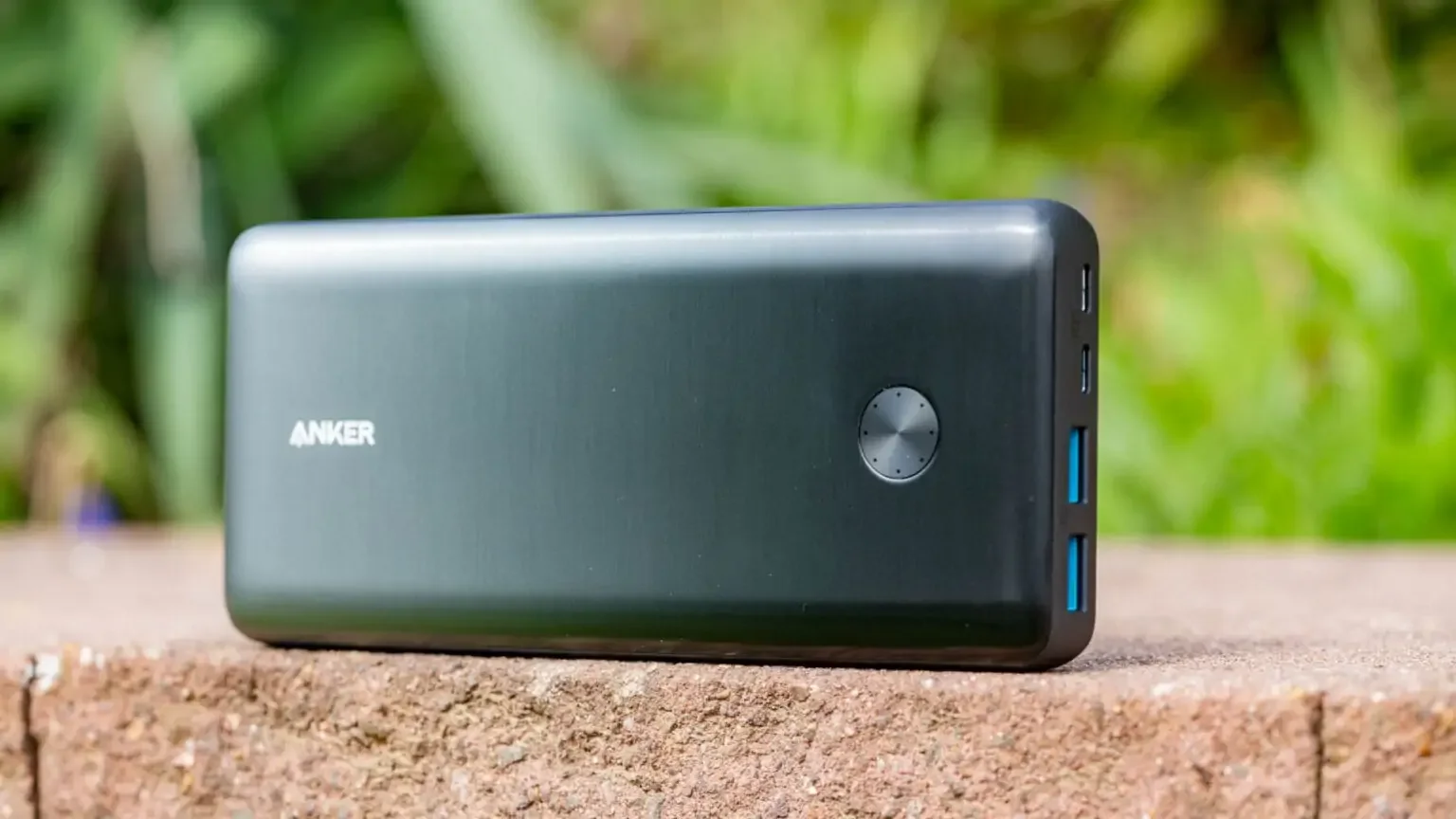
Anker has long maintained a reputation for utilitarian yet premium build quality, and the PowerCore III Elite 25600 exemplifies this ethos perfectly. Clad in a sleek, brushed-aluminum alloy casing with matte plastic accents, the power bank feels incredibly robust in the hand. The textured surface not only resists unsightly fingerprints but also provides a necessary grip for a device of this heft. Weighing in at roughly 600 grams, it is undeniably a brick, but the elongated, flattened profile makes it surprisingly easy to slide into the laptop sleeve of a backpack alongside your workstation.
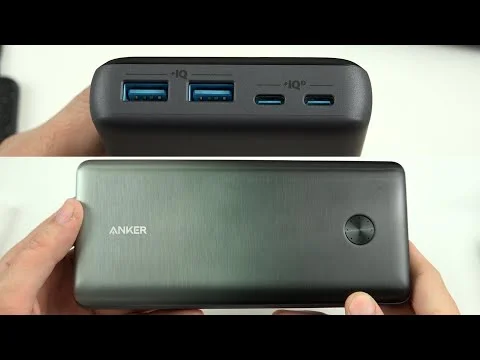
Ergonomics and layout are straightforward and highly functional. One end of the chassis houses the impressive array of I/O: two USB-C ports equipped with Power Delivery and two standard USB-A ports for legacy devices. At the center of the faceplate sits Anker’s signature multi-point LED indicator ring housed within the power button. Pressing it gives you an instant, precise reading of your remaining charge, while a long press activates the trickle-charging mode for low-power accessories like wireless earbuds or smartwatches.
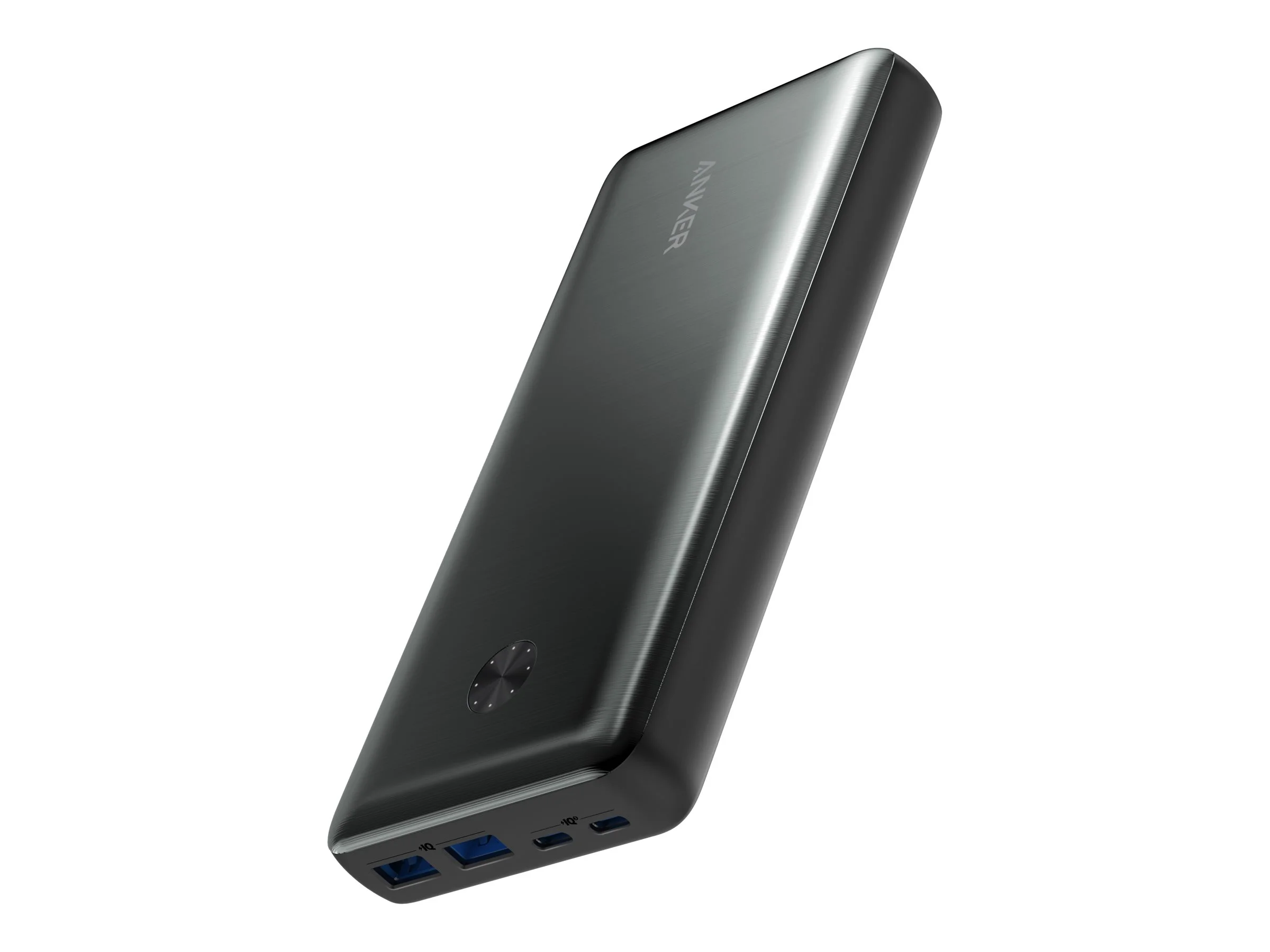
While it lacks the futuristic OLED data screens found on some newer 2026 flagship models, the PowerCore III Elite opts for understated reliability. The internal build leaves no room for creaking or flexing, assuring frequent travelers that it can survive the inevitable bumps and drops associated with modern digital nomadism.
Performance
When it comes to real-world performance, the PowerCore III Elite 25600 flexes its 87W maximum output muscle with exceptional stability. In our testing, the primary USB-C port easily sustained a MacBook Pro 14-inch at peak charging speeds, allowing for intensive 4K video rendering workflows without a dip in the laptop’s internal battery percentage. The 25,600 mAh capacity—which equates to roughly 94.72Wh, keeping it safely under the 100Wh TSA flight restriction limit—is massive enough to charge a flagship smartphone over five times or provide a full 0-100% charge to most 15-inch laptops.
Multi-device charging is where the PowerCore III Elite demonstrates its intelligent power distribution. Utilizing Anker’s proprietary architecture, the bank efficiently splits its output when multiple devices are connected. You can fast-charge a laptop via USB-C while simultaneously topping up a tablet and a smartphone, though it is worth noting the maximum combined output will bottleneck if all four ports are taxed heavily at once. Heat dissipation is handled exceptionally well; even under an hour of maximum sustained 87W load, the aluminum chassis remained only warm to the touch, avoiding the thermal throttling that frequently plagues cheaper high-capacity alternatives.
Recharging the massive internal cell is equally impressive. Utilizing a 65W Power Delivery wall charger, the entire 25,600 mAh battery goes from completely dead to 100% in roughly two hours and ten minutes. This rapid turnaround is a massive quality-of-life feature for professionals on the go who may only have a short layover at an airport to juice up their gear before a long flight.
Features & Software
The standout feature of the PowerCore III Elite 25600 is undoubtedly Anker’s PowerIQ 3.0 technology. This onboard smart-charging protocol automatically detects the connected device and optimizes the voltage output to deliver the fastest possible charge while protecting against overcurrent. Furthermore, the inclusion of a dedicated Trickle-Charging mode is a lifesaver for audio enthusiasts. Many high-capacity power banks fail to recognize low-draw devices like AirPods or fitness trackers, automatically shutting off mid-charge. The PowerCore bypasses this issue entirely with a simple long-press of the power button, denoted by the LED ring turning green.
On the safety front, Anker’s MultiProtect safety system runs silently in the background. It utilizes advanced temperature control, short-circuit protection, and cell balancing to extend the overall lifespan of the internal lithium-ion batteries. While it eschews companion apps or Bluetooth connectivity—features starting to creep into the ultra-premium power bank tier in 2026—this purposeful omission keeps the device delightfully plug-and-play and free from unnecessary battery drain.
Value Proposition
The Anker PowerCore III Elite 25600 commands a premium price tag, but when evaluating the cost-to-performance ratio, it remains a high-value asset for dedicated power users. You are paying for airline-safe maximum capacity, highly reliable 87W laptop charging, and the peace of mind that comes with Anker’s proven safety track record and robust warranty support.
Compared to budget bricks that falsely advertise high wattages but suffer from severe voltage drops under load, the PowerCore is a genuine investment in your mobile workstation’s longevity. For casual users who only need to keep a single smartphone topped up, this unit is undeniably overkill. But for photographers, traveling executives, or content creators carrying a backpack full of high-drain devices, the time saved and battery anxiety prevented easily justify the entry fee.
How It Compares
When stacked against the Zendure SuperTank, the Anker PowerCore III Elite 25600 trades blows closely. The Zendure offers a slightly higher 100W output, which might benefit users of 16-inch laptops pushing heavy computational loads, but Anker’s overall build quality feels significantly more refined and less prone to casing wear. Another notable competitor is the Omnicharge Omni 20+. The Omni 20+ boasts a built-in AC outlet and a detailed OLED data screen, making it infinitely more versatile for non-USB devices like drone battery chargers. However, the Omni has a lower total capacity (20,000 mAh) and costs substantially more, making the Anker a much more practical, higher-capacity choice for users operating strictly within a USB-C/USB-A ecosystem.
Pros and Cons
Pros
- Delivers a highly stable 87W output capable of efficiently charging modern USB-C laptops.
- Massive 25,600 mAh capacity is right at the legal limit for TSA-approved cabin air travel.
- Exceptionally fast 2.1-hour recharge time when paired with a compatible 65W wall adapter.
- Premium, durable aluminum design allows for excellent heat dissipation under heavy loads.
Cons
- Noticeably heavy and bulky, making it cumbersome for small everyday carry bags.
- Does not support the 140W PD 3.1 output found on the absolute bleeding-edge 2026 power banks.
- The aluminum chassis can scuff easily if not carried in a protective sleeve or pouch.
- The standalone retail unit does not include the 65W wall charger required to achieve maximum recharge speeds.
FAQ
Q: Is the Anker PowerCore III Elite 25600 allowed on airplanes in 2026?
A: Yes. Its capacity of 94.72Wh falls safely under the FAA and TSA restriction limit of 100Wh, allowing you to legally carry it in your cabin baggage without needing airline pre-approval.
Q: Can it charge a laptop and a phone at the same time?
A: Yes, it features multiple ports and uses PowerIQ 3.0 to distribute power dynamically. However, the total maximum output will be split, meaning your laptop may charge slightly slower when secondary devices are connected.
Q: Does it come with a wall charger in the box?
A: It depends on the retail bundle you purchase. The standard standalone version only includes a USB-C to USB-C cable, meaning you will need to supply your own 65W+ Power Delivery charger to hit the 2.1-hour recharge speeds.
Q: What is the trickle-charging mode and how do I use it?
A: Trickle-charging is a low-power output mode specifically designed for small devices like Bluetooth earbuds and smartwatches, preventing the power bank from automatically shutting off due to a low power draw. You can activate it by holding the power button for two seconds until the LED turns green.
Verdict
The Anker PowerCore III Elite 25600 is an outstanding workhorse for digital nomads, remote professionals, and content creators who rely heavily on USB-C laptops and multiple smart devices. While it lacks the ultra-fast 140W outputs of the most cutting-edge 2026 models, its 87W sustained delivery, maximum TSA-approved capacity, and rugged build make it a remarkably dependable travel companion. If you value sustained reliability and sheer battery volume over flashy technological gimmicks, this power bank remains a top-tier investment.
Where to Buy
Pros
- ✓ Delivers a highly stable 87W output capable of efficiently charging modern USB-C laptops.
- ✓ Massive 25,600 mAh capacity is right at the legal limit for TSA-approved cabin air travel.
- ✓ Exceptionally fast 2.1-hour recharge time when paired with a compatible 65W wall adapter.
- ✓ Premium, durable aluminum design allows for excellent heat dissipation under heavy loads.
Cons
- ✗ Noticeably heavy and bulky, making it cumbersome for small everyday carry bags.
- ✗ Does not support the 140W PD 3.1 output found on the absolute bleeding-edge 2026 power banks.
- ✗ The aluminum chassis can scuff easily if not carried in a protective sleeve or pouch.
- ✗ The standalone retail unit does not include the 65W wall charger required to achieve maximum recharge speeds.
Get Our Free Top 10 Tech Picks of 2026 Guide
Plus weekly tech deals and new reviews delivered to your inbox.
[cp_email_signup]
No spam. Unsubscribe anytime.
Ready to buy the Anker PowerCore III Elite 25600?
Affiliate link — we may earn a commission at no extra cost to you.