






The DJI Osmo Action 4 continues to hold its ground in 2026 as a powerhouse action camera for low-light recording and extreme durability. With its large 1/1.3-inch sensor and reliable magnetic mounting system, it remains a top choice for creators refusing to compromise on dynamic range. Read our full review to see how it stands up to the demands of modern adventure filmmaking.
Table of Contents
Key Specifications
| Feature | Detail |
|---|---|
| Sensor | 1/1.3-inch CMOS |
| Max Video Resolution | 4K at 120fps |
| Waterproofing | Up to 18m (without external case) |
| Battery Life | Up to 160 minutes (Extreme Battery) |
| Displays | Dual full-color touchscreens |
| Stabilization | RockSteady 3.0, HorizonSteady |
| Color Profile | 10-bit D-Log M |
| Weight | 145g |
Design & Build Quality
DJI has long embraced a utilitarian yet premium design language, and the Osmo Action 4 exemplifies this philosophy perfectly. Visually almost identical to its predecessor, it features a robust, rubberized exterior that can shrug off drops, scrapes, and extreme temperatures. The standout hardware element remains DJI’s brilliant magnetic quick-release mounting system. This locking mechanism provides incredible peace of mind while allowing you to seamlessly swap the camera between chest mounts, helmets, and tripods in seconds, completely bypassing the tedious thumbscrews favored by its competitors.
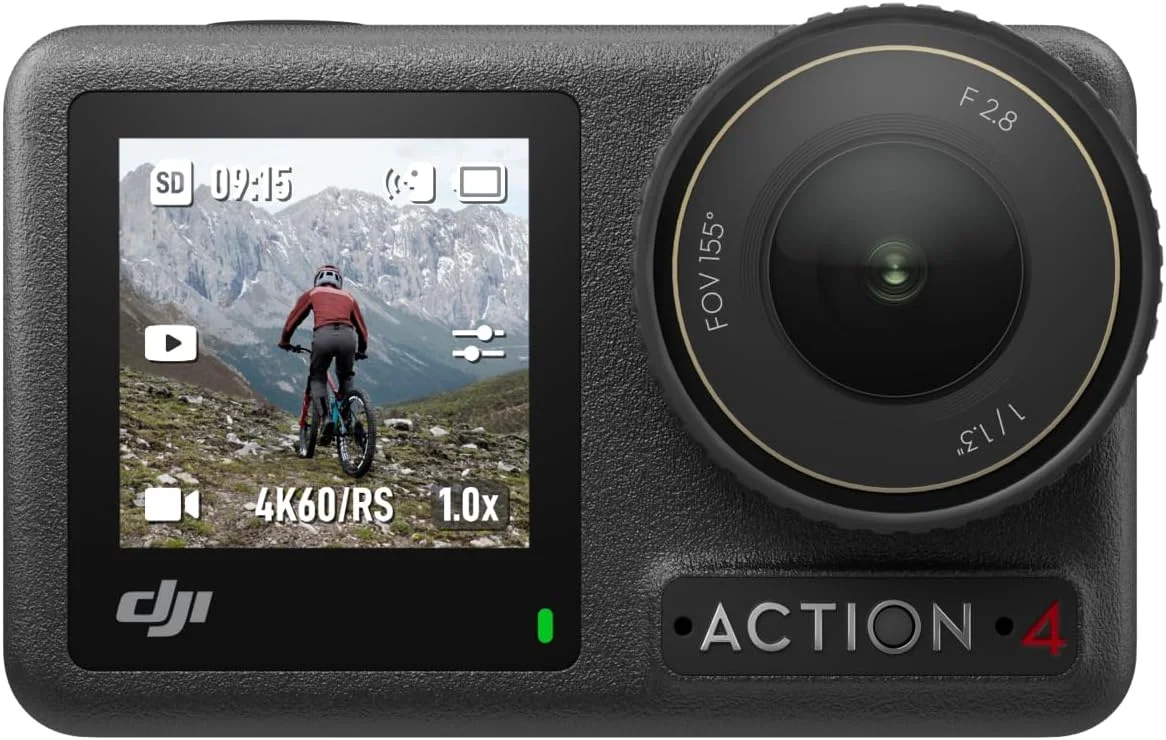
The dual full-color touchscreens are incredibly responsive and easily visible, even in glaring sunlight. Vloggers will particularly appreciate the front-facing touchscreen, which makes framing shots on the go completely foolproof. Furthermore, the Action 4 is natively waterproof down to an impressive 18 meters without requiring an external dive housing, pushing past the industry standard.
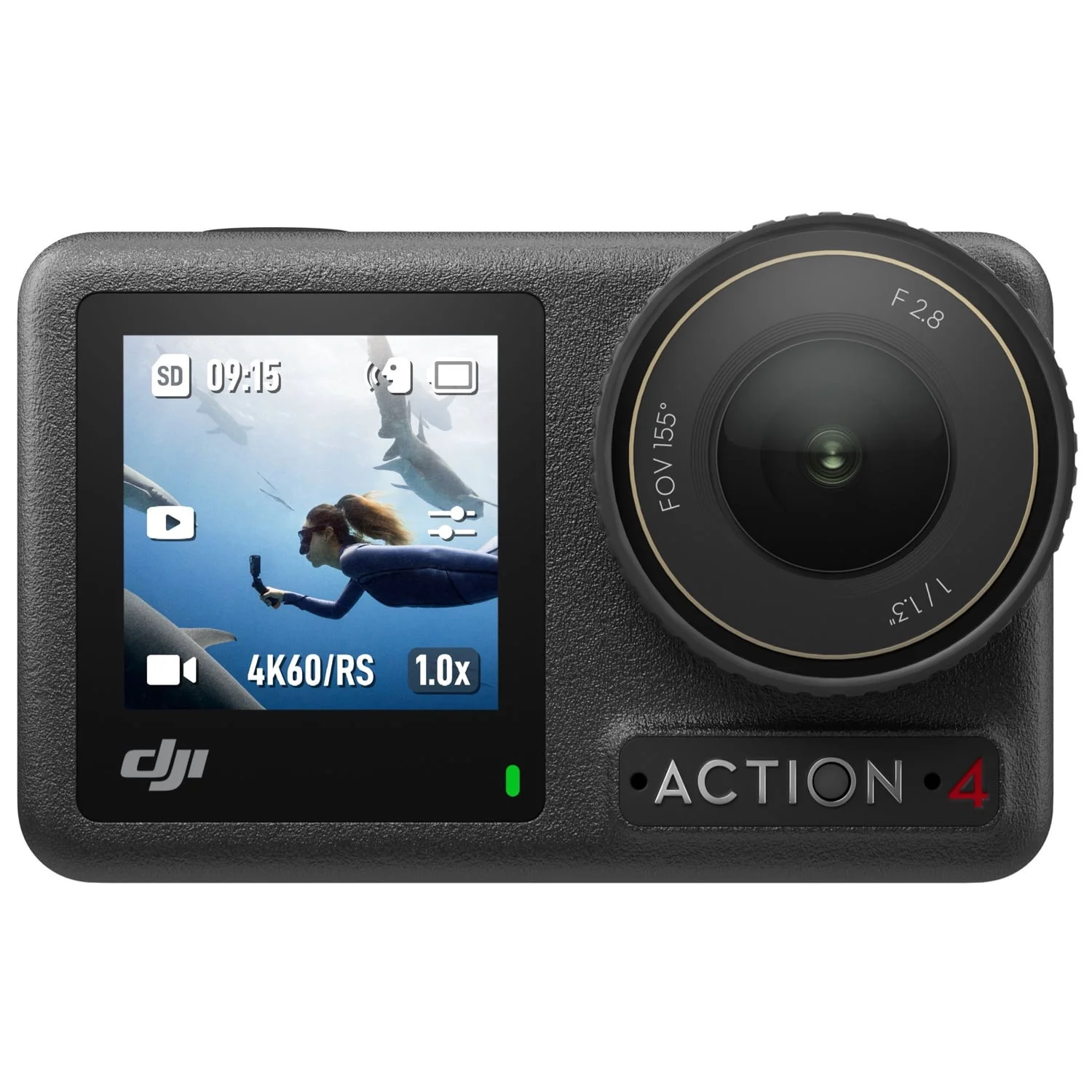
This ruggedness is combined with tactile physical buttons that are easy to press even when wearing thick winter gloves or diving gear. The battery compartment and USB-C port doors are tightly sealed with distinct latches that show a red marker when not fully secured, ensuring you never accidentally flood your hardware during aquatic excursions.
Performance
The real star of the show for the Osmo Action 4 is its massive 1/1.3-inch sensor, which fundamentally altered the action camera landscape and continues to impress as we evaluate it in 2026. While other cameras struggle with muddy details and high digital noise as soon as the sun goes down, the Action 4 thrives. In low-light environments—whether you are recording a dawn patrol surf session or riding a mountain bike through dense forest canopies—the footage remains startlingly clean, boasting excellent dynamic range and accurate color science.
Video benchmarks confirm it handles 4K video recording at 120 frames per second without breaking a sweat, ensuring buttery-smooth slow-motion playback. The RockSteady 3.0 and HorizonSteady electronic image stabilization algorithms are industry-leading, effectively ironing out violent shakes and vibrations to deliver gimbal-like smoothness. Even when pushing the camera to its absolute limits under intense summer heat, the internal thermal management system holds up exceptionally well, minimizing the frustrating overheating shutdowns that plague other compact flagship action cameras.
Audio performance is also surprisingly competent for a rugged device. The Action 4 utilizes an advanced array of microphones hidden beneath wind-resistant meshes, yielding clean and usable voice capture even when you are speeding downhill. While serious vloggers will still want to pair it with an external wireless mic system, the internal audio does an admirable job capturing the immersive, ambient roar of your environment.
Features & Software
DJI’s Mimo app continues to provide one of the most intuitive software experiences in the ecosystem, pairing quickly and enabling robust remote control and fast file transfers. A highly appreciated feature for professionals is the 10-bit D-Log M color profile, which captures over a billion colors and gives advanced creators immense flexibility during post-production color grading to recover highlights and shadows.
Additionally, the software suite includes the clever InvisiStick feature, which uses algorithmic processing to automatically remove your selfie stick from your footage in post. It effectively mimics the “floating camera” effect of a 360-degree camera without requiring the complicated reframing process, making it a powerful tool for solo content creators looking to elevate their production value.
Value Proposition
In 2026, the DJI Osmo Action 4 sits in an aggressive pricing sweet spot. It deliberately avoids participating in the spec-sheet resolution war with 5.3K or 8K gimmicks; instead, it offers immense value by doubling down on highly practical features. You get supreme low-light performance, unmatched mounting versatility, and a fast-charging Extreme Battery included right in the box.
For the asking price, creators are getting a highly reliable daily driver that outclasses pricier competitors where it actually matters: everyday usability, workflow speed, and cinematic dynamic range. It is an investment in quality capture rather than inflated pixel counts.
How It Compares
When pitted against the GoPro HERO 12 Black, the Osmo Action 4 trades maximum resolution (capping at 4K versus GoPro’s 5.3K) for noticeably superior low-light capability and a vastly better magnetic mounting ecosystem. While the HERO 12 might offer slightly sharper daytime footage due to its higher megapixel count, the Action 4 is much more versatile for twilight and indoor shooting. Compared to the Insta360 Ace Pro, the Action 4 maintains a smaller, more pocketable form factor and a significantly more competitive price tag, even if it lacks the Ace Pro’s flip-up screen and Leica-engineered optics.
Pros and Cons
Pros
- Features a massive 1/1.3-inch sensor that delivers exceptional low-light video performance.
- Utilizes an ultra-convenient magnetic quick-release mounting system for fast gear changes.
- Boasts impressive native waterproofing up to 18 meters without requiring an extra housing.
- Includes highly responsive dual color touchscreens for effortless vlogging and menu navigation.
- Supports 30W fast charging, bringing the battery to 80% in just 18 minutes.
Cons
- Capped at 4K resolution, lagging behind competitors offering 5.3K or 8K recording capabilities.
- Captures still photos at a relatively low 10 megapixels, making it less ideal for high-resolution photography.
- Relies heavily on the DJI Mimo smartphone app for initial activation, which can be frustrating for offline users.
- Lacks a built-in GPS module, meaning you cannot natively overlay telemetry data like speed or altitude onto your footage.
FAQ
Q: Does the DJI Osmo Action 4 have internal storage?
A: No, it does not feature built-in storage. You will need to purchase a high-speed microSD card separately to record your footage.
Q: Can I use my old Osmo Action 3 batteries and accessories with the Action 4?
A: Yes, the physical dimensions are nearly identical, meaning your Osmo Action 3 Extreme Batteries, magnetic mounts, and most camera cages are fully compatible with the Action 4.
Q: Is the front screen touch-sensitive?
A: Absolutely. Both the front and rear screens are fully touch-enabled, allowing you to easily adjust settings and playback footage from either side of the camera.
Q: Can I connect a wireless microphone directly to the camera?
A: Yes, the Osmo Action 4 supports direct digital audio input via its USB-C port, natively supporting systems like the DJI Mic and DJI Mic 2 without requiring a bulky adapter.
Verdict
The DJI Osmo Action 4 is the ultimate action camera for low-light adventurers and vloggers who prioritize dynamic range, workflow speed, and quick-swap mounting over pure megapixel counts. If you frequently shoot in challenging lighting conditions or find yourself frustrated by tedious screw mounts, this is absolutely the camera to buy.
Where to Buy
No products found.
Pros
- ✓ Features a massive 1/1.3-inch sensor that delivers exceptional low-light video performance.
- ✓ Utilizes an ultra-convenient magnetic quick-release mounting system for fast gear changes.
- ✓ Boasts impressive native waterproofing up to 18 meters without requiring an extra housing.
- ✓ Includes highly responsive dual color touchscreens for effortless vlogging and menu navigation.
- ✓ Supports 30W fast charging, bringing the battery to 80% in just 18 minutes.
Cons
- ✗ Capped at 4K resolution, lagging behind competitors offering 5.3K or 8K recording capabilities.
- ✗ Captures still photos at a relatively low 10 megapixels, making it less ideal for high-resolution photography.
- ✗ Relies heavily on the DJI Mimo smartphone app for initial activation, which can be frustrating for offline users.
- ✗ Lacks a built-in GPS module, meaning you cannot natively overlay telemetry data like speed or altitude onto your footage.