

The Meta Quest 3 512GB is one of the most compelling standalone VR headsets you can buy in 2026, combining strong mixed reality features with a meaningful leap in comfort and visual clarity. With a sharper display, faster Snapdragon XR2 Gen 2 platform, and generous storage, it targets enthusiasts who want room for larger game libraries and media without stepping up to a far pricier headset.
Table of Contents
Key Specifications
| Feature | Detail |
|---|---|
| Product | Meta Quest 3 512GB |
| Storage | 512GB internal storage |
| Processor | Qualcomm Snapdragon XR2 Gen 2 |
| Memory | 8GB RAM |
| Display Resolution | 2064 x 2208 per eye |
| Display Type | LCD |
| Refresh Rate | Up to 120Hz |
| Lenses | Pancake lenses |
| Tracking | Inside-out 6DoF tracking |
| Mixed Reality | Full-color passthrough with depth sensor |
| Controllers | Meta Quest Touch Plus controllers |
| Audio | Integrated spatial audio speakers |
| Connectivity | Wi-Fi 6E, Bluetooth, USB-C |
| Battery Life | Roughly 2 to 3 hours depending on workload |
| Weight | Approximately 515g |
| Platform | Meta Horizon OS |
Design & Build Quality
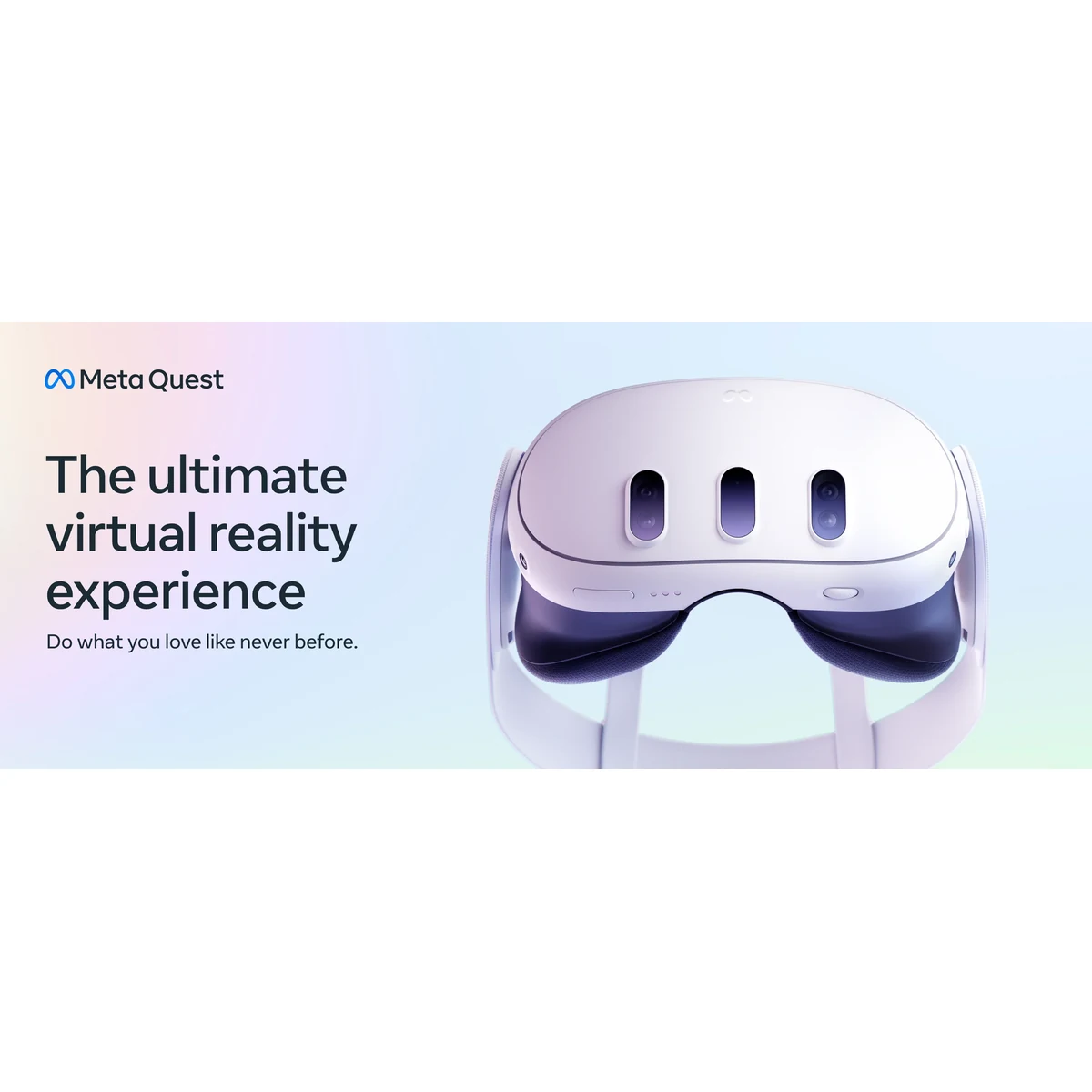
Meta refined the Quest formula nicely with the Quest 3 512GB. The headset is noticeably slimmer than the Quest 2 thanks to pancake optics, and that reduction in front-heavy bulk makes a real difference during longer sessions. It still looks unmistakably like a consumer VR headset rather than a luxury gadget, but the cleaner front panel, improved weight distribution, and more compact visor give it a more modern and practical feel.
Build quality is solid rather than premium. The plastic chassis feels durable enough for regular use, and the facial interface is comfortable for most sessions, though serious users may still want an aftermarket strap for better support. The included soft strap keeps the entry price reasonable, but it is one of the first areas many buyers will want to upgrade if they play active titles or spend extended time in VR.

The Touch Plus controllers are another highlight. By removing the large tracking rings, Meta has made them easier to handle in tighter spaces and less likely to clash during games that require close hand movement. Buttons, triggers, and haptics all feel responsive, and the overall ergonomic design remains among the best in the standalone VR market.
Performance
In real-world use, the Meta Quest 3 512GB delivers a clear and meaningful performance uplift over the Quest 2. The Snapdragon XR2 Gen 2 chip helps games load faster, environments render with more detail, and mixed reality applications run more smoothly. Titles that support Quest 3 enhancements benefit from improved lighting, denser textures, and more stable frame rates, especially in graphically demanding experiences.
Display quality is one of the biggest upgrades. The 2064 x 2208 per-eye resolution and pancake lenses combine to produce a sharper, cleaner image with better edge-to-edge clarity than older Fresnel-based headsets. Text readability is improved, fine detail is easier to make out, and the “sweet spot” is more forgiving, which matters for both gaming and productivity-style apps. At up to 120Hz, motion feels fluid in supported content, although not every title fully takes advantage of the highest refresh rate.
Tracking is generally excellent for a standalone headset. Inside-out tracking remains reliable in well-lit rooms, and hand tracking has matured enough to be genuinely useful for navigation and some mixed reality apps. Wireless PC VR streaming through Air Link or third-party solutions can also be very good with a strong Wi-Fi 6E network, though latency and image consistency still depend heavily on your home setup. Native standalone performance is where the Quest 3 feels most polished and dependable.
Features & Software
The standout feature here is mixed reality. Full-color passthrough is dramatically better than what earlier Quest headsets offered, making it much more practical to blend virtual objects into your real environment. It is still not perfectly lifelike, but it is good enough to support compelling MR games, fitness apps, and utility experiences without feeling like a gimmick. The depth sensor also helps digital content anchor more convincingly in physical space.
Meta Horizon OS is mature, fast, and backed by one of the largest standalone VR content libraries available. Setup is straightforward, the interface is easy to navigate, and the ecosystem includes strong first-party support alongside a broad catalog of games, fitness tools, social apps, and media experiences. The 512GB model is especially appealing if you want to keep a large library installed locally, including bigger modern games and downloaded video content.

Value Proposition
The Meta Quest 3 512GB hits a sweet spot for buyers who want high-end standalone VR features without moving into the premium pricing tier occupied by devices like the Apple Vision Pro. It offers a strong blend of gaming performance, mixed reality capability, and software ecosystem depth, making it one of the easiest VR headsets to recommend to mainstream enthusiasts in 2026.
The 512GB version specifically makes sense for users who dislike juggling installs or expect to build a large library over time. If you mostly play a small number of titles, the lower-storage model may be the better value. But for power users, frequent travelers, or anyone downloading lots of media and larger games, the extra capacity is practical rather than excessive.
How It Compares
Against the Meta Quest 3S, the Quest 3 512GB is the more premium and more future-proof choice. The Quest 3S is cheaper, but it gives up the sharper optics and slimmer design that make the standard Quest 3 feel like a genuine generational step forward. If image clarity, mixed reality quality, and long-term satisfaction matter more than the lowest possible price, the Quest 3 is the better buy.

Compared with the Apple Vision Pro, the Meta Quest 3 512GB is dramatically more affordable and far more gaming-focused. Apple’s headset offers a more premium build, stronger productivity ambitions, and superior passthrough polish, but it sits in an entirely different price bracket. For most consumers and gamers, the Quest 3 delivers much better overall value and a more accessible software ecosystem.
Pros and Cons
Pros
- The pancake lenses and higher-resolution display deliver a noticeably sharper and more comfortable visual experience than older Quest headsets.
- The Snapdragon XR2 Gen 2 platform provides strong standalone performance for modern VR and mixed reality apps.
- Full-color passthrough and improved mixed reality features make the headset more versatile beyond traditional VR gaming.
- The 512GB storage capacity is ideal for users with large game libraries, media downloads, and frequent app switching.
- The software ecosystem remains one of the strongest in consumer VR, with broad app support and easy setup.
Cons
- The included soft strap is serviceable but not ideal for long sessions, and many users will want an additional accessory upgrade.
- Battery life is still modest, especially in demanding mixed reality or high-refresh-rate workloads.
- LCD panels look good, but they cannot match the black levels and contrast of OLED-based competitors.
- Passthrough quality is much improved, yet it still falls short of a truly natural real-world view.
- Wireless PC VR performance can vary significantly depending on router quality and network conditions.
FAQ
Q: Is the Meta Quest 3 512GB worth it over the lower-storage version?
A: Yes, if you plan to install many games, keep media offline, or avoid constantly deleting and re-downloading content. Casual users may be better served by the smaller-capacity model.
Q: Can the Meta Quest 3 512GB be used without a PC or console?
A: Yes. It is a fully standalone VR headset that runs games and apps locally, though it can also connect to a gaming PC for PC VR experiences.
Q: Is the Meta Quest 3 good for mixed reality in 2026?
A: Yes. It remains one of the best consumer mixed reality options at its price, with strong full-color passthrough and a growing MR app library.
Q: How much battery life does the Meta Quest 3 512GB get?
A: Most users can expect around 2 to 3 hours per charge, depending on brightness, app type, refresh rate, and whether mixed reality features are heavily used.
Q: Does the Meta Quest 3 512GB support PC VR gaming?
A: Yes. It supports wired and wireless PC VR through Meta Link, Air Link, and compatible third-party streaming solutions.
Verdict
The Meta Quest 3 512GB is the best choice for buyers who want a premium standalone VR headset with strong mixed reality features, excellent optics, and enough storage for a serious content library. It is especially well suited to enthusiasts, gamers, and returning VR users who want a meaningful upgrade without paying ultra-premium prices.
Pros
- ✓ The pancake lenses and higher-resolution display deliver a noticeably sharper and more comfortable visual experience than older Quest headsets.
- ✓ The Snapdragon XR2 Gen 2 platform provides strong standalone performance for modern VR and mixed reality apps.
- ✓ Full-color passthrough and improved mixed reality features make the headset more versatile beyond traditional VR gaming.
- ✓ The 512GB storage capacity is ideal for users with large game libraries, media downloads, and frequent app switching.
- ✓ The software ecosystem remains one of the strongest in consumer VR, with broad app support and easy setup.
Cons
- ✗ The included soft strap is serviceable but not ideal for long sessions, and many users will want an additional accessory upgrade.
- ✗ Battery life is still modest, especially in demanding mixed reality or high-refresh-rate workloads.
- ✗ LCD panels look good, but they cannot match the black levels and contrast of OLED-based competitors.
- ✗ Passthrough quality is much improved, yet it still falls short of a truly natural real-world view.
- ✗ Wireless PC VR performance can vary significantly depending on router quality and network conditions.
Where to Buy the Meta Quest 3 512GB





Prices may vary. Affiliate links — we may earn a commission at no extra cost to you.
Related Reviews

Affiliate links — we may earn a commission at no extra cost to you.