

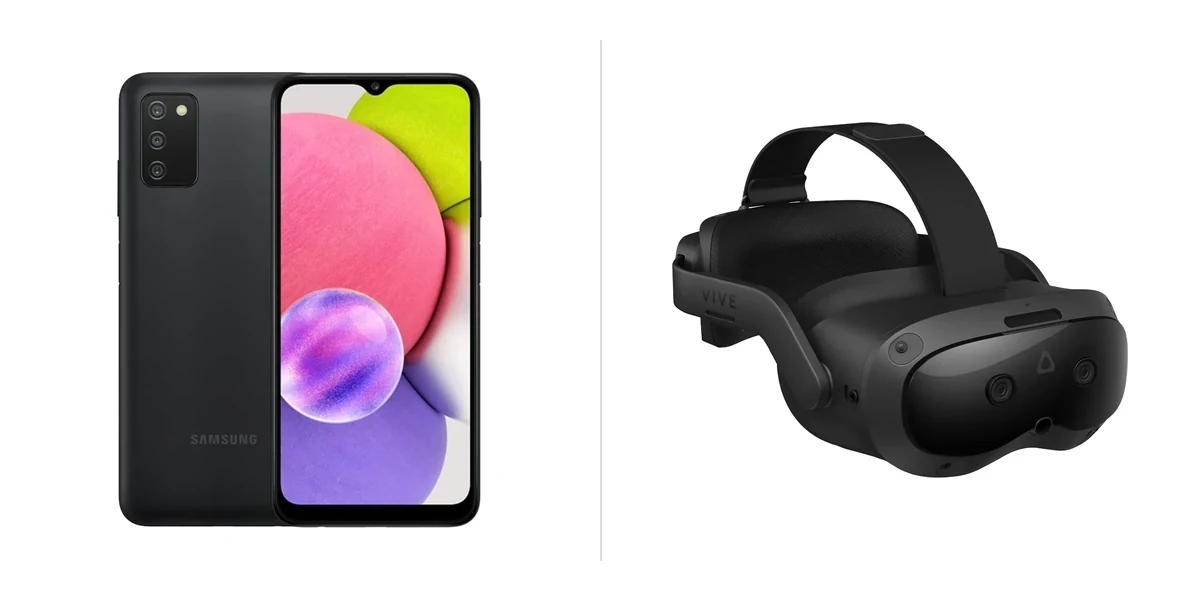
In 2026, the Samsung Galaxy XR and HTC Vive Focus Vision offer distinct approaches to standalone VR and mixed reality. Samsung emphasizes ecosystem integration, comfort, and everyday usability while HTC focuses on premium visual clarity and precision tracking for productivity and social applications. This head-to-head breaks down their real-world strengths to help you choose the right VR device.
At a Glance
| Feature | Samsung Galaxy XR | HTC Vive Focus Vision |
|---|---|---|
| Price | $72.86 | $2515.6 |
| Overall Score | 82/100 | 81/100 |
| Best For | Galaxy ecosystem users seeking comfort and longevity | Professionals needing visual clarity and precision tracking |
| Comfort & Ergonomics | Outstanding comfort with balanced weight distribution for hours of use | Well-balanced ergonomics for long sessions with enterprise-grade design |
| Passthrough Quality | Excellent real-world AR with accurate color and low latency | Full-color passthrough among the best available |
| Battery Life | 3.5–4 hours under mixed use | Approximately two hours at maximum refresh rate |
Design and Build
The Samsung Galaxy XR prioritizes outstanding comfort and balanced weight distribution that enable hours of use with minimal fatigue. Its design feels like a natural extension of the Galaxy ecosystem, focusing on practical wearability for mixed reality tasks rather than flashy materials.
In contrast, the HTC Vive Focus Vision delivers strong build quality and thoughtful design details reflecting HTC’s enterprise-grade engineering standards. It offers well-balanced ergonomics and improved weight distribution for surprisingly long sessions, though some users may find the plastic construction less premium than materials in competing high-end devices.
Performance and Features
The Samsung Galaxy XR provides strong performance with efficient thermal management for sustained workloads, plus excellent real-world passthrough AR with accurate color and low latency. It features deep, seamless integration with the Galaxy smartphone and tablet ecosystem and five years of promised software updates for long-term value. However, its XR content library remains smaller than Meta’s established ecosystem, battery life is limited to roughly 3.5–4 hours under mixed use, and hand tracking can occasionally misread fine motor movements in low-light environments. For the full details, read our full review of Samsung Galaxy XR.
The HTC Vive Focus Vision excels with exceptional visual clarity from dual 4K Mini-LED displays that surpass most competitors in the standalone category, paired with precise eye-tracking for effective foveated rendering and natural interactions. Its full-color passthrough quality ranks among the best available for mixed reality experiences in 2026. That said, it requires a well-lit environment for optimal hand and environment tracking performance, battery life reaches only approximately two hours at maximum refresh rate, and the content ecosystem still trails Meta’s in both quantity and exclusive titles. See our full review of HTC Vive Focus Vision for more.
Both devices deliver capable mixed reality experiences but cater to different priorities — Samsung for ecosystem convenience and endurance, HTC for visual fidelity and precision.
Pricing and Value
Priced at just $72.86, the Samsung Galaxy XR delivers substantially better value than the HTC Vive Focus Vision at $2515.6. The Galaxy XR’s combination of outstanding comfort, excellent passthrough, efficient performance, and five years of software updates makes it accessible and future-proof for casual and ecosystem-oriented users, despite needing an optional external battery pack for all-day operation.
While the HTC justifies its premium cost with superior display clarity, precise eye-tracking, and enterprise-grade build, the massive price gap makes it difficult to recommend for anyone outside professional or high-end use cases. For most buyers in 2026, the Samsung Galaxy XR provides far superior overall value.
Pros and Cons
Samsung Galaxy XR
Pros:
– Outstanding comfort and balanced weight distribution enable hours of use with minimal fatigue.
– Excellent real-world passthrough AR with accurate color and low latency.
– Deep, seamless integration with the Galaxy smartphone and tablet ecosystem.
– Strong performance with efficient thermal management for sustained workloads.
– Five years of promised software updates provide long-term value.
Cons:
– Battery life remains limited to roughly 3.5–4 hours under mixed use, requiring the optional external pack for all-day operation.
– The XR content library is still smaller than Meta’s established ecosystem.
– $1,299 price point, while competitive, still represents a significant investment for casual users.
– Hand tracking can occasionally misread fine motor movements in low-light environments.
– Some enterprise features require additional Samsung business subscriptions.
HTC Vive Focus Vision
Pros:
– Delivers exceptional visual clarity with dual 4K Mini-LED displays that surpass most competitors in the standalone category.
– Precise eye-tracking enables effective foveated rendering and natural interactions in social and productivity applications.
– Well-balanced ergonomics and improved weight distribution make it comfortable for surprisingly long sessions.
– Full-color passthrough quality ranks among the best available for mixed reality experiences in 2026.
– Strong build quality and thoughtful design details reflect HTC’s enterprise-grade engineering standards.
Cons:
– The $899 price point positions it beyond the reach of many mainstream VR enthusiasts.
– Battery life of approximately two hours at maximum refresh rate may disappoint users wanting all-day play.
– The content ecosystem still trails Meta’s extensive library in both quantity and exclusive titles.
– Some users may find the plastic construction less premium than the materials used in competing high-end devices.
– Requires a well-lit environment for optimal hand and environment tracking performance.
Who Should Buy Which
Users already invested in Samsung’s Galaxy smartphones and tablets should choose the Samsung Galaxy XR. Its outstanding comfort, excellent passthrough AR, efficient thermal management, and five years of software updates make it the ideal choice for comfortable, long-term mixed reality use within a familiar ecosystem.
Professionals and enthusiasts who demand the highest visual fidelity should buy the HTC Vive Focus Vision. Its exceptional clarity, precise eye-tracking, and top-tier full-color passthrough excel in productivity, social VR, and mixed reality applications where performance in well-lit environments matters most.
Verdict
The Samsung Galaxy XR wins overall with its higher 82/100 score, thanks to outstanding comfort, excellent passthrough AR, seamless Galaxy ecosystem integration, and dramatically better value at $72.86 versus $2515.6. It is clearly the better choice for everyday users and those seeking long-term software support. The HTC Vive Focus Vision is the superior pick for users who specifically need exceptional visual clarity and precise eye-tracking in professional or high-end productivity scenarios, despite its shorter battery life and higher cost.