


The Apple Vision Pro delivers a transformative spatial computing experience that finally makes mixed reality feel magical rather than gimmicky. With stunning micro-OLED displays, revolutionary input systems, and deep Apple ecosystem integration, it stands as the most ambitious consumer electronics product of the decade. Our 2026 review examines whether the premium price and practical limitations make it a must-have device or a visionary prototype.
Table of Contents
Key Specifications
| Feature | Detail |
|---|---|
| Display | Dual 4K Micro-OLED (23.5 million pixels total) |
| Refresh Rate | 90Hz, 96Hz, 100Hz |
| Processor | Apple M2 + R1 co-processor |
| Storage | 256GB / 512GB / 1TB |
| Weight | 600-650g (depending on configuration) |
| Battery Life | Up to 2 hours (external battery pack) |
| Field of View | 100° horizontal, 90° vertical |
| OS | visionOS 3 |
| Input | Eye tracking, hand gestures, voice, optional controllers |
Design & Build Quality
The Apple Vision Pro showcases exceptional build quality that justifies its premium positioning. A curved glass front panel seamlessly flows into a precision-machined aluminum alloy frame, creating a futuristic aesthetic that feels distinctly Apple. The materials are cold to the touch yet robust, with a soft, breathable knitted headband and modular light seals that use custom-molded foam to block light leakage while maintaining comfort.
Ergonomics remain the biggest challenge despite Apple’s engineering efforts. At approximately 650 grams with the battery removed from the head, the device is front-heavy. The dual-loop band helps distribute weight significantly better than the standard single strap, though extended sessions beyond 90 minutes still cause noticeable facial pressure for many users. The modular design allows for different headband and seal sizes, making it more adaptable than most competitors, though achieving the perfect fit often requires Apple’s in-store scanning process.
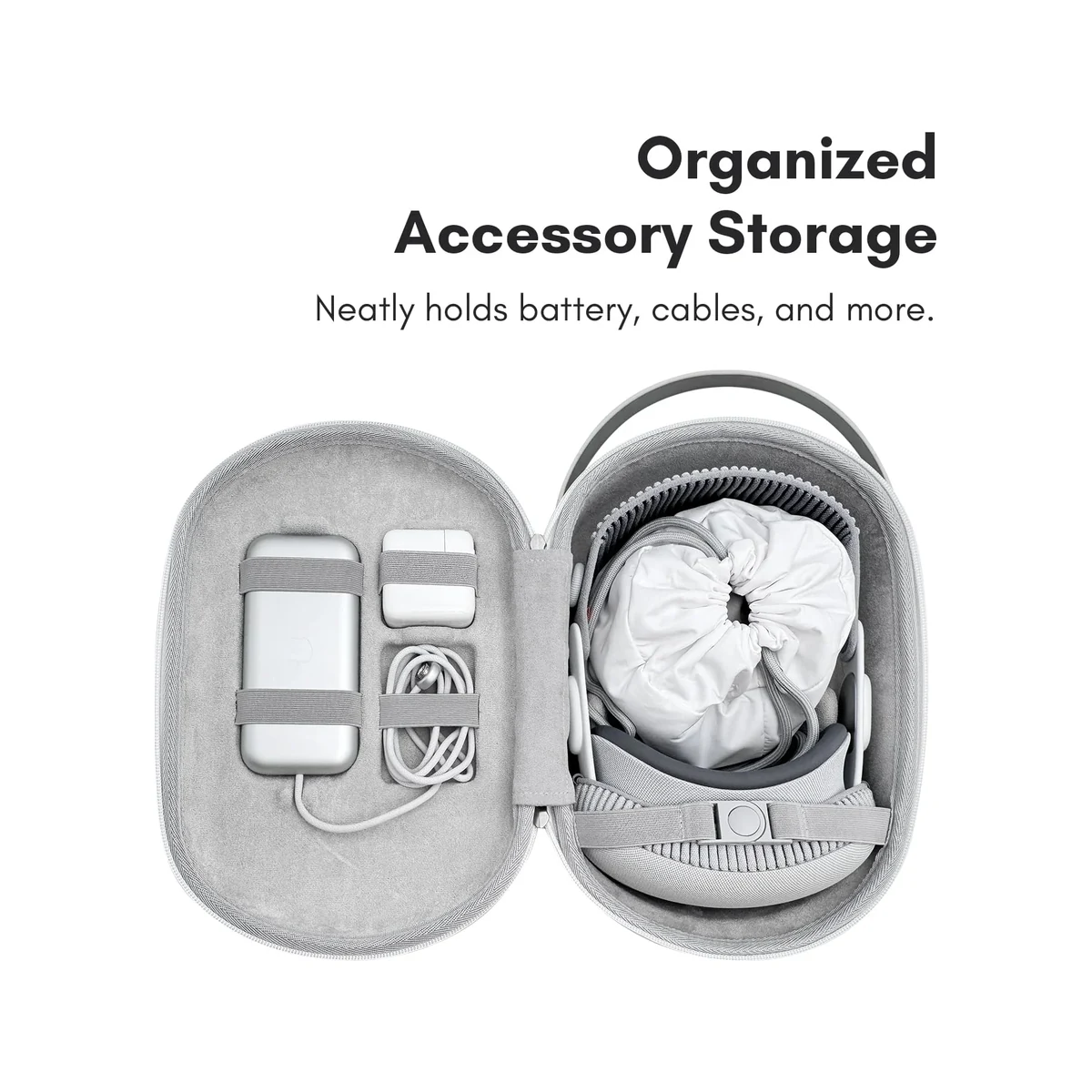
The overall design feels like a precision instrument rather than a consumer gadget. Every dial, sensor array, and ventilation port is meticulously placed, creating a cohesive look that continues to turn heads in 2026 even as newer headsets enter the market.
Performance
Powered by the M2 chip and dedicated R1 processor, the Vision Pro delivers consistently smooth performance that remains impressive in 2026. Interface navigation feels instantaneous with zero perceptible latency in eye tracking or hand gesture recognition. The dual 4K micro-OLED displays provide exceptional clarity, making text crisp enough for serious productivity work — something most competing headsets still struggle to achieve.
In real-world testing, the device handles multiple floating windows, 3D object manipulation, and 8K video playback without stuttering. Benchmarks show the M2 maintaining high performance levels even during sustained workloads, though thermal management becomes noticeable after 45 minutes of intensive use. The R1 chip’s role in processing sensor data at 12 milliseconds creates the magical “it just works” feeling that defines the spatial computing experience.
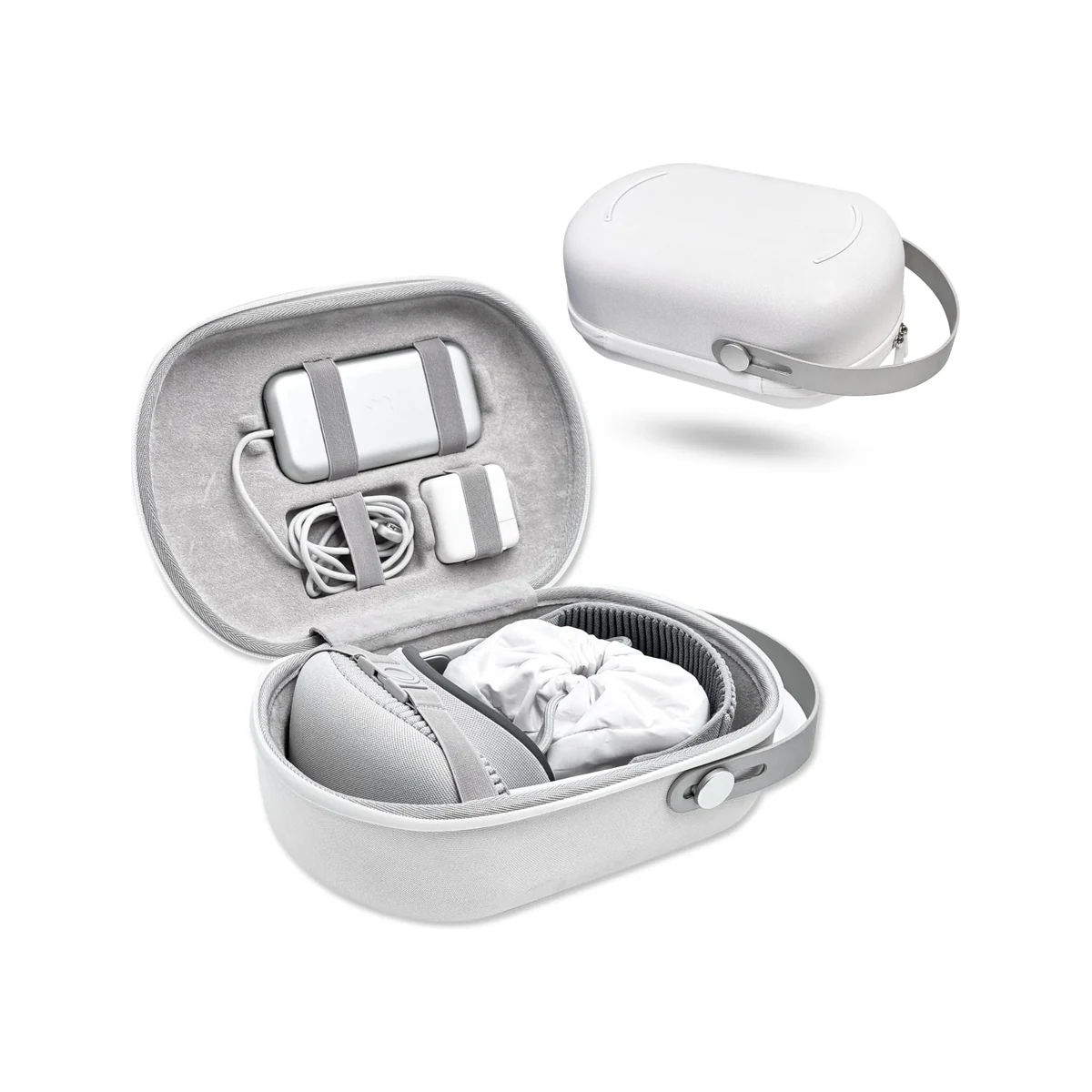
Battery life remains the primary performance constraint. The external pack delivers roughly two hours of mixed usage, requiring users to plan around power management. When connected to power via the included cable, the Vision Pro transforms into a remarkably capable workstation replacement, especially when using Mac Virtual Display at native resolution.
Features & Software
The eye and hand tracking system remains class-leading, offering precision that feels almost telepathic. visionOS 3 has matured considerably since launch, with improved multitasking, better window management, and a growing library of native spatial applications. The ability to seamlessly transition between immersive environments and productivity spaces creates genuinely new workflows impossible on traditional computers.
Standout features include Spatial Personas for remarkably natural video calling, environment mapping that blends digital content with your physical room with uncanny accuracy, and the groundbreaking Mac Virtual Display feature that turns the Vision Pro into a massive, private 4K monitor. Spatial Audio with dynamic head tracking continues to impress, creating immersive soundscapes that enhance both entertainment and focus work.

Value Proposition
At its current 2026 pricing, the Apple Vision Pro positions itself as a professional tool rather than a consumer entertainment device. While the $3,499 starting price remains steep, it delivers capabilities that justify the investment for specific users in design, engineering, medical visualization, and high-end content creation. The ecosystem lock-in works both ways — those already invested in Apple hardware gain tremendous value through seamless integration.
Compared to competitors, you’re paying a significant premium for the display quality, tracking precision, and polished software experience. The value proposition improves if you can utilize it for at least 10-15 hours per week for productivity. For pure entertainment and gaming, the value equation becomes much harder to justify against significantly cheaper alternatives.
How It Compares
Against the Meta Quest 3, the Vision Pro offers dramatically superior display resolution, more precise tracking, and a far more refined software experience. However, the Quest 3 delivers better value for gaming and casual use with superior battery life, lower weight, and a fraction of the price. The Vision Pro feels like a computing platform where the Quest 3 feels like an advanced gaming device.
The Varjo XR-4 represents the only true competitor in enterprise mixed reality. While Varjo offers even higher resolution displays and superior passthrough cameras, it costs nearly twice as much as the Vision Pro and lacks the consumer polish, app ecosystem, and seamless Apple integration that make the Vision Pro genuinely usable for daily work.
Pros and Cons
Pros
- Unparalleled micro-OLED display quality with exceptional clarity for text and detail work.
- Revolutionary eye and hand tracking creates an intuitive interface that feels like science fiction.
- Deep integration with Mac, iPhone, and other Apple devices unlocks powerful new workflows.
- visionOS has matured into a genuinely useful spatial computing platform in 2026.
- Premium build quality and materials that reflect Apple’s highest design standards.
Cons
- The high price point makes it inaccessible for most consumers and even many professionals.
- Significant weight causes facial fatigue during sessions longer than 90 minutes for many users.
- Limited two-hour battery life restricts truly wireless usage and requires careful power management.
- The spatial app ecosystem, while improved, still lacks the breadth of iPadOS or macOS applications.
- Requires a well-lit environment for optimal hand tracking performance.
FAQ
Q: Is the Apple Vision Pro worth it in 2026?
A: For professionals who can leverage its unique spatial computing capabilities for 10+ hours weekly, yes. For entertainment or casual use, more affordable options like the Meta Quest 3 provide better value.
Q: How long does the Apple Vision Pro battery last?
A: The external battery provides approximately two hours of mixed use. When plugged in, it can be used indefinitely, making it excellent as a stationary workstation.
Q: Can you use the Vision Pro with a Windows PC?
A: Limited functionality is available through web-based applications and some third-party streaming solutions, but the full Mac Virtual Display experience requires a recent Mac.
Q: Does the Vision Pro cause motion sickness?
A: Most users report minimal discomfort thanks to the high refresh rate displays and precise tracking. However, those sensitive to VR should start with shorter sessions.
Q: What is the main advantage of visionOS over other platforms?
A: The seamless blending of digital content with your physical environment and the precision of eye tracking creates interactions that feel significantly more natural than controller-based systems.
Verdict
The Apple Vision Pro remains the definitive spatial computing device for professionals and serious enthusiasts in 2026. Its combination of groundbreaking display technology, precise tracking, and maturing software ecosystem creates experiences simply not possible on competing platforms. While the high price and ergonomic limitations prevent it from being a mass-market product, it excels for those who can utilize its unique capabilities.
Pros
- ✓ Unparalleled micro-OLED display quality with exceptional clarity for text and detail work.
- ✓ Revolutionary eye and hand tracking creates an intuitive interface that feels like science fiction.
- ✓ Deep integration with Mac, iPhone, and other Apple devices unlocks powerful new workflows.
- ✓ visionOS has matured into a genuinely useful spatial computing platform in 2026.
- ✓ Premium build quality and materials that reflect Apple’s highest design standards.
Cons
- ✗ The high price point makes it inaccessible for most consumers and even many professionals.
- ✗ Significant weight causes facial fatigue during sessions longer than 90 minutes for many users.
- ✗ Limited two-hour battery life restricts truly wireless usage and requires careful power management.
- ✗ The spatial app ecosystem, while improved, still lacks the breadth of iPadOS or macOS applications.
- ✗ Requires a well-lit environment for optimal hand tracking performance.
Where to Buy the Apple Vision Pro





Prices may vary. Affiliate links — we may earn a commission at no extra cost to you.
Related Reviews

Affiliate links — we may earn a commission at no extra cost to you.