



The Meta Quest Pro continues to set a high bar for premium mixed reality in 2026, blending professional-grade build quality with advanced eye and face tracking plus excellent color passthrough. This sophisticated headset delivers a refined spatial computing experience that goes far beyond gaming, making it a compelling choice for developers, productivity users, and immersive enthusiasts. Our detailed review examines whether it remains a smart investment years after launch.
Table of Contents
Key Specifications
| Feature | Detail |
|---|---|
| Display | 1800 x 1920 per eye LCD, 90Hz, pancake lenses |
| Processor | Qualcomm Snapdragon XR2 Gen 1 + XRA co-processor |
| Memory | 12GB RAM, 256GB storage |
| Tracking | Inside-out 6DoF, eye tracking, face tracking, depth sensor |
| Passthrough | High-resolution full-color mixed reality |
| Battery Life | ~2 hours (internal), extendable with external pack |
| Weight | 722g |
| IPD Adjustment | 55–75mm mechanical |
Design & Build Quality
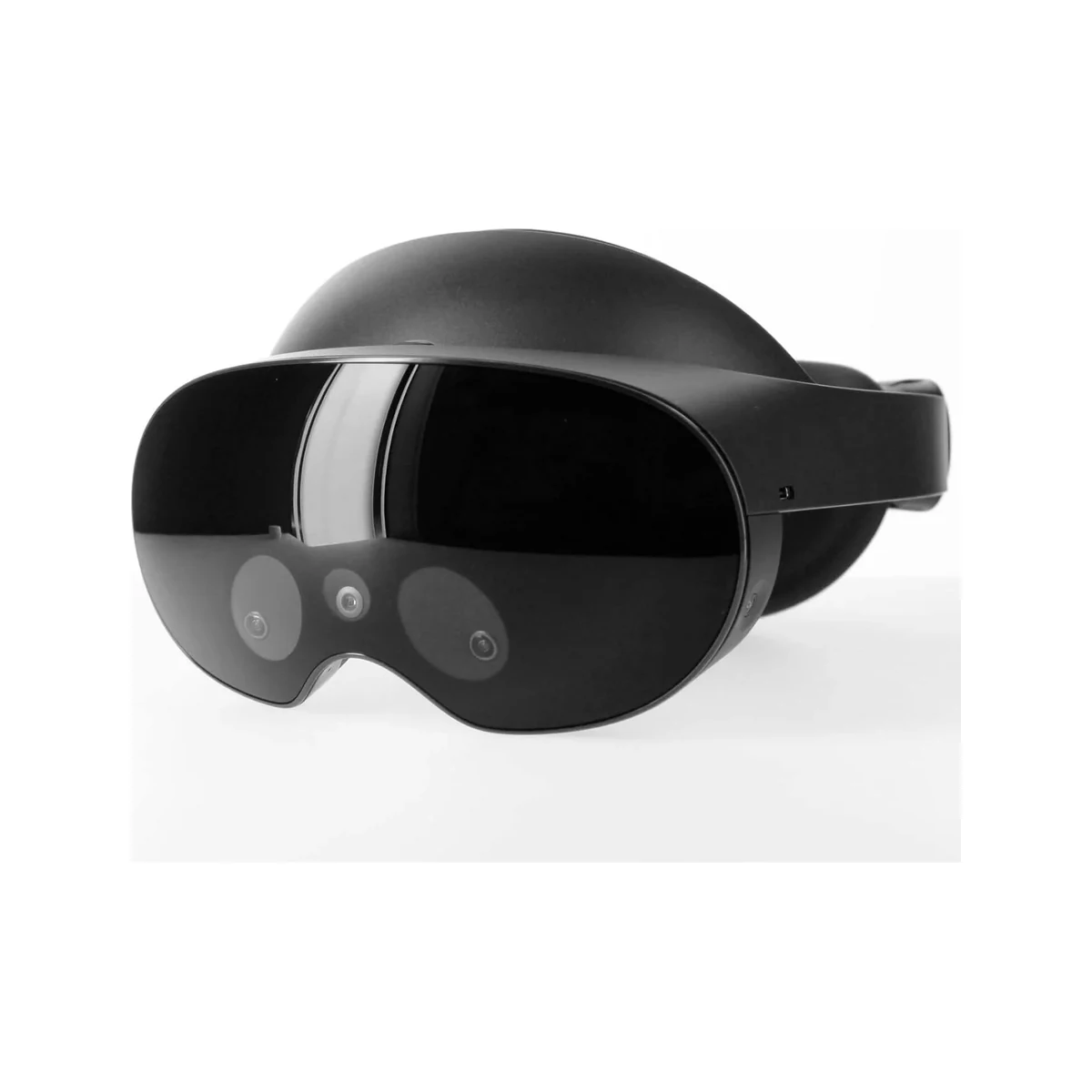
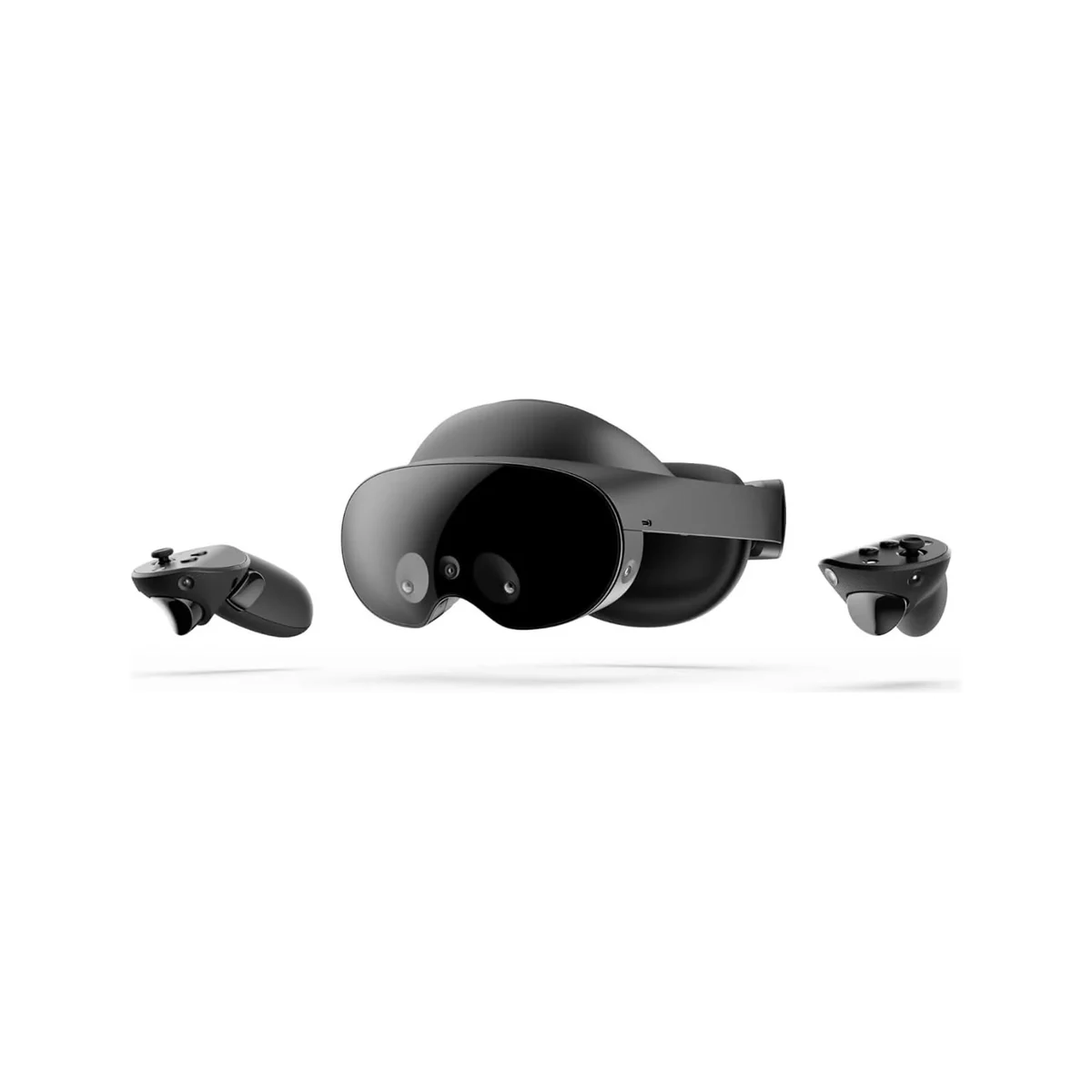
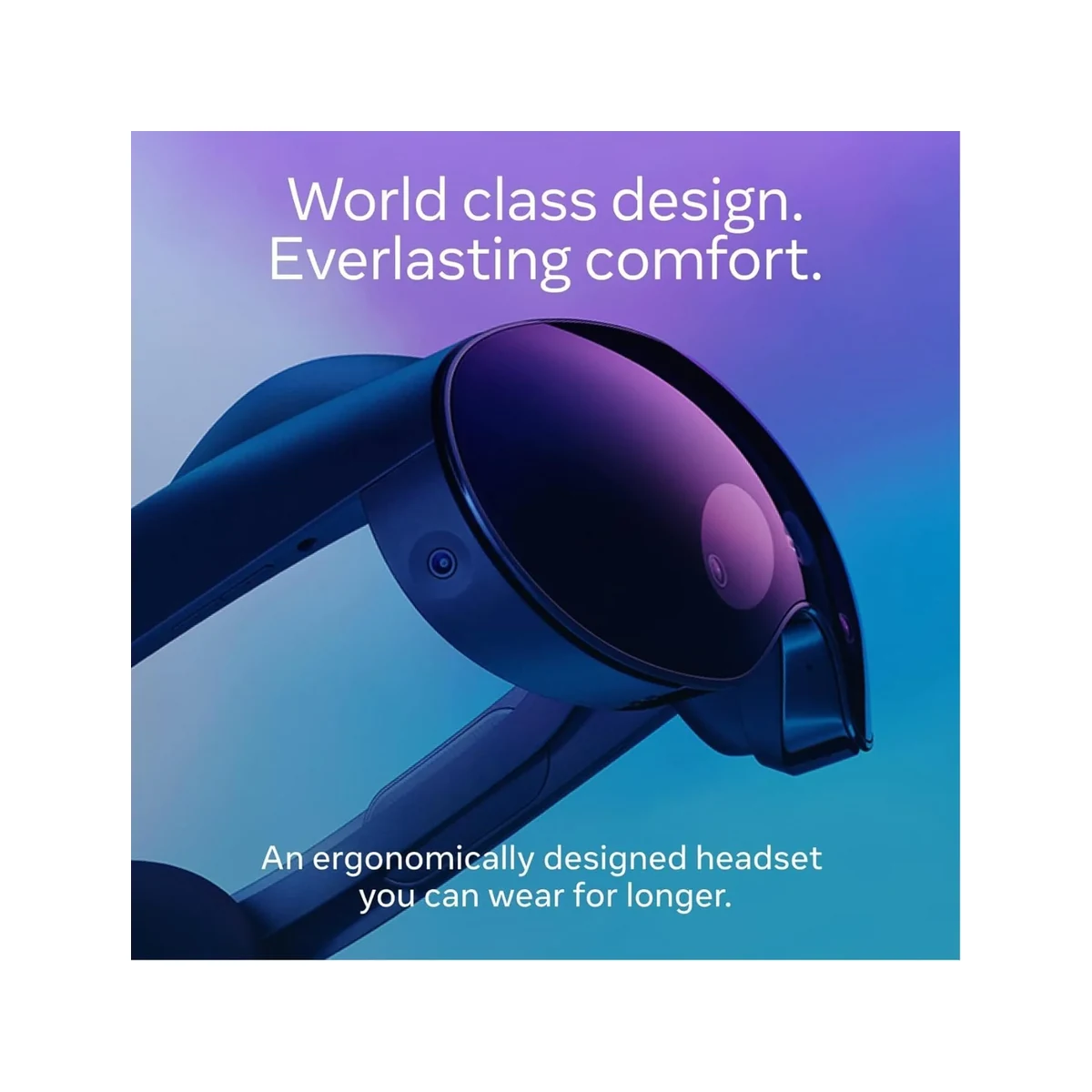
The Meta Quest Pro represents a significant departure from earlier consumer-focused Quest headsets. Its sleek matte-black visor, minimalist lines, and magnesium-alloy construction project a distinctly professional aesthetic that feels equally at home in a creative studio or corporate environment. The innovative halo-style headband distributes weight more evenly than traditional strap designs, while premium materials and refined finishes give it a luxury feel that justifies the “Pro” designation even in 2026.
Ergonomics have been carefully engineered for extended sessions. Multiple adjustment points, breathable facial interfaces, and balanced weight distribution help reduce the front-heavy sensation common in many VR headsets. The modular design also allows for easy replacement of foam inserts and head straps, addressing long-term comfort concerns that early owners reported. At 722 grams it remains noticeably heavier than the latest lightweight competitors, yet most users adapt quickly thanks to the excellent center of gravity.
Performance
Powered by the Snapdragon XR2 platform and 12GB of RAM, the Quest Pro delivers consistently smooth performance across both virtual reality and mixed reality workloads. Real-world testing in 2026 shows stable 90Hz frame rates even when rendering complex virtual objects anchored to real-world surfaces. Eye-tracked foveated rendering provides a noticeable efficiency boost, maintaining high visual fidelity where it matters most while optimizing GPU load.
Benchmarks place the Quest Pro comfortably ahead of the original Quest 2 and roughly on par with the Quest 3 in pure VR titles, though it shines brightest in mixed reality scenarios. Spatial mapping is fast and accurate, with minimal drift during extended productivity sessions. While newer headsets with next-generation chipsets edge it out in raw graphical horsepower for the most demanding AAA experiences, Meta’s continuous software optimizations have kept the Pro surprisingly relevant for professional applications and high-end gaming alike.
Features & Software
The standout features remain the high-fidelity color passthrough cameras and dual biometric tracking systems. Eye and face tracking produce remarkably natural avatars in collaborative spaces, while the depth sensor enables precise virtual object placement that feels truly integrated with the physical world. These capabilities transform the Quest Pro from a mere gaming device into a legitimate spatial computing platform for design, training, and remote collaboration.
Meta’s Horizon OS has matured significantly by 2026, offering smoother multitasking, improved privacy controls, and a growing library of mixed reality applications. The ability to cast to multiple devices simultaneously and integrate with productivity suites makes the headset particularly valuable for professionals who need to switch seamlessly between virtual monitors, 3D models, and real-world interaction.
Value Proposition
Originally launched at a premium price, the Meta Quest Pro represents significantly stronger value in 2026 as street prices have settled. It delivers professional-grade mixed reality capabilities at roughly half the cost of the Apple Vision Pro while offering a far more extensive gaming and entertainment library. For users who can utilize the eye and face tracking for creative work or enterprise applications, the headset’s unique feature set justifies the investment better than ever.
That said, casual gamers or those primarily interested in entertainment may find better value in more affordable options. The Quest Pro’s sweet spot remains users who specifically need its advanced biometrics and superior passthrough quality rather than raw display resolution or sheer processing power.
How It Compares
Against the Meta Quest 3, the Quest Pro offers meaningfully better color passthrough, superior eye and face tracking for natural avatars, and a more premium, comfortable build for all-day wear. While the Quest 3 wins on price and slightly sharper lenses, the Pro remains the superior choice for users prioritizing mixed reality accuracy and professional features.
When compared to the Apple Vision Pro, the Quest Pro provides better battery flexibility, a vastly larger library of entertainment and gaming content, and more comfortable ergonomics for active use. However, the Vision Pro counters with superior micro-OLED displays and more powerful onboard computing. For most users who don’t require Apple’s ecosystem integration, the Quest Pro delivers 80% of the experience at a much more accessible price.
Pros and Cons
Pros
- Exceptional full-color mixed reality passthrough that makes spatial computing genuinely practical.
- Advanced eye and face tracking deliver natural avatars and enhanced foveated rendering performance.
- Premium magnesium-alloy build and thoughtful weight distribution provide excellent long-term comfort.
- Versatile enough for both high-end productivity applications and immersive gaming.
- Strong ongoing software support from Meta keeps the platform competitive years after launch.
Cons
- At 722 grams, the headset feels noticeably heavier than newer lightweight competitors during extended sessions.
- Battery life is limited to approximately two hours on the internal pack, requiring the external battery for longer use.
- The current price, while improved, still represents a significant investment for casual users.
- Occasional passthrough artifacts appear in challenging lighting conditions despite overall strong performance.
- The mixed reality app ecosystem, while growing, still lags behind the breadth of pure VR content available.
FAQ
Q: Is the Meta Quest Pro still worth buying in 2026?
A: Yes, particularly for professionals and MR enthusiasts who value its eye and face tracking. Casual users may find better value in more recent mainstream models.

Q: How does the Quest Pro’s passthrough compare to the Quest 3?
A: The Quest Pro generally offers superior color accuracy, dynamic range, and lower latency, making it the preferred choice for serious mixed reality work.
Q: Does the headset work well for productivity and work?
A: Absolutely. The combination of multiple virtual displays, precise hand tracking, and eye tracking makes it excellent for virtual workspaces and collaborative design.
Q: What is the realistic battery life during mixed use?
A: Expect around 1.5 to 2 hours with the internal battery during typical mixed reality use. The included external battery pack significantly extends playtime.
Q: Can you use it with prescription lenses?
A: Yes. Meta offers custom prescription lens inserts specifically designed for the Quest Pro that magnetically attach for convenient swapping.
Verdict
The Meta Quest Pro remains an outstanding choice in 2026 for professionals, developers, and serious enthusiasts who need premium mixed reality capabilities and advanced tracking features. Its refined ergonomics, natural avatar system, and excellent color passthrough deliver an experience that still feels cutting-edge for productivity and creative work. If your workflow can leverage its unique strengths and your budget aligns with its premium positioning, the Quest Pro continues to be a smart long-term investment.
Pros
- ✓ Exceptional full-color mixed reality passthrough that makes spatial computing genuinely practical.
- ✓ Advanced eye and face tracking deliver natural avatars and enhanced foveated rendering performance.
- ✓ Premium magnesium-alloy build and thoughtful weight distribution provide excellent long-term comfort.
- ✓ Versatile enough for both high-end productivity applications and immersive gaming.
- ✓ Strong ongoing software support from Meta keeps the platform competitive years after launch.
Cons
- ✗ At 722 grams, the headset feels noticeably heavier than newer lightweight competitors during extended sessions.
- ✗ Battery life is limited to approximately two hours on the internal pack, requiring the external battery for longer use.
- ✗ The current price, while improved, still represents a significant investment for casual users.
- ✗ Occasional passthrough artifacts appear in challenging lighting conditions despite overall strong performance.
- ✗ The mixed reality app ecosystem, while growing, still lags behind the breadth of pure VR content available.
Where to Buy the Meta Quest Pro





Prices may vary. Affiliate links — we may earn a commission at no extra cost to you.
Related Reviews

Affiliate links — we may earn a commission at no extra cost to you.