


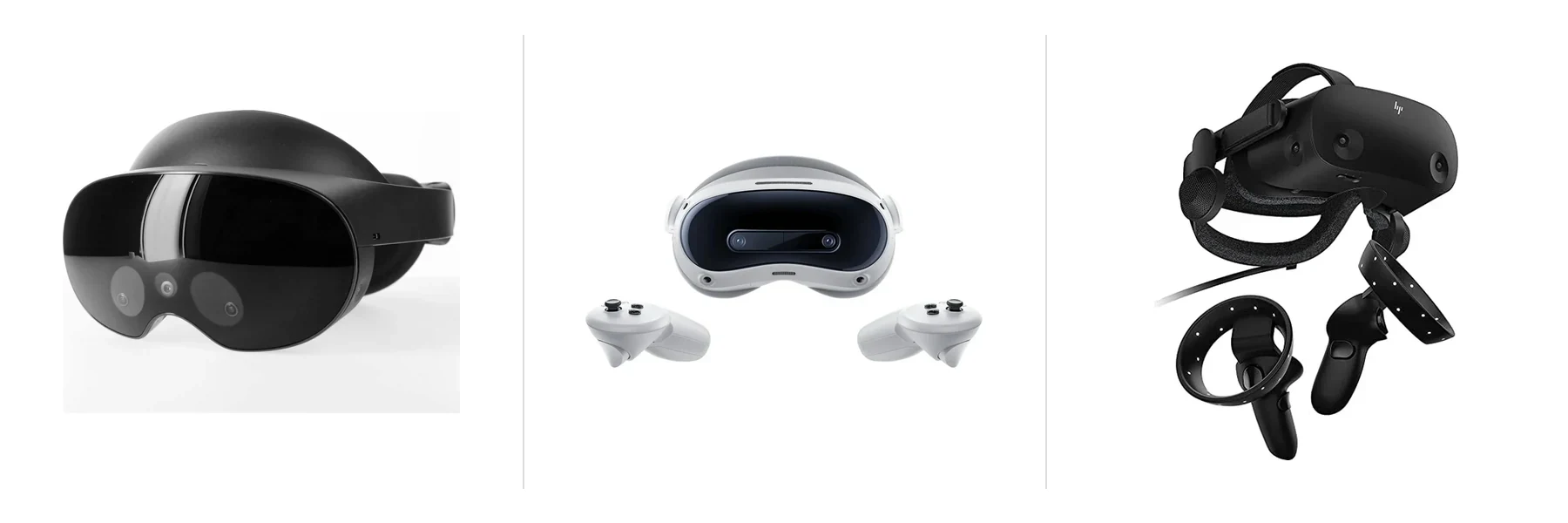
As we navigate the VR landscape in 2026, the Meta Quest Pro, Pico 4 Ultra, and HP Reverb G2 offer distinct approaches to virtual and mixed reality. The Quest Pro emphasizes versatile spatial computing with robust software support, while the Pico 4 Ultra focuses on display excellence and advanced mixed reality sensing. The Reverb G2 provides an accessible entry into high-clarity PC VR for those with compatible hardware.
At a Glance
| Feature | Meta Quest Pro | Pico 4 Ultra | HP Reverb G2 |
|---|---|---|---|
| Price | $765 | $1,023 | See retailer |
| Overall Score | 78/100 | 77/100 | 74/100 |
| Best For | Versatile mixed reality and productivity | High-clarity mixed reality experiences | Budget-friendly PC VR |
| Passthrough | Exceptional full-color | Industry-leading with AI depth sensing | Not featured |
| Key Strength | Eye/face tracking & software support | Micro-OLED displays & ergonomics | Visual clarity & SteamVR compatibility |
| Comfort Focus | Premium build with weight distribution | Excellent ergonomics for extended wear | Glasses-friendly long-session design |
Design and Build
The Meta Quest Pro features a premium magnesium-alloy build and thoughtful weight distribution that provide excellent long-term comfort, though at 722 grams it feels noticeably heavier than newer lightweight competitors during extended sessions. The Pico 4 Ultra counters with a highly comfortable ergonomic design and excellent weight distribution that supports extended wear without facial fatigue. The HP Reverb G2 offers comfortable weight distribution and a glasses-friendly design suitable for long sessions, but its older design shows its age against 2025 and 2026 headsets.
Both the Quest Pro and Pico 4 Ultra are built as untethered standalone devices that prioritize mixed reality functionality through advanced passthrough systems. In contrast, the HP Reverb G2 relies on a fixed tethering cable that restricts movement and requires careful cable management solutions. These fundamental design choices make the standalone headsets more practical for spatial computing while the Reverb G2 focuses on pure visual immersion within a tethered PC setup.
Performance and Features
The Meta Quest Pro delivers exceptional full-color mixed reality passthrough that makes spatial computing genuinely practical, enhanced by advanced eye and face tracking for natural avatars and improved foveated rendering. It proves versatile enough for both high-end productivity applications and immersive gaming, backed by strong ongoing software support from Meta that keeps the platform competitive years after launch. Battery life is limited to approximately two hours on the internal pack, often requiring the external battery for longer sessions, and occasional passthrough artifacts can appear in challenging lighting conditions.
The Pico 4 Ultra stands out with exceptional 4.3K Micro-OLED displays that deliver outstanding clarity, contrast, and color accuracy for both gaming and productivity. Its industry-leading color passthrough and AI depth sensing create some of the most convincing mixed reality experiences available, while the Snapdragon XR2 Gen 4 ensures strong real-world performance with smooth frame rates even in demanding titles. However, hand tracking can occasionally lose precision in challenging lighting, and the software ecosystem still lags behind Meta’s in quantity and variety.
As detailed in our full review of HP Reverb G2, this headset provides exceptional visual clarity with minimal screen door effect thanks to its 2160×2160 per-eye resolution and integrated spatial audio speakers for immersive sound without headphones. It maintains strong compatibility with both SteamVR and modern OpenXR applications but is hampered by inside-out tracking that can falter in challenging conditions or when hands are obscured. The fixed tethering cable and demand for a high-end GPU further limit accessibility compared to the standalone mixed reality capabilities of its competitors.
Pricing and Value
At $765, the Meta Quest Pro strikes a balance between capability and cost, though it still represents a significant investment for casual users. Its versatile mixed reality features and strong long-term software support deliver solid value for users who will actively use both productivity and gaming applications. The Pico 4 Ultra at $1,023 commands a premium but justifies it with future-proof features like Wi-Fi 7 and hot-swappable batteries, offering excellent long-term value despite the higher entry point.
The HP Reverb G2 provides the strongest value proposition in 2026 thanks to significant price depreciation from launch, making its exceptional visual clarity and SteamVR compatibility available at an accessible price for PC owners. While it lacks the standalone mixed reality capabilities of the other two, its depreciated cost makes it the clear choice for budget-conscious users who already have a high-end gaming PC.
Pros and Cons
Meta Quest Pro
Pros:
– Exceptional full-color mixed reality passthrough that makes spatial computing genuinely practical.
– Advanced eye and face tracking deliver natural avatars and enhanced foveated rendering performance.
– Premium magnesium-alloy build and thoughtful weight distribution provide excellent long-term comfort.
– Versatile enough for both high-end productivity applications and immersive gaming.
Cons:
– At 722 grams, the headset feels noticeably heavier than newer lightweight competitors during extended sessions.
– Battery life is limited to approximately two hours on the internal pack, requiring the external battery for longer use.
– The current price, while improved, still represents a significant investment for casual users.
– Occasional passthrough artifacts appear in challenging lighting conditions despite overall strong performance.
Pico 4 Ultra
Pros:
– Exceptional 4.3K Micro-OLED displays deliver outstanding clarity, contrast, and color accuracy for both gaming and productivity.
– Highly comfortable ergonomic design with excellent weight distribution supports extended wear without facial fatigue.
– Industry-leading color passthrough and AI depth sensing create some of the most convincing mixed reality experiences available.
– Strong real-world performance from the Snapdragon XR2 Gen 4 keeps frame rates smooth even in demanding titles.
– Competitive pricing combined with future-proof features like Wi-Fi 7 and hot-swappable batteries offers excellent long-term value.
Cons:
– The software ecosystem and app library still lag behind Meta’s established Quest platform in both quantity and variety.
– Battery life remains limited to roughly two hours under heavy MR or gaming loads, requiring external solutions for all-day use.
– Hand tracking can occasionally lose precision in challenging lighting conditions despite overall improvements.
– Regional content availability and official support networks are not yet as comprehensive as those offered by Meta or Apple.
HP Reverb G2
Pros:
– Exceptional visual clarity with minimal screen door effect thanks to 2160×2160 per-eye resolution.
– Integrated spatial audio speakers deliver immersive sound without requiring additional headphones.
– Comfortable weight distribution and glasses-friendly design suitable for long sessions.
– Strong compatibility with both SteamVR and modern OpenXR applications.
– Excellent value in 2026 after significant price depreciation from launch.
Cons:
– Inside-out tracking can falter in challenging lighting conditions or when hands are obscured.
– The fixed tethering cable restricts movement and requires careful cable management solutions.
– Controllers feel dated compared to newer designs with better ergonomics and haptics.
– Demands a high-end GPU to truly shine, limiting accessibility for mid-range PC users.
Who Should Buy Which
Meta Quest Pro
Users who want a versatile standalone headset for both spatial computing and immersive gaming should choose the Meta Quest Pro. Its exceptional mixed reality passthrough, advanced eye and face tracking, and strong long-term software support make it ideal for professionals and enthusiasts who value Meta’s established ecosystem and practical productivity features.
Pico 4 Ultra
Those prioritizing the highest display clarity and most convincing mixed reality experiences will be best served by the Pico 4 Ultra. Its Micro-OLED panels, AI depth sensing, and ergonomic comfort suit power users and early adopters who can work within a smaller software library and are willing to invest in future-proof standalone hardware.
HP Reverb G2
PC gamers and enthusiasts on a budget who already own a high-end GPU should opt for the HP Reverb G2. Its exceptional visual clarity, SteamVR compatibility, and excellent depreciated value in 2026 make it the practical choice for users seeking high-resolution tethered VR without mixed reality requirements.
Verdict
The Meta Quest Pro wins overall in this 2026 comparison thanks to its exceptional full-color mixed reality passthrough, advanced tracking features, versatile use cases, and strong ongoing software support that keep it competitive years after launch. The Pico 4 Ultra runs extremely close behind and is the better pick for users who specifically want the highest display clarity and most convincing MR experiences. The HP Reverb G2 remains the best choice for budget PC VR enthusiasts who value visual fidelity and SteamVR compatibility over standalone mixed reality capabilities.