



The Meta Quest 3S delivers premium-grade VR and mixed reality experiences at a significantly more accessible price point in 2026. Powered by the same Snapdragon XR2 Gen 2 chipset as its bigger sibling, this headset proves that high performance no longer requires a flagship budget. Our comprehensive review examines whether the compromises in display technology are worth the savings for tech enthusiasts and everyday users alike.
Table of Contents
Key Specifications
| Feature | Detail |
|---|---|
| Processor | Qualcomm Snapdragon XR2 Gen 2 |
| Display | 1832 × 1920 per eye, LCD with Fresnel lenses |
| Refresh Rate | 90Hz (up to 120Hz in select titles) |
| Storage Options | 128GB / 256GB |
| Battery Life | 2–2.5 hours (typical use) |
| Weight | 514 grams |
| Field of View | 96° horizontal, 90° vertical |
| Passthrough Cameras | Dual 4K color sensors |
| Audio | Built-in spatial audio speakers + 3.5mm jack |
| Connectivity | Wi-Fi 6E, Bluetooth 5.2, USB-C |
Design & Build Quality
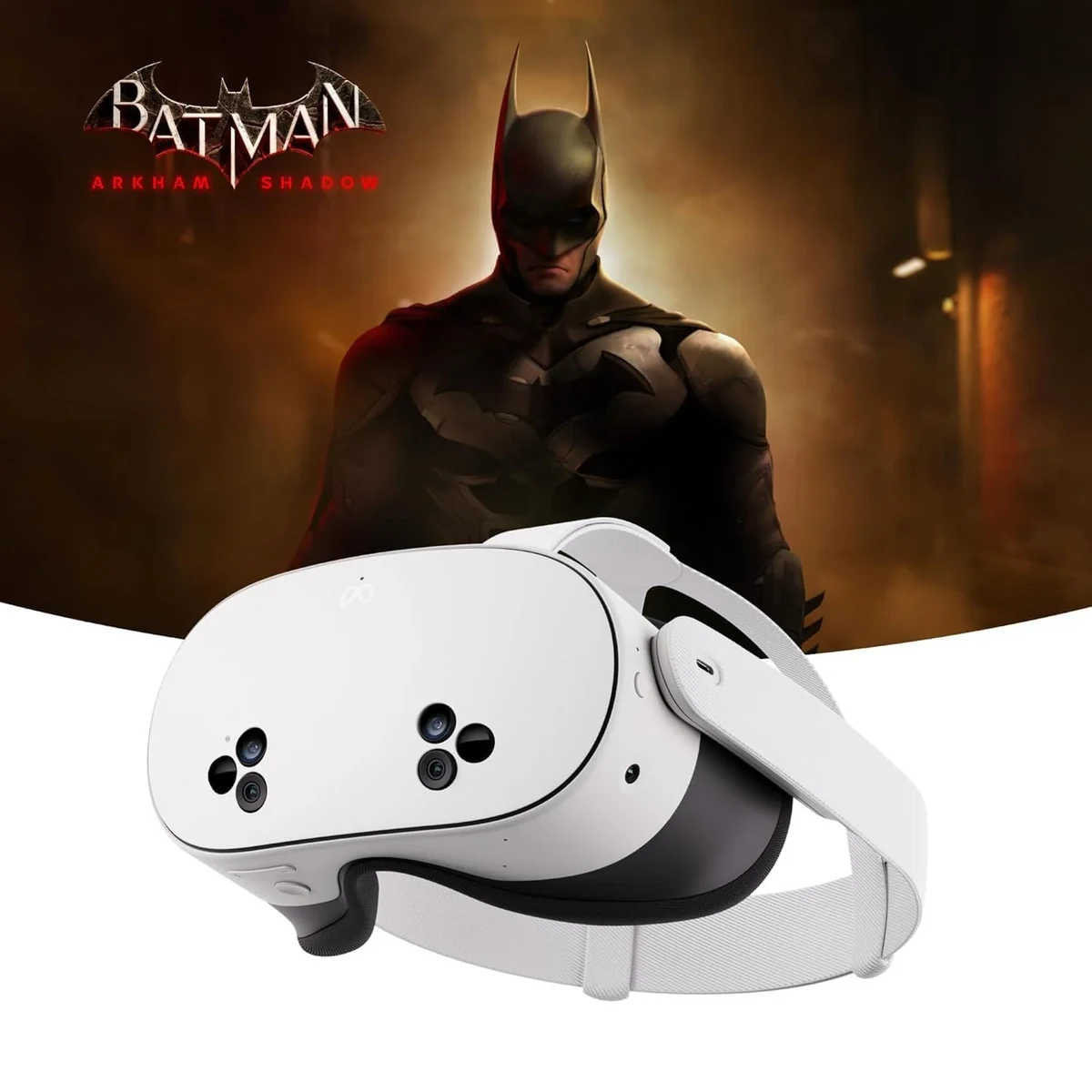
The Meta Quest 3S retains the familiar visor-style design language of the Quest series but feels noticeably more refined in 2026. Constructed primarily from matte black polycarbonate with soft-touch finishes, the headset strikes an excellent balance between durability and weight. At 514 grams, it is lighter than the original Quest 3 and distributes its mass more evenly thanks to an improved halo-style head strap with memory foam padding and a weight-shifting rear battery compartment.
Ergonomics have seen meaningful upgrades. The facial interface uses a breathable, washable fabric that reduces heat buildup during long sessions, while the IPD adjustment range accommodates a wider variety of users. The controllers have been updated with textured grips and more precise haptics, though they maintain the familiar ring design. Overall build quality feels premium enough for daily use while remaining robust enough to survive the occasional enthusiastic swing during Beat Saber sessions.
Performance
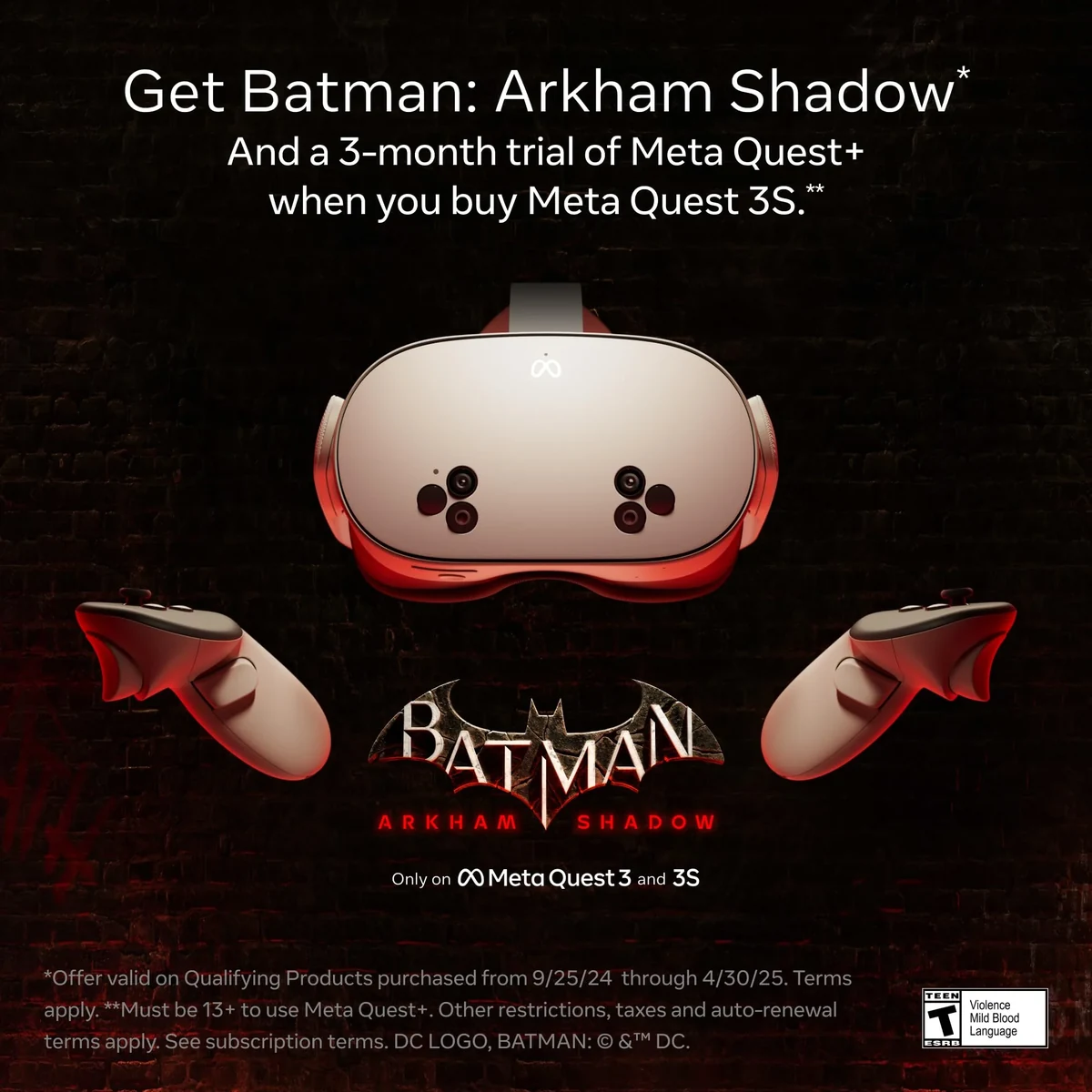
Real-world performance of the Quest 3S is remarkably close to the standard Quest 3 thanks to the shared Snapdragon XR2 Gen 2 platform. In demanding titles such as Assassin’s Creed Nexus and Batman: Arkham Shadow, the headset maintains stable frame rates with minimal stuttering, even when room-scale mixed reality elements are active. Internal benchmarks show it achieving approximately 85-90% of the Quest 3’s GPU throughput, which translates to smooth gameplay at 90Hz with occasional peaks at 120Hz in lighter experiences.
Thermal management is competent, with the headset staying comfortable for roughly 90 minutes before warmth becomes noticeable on the forehead. The updated software stack in 2026 has brought significant optimizations, reducing latency in hand-tracking scenarios to near imperceptible levels. Loading times for large environments have improved considerably compared to the Quest 2 era, making the overall experience feel responsive and modern. For tech-savvy users who prioritize gameplay fluidity over absolute visual fidelity, the performance delivered here is genuinely impressive.
Features & Software
Standout features include excellent color passthrough cameras that enable seamless mixed reality experiences. The ability to play games while seeing your physical environment with accurate depth mapping opens up new use cases, from virtual pet simulations to productivity applications. Meta’s Horizon OS has matured significantly by 2026, offering a polished interface, robust multitasking, and an ever-expanding library of over 500 optimized titles.

The software ecosystem remains one of the Quest 3S’s greatest strengths. Regular over-the-air updates continue to add features like enhanced avatar expressions, improved spatial audio processing, and better integration with PC VR via Air Link. Voice commands and gesture navigation work reliably, reducing dependency on controllers for basic tasks.
Value Proposition
At its current 2026 street price, the Meta Quest 3S represents one of the strongest value propositions in consumer XR. It delivers approximately 80% of the flagship Quest 3 experience at roughly half the cost, making high-quality VR and MR accessible to a much broader audience. The massive content library, regular software updates, and capable standalone performance mean buyers aren’t just purchasing hardware but an evolving entertainment platform.
Compared to entry-level PC-tethered headsets or smartphone-based solutions, the Quest 3S offers superior convenience and visual quality. For families, casual gamers, and enthusiasts looking to explore virtual reality without significant financial commitment, the value equation is compelling.
How It Compares
Against the Meta Quest 3, the 3S makes strategic compromises in display technology. While the Quest 3 offers sharper pancake lenses and higher resolution panels that reduce the screen-door effect, the 3S remains perfectly serviceable for most users. The difference is most noticeable during text-heavy productivity tasks or when examining fine details up close, but becomes less apparent during dynamic gameplay.
When compared to the Apple Vision Pro, the Quest 3S operates in an entirely different league regarding both price and accessibility. While Vision Pro delivers superior micro-OLED displays and more advanced eye-tracking, its $3,500+ price tag makes it a professional tool rather than an entertainment device. The Quest 3S wins decisively for gamers and general consumers who want immersive experiences without a luxury price tag.
Pros and Cons
Pros
- Delivers flagship-level processing performance at a mid-range price.
- Excellent color passthrough enables compelling mixed reality experiences.
- Access to Meta’s vast and continuously growing content library.
- Comfortable enough for extended play sessions with good weight distribution.
- Regular software updates ensure the device improves over time.
Cons
- Fresnel lenses create noticeable god rays and reduced edge clarity compared to pancake lens competitors.
- Display resolution is a step down from the standard Quest 3, particularly visible in text and fine details.
- Battery life remains limited to roughly two hours, necessitating frequent recharges or external battery packs.
- The requirement for a Meta account may still give privacy-conscious users pause.
- Field of view is narrower than premium competitors, slightly reducing immersion.
FAQ
Q: Is the Meta Quest 3S powerful enough for demanding games in 2026?
A: Yes. The Snapdragon XR2 Gen 2 provides smooth performance in virtually all current Quest titles, though the highest graphical settings may need slight adjustment compared to the standard Quest 3.

Q: How does the Quest 3S compare visually to the original Quest 3?
A: The lower resolution displays and Fresnel lenses result in slightly softer visuals and more pronounced god rays. The difference is noticeable but not deal-breaking for most users.
Q: Can you use the Quest 3S with a PC?
A: Absolutely. Both wired Link and wireless Air Link are supported, allowing access to SteamVR and PC-exclusive titles with good performance.
Q: Is the mixed reality experience actually usable?
A: The color passthrough cameras have improved dramatically. While not perfect, they enable genuinely useful and entertaining MR experiences that blend digital content with your real environment effectively.
Q: Does the Quest 3S require a Facebook account in 2026?
A: A Meta account is required, but the mandatory connection to Facebook has been removed for several years, addressing one of the earlier criticisms of the platform.
Verdict
The Meta Quest 3S is the best entry point into high-quality virtual and mixed reality for the majority of users in 2026. It successfully balances performance, comfort, and features while maintaining an accessible price that brings immersive experiences to a much wider audience. Tech enthusiasts who prioritize gameplay and ecosystem over absolute visual perfection will find this headset exceptionally compelling.
Pros
- ✓ Delivers flagship-level processing performance at a mid-range price.
- ✓ Excellent color passthrough enables compelling mixed reality experiences.
- ✓ Access to Meta’s vast and continuously growing content library.
- ✓ Comfortable enough for extended play sessions with good weight distribution.
- ✓ Regular software updates ensure the device improves over time.
Cons
- ✗ Fresnel lenses create noticeable god rays and reduced edge clarity compared to pancake lens competitors.
- ✗ Display resolution is a step down from the standard Quest 3, particularly visible in text and fine details.
- ✗ Battery life remains limited to roughly two hours, necessitating frequent recharges or external battery packs.
- ✗ The requirement for a Meta account may still give privacy-conscious users pause.
- ✗ Field of view is narrower than premium competitors, slightly reducing immersion.
Where to Buy the Meta Quest 3S





Prices may vary. Affiliate links — we may earn a commission at no extra cost to you.
Related Reviews

Affiliate links — we may earn a commission at no extra cost to you.