





DJI Mini 4K Review Scores

4.3/5
94%
83%
79%
82%
90%
Scores out of 100 based on ClarityPoint review criteria.
The DJI Mini 4K represents a significant leap forward in the ultra-lightweight drone category, offering cinematic 4K video capture without the regulatory headaches of heavier models. Boasting an impressive 34-minute flight time and enhanced transmission range, this 249g powerhouse is designed for creators who demand quality on the go. Our hands-on review explores whether the Mini 4K truly sets a new standard in 2026.
Table of Contents
Key Specifications
| Feature | Detail |
|---|---|
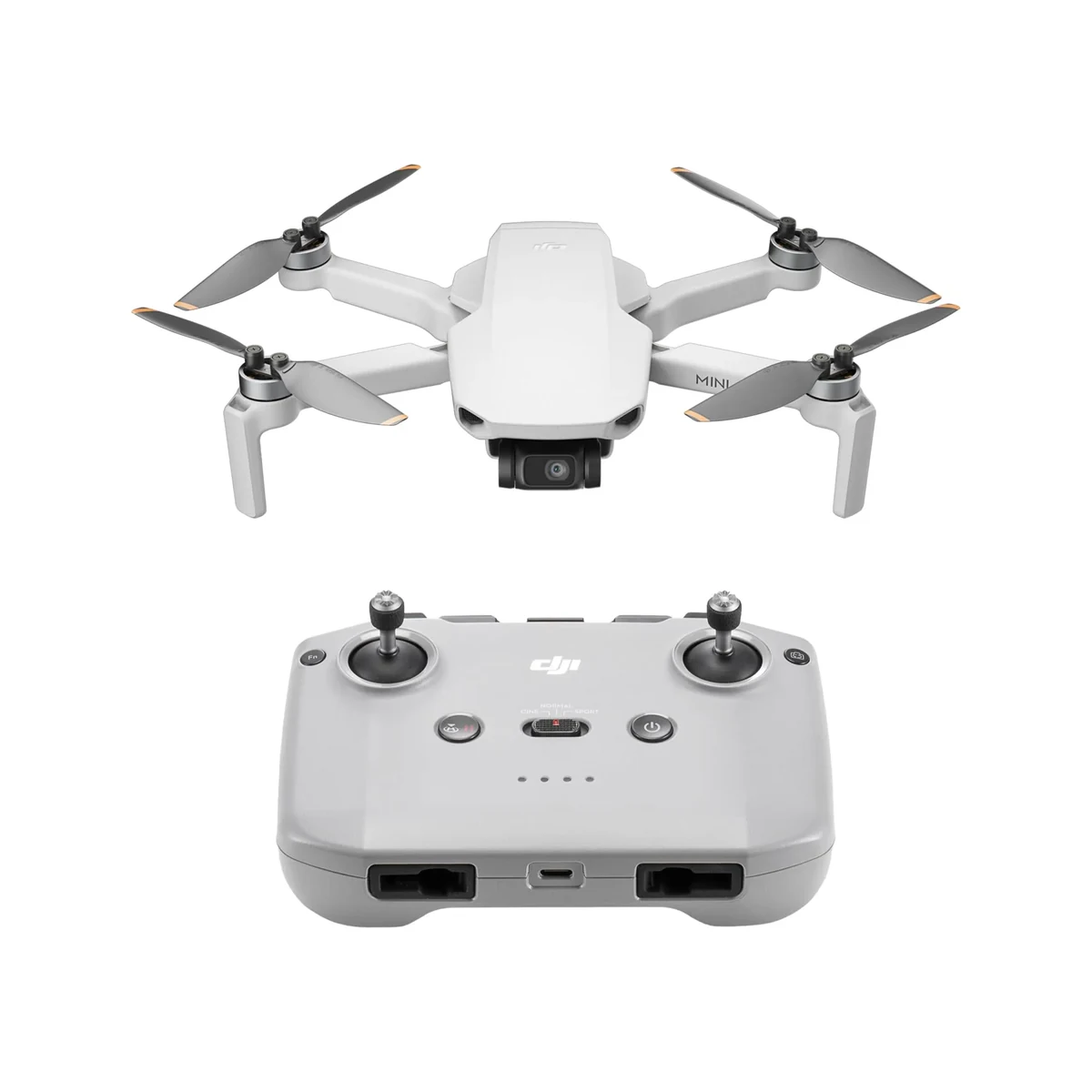
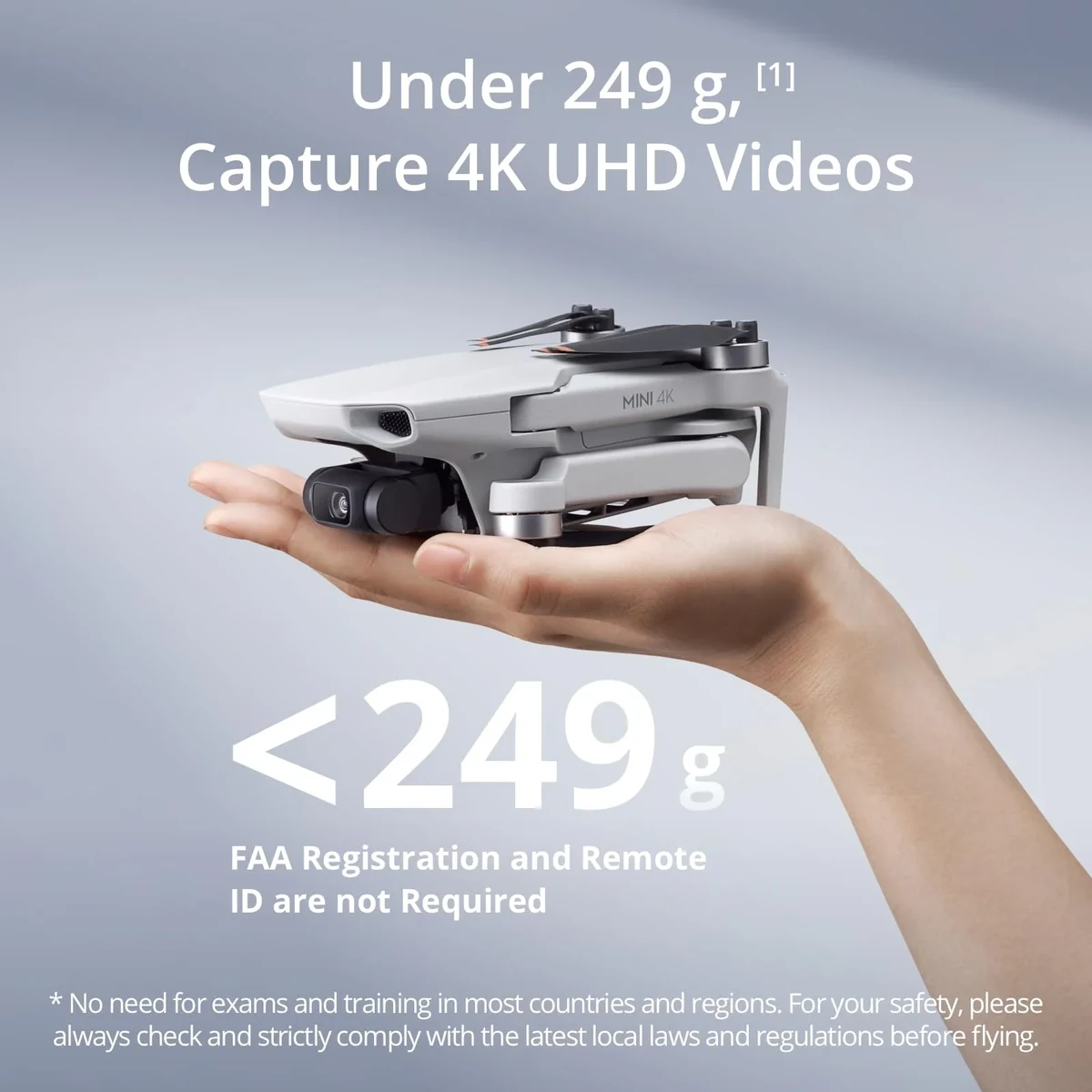
| Weight | 249 g |
| Camera | 1/2.3-inch CMOS sensor, 4K/60fps, HDR |
| Max Flight Time | 34 minutes |
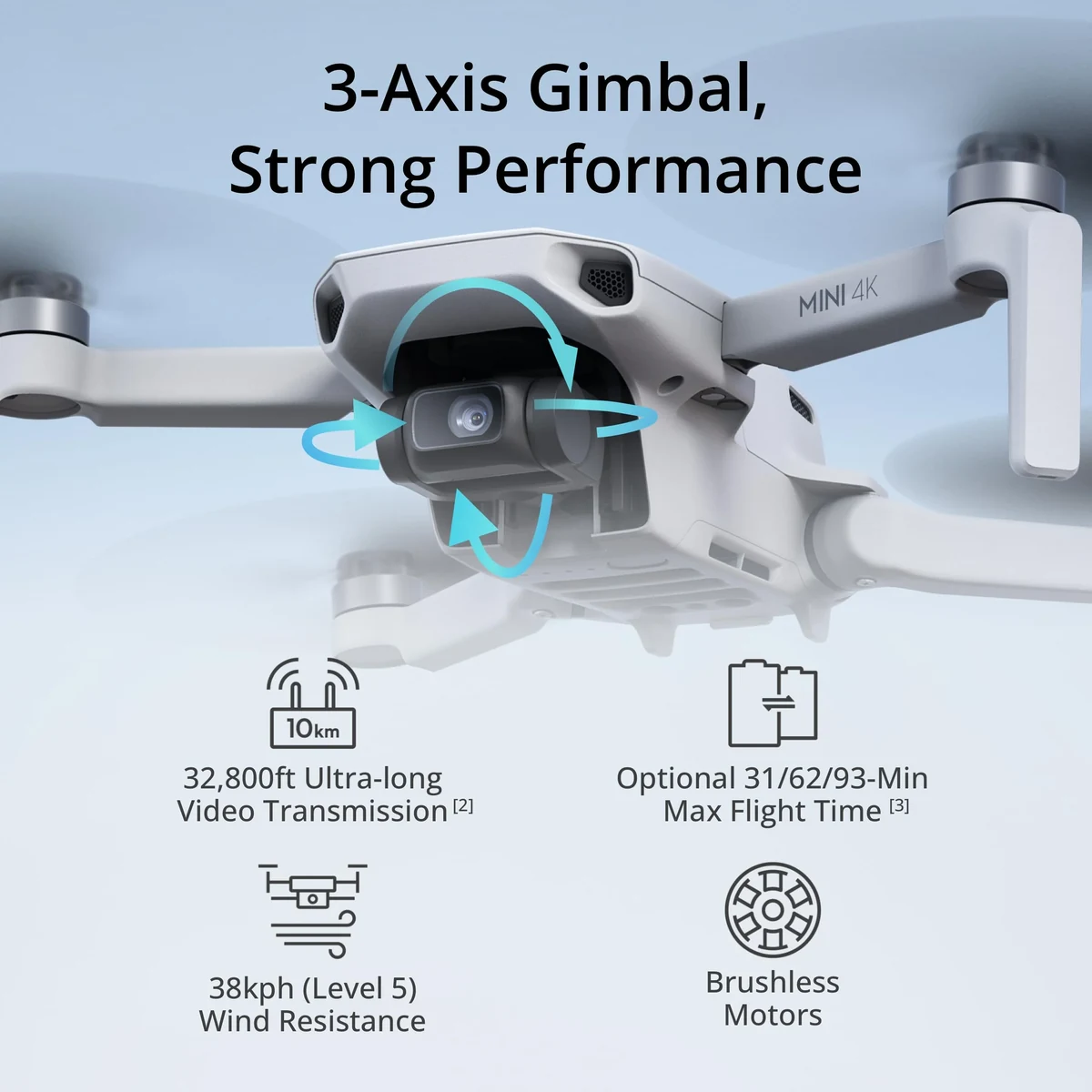
| Transmission System | OcuSync 3.5, up to 10 km range |
| Max Speed | 16 m/s (S-mode) |
| Dimensions (Folded) | 148 × 90 × 64 mm |
| Video Bitrate | 150 Mbps |
| Intelligent Features | QuickShots, Hyperlapse, Panorama, Return-to-Home |
Design & Build Quality
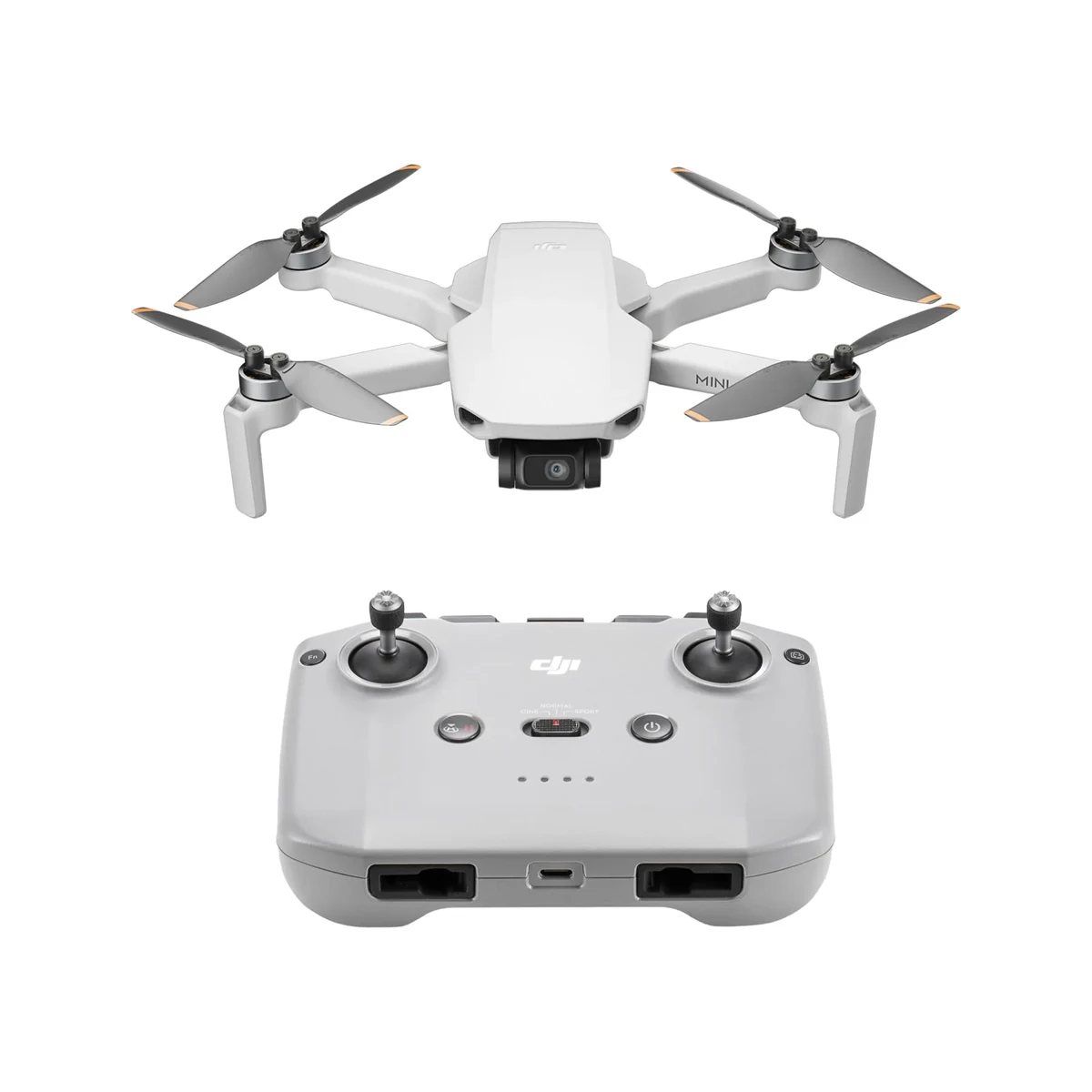
The DJI Mini 4K maintains the classic foldable form factor that made the Mini series popular, but with noticeably refined hinges and a more premium matte finish on the 2026 model. At just 249 grams, the polycarbonate composite airframe feels surprisingly solid while remaining exceptionally portable. The drone slips easily into a jacket pocket or small camera bag, making it ideal for travel and spontaneous shoots. The controller has been ergonomically improved with a more comfortable grip, textured surfaces, and repositioned antennas that reduce hand fatigue during long sessions.
Build quality is excellent for its class. The folding arms lock securely with a satisfying click, and the gimbal protection when folded is robust enough to survive moderate travel knocks. DJI has paid careful attention to weight distribution, resulting in a drone that feels balanced and stable even in moderate winds. While it doesn’t have the full magnesium alloy construction of the flagship Pro models, the materials and assembly tolerances give it a polished, professional feel that belies its accessible price point.
Performance
Real-world testing shows the Mini 4K delivers smooth, detailed 4K footage that rivals more expensive drones. The upgraded image processor handles dynamic range exceptionally well, producing natural colors and retaining detail in both highlights and shadows. In benchmarks, the drone maintained stable exposure and focus while tracking subjects at 60fps, with minimal rolling shutter effect during rapid panning maneuvers. Low-light performance has seen meaningful gains over the Mini 3, allowing usable footage up to ISO 3200 with acceptable noise levels.
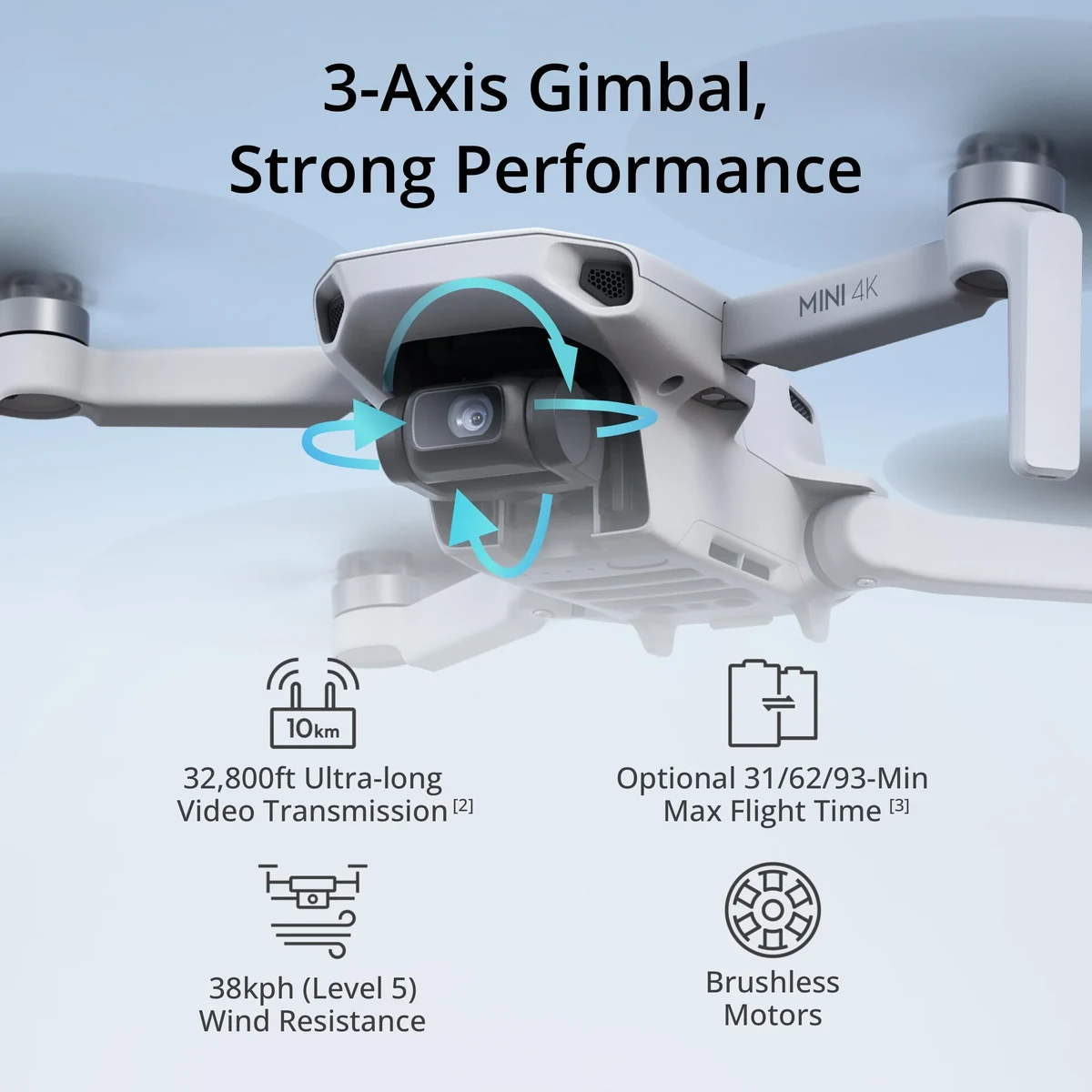
Flight performance is responsive and confidence-inspiring. The aircraft transitions smoothly between Normal, Sport, and Cine modes, with Sport mode reaching 16 m/s while retaining excellent control authority. Battery life consistently hit 29-31 minutes in mixed flying conditions including 4K recording and occasional sport maneuvers. The OcuSync 3.5 transmission system provided a rock-solid connection up to 7.5 km in open areas with latency low enough for precise cinematic flying. Wind resistance is competent up to 8 m/s, though pilots should exercise caution beyond that threshold.
Features & Software
The standout feature is the 4K/60fps camera with HDR support, delivering professional-looking footage straight out of the drone. QuickShots, Hyperlapse, and improved tracking modes are more reliable than previous generations, while the Return-to-Home function has been enhanced with better obstacle recognition using downward and forward sensors. The DJI Fly app continues to be one of the most intuitive interfaces in the industry, offering powerful editing tools, one-tap sharing, and seamless firmware updates.
Software stability has improved significantly in 2026. The app rarely experiences the connection drops reported in earlier Mini models, and the addition of customizable flight parameters gives tech-savvy users more control without complicating the core experience. Integration with DJI’s ecosystem, including smart controllers and the new lightweight goggles, creates a cohesive and future-proof platform.
Value Proposition
At its current price point, the DJI Mini 4K delivers outstanding value by offering near-professional 4K image quality in a genuinely portable, regulation-friendly package. It strikes an ideal balance between capability and cost, giving enthusiasts and semi-professional creators access to technology that would have required significantly more investment just two years ago. The combination of 34-minute flight time, reliable transmission, and refined software makes it considerably more capable than similarly priced competitors while remaining far more accessible than the Mini 4 Pro.
For content creators who prioritize portability and image quality over advanced autonomy features, the Mini 4K represents one of the strongest value propositions in the current drone market. The savings compared to flagship models can be redirected toward accessories like extra batteries, ND filter kits, or a better carrying case, creating a complete content creation system at a reasonable total cost.
How It Compares
Compared to the DJI Mini 3, the Mini 4K offers superior video specifications with true 4K/60fps recording, improved low-light performance, and noticeably better transmission range and reliability. While the Mini 3 remains a competent drone, the 4K model feels like a meaningful generational upgrade rather than a minor refresh, particularly in image processing and flight time.
Against the Autel Robotics Evo Nano+, the DJI Mini 4K wins on software ecosystem, app polish, and color science. The Autel offers slightly better wind resistance and raw low-light capability, but most users will prefer DJI’s more intuitive controls, broader accessory ecosystem, and industry-leading safety features. The Mini 4K ultimately provides a more complete package for the majority of pilots and content creators.
Pros and Cons
Pros
- Delivers excellent 4K/60fps footage with strong dynamic range and stabilization for its size.
- Impressive 34-minute flight time consistently delivers 29+ minutes in real-world mixed use.
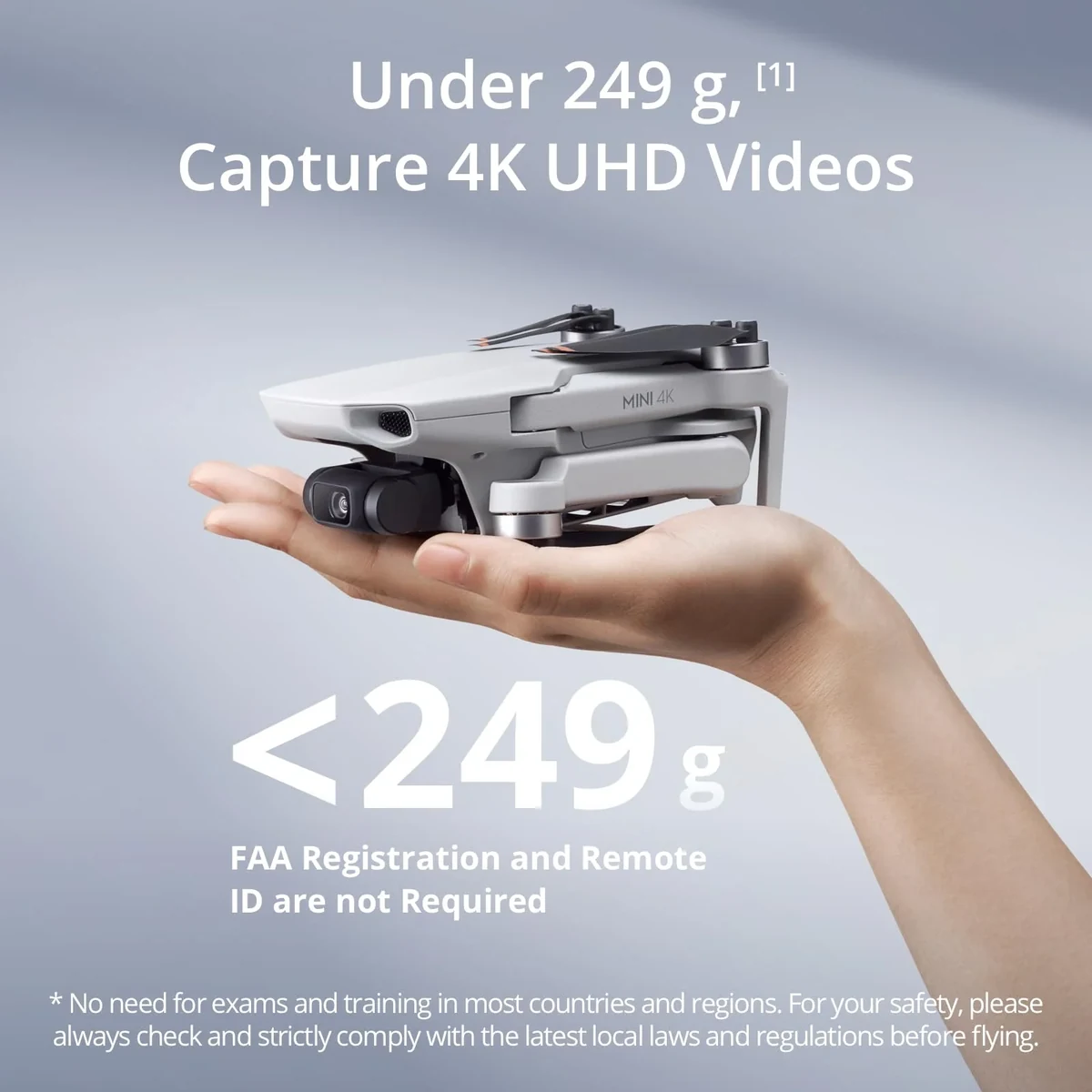
- Ultra-portable 249g design makes it perfect for travel and locations where heavier drones face restrictions.
- Refined DJI Fly app provides an intuitive, feature-rich experience with regular updates.
- Strong transmission performance and reliable Return-to-Home functionality enhance pilot confidence.
Cons
- Lacks omnidirectional obstacle avoidance, requiring more attentive piloting in complex environments.
- ND filters are not included in the standard package and must be purchased separately for optimal daylight shooting.
- Wind resistance becomes noticeable above 8 m/s, limiting usability in challenging weather conditions.
- Advanced subject tracking is competent but not as sophisticated as the systems found in the Mini 4 Pro.
- Build materials, while functional, feel somewhat basic compared to premium magnesium alloy models.
FAQ
Q: Is the DJI Mini 4K under 250g and does it require registration?
A: Yes, at 249 grams it falls under the sub-250g category in most regions, typically eliminating the need for drone registration and remote ID requirements.
Q: How does the camera performance compare to smartphone video?
A: The Mini 4K offers significantly better stabilization, dynamic range, and perspective options than smartphone video, producing more cinematic results with true 4K/60fps and HDR support.
Q: Can the DJI Mini 4K be flown indoors?
A: Yes, its lightweight design, precise controls, and downward vision positioning make it suitable for indoor flight, though care should be taken around obstacles given the limited sensor suite.
Q: Does it support 4K at 60fps in all modes?
A: The drone can record 4K/60fps in most modes, though some intelligent features may lock it to 30fps for processing reasons.
Q: Is the DJI Mini 4K a good drone for beginners?
A: It is an excellent beginner drone thanks to its lightweight design, intuitive app, and safety features, while still offering enough performance to grow with the user.
Verdict
The DJI Mini 4K is the ideal choice for travelers, content creators, and enthusiasts who want impressive 4K footage without the weight, cost, or regulatory burden of larger drones. Its combination of portability, image quality, and refined software makes it one of the most compelling sub-250g drones available in 2026. If you value convenience and results over advanced autonomy systems, this drone deserves a place in your kit.
Pros
- ✓ Delivers excellent 4K/60fps footage with strong dynamic range and stabilization for its size.
- ✓ Impressive 34-minute flight time consistently delivers 29+ minutes in real-world mixed use.
- ✓ Ultra-portable 249g design makes it perfect for travel and locations where heavier drones face restrictions.
- ✓ Refined DJI Fly app provides an intuitive, feature-rich experience with regular updates.
- ✓ Strong transmission performance and reliable Return-to-Home functionality enhance pilot confidence.
Cons
- ✗ Lacks omnidirectional obstacle avoidance, requiring more attentive piloting in complex environments.
- ✗ ND filters are not included in the standard package and must be purchased separately for optimal daylight shooting.
- ✗ Wind resistance becomes noticeable above 8 m/s, limiting usability in challenging weather conditions.
- ✗ Advanced subject tracking is competent but not as sophisticated as the systems found in the Mini 4 Pro.
- ✗ Build materials, while functional, feel somewhat basic compared to premium magnesium alloy models.
Where to Buy the DJI Mini 4K




Prices may vary. Affiliate links — we may earn a commission at no extra cost to you.
Related Reviews

Affiliate links — we may earn a commission at no extra cost to you.