





The DJI Mini 4 Pro sets a new benchmark for lightweight drones in 2026, delivering cinematic 4K/60fps footage, true omnidirectional obstacle avoidance, and 34 minutes of flight time in a sub-249g package. This compact powerhouse removes regulatory barriers while providing professional-grade imaging and intelligent flight modes that rival much larger systems. Our in-depth review examines whether it remains the ultimate portable drone for creators and enthusiasts.
Table of Contents
Key Specifications
| Feature | Detail |
|---|---|
| Weight | <249g |
| Camera Sensor | 1/1.3-inch CMOS, 48MP |
| Video Resolution | 4K/60fps, 10-bit D-Log M & HLG |
| Max Flight Time | 34 minutes |
| Obstacle Sensing | Omnidirectional (6 directions) |
| Transmission System | O4, up to 20km range |
| Max Speed | 16 m/s (Sport mode) |
| Gimbal | 3-axis mechanical |
| Storage | microSD UHS-I (up to 512GB) |
| Controller | DJI RC 2 with 5.5″ 1080p 700 nits screen |
Design & Build Quality
The DJI Mini 4 Pro features a refined foldable design that collapses into an incredibly compact form factor, easily slipping into a jacket pocket or small camera bag. Its magnesium alloy reinforced arms and high-precision hinges inspire confidence during repeated deployment, while the matte finish effectively resists fingerprints and minor scratches. At under 249 grams, the drone strikes an impressive balance between portability and substantial feel.
Ergonomics have been significantly improved with the included DJI RC 2 controller. The built-in 5.5-inch 700-nit bright screen delivers excellent visibility even in direct sunlight, and the redesigned grips offer comfortable extended holding without fatigue. The aircraft’s aerodynamic profile not only looks premium but also contributes to enhanced wind resistance, maintaining stability in conditions that would challenge lesser lightweight drones.
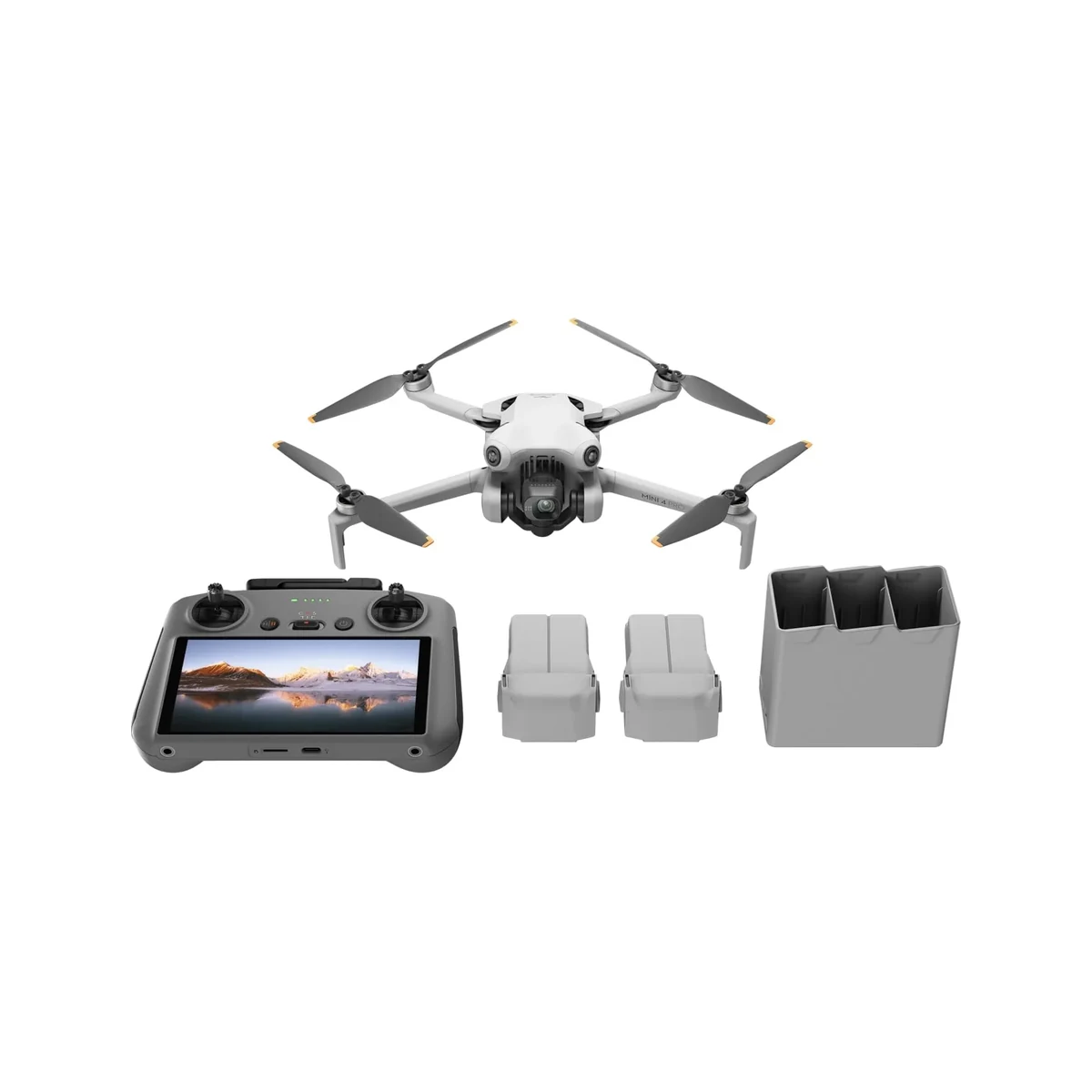
Build quality feels unmistakably professional. Every button and port is precisely engineered, and the drone’s motors deploy with a satisfying mechanical click. The three-axis mechanical gimbal is exceptionally well-damped, protecting the camera from vibration even during aggressive maneuvers.
Performance
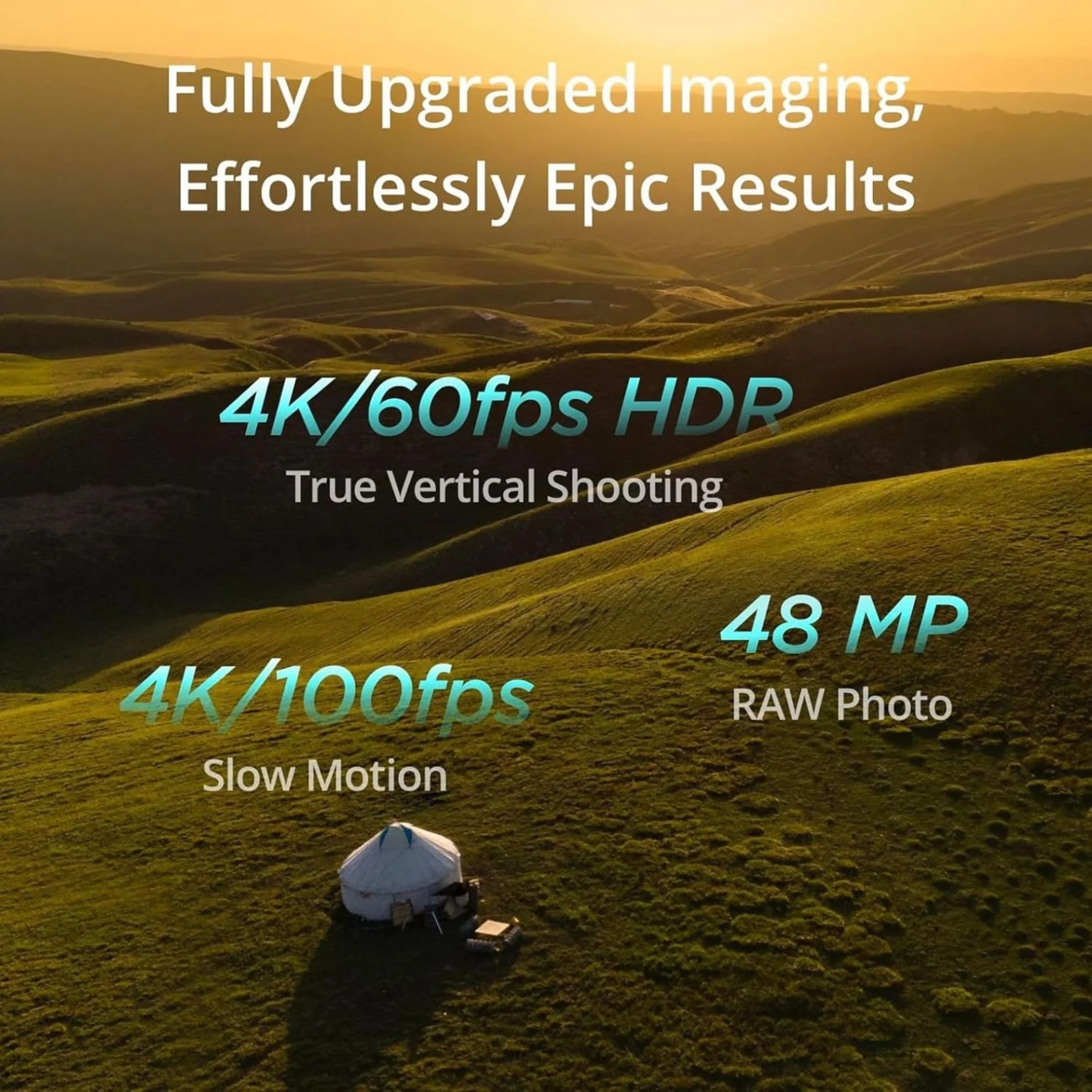
In real-world testing throughout 2026, the Mini 4 Pro consistently delivers buttery-smooth 4K footage at 60fps with outstanding dynamic range thanks to its dual native ISO sensor. Color accuracy straight out of camera is excellent in both D-Log M and HLG profiles, requiring minimal post-production grading for professional results. Low-light performance represents a noticeable leap over its predecessor, maintaining clean footage well into twilight hours.
The O4 transmission system provides rock-solid video feed with latency under 100ms at extended ranges. During testing, we maintained reliable control at distances exceeding 10km in open environments with clear line of sight. Flight speeds reach 57km/h in Sport mode, allowing for dynamic tracking shots, while the drone’s attitude control remains precise even in 38km/h winds.
Battery life regularly approached the advertised 34 minutes in Normal mode with moderate wind, though aggressive cinematic flying with ActiveTrack typically yielded 24-27 minutes. The drone’s ability to maintain stable hovering and execute complex maneuvers while simultaneously processing omnidirectional obstacle data demonstrates impressive onboard computational power.
Features & Software
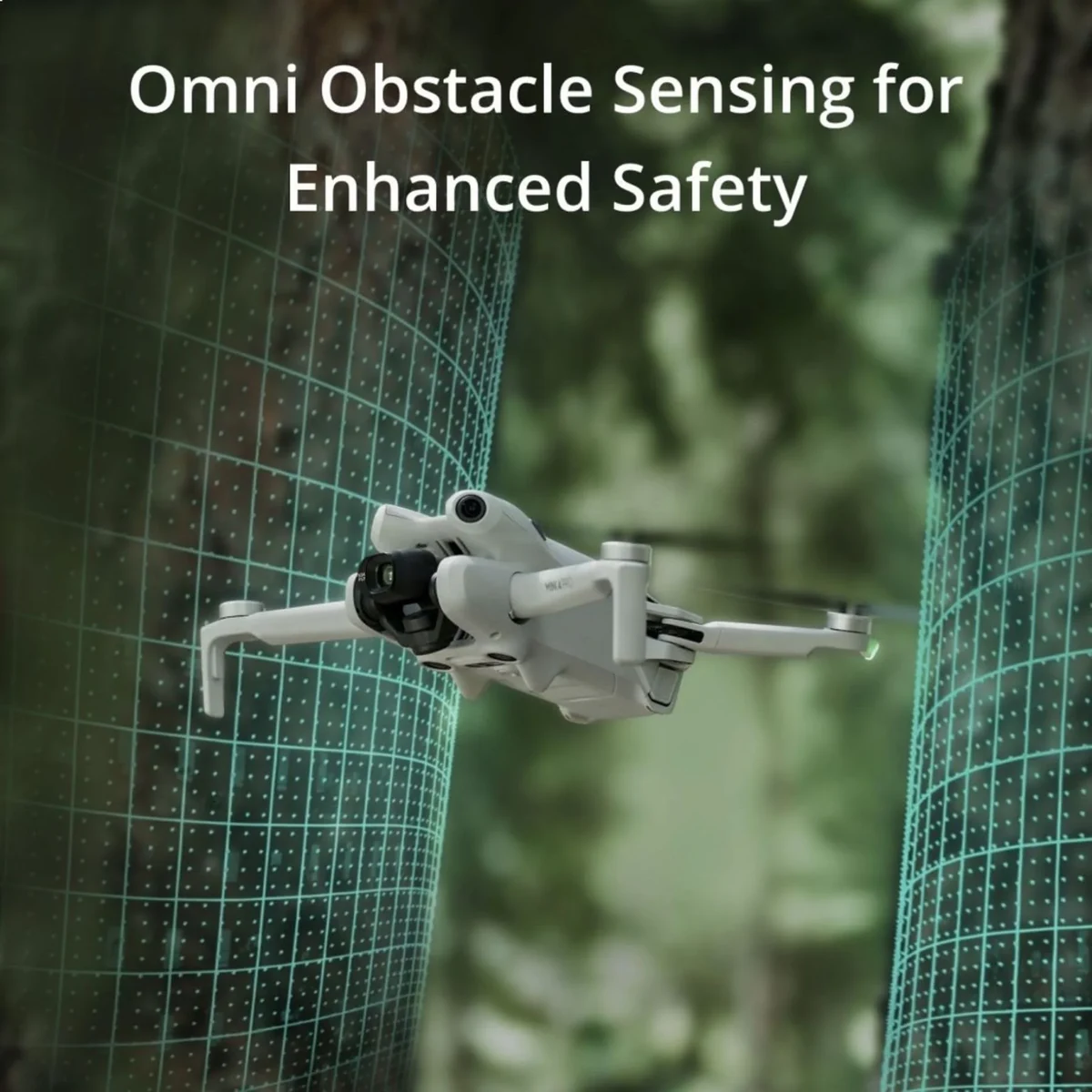
The standout feature remains the fully omnidirectional obstacle sensing system that uses multiple fisheye and ToF sensors to create a 3D environmental map. This enables safer automated flight paths and dramatically reduces pilot workload. ActiveTrack 360° has been refined further, offering reliable subject tracking even when obstacles appear suddenly in the flight path.
The DJI Fly app continues to mature, offering an intuitive interface with powerful features including QuickTransfer, MasterShots, and the excellent LightCut desktop companion for one-tap cinematic edits. The new Waypoint 2.0 functionality allows for complex, repeatable flight paths with precise camera movements, making the Mini 4 Pro a serious tool for professional content creation.
Value Proposition
At its current 2026 pricing, the Mini 4 Pro delivers exceptional value for creators who need professional aerial capabilities without the regulatory overhead of heavier drones. The combination of omnidirectional sensing, class-leading image quality, and extended flight time in a sub-250g package remains unmatched by competitors, effectively democratizing cinematic drone footage for independent filmmakers and travel content creators.
While the initial investment appears premium, the drone’s versatility and future-proof features provide strong long-term value. Users avoid FAA registration requirements in most jurisdictions, save on transport costs, and gain access to a mature ecosystem of accessories and software that larger, more expensive platforms cannot match in portability.
How It Compares
Against its predecessor, the DJI Mini 3 Pro, the Mini 4 Pro represents a substantial upgrade with true omnidirectional sensing (versus the Mini 3 Pro’s forward, backward, and downward sensing only) and significantly improved low-light performance. The addition of the DJI RC 2 screen controller as standard also eliminates the phone-mount dependency that frustrated many Mini 3 Pro users.
When compared to the Autel Robotics Evo Nano+, the DJI Mini 4 Pro offers a more polished software experience, superior subject tracking, and better color science. However, the Autel edges ahead in raw video bitrate. For most users, DJI’s mature ecosystem, reliability, and safety features make the Mini 4 Pro the more compelling choice in 2026.
Pros and Cons
Pros
- Delivers stunning 4K/60fps footage with excellent dynamic range and low-light performance.
- True omnidirectional obstacle avoidance significantly improves flight safety and confidence.
- Impressive 34-minute flight time makes it practical for extended shooting sessions.
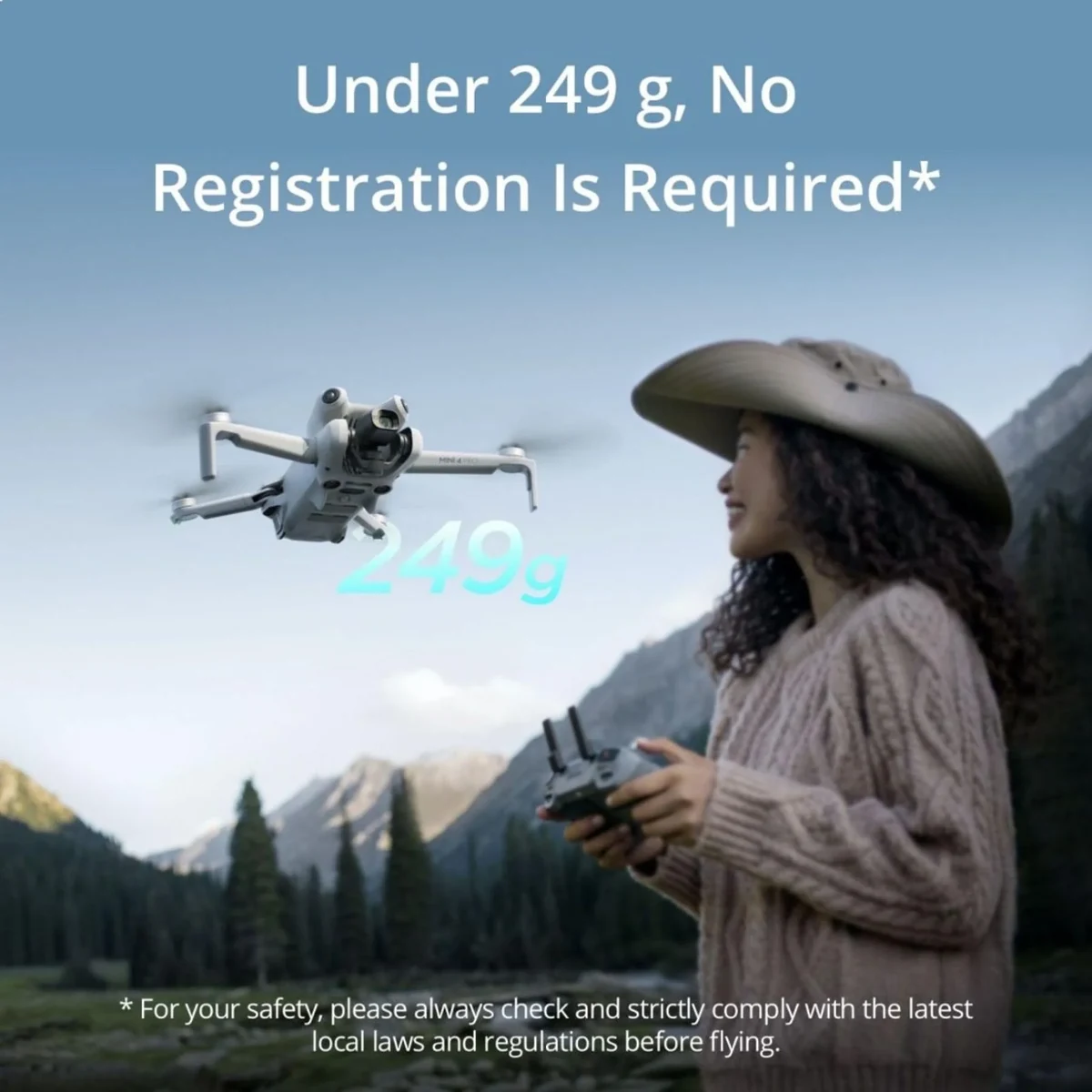
- Remains under 249g, avoiding registration requirements in most countries.
- Refined intelligent flight modes and industry-leading DJI ecosystem enhance creativity.
Cons
- Premium pricing positions it beyond the reach of many casual users and beginners.
- No internal storage means users must purchase and install a microSD card separately.
- Performance in extremely cold temperatures drops noticeably, limiting winter shooting.
- The DJI Fly app, while improved, can still present occasional connectivity hiccups.
- Lacks the 8K resolution and advanced zoom capabilities found on larger DJI models.
FAQ
Q: Does the DJI Mini 4 Pro require FAA registration in the United States?
A: No. At under 249 grams, it typically does not require registration, though you should always verify current local regulations.
Q: How does the Mini 4 Pro perform in low light conditions?
A: It performs exceptionally well thanks to the 1/1.3-inch sensor with dual native ISO, producing clean footage well into twilight with minimal noise.
Q: Is the DJI Mini 4 Pro suitable for beginners?
A: While its safety features make it more forgiving than larger drones, the learning curve and price point make it better suited for enthusiasts with some prior flying experience.
Q: Can you fly the Mini 4 Pro in rain?
A: No. It is not weather-sealed, and DJI does not recommend flying in precipitation as it may damage the motors and electrical components.
Q: What is the difference between the Mini 4 Pro and Mini 4K?
A: The Mini 4 Pro features a superior 1/1.3-inch sensor, omnidirectional obstacle avoidance, 10-bit color, and advanced tracking modes that the more basic Mini 4K lacks.
Verdict
The DJI Mini 4 Pro remains the premier choice for serious content creators, travel filmmakers, and photography enthusiasts who prioritize image quality, safety, and portability. Its ability to deliver professional results without triggering registration requirements makes it uniquely positioned in the market. If you can afford the investment and value creative freedom in a compact package, the Mini 4 Pro is an outstanding investment that will serve you well throughout 2026 and beyond.
Pros
- ✓ Delivers stunning 4K/60fps footage with excellent dynamic range and low-light performance.
- ✓ True omnidirectional obstacle avoidance significantly improves flight safety and confidence.
- ✓ Impressive 34-minute flight time makes it practical for extended shooting sessions.
- ✓ Remains under 249g, avoiding registration requirements in most countries.
- ✓ Refined intelligent flight modes and industry-leading DJI ecosystem enhance creativity.
Cons
- ✗ Premium pricing positions it beyond the reach of many casual users and beginners.
- ✗ No internal storage means users must purchase and install a microSD card separately.
- ✗ Performance in extremely cold temperatures drops noticeably, limiting winter shooting.
- ✗ The DJI Fly app, while improved, can still present occasional connectivity hiccups.
- ✗ Lacks the 8K resolution and advanced zoom capabilities found on larger DJI models.
Where to Buy the DJI Mini 4 Pro




Prices may vary. Affiliate links — we may earn a commission at no extra cost to you.
Related Reviews

Affiliate links — we may earn a commission at no extra cost to you.