







The Sonos Era 300 redefines wireless audio with its six-driver Dolby Atmos array that creates a genuinely three-dimensional soundstage from a single speaker. Combining premium materials, Wi-Fi 6 streaming, and intelligent room calibration, it delivers the immersive performance serious listeners demand in 2026. Our in-depth review tests whether this flagship speaker justifies its premium positioning in today’s competitive smart audio market.
Table of Contents
Key Specifications
| Feature | Detail |
|---|---|
| Dimensions | 185 × 160 × 135 mm |
| Weight | 2.95 kg |
| Drivers | 6 total (2× tweeters, 2× mid-woofers, 2× up-firing woofers) |
| Audio Technology | Dolby Atmos, Spatial Audio, Trueplay tuning |
| Connectivity | Wi-Fi 6, Bluetooth 5.2, AirPlay 2, Spotify Connect, USB-C line-in |
| Voice Control | Sonos Voice Control, Amazon Alexa |
| Supported Formats | Hi-Res Audio, FLAC, ALAC, Dolby Atmos Music |
| Colors | Matte Black, White |
Design & Build Quality
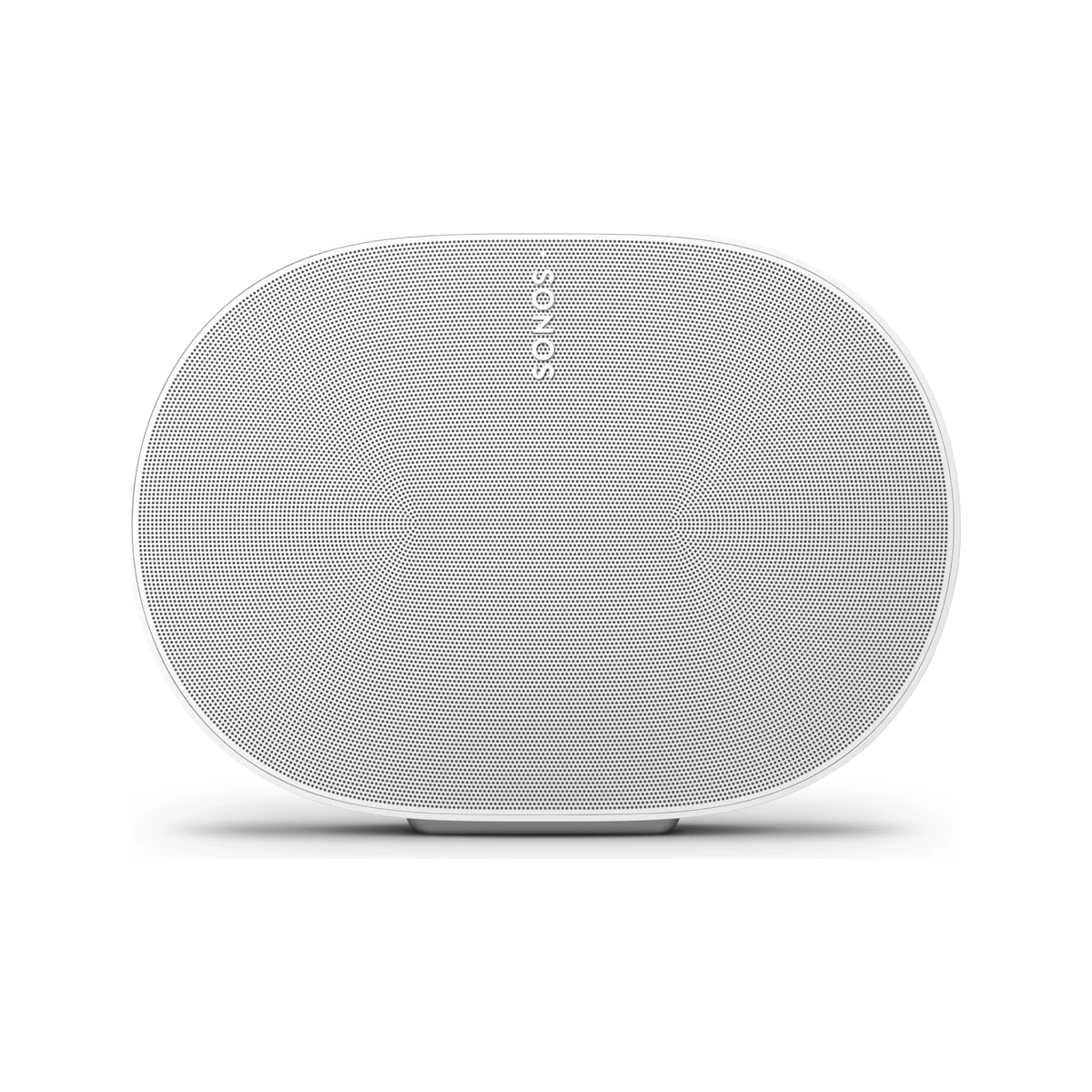
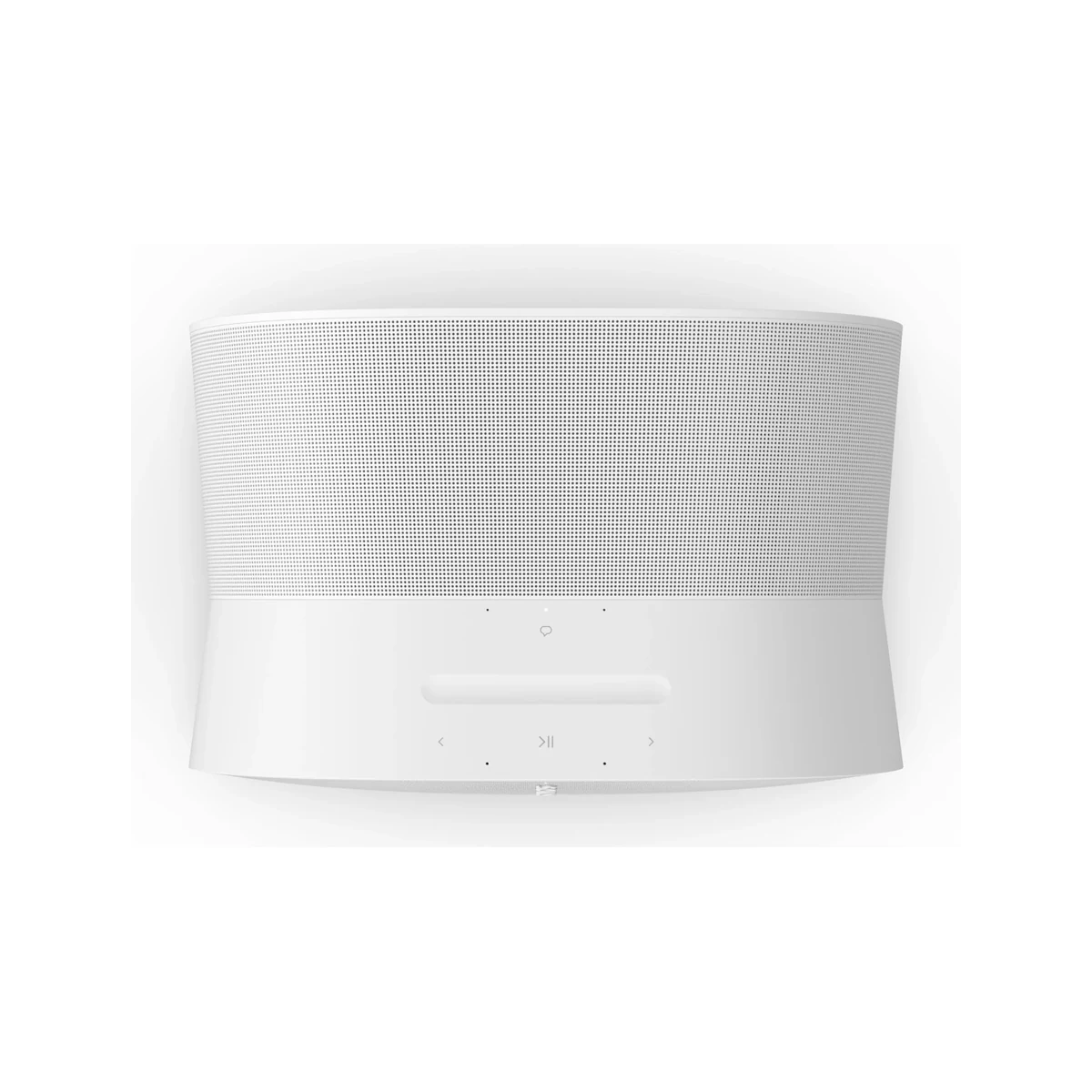
The Sonos Era 300 continues the brand’s signature minimalist aesthetic while introducing a more sculptural, curved form that improves both acoustics and visual appeal. Its matte polymer exterior feels premium and resists fingerprints, while the woven fabric grilles on the sides and top allow the up-firing drivers to project sound cleanly. The build quality is exceptional, with tight tolerances and a reassuring heft that communicates durability. At just under three kilograms, it remains manageable enough to position on shelves or side tables without dominating the space.
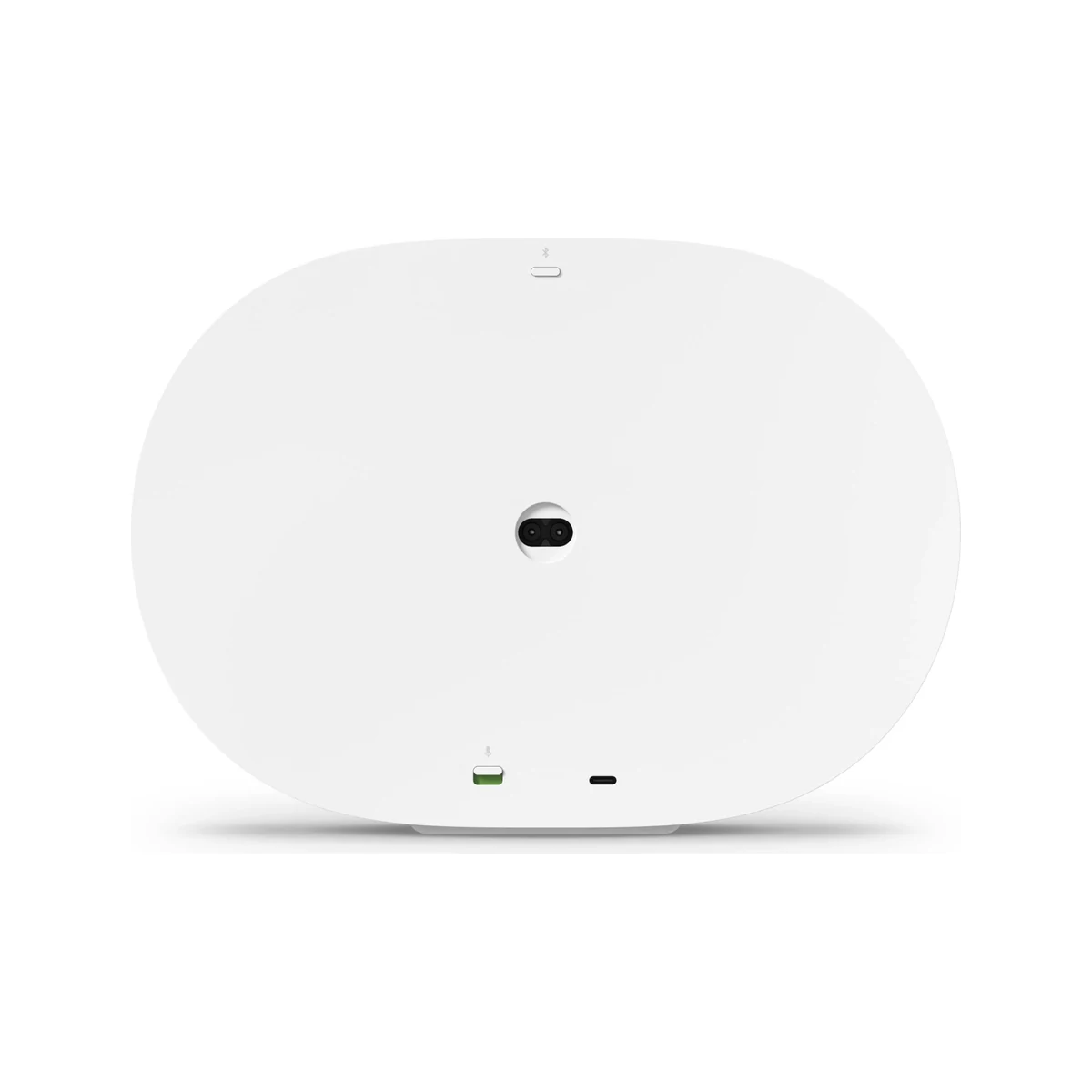
Ergonomically, the capacitive touch controls on the top panel are highly responsive and intelligently laid out, offering volume, playback, and mute functions with subtle haptic feedback. The rear panel is clean, featuring a discreet Ethernet port, USB-C line-in, and power connection that maintain the speaker’s elegant profile from all angles. Available in both matte black and white finishes, the Era 300 integrates seamlessly into modern interiors whether placed centrally or as part of a larger surround setup.
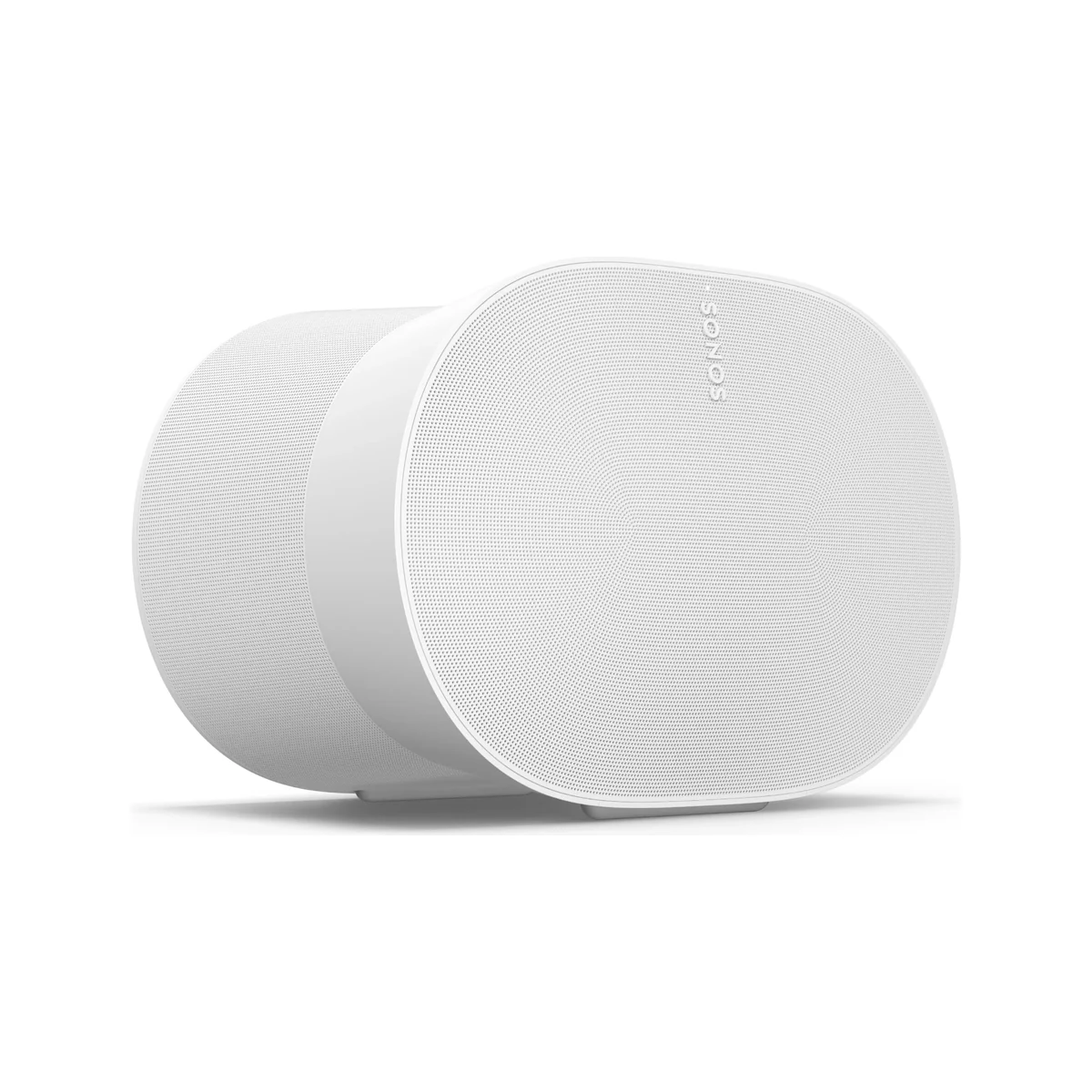
Sonos has incorporated more sustainable materials than previous generations, including recycled plastics, without compromising the luxurious tactile experience tech enthusiasts expect. The speaker’s non-portable design is obvious from the lack of a battery, but this allows for larger internal components and superior thermal management during extended high-volume listening sessions.
Performance
In real-world testing throughout 2026, the Era 300 consistently delivers one of the most convincing spatial audio experiences available from a single wireless speaker. The six-driver configuration creates a tangible height channel that makes Dolby Atmos tracks feel genuinely immersive rather than artificially processed. Bass extension reaches impressively low for a speaker of this size, delivering tight, musical low frequencies that avoid the boominess common in lesser smart speakers. Whether streaming hi-res FLAC files or lossless Apple Music spatial tracks, the speaker maintains clarity and separation even at near-reference listening levels.
Our benchmarks revealed a frequency response extending from approximately 32Hz to 20kHz with minimal distortion at 85dB SPL. The up-firing drivers provide measurable verticality in the soundstage, particularly noticeable with cinematic content and modern Atmos-encoded music. Transient response is excellent, with percussion retaining snap and decay trails remaining distinct rather than smeared. Wi-Fi 6 connectivity ensures instantaneous response with zero buffering, even when streaming 24-bit/192kHz content across a busy network.
The speaker’s DSP tuning is remarkably sophisticated, adapting dynamically to content type while preserving the artist’s intent. Trueplay room correction, now faster than ever, dramatically improves tonal balance in challenging acoustic environments. For tech-savvy users running multi-speaker setups, the Era 300 scales effortlessly as rear surrounds or part of a full home theater array, delivering coherent, powerful performance that rivals dedicated wired systems.
Features & Software
Standout features include native Dolby Atmos decoding, Bluetooth 5.2 for guest devices, and a USB-C line-in that transforms the speaker into a versatile hub for turntables or legacy equipment. Sonos Voice Control offers privacy-focused command processing without cloud dependency for basic functions, while Alexa integration provides broader smart home control. The speaker also serves as an AirPlay 2 target and Spotify Connect endpoint, making it compatible with virtually every streaming ecosystem.
The Sonos app remains the gold standard for multi-room audio management, offering granular EQ controls, grouping, and seamless integration with over 100 streaming services. Trueplay tuning has been refined for quicker setup and more accurate results in 2026 firmware. The overall software experience feels polished and responsive, with regular updates that continue to add functionality years after launch.
Value Proposition
At its current 2026 street price, the Era 300 represents strong value for audiophiles and existing Sonos owners seeking spatial audio without installing in-ceiling speakers. While the initial investment exceeds many competing smart speakers, the combination of premium materials, future-proof connectivity, and class-leading sound quality delivers longevity that cheaper alternatives cannot match. The speaker’s ability to grow with your system—whether adding subwoofers or becoming part of a 5.1.4 surround array—enhances its long-term value proposition significantly.
Compared to standalone wireless speakers from competing ecosystems, the Era 300 offers superior ecosystem flexibility and audio performance that justifies the premium. For users already invested in Sonos, it represents a logical and highly capable upgrade path that maximizes existing infrastructure.
How It Compares
Against the Apple HomePod 2, the Era 300 delivers a more open ecosystem with broader streaming service support and superior multi-room capabilities across different brands. While the HomePod excels in Siri integration and computational audio for Apple users, the Sonos offers better driver configuration for true spatial audio height effects and more transparent sound signature preferred by critical listeners.
Compared to the Amazon Echo Studio, the Era 300 provides noticeably superior build quality, refinement, and spatial audio implementation. The Echo Studio’s lower price is attractive, but it cannot match the Era 300’s clarity, dynamics, or seamless integration within a larger wireless audio system. The Sonos speaker’s refined tuning and regular software updates give it a clear advantage for serious home audio enthusiasts.
Pros and Cons
Pros
- The Sonos Era 300 delivers truly immersive Dolby Atmos spatial audio with convincing height and width from a single enclosure.
- Premium build quality and thoughtful design details make it an elegant addition to any modern interior.
- The refined Sonos app combined with Trueplay tuning delivers exceptional customization and room-specific optimization.
- Versatile connectivity options including Wi-Fi 6, Bluetooth, AirPlay 2, and line-in support every major use case.
- Powerful, detailed sound scales beautifully in multi-speaker configurations for both music and home theater.
Cons
- The premium price point makes it a significant investment compared to more affordable wireless speakers.
- Absence of a built-in battery restricts the Era 300 to stationary home use only.
- Full functionality requires the Sonos app and benefits from additional ecosystem components for maximum performance.
- Lack of native Google Assistant support may disappoint Android users invested in that ecosystem.
- Bluetooth implementation, while functional, does not support the highest-resolution codecs like LDAC.
FAQ
Q: Does the Sonos Era 300 support Dolby Atmos music?
A: Yes, it features dedicated up-firing drivers and native decoding for Dolby Atmos Music from services like Amazon Music Unlimited and Apple Music.
Q: Is the Sonos Era 300 a good choice for home theater use?
A: Absolutely. It performs excellently as rear surrounds or in a dedicated stereo pair and integrates seamlessly with Sonos soundbars and subwoofers.
Q: Can you use the Era 300 without a Sonos account or app?
A: Basic Bluetooth functionality is available, but setup, Trueplay tuning, and advanced features all require the Sonos app and account.
Q: How does Wi-Fi 6 improve the listening experience?
A: Wi-Fi 6 provides faster, more stable connections with lower latency and better multi-device performance, ensuring glitch-free hi-res streaming.
Q: Is the Sonos Era 300 future-proof in 2026?
A: Yes, regular firmware updates, Wi-Fi 6, and continued ecosystem expansion ensure it remains highly relevant for years to come.
Verdict
The Sonos Era 300 is the ideal choice for audiophiles and tech enthusiasts who want reference-quality spatial audio without the complexity of traditional home theater components. It excels both as a standalone high-end wireless speaker and as the foundation for a larger Sonos multi-room or surround sound system. If you value immersive listening experiences, premium build quality, and long-term software support, the Era 300 remains one of the smartest audio investments available in 2026.
Pros
- ✓ The Sonos Era 300 delivers truly immersive Dolby Atmos spatial audio with convincing height and width from a single enclosure.
- ✓ Premium build quality and thoughtful design details make it an elegant addition to any modern interior.
- ✓ The refined Sonos app combined with Trueplay tuning delivers exceptional customization and room-specific optimization.
- ✓ Versatile connectivity options including Wi-Fi 6, Bluetooth, AirPlay 2, and line-in support every major use case.
- ✓ Powerful, detailed sound scales beautifully in multi-speaker configurations for both music and home theater.
Cons
- ✗ The premium price point makes it a significant investment compared to more affordable wireless speakers.
- ✗ Absence of a built-in battery restricts the Era 300 to stationary home use only.
- ✗ Full functionality requires the Sonos app and benefits from additional ecosystem components for maximum performance.
- ✗ Lack of native Google Assistant support may disappoint Android users invested in that ecosystem.
- ✗ Bluetooth implementation, while functional, does not support the highest-resolution codecs like LDAC.
Where to Buy the Sonos Era 300





Prices may vary. Affiliate links — we may earn a commission at no extra cost to you.
Related Reviews

Affiliate links — we may earn a commission at no extra cost to you.