



The Samsung T7 Shield Portable SSD remains a titan of external storage in 2026, blending rugged durability with blistering NVMe speeds for creators on the move. Whether you are editing 4K footage in the field or safeguarding vital project archives, this drive is engineered to survive drops, spills, and extreme environments. Read our full review to see if this tough, pocket-sized powerhouse is still the ultimate companion for your digital workflow.
Table of Contents
Key Specifications
| Feature | Detail |
|---|---|
| Capacity Options | 1TB, 2TB, 4TB |
| Interface | USB 3.2 Gen 2 (10Gbps) |
| Sequential Read Speed | Up to 1,050 MB/s |
| Sequential Write Speed | Up to 1,000 MB/s |
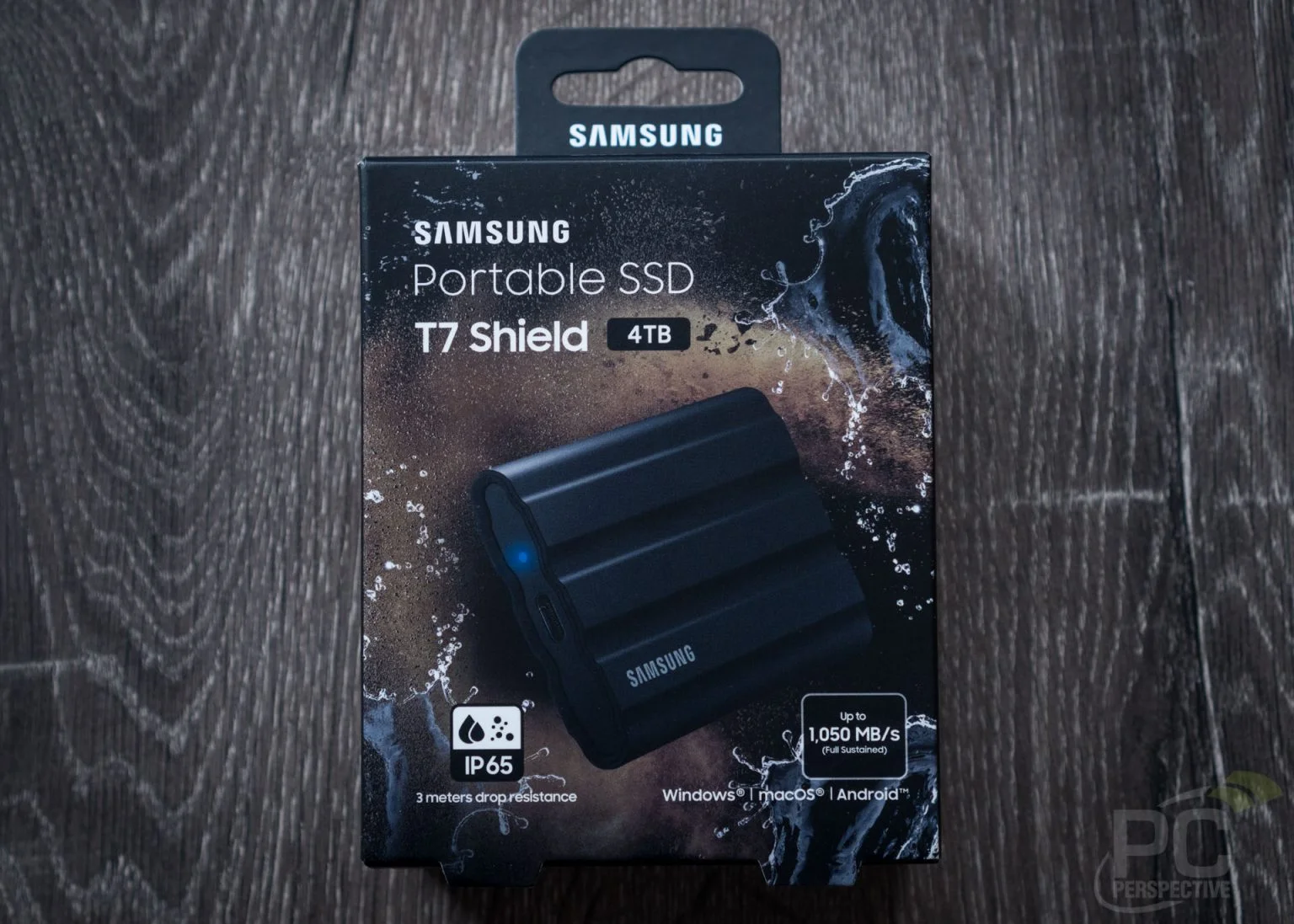
| Durability Rating | IP65 (Water & Dust Resistant), 3-meter drop proof |
| Security | AES 256-bit hardware encryption |
| Dimensions | 59 x 88 x 13 mm |
| Weight | 98 grams |
Design & Build Quality
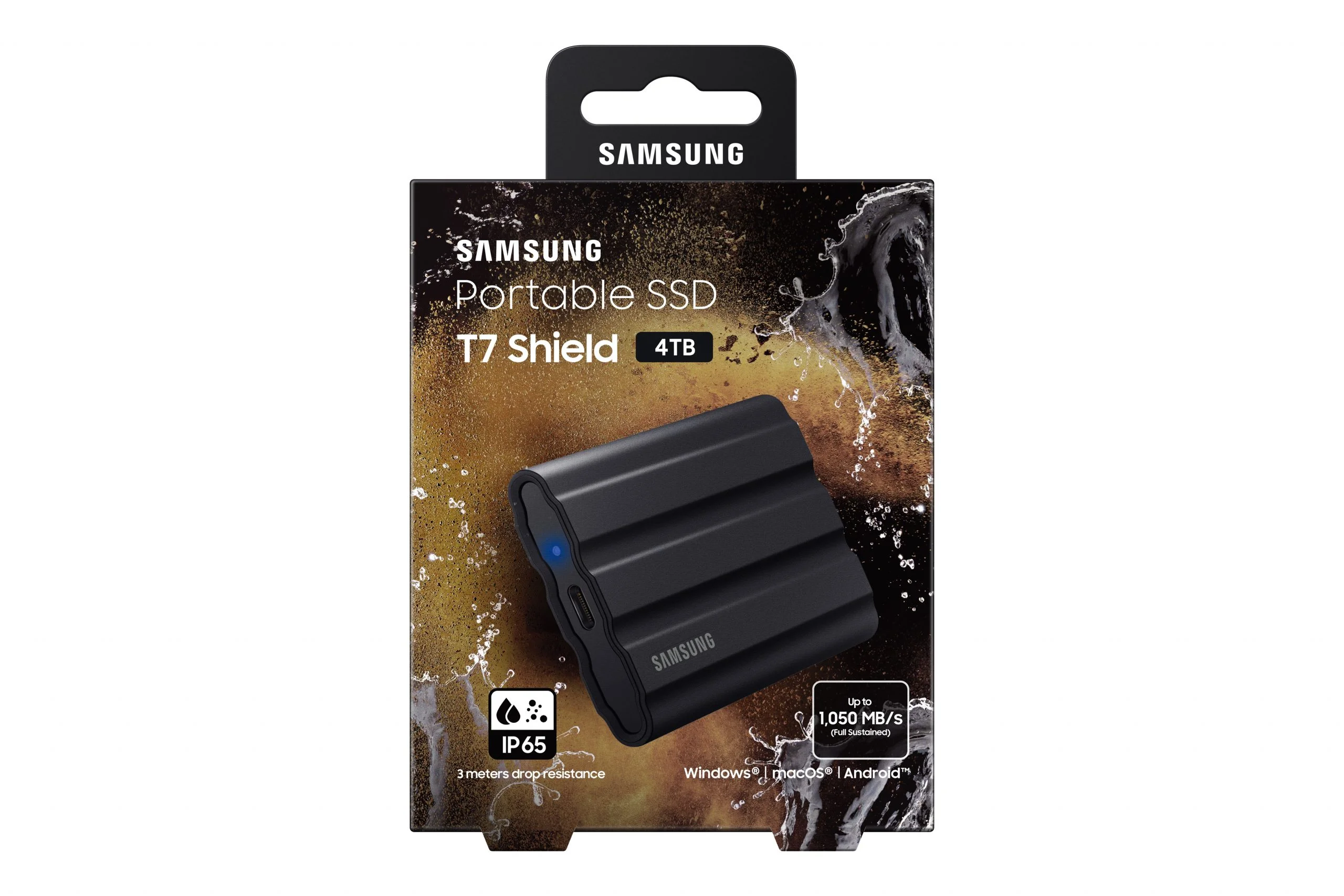
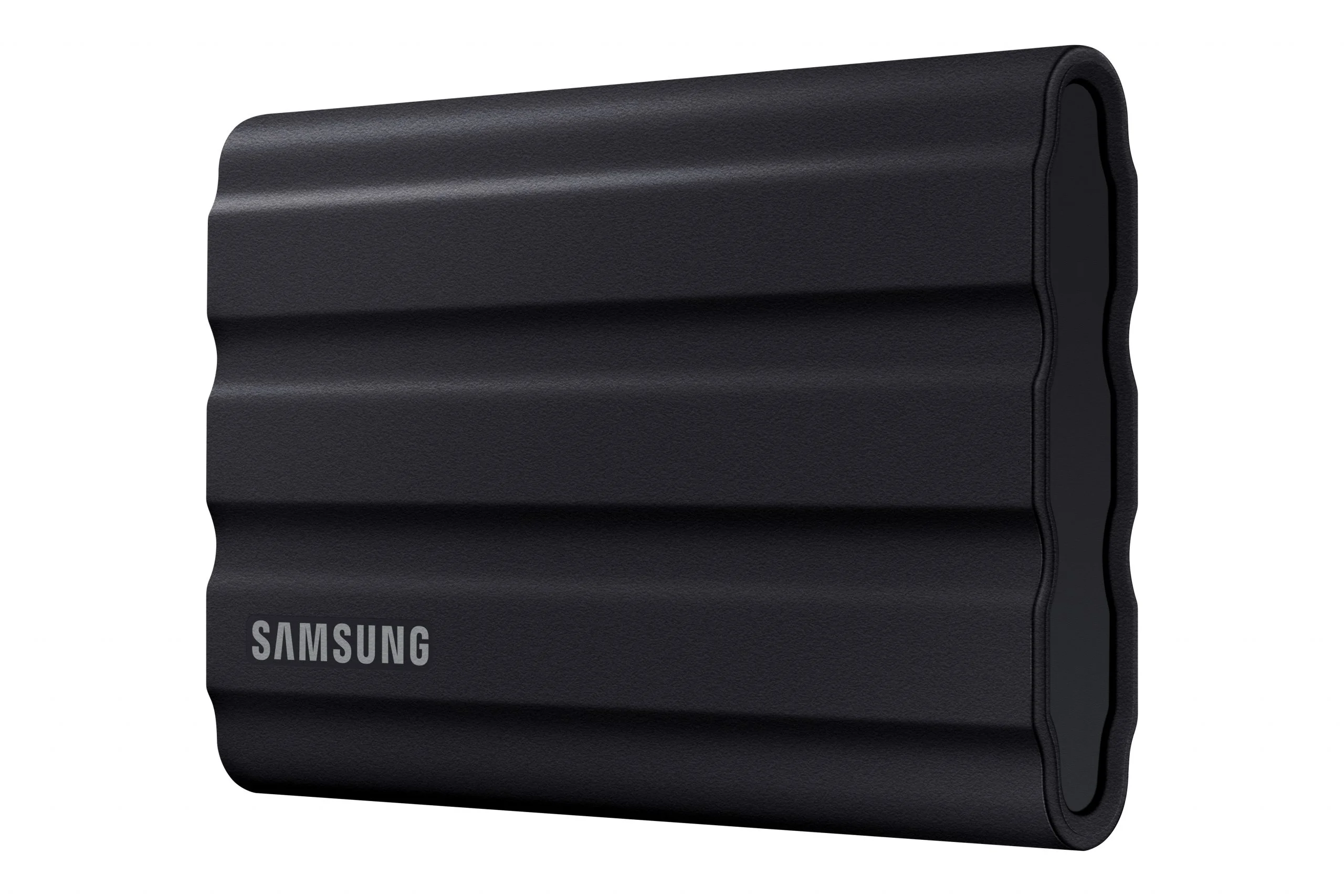
Samsung completely overhauled the aesthetic of the original T7 to create the T7 Shield, encasing the sleek aluminium chassis in a heavily textured, rubberised elastomer shell. This ruggedised exterior provides an excellent tactile grip and prevents the drive from sliding off slanted desks or slick airplane tray tables. Available in stealthy black, beige, or striking blue, the ridged design does an excellent job of dissipating heat while keeping the drive looking stylish.
Crucially, that thick rubber armour isn’t just for show. The T7 Shield boasts an IP65 rating, making it completely impervious to dust ingress and capable of surviving low-pressure water jets. Furthermore, the elastomer casing absorbs shock efficiently, allowing the drive to withstand drops from up to three meters. Even by 2026 standards, where rugged drives are increasingly common, the build quality here feels incredibly premium, robust, and reliable.
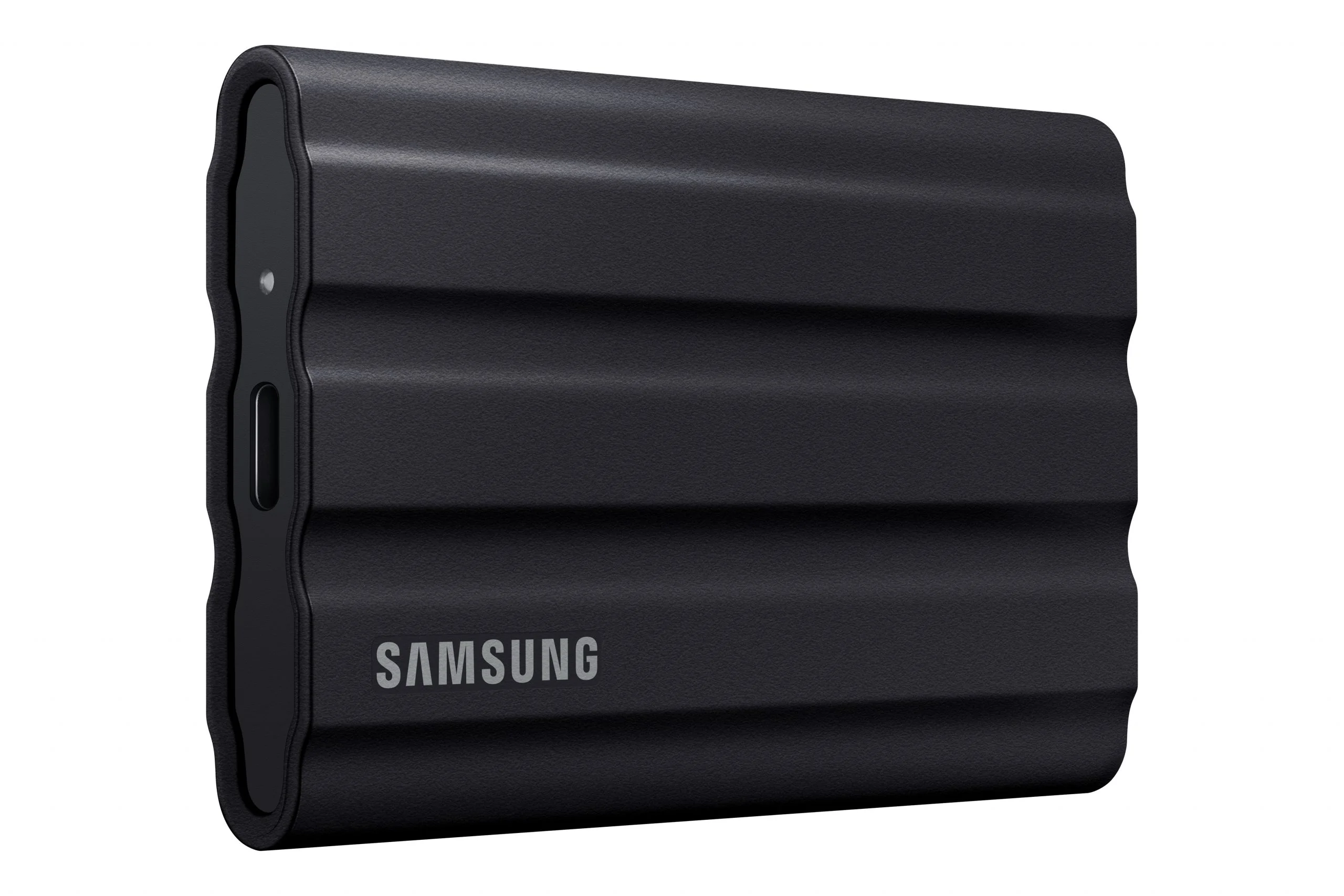
Ergonomically, the T7 Shield remains a pocket-sized marvel. Weighing in at just 98 grams and roughly the size of a standard credit card, it slips effortlessly into tight camera bags, backpacks, or jacket pockets. The recessed USB-C port is tightly integrated to prevent frustrating port wobble, and the bundled cables (USB-C to C and USB-C to A) are thick, durable, and ready to endure the rigours of daily travel.
Performance
Beneath the rugged exterior lies a highly capable NVMe drive utilizing a USB 3.2 Gen 2 interface, promising sequential read speeds of up to 1,050 MB/s and write speeds of 1,000 MB/s. In our synthetic benchmarks via CrystalDiskMark, the T7 Shield consistently hits these advertised peaks, pulling in 1,048 MB/s reads and 992 MB/s writes. While newer USB4 drives have entered the market in 2026, the 10Gbps bandwidth here remains an optimal sweet spot for the vast majority of modern laptops, gaming consoles, and professional camera rigs.
Real-world performance is where the T7 Shield truly shines, specifically regarding its sustained write speeds. Unlike older drives that heavily throttle once their SLC cache fills up, Samsung has engineered the T7 Shield to maintain consistently high write speeds over long periods. When transferring massive 200GB folders of 4K ProRes video files, the drive maintained a steady write speed of over 850 MB/s almost to the very end of the transfer. This makes it a formidable tool for videographers who need to offload heavy media files quickly on location.
Thermal management is another area where the rubberised ridges pay dividends. Under sustained heavy workloads, the drive gets warm but never alarmingly hot to the touch. Samsung’s Dynamic Thermal Guard technology actively monitors and manages the drive’s temperature, ensuring that performance does not artificially throttle to protect the internal components, allowing you to work directly off the drive seamlessly.
Features & Software
The Samsung Portable SSD software continues to be one of the most streamlined and intuitive storage management tools available. It enables you to easily configure AES 256-bit hardware encryption, ensuring that if you accidentally leave your drive at a coffee shop, your sensitive client data remains completely inaccessible. The initial setup process takes mere seconds, and unlocking the drive requires just a quick password entry upon connection to a Mac, PC, or Android device.
Additionally, Samsung Magician software compatibility allows users to monitor drive health, check for firmware updates, and run diagnostic scans to ensure optimal performance over the drive’s lifespan. Notably absent is any built-in fingerprint reader—a feature reserved for the older T7 Touch—but the password-based encryption of the Shield remains highly secure, straightforward, and arguably much less prone to environmental failure when working outdoors in the elements.
Value Proposition
In 2026, the portable SSD market is fiercely competitive, but the Samsung T7 Shield continues to hold its ground by striking an aggressive balance between durability, sustained speed, and cost. While you might pay a slight premium over standard, non-rugged external SSDs, the peace of mind offered by the IP65 rating and reliable sustained write performance makes it a highly worthwhile investment for content creators, photographers, and frequent travelers.
When evaluating cost-per-gigabyte, especially the high-capacity 4TB model, the T7 Shield provides immense value compared to upgrading internal laptop storage. It effectively bridges the gap between everyday consumer drives and ultra-expensive, specialized cinema-grade storage arrays, giving prosumers professional-grade reliability at a very accessible price point.
How It Compares
When pitted against the SanDisk Extreme Portable SSD, the T7 Shield holds a distinct advantage in sustained write speeds and thermal management. While the SanDisk is equally rugged and features a handy carabiner loop, it is known to experience steeper performance drops during massive, continuous file transfers. Alternatively, compared to the Crucial X10 Pro, the T7 Shield is slightly bulkier due to its thick rubber casing. The Crucial X10 Pro offers a much smaller footprint, but Samsung’s robust AES 256-bit encryption software and proven track record of maintaining cooler temperatures under sustained loads give the T7 Shield an edge for demanding, real-time video-editing workloads.
Pros and Cons
Pros
- Maintains excellent sustained write speeds during massive file transfers without severe throttling.
- Offers robust physical protection with an IP65 water/dust rating and 3-meter drop resistance.
- Features a highly tactile, rubberised shell that prevents slipping on smooth surfaces.
- Includes user-friendly software for seamless AES 256-bit hardware encryption setup.
Cons
- The rubberised exterior is a magnet for pocket lint, fine dust, and pet hair.
- Lacks an integrated carabiner loop or lanyard hole for easily clipping to backpacks.
- Does not support the newer, faster USB 3.2 Gen 2×2 (20Gbps) or USB4 standards available on premium 2026 models.
- The included USB cables are relatively short, which can be restrictive for traditional desktop workstation setups.
FAQ
Q: Is the Samsung T7 Shield compatible with Mac and Windows?
A: Yes, the drive is pre-formatted in exFAT, ensuring seamless out-of-the-box compatibility with both macOS and Windows, as well as many Android smartphones, tablets, and gaming consoles.
Q: Can I edit 4K video directly off the T7 Shield?
A: Absolutely. With sustained read and write speeds hovering near 1,000 MB/s, the drive provides more than enough bandwidth to smoothly scrub through and edit 4K, and even some 8K, video timelines in software like Premiere Pro or DaVinci Resolve.
Q: How do you clean the rubberised exterior?
A: Because the drive is highly water-resistant (IP65), you can safely wipe down the rubber shell with a slightly damp microfiber cloth to remove any accumulated dust, lint, or debris without damaging the internal hardware.
Q: Does the hardware encryption slow down the drive’s speed?
A: No, the AES 256-bit encryption is processed entirely on the drive’s dedicated hardware controller, meaning your read and write speeds remain completely unaffected even when password protection is enabled.
Verdict
The Samsung T7 Shield Portable SSD is the ideal external storage solution for videographers, photographers, and remote workers who require dependable performance in unpredictable environments. Despite the arrival of newer connectivity standards in 2026, its exceptional sustained write speeds, unyielding durability, and pocket-friendly footprint keep it at the top of its class. If you need a drive that can survive the elements while securing your most critical data, the T7 Shield remains an unbeatable choice.
Where to Buy
Pros
- ✓ Maintains excellent sustained write speeds during massive file transfers without severe throttling.
- ✓ Offers robust physical protection with an IP65 water/dust rating and 3-meter drop resistance.
- ✓ Features a highly tactile, rubberised shell that prevents slipping on smooth surfaces.
- ✓ Includes user-friendly software for seamless AES 256-bit hardware encryption setup.
Cons
- ✗ The rubberised exterior is a magnet for pocket lint, fine dust, and pet hair.
- ✗ Lacks an integrated carabiner loop or lanyard hole for easily clipping to backpacks.
- ✗ Does not support the newer, faster USB 3.2 Gen 2×2 (20Gbps) or USB4 standards available on premium 2026 models.
- ✗ The included USB cables are relatively short, which can be restrictive for traditional desktop workstation setups.
Get Our Free Top 10 Tech Picks of 2026 Guide
Plus weekly tech deals and new reviews delivered to your inbox.
[cp_email_signup]
No spam. Unsubscribe anytime.
Ready to buy the Samsung T7 Shield Portable SSD?
Affiliate link — we may earn a commission at no extra cost to you.