






The Synology DS923+ represents a strategic evolution in prosumer network-attached storage, trading integrated graphics for pure processing power and expandable networking. Whether you are running a robust home lab or managing small business data in 2026, this four-bay powerhouse delivers exceptional flexibility. Read our comprehensive review to see if the DS923+ is the right data fortress for your workflow.
Table of Contents
Key Specifications
| Feature | Detail |
|---|---|
| Processor (CPU) | AMD Ryzen R1600 (2-core 2.6 GHz, burst up to 3.1 GHz) |
| System Memory | 4 GB DDR4 ECC SO-DIMM (Expandable up to 32 GB) |
| Drive Bays | 4 x 3.5″ or 2.5″ SATA (Expandable to 9 with DX517) |
| M.2 Drive Slots | 2 x NVMe M.2 2280 (Supports caching and storage pools) |
| Networking | 2 x 1GbE RJ-45 (PCIe upgrade slot for optional 10GbE) |
| External Ports | 2 x USB 3.2 Gen 1, 1 x eSATA |
Design & Build Quality
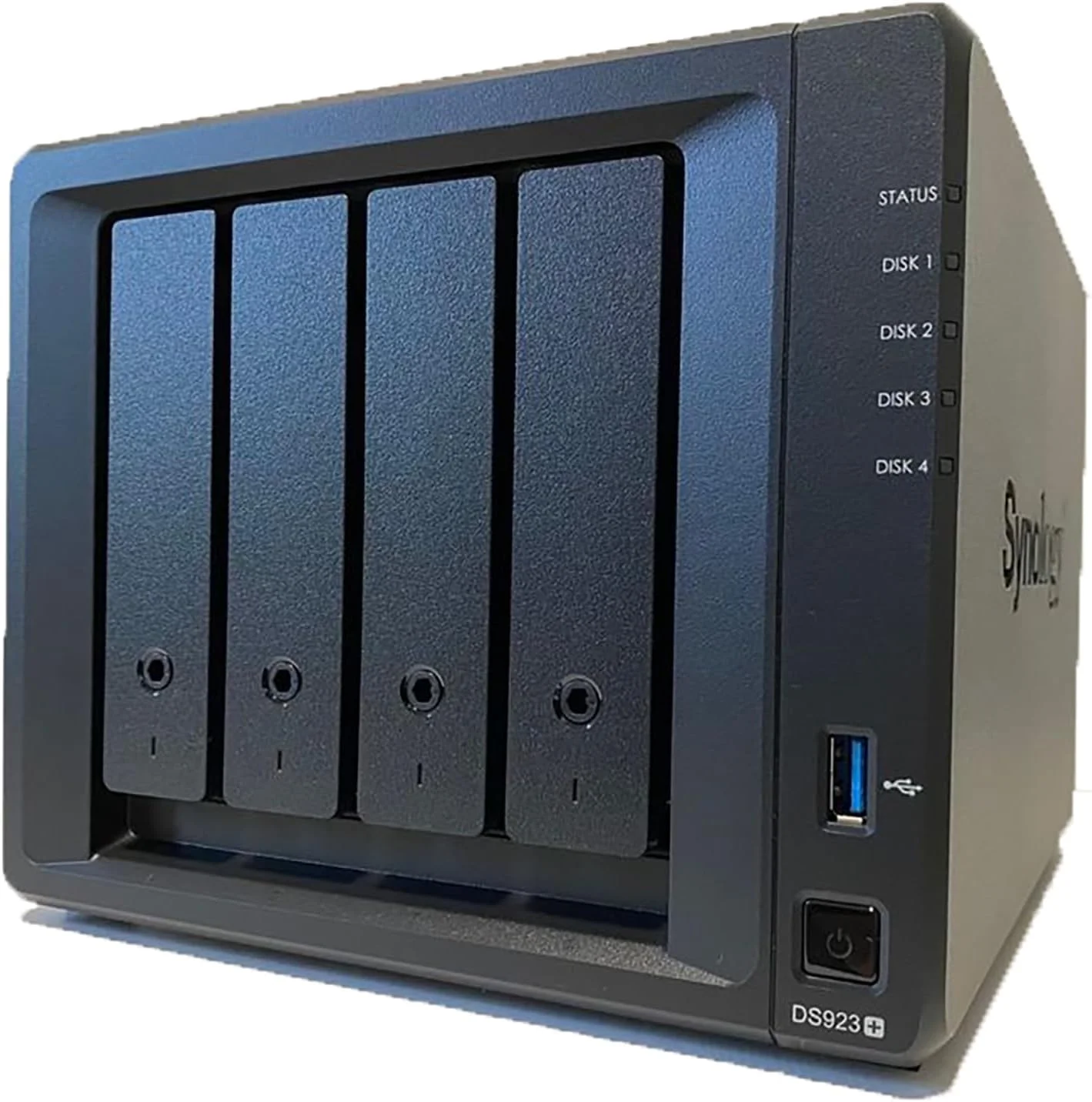
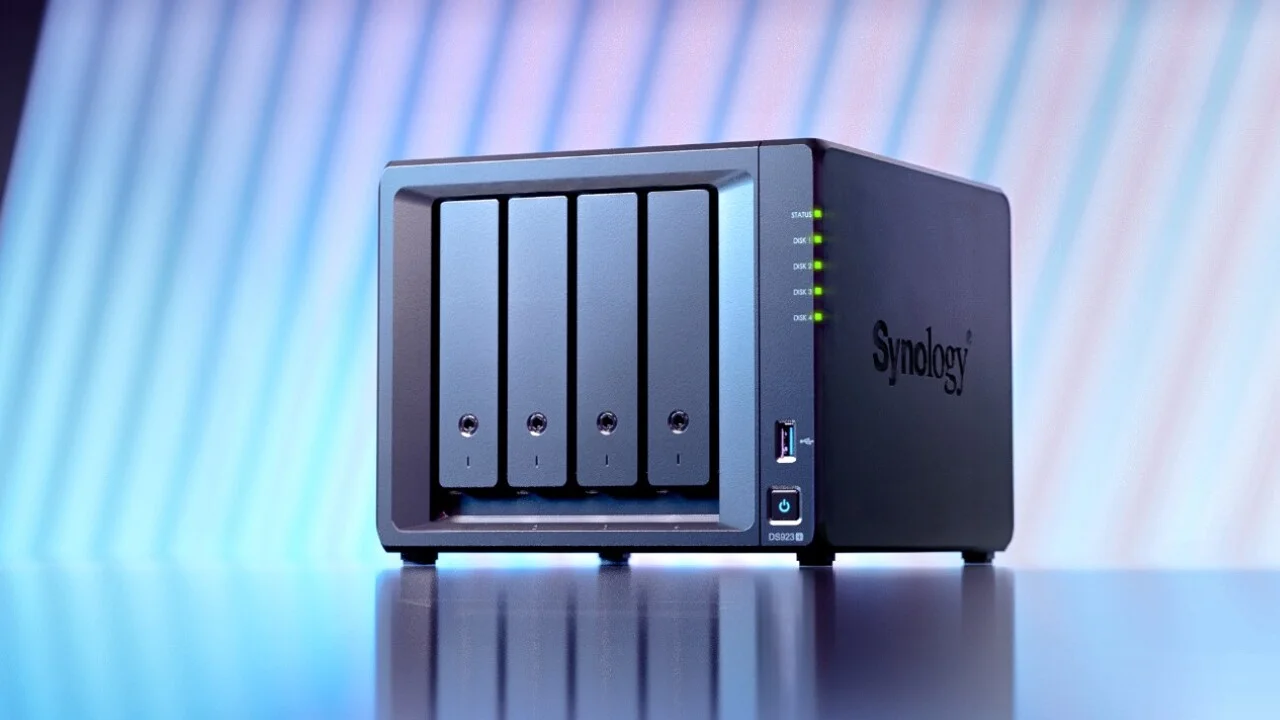
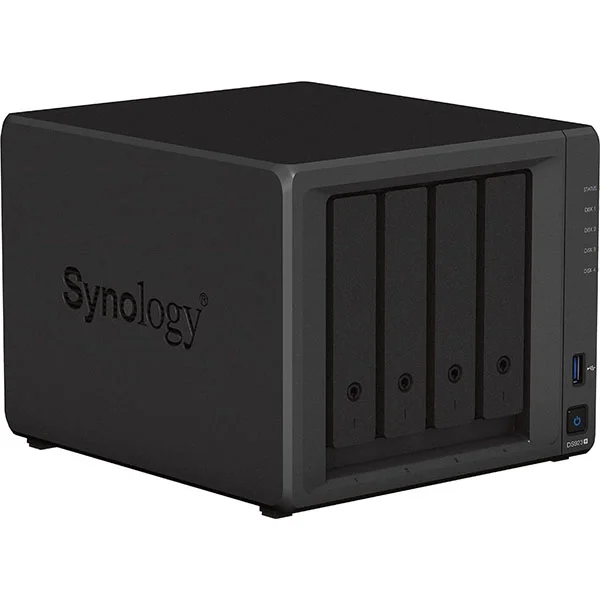
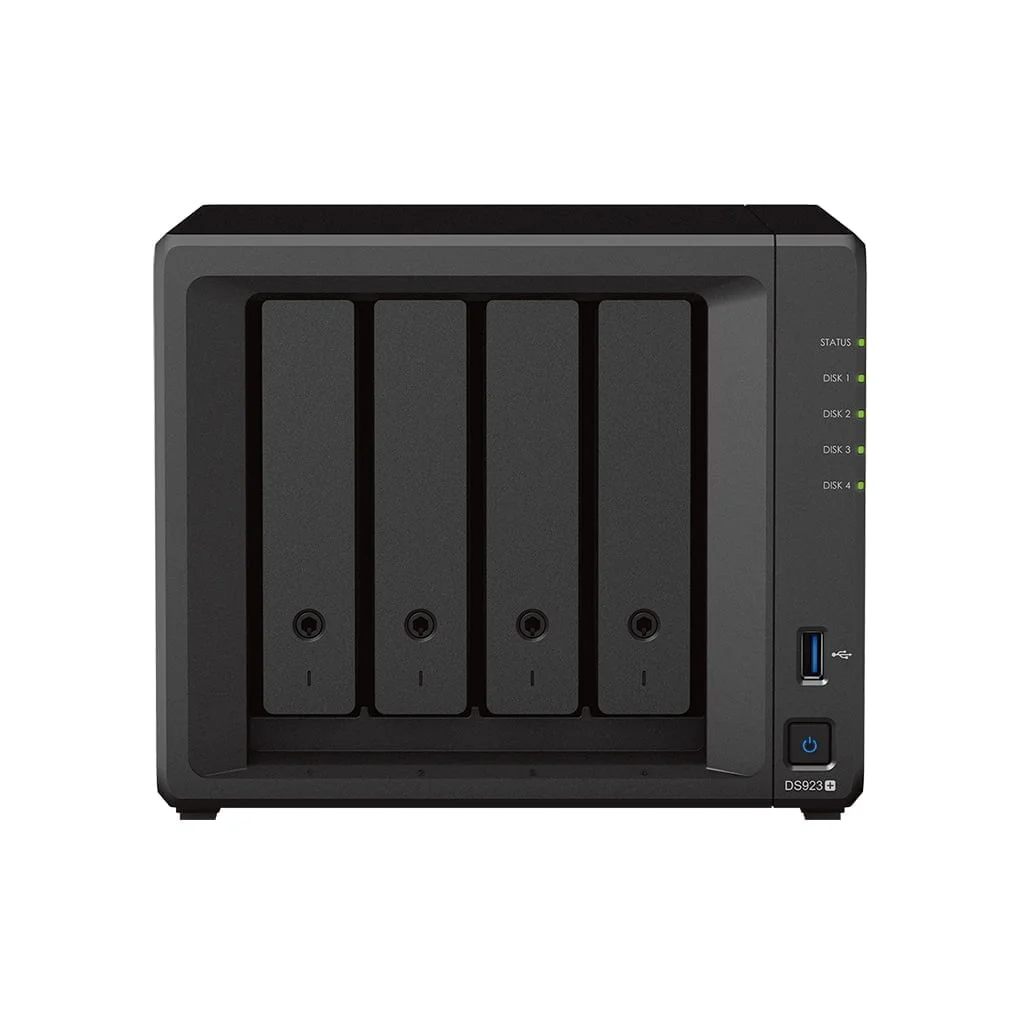
The Synology DS923+ adheres to the brand’s classic, utilitarian design language. Sporting a matte black plastic exterior stretched over a rigid metal chassis, it looks virtually identical to its predecessors like the DS920+. While it might not win any avant-garde design awards in 2026, its aesthetic is highly functional, allowing it to blend seamlessly into a server rack, a small office environment, or a minimalist desk setup without drawing unnecessary attention.
Ergonomics and ease of maintenance remain top-tier. The four front-loading drive caddies are entirely tool-less for 3.5-inch drives, utilizing a simple snap-in bracket system that makes hot-swapping a breeze. On the underside of the unit, you will find two easily accessible M.2 NVMe slots covered by removable plastic hatches. This brilliant design choice means you can add or upgrade your NVMe drives without needing to power down the NAS, remove the main drives, or disassemble the enclosure.
Cooling is handled by a pair of 92mm fans situated at the rear of the device. Even when running intensive Docker containers or syncing massive 4K video projects, the thermal management remains impressive. The fans run quietly under standard operation, and the acoustic dampening inside the chassis does an excellent job of silencing the typical mechanical clicking of high-capacity hard disk drives.
Performance
The most significant architectural shift in the DS923+ is the inclusion of the AMD Ryzen R1600 processor. By stepping away from Intel’s Celeron lineup, Synology has prioritized raw computational power over multimedia party tricks. For 2026 workflows involving heavy database management, running multiple virtual machines, and orchestrating complex Docker environments, the Ryzen CPU is a revelation. The system is incredibly snappy, parsing large directories and indexing files noticeably faster than previous iterations.
From a networking perspective, standard file transfers over the dual 1GbE ports easily saturate the gigabit limit, hovering around 115 MB/s. However, the true performance capabilities of this NAS are unlocked via the proprietary PCIe network upgrade slot. When paired with Synology’s compact 10GbE module and a solid SSD caching setup, the DS923+ transforms into a bandwidth monster. Sustained read and write speeds can easily approach the 1,000 MB/s threshold, making it highly viable for remote video editing or large-scale automated backups.
Crucially, the DS923+ comes standard with 4GB of DDR4 ECC (Error-Correcting Code) memory. Historically reserved for enterprise-grade servers, ECC memory detects and corrects internal data corruption, providing unparalleled peace of mind for small businesses and serious prosumers. This commitment to data integrity ensures that your most critical files, financial records, and irreplaceable archives are safeguarded against silent data corruption during intensive read/write cycles.
Features & Software
Hardware capabilities are ultimately bottlenecked by software, but thankfully, Synology’s DiskStation Manager (DSM) remains the absolute gold standard in the NAS industry. Operating practically like a standalone desktop OS directly in your web browser, DSM makes complex network routing, user permissions, and RAID configurations remarkably intuitive. Applications like Synology Drive and Active Backup for Business allow you to create a completely localized, subscription-free alternative to Google Drive or Microsoft OneDrive, complete with versioning and granular access controls.
A standout feature that significantly boosts the DS923+’s utility is the ability to use the dual M.2 NVMe slots to create dedicated storage pools, rather than strictly using them for read/write caching. This highly requested feature allows users to build a blisteringly fast, perfectly silent solid-state volume directly on the NAS. It is the perfect environment for hosting active coding repositories, virtual machine OS drives, or scratch disks for ongoing multimedia projects.
Value Proposition
At its base price, the Synology DS923+ presents a unique value proposition. You are undoubtedly paying a premium for the peerless DSM software ecosystem, the inclusion of ECC memory, and Synology’s renowned reliability. For a small business owner or a dedicated home lab enthusiast who wants a robust, “set it and forget it” data management solution, the initial investment easily justifies itself in time saved and data secured.
However, budget-conscious buyers must factor in the hidden costs of expansion. To truly utilize the Ryzen processor’s bandwidth and push the unit to its limits, you will need to purchase the proprietary 10GbE network upgrade module and source additional ECC RAM. These add-ons significantly increase the total cost of ownership, making the fully kitted-out DS923+ a considerably more expensive proposition than its base sticker price suggests.
How It Compares
When stacked against competitors like the QNAP TS-464 and the Asustor Lockerstor 4 Gen2, the Synology DS923+ takes a decidedly different philosophical approach. Both the QNAP and Asustor units include built-in 2.5GbE ports as standard and rely on Intel Celeron processors featuring integrated graphics. This makes them vastly superior choices for users wanting a seamless, out-of-the-box Plex media server with hardware transcoding. Conversely, the DS923+ pulls ahead with its superior DSM software, native ECC memory support, and the higher ceiling of a 10GbE upgrade—catering heavily to professional IT environments and raw data management rather than home theater applications.
Pros and Cons
Pros
- The Synology DiskStation Manager (DSM) software ecosystem is exceptionally refined and intuitive.
- Support for ECC memory ensures superior data integrity and enterprise-grade reliability.
- M.2 NVMe slots can now be configured as ultra-fast dedicated storage pools.
- The unit offers a seamless, plug-and-play upgrade path to 10GbE networking.
Cons
- The AMD Ryzen processor lacks an integrated GPU, severely limiting hardware media transcoding capabilities.
- It ships with aging 1GbE network ports natively, lagging behind the 2.5GbE industry standard.
- Expanding memory, adding 10GbE, or purchasing official Synology NVMe drives significantly raises the total cost of ownership.
FAQ
Q: Can the Synology DS923+ run Plex?
A: Yes, it runs Plex perfectly as a standard media server. However, because its AMD Ryzen CPU lacks integrated graphics, it cannot perform hardware-accelerated video transcoding. Direct streaming to modern devices works flawlessly, but converting 4K video on the fly for older devices will cause CPU bottlenecks.
Q: Can I use third-party M.2 NVMe drives in the DS923+?
A: Yes, you can use third-party NVMe drives for SSD caching. However, to officially create dedicated M.2 storage volumes out of the box, Synology heavily restricts support to their own proprietary NVMe drives.
Q: Does the DS923+ come with hard drives included?
A: No, the DS923+ is sold as a diskless enclosure. You will need to separately purchase compatible 3.5-inch NAS-grade hard disk drives or 2.5-inch SATA solid-state drives.
Q: Is it possible to upgrade the RAM?
A: Absolutely. While it ships with 4GB of ECC DDR4 memory, there are two easily accessible SO-DIMM slots inside the drive bay area, allowing you to officially expand the memory up to 32GB (2 x 16GB).
Verdict
The Synology DS923+ is an outstanding, highly reliable NAS tailor-made for small businesses, prosumers, and home lab enthusiasts who prioritize data integrity and raw compute performance over multimedia capabilities. While home theater buffs might miss native hardware transcoding, the addition of ECC memory, an easy 10GbE upgrade path, and NVMe storage pools makes this a formidable, future-proof data hub for 2026 and beyond.
Where to Buy
Pros
- ✓ The Synology DiskStation Manager (DSM) software ecosystem is exceptionally refined and intuitive.
- ✓ Support for ECC memory ensures superior data integrity and enterprise-grade reliability.
- ✓ M.2 NVMe slots can now be configured as ultra-fast dedicated storage pools.
- ✓ The unit offers a seamless, plug-and-play upgrade path to 10GbE networking.
Cons
- ✗ The AMD Ryzen processor lacks an integrated GPU, severely limiting hardware media transcoding capabilities.
- ✗ It ships with aging 1GbE network ports natively, lagging behind the 2.5GbE industry standard.
- ✗ Expanding memory, adding 10GbE, or purchasing official Synology NVMe drives significantly raises the total cost of ownership.
Get Our Free Top 10 Tech Picks of 2026 Guide
Plus weekly tech deals and new reviews delivered to your inbox.
[cp_email_signup]
No spam. Unsubscribe anytime.
Ready to buy the Synology DS923+ NAS?
Affiliate link — we may earn a commission at no extra cost to you.