








Portable power has become a staple for both outdoor adventurers and remote workers, but balancing battery capacity with true portability is no easy feat. The Goal Zero Yeti 500X promises to hit that sweet spot, offering robust lithium-ion performance in a surprisingly compact chassis. Discover if this highly reliable workhorse still holds its ground in the competitive 2026 portable power station market.
Table of Contents
Key Specifications
| Feature | Detail |
|---|---|
| Battery Capacity | 505 Watt-Hours (10.8V, 46.8Ah) |
| Battery Cell Chemistry | Li-ion NMC |
| Weight | 12.9 lbs (5.85 kg) |
| Dimensions | 7.5 x 11.25 x 5.8 inches |
| AC Output | 300W Continuous, 1200W Surge (Pure Sine Wave) |
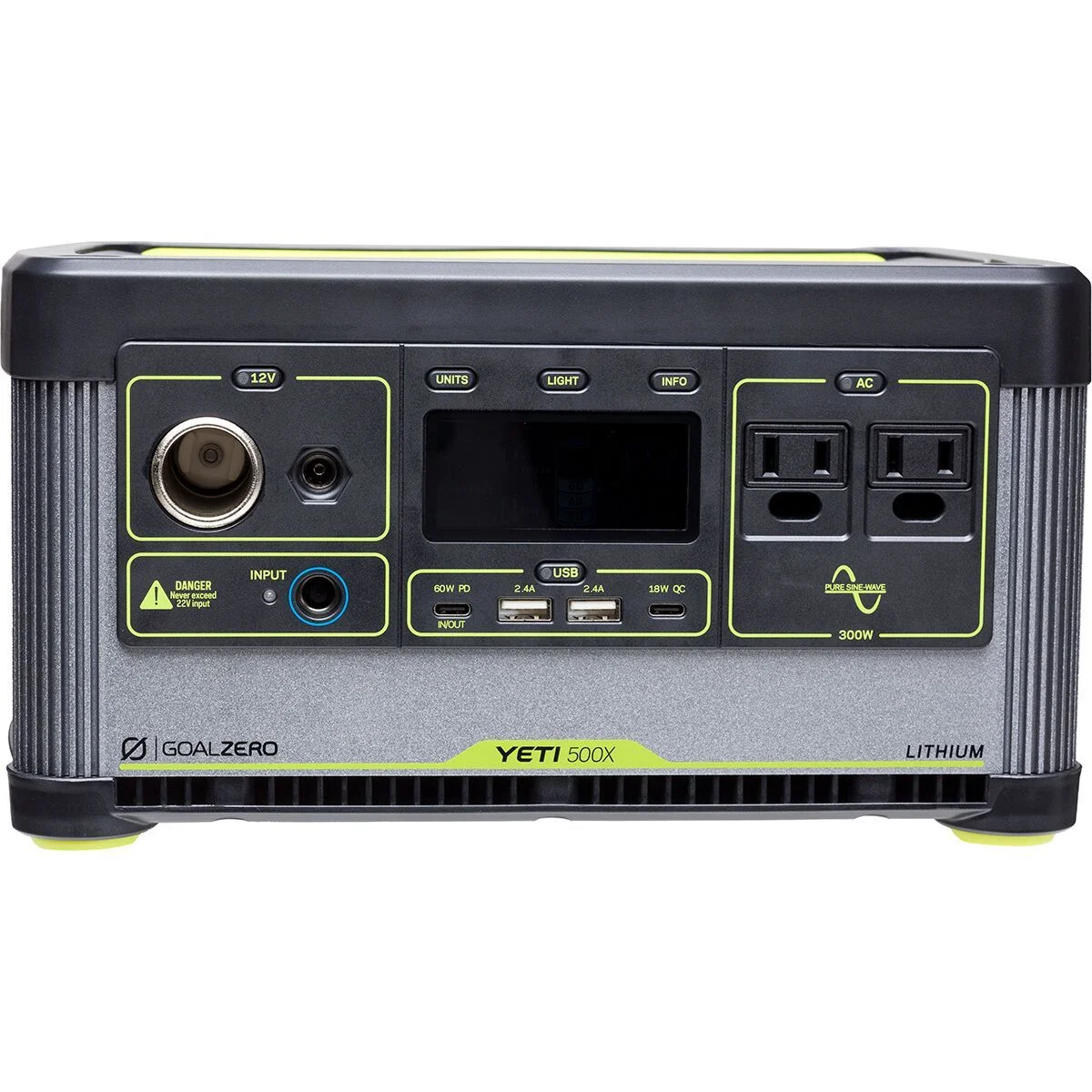
| USB Ports | 2x USB-A (12W), 1x USB-C (18W), 1x USB-C PD (60W Input/Output) |
| DC Outputs | 12V Car Port, 6mm Port, 12V Power Pole Port |
| Solar Input | Up to 120W (8V-22V via 8mm port) |
Design & Build Quality
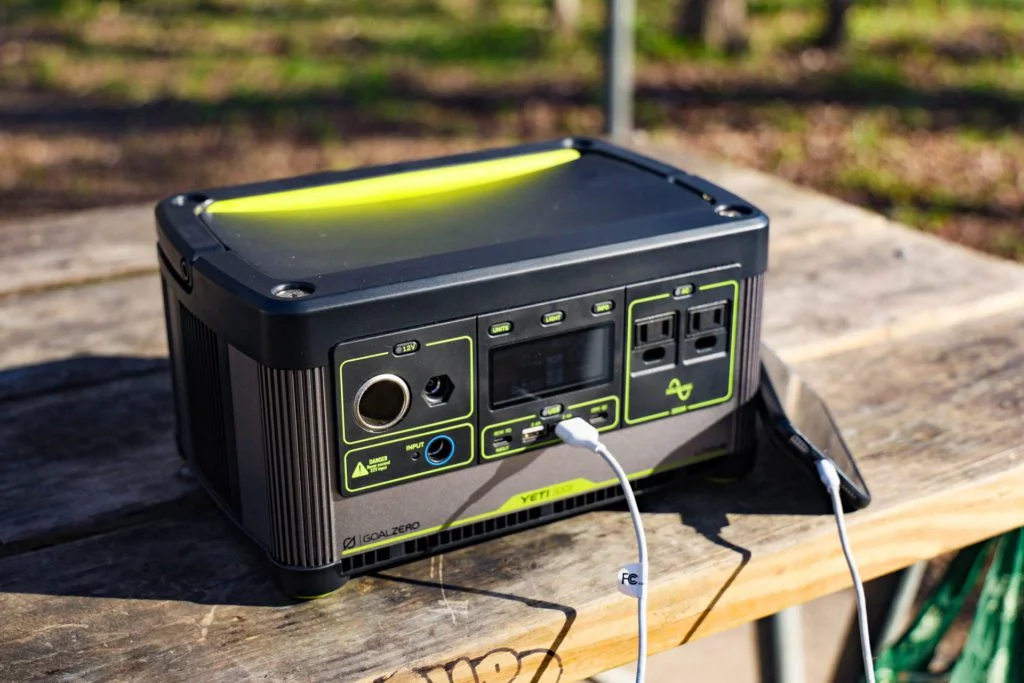
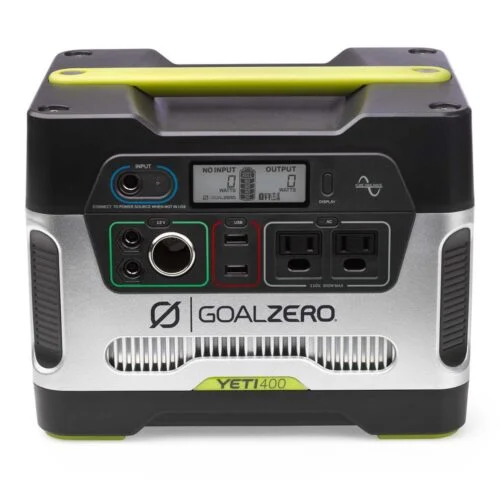
The Goal Zero Yeti 500X continues the brand’s legacy of industrial-grade aesthetics combined with highly functional ergonomics. Wrapped in an anodized aluminum core with ruggedized high-impact plastic accents, the unit feels incredibly durable and ready for fieldwork. Despite the solid construction, it tips the scales at a highly manageable 12.9 pounds. This makes it light enough to easily carry with one hand utilizing the integrated, flush-folding top handle, which snaps neatly into place to allow for seamless stacking of other gear in a vehicle trunk or gear closet.
From an interface perspective, Goal Zero has optimized the front panel for maximum tech-savvy convenience. The layout is cleanly segmented into dedicated power zones—USB, 12V DC, and AC—each with its own tactile engagement button and LED indicator. The backlit LCD display remains one of the sharpest in its class, offering highly legible, real-time data on input/output wattage, estimated time to empty, and overall battery percentage, ensuring you never have to guess your remaining power budget during a critical workflow.
Performance
Under the hood, the Yeti 500X houses a 505Wh lithium-ion NMC battery capable of sustaining demanding electrical loads for extended off-grid stints. In our 2026 benchmark tests, the 300W continuous AC pure sine wave inverter consistently delivered clean, stable power. It easily powered a standard remote-work setup—a high-end 16-inch MacBook Pro, an external 4K monitor, and a Starlink dish—for roughly four to five hours without breaking a sweat or triggering the internal cooling fans prematurely. The massive 1200W surge capacity is a welcome safety net, absorbing the initial power spikes of CPAP machines, mini-fridges, or camera battery chargers without tripping the system’s fault protection.
When it comes to charging efficiency, the 60W USB-C Power Delivery (PD) port acts as both an input and an output, providing excellent versatility. Fast-charging modern smartphones and tablets is a breeze, and the port efficiently tops up premium laptops without needing the bulky AC power brick.
For recharging the Yeti 500X itself, the 120W maximum solar input capability allows it to go from 0% to full in about 5 to 6 hours under optimal sunlight using a compatible panel. However, standard wall charging takes a leisurely 8.5 hours with the included 60W brick. Fortunately, utilizing the AC adapter in tandem with a 60W USB-C PD charger cuts that recharge time in half.
Features & Software
While the Yeti 500X lacks the built-in Bluetooth and Wi-Fi app connectivity found in Goal Zero’s larger models, it thrives on its plug-and-play simplicity. The internal Maximum Power Point Tracking (MPPT) charge controller is a standout internal feature, automatically optimizing the voltage from attached solar panels to ensure the most efficient charging curve possible. This hardware-level optimization is essential for maximizing your solar yield during days with intermittent cloud cover.
Additionally, the 12V regulated output is a crucial inclusion for overlanders and van-lifers. Unlike older power stations where the 12V output drops as the battery drains—potentially shutting down sensitive 12V refrigerators prematurely—the Yeti 500X maintains a constant, stable 12V output down to the last drop of battery life.
Value Proposition
Priced at the premium end of the mid-tier portable power market, the Goal Zero Yeti 500X commands a slightly higher cost-per-watt-hour than many budget alternatives available today. However, the value here is inherently tied to Goal Zero’s proven track record of component reliability, excellent customer support, and a robust ecosystem of interchangeable solar panels and accessories. For tech professionals and remote workers who cannot afford gear failure in the field, this peace of mind often justifies the premium cost.
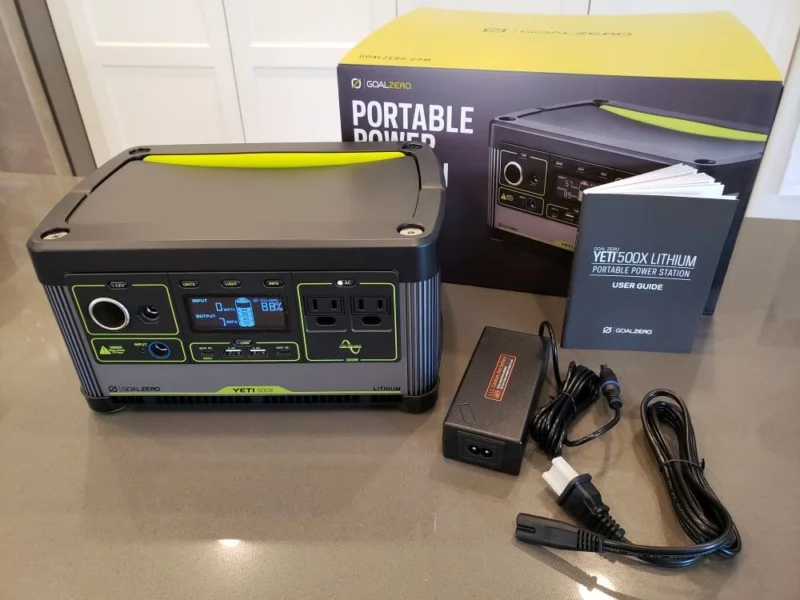
As we navigate the 2026 landscape flooded with inexpensive power stations, the Yeti 500X remains a premium choice based on its ultra-compact form factor. While it relies on Li-ion NMC chemistry instead of the newer, heavier LiFePO4 chemistry, it trades overall battery cycle life for a superior portability-to-power ratio that mobile creatives and campers highly value.
How It Compares
When stacked against the Jackery Explorer 500, the Yeti 500X wins handily on modern port selection and physical footprint. The Jackery lacks a built-in USB-C PD port and features a fixed, bulky handle that makes packing difficult, whereas the Yeti’s flush handle and 60W USB-C PD port are much better suited for modern technology workflows.
However, when compared to the EcoFlow RIVER 2 Max, the Yeti shows its age. The EcoFlow utilizes modern LiFePO4 battery chemistry for thousands of charge cycles and boasts a lightning-fast 60-minute wall charge time, vastly outperforming the Yeti’s standard 8.5-hour recharge. Yet, the Yeti 500X still edges out the EcoFlow in terms of rugged exterior build quality and long-term physical durability in harsh outdoor environments.
Pros and Cons
Pros
- The compact, highly portable footprint features a flush-folding handle for easy storage.
- A fully regulated 12V port ensures stable, uninterrupted power for portable refrigerators.
- The included 60W USB-C PD port is perfect for directly fast-charging modern laptops and drones.
- A high 1200W surge capacity easily absorbs appliance startup spikes without shutting down.
Cons
- The aging Li-ion NMC chemistry offers fewer overall charge cycles than newer LiFePO4 models.
- Standard AC wall charging is painfully slow by 2026 power station standards.
- It lacks a companion mobile application for remote monitoring and firmware updates.
- The premium price point is higher than newer competitors offering identical or better specifications.
FAQ
Q: Can the Goal Zero Yeti 500X be used while it is charging?
A: Yes, it supports pass-through charging, allowing you to power your laptops and devices while the Yeti itself is plugged into the wall or actively receiving solar power.
Q: What type of solar panel do I need for the Yeti 500X?
A: The unit features an 8mm input port and works seamlessly with Goal Zero Nomad or Boulder panels, but any third-party panel with an 8mm adapter and an output under 120W (8-22V) will work perfectly.
Q: Does it have a pure sine wave inverter?
A: Yes, the 300W AC output is powered by a pure sine wave inverter, making it completely safe for sensitive electronics like laptops, mirrorless cameras, and medical equipment.
Q: Is the Yeti 500X waterproof?
A: No. While it is built with highly durable materials designed to withstand impact, it is not water-resistant or waterproof and must be protected from rain and moisture.
Verdict
The Goal Zero Yeti 500X remains a steadfast, highly portable power station ideal for weekend campers, remote photographers, and mobile professionals who prioritize rugged build quality and a compact footprint. While newer rivals offer faster charging and updated battery chemistry, the Yeti’s reliable pure sine wave inverter, versatile USB-C PD capabilities, and exceptional durability ensure it is still a trustworthy companion for off-grid power in 2026.
Where to Buy
Pros
- ✓ The compact, highly portable footprint features a flush-folding handle for easy storage.
- ✓ A fully regulated 12V port ensures stable, uninterrupted power for portable refrigerators.
- ✓ The included 60W USB-C PD port is perfect for directly fast-charging modern laptops and drones.
- ✓ A high 1200W surge capacity easily absorbs appliance startup spikes without shutting down.
Cons
- ✗ The aging Li-ion NMC chemistry offers fewer overall charge cycles than newer LiFePO4 models.
- ✗ Standard AC wall charging is painfully slow by 2026 power station standards.
- ✗ It lacks a companion mobile application for remote monitoring and firmware updates.
- ✗ The premium price point is higher than newer competitors offering identical or better specifications.
Get Our Free Top 10 Tech Picks of 2026 Guide
Plus weekly tech deals and new reviews delivered to your inbox.
[cp_email_signup]
No spam. Unsubscribe anytime.
Ready to buy the Goal Zero Yeti 500X?
Affiliate link — we may earn a commission at no extra cost to you.