




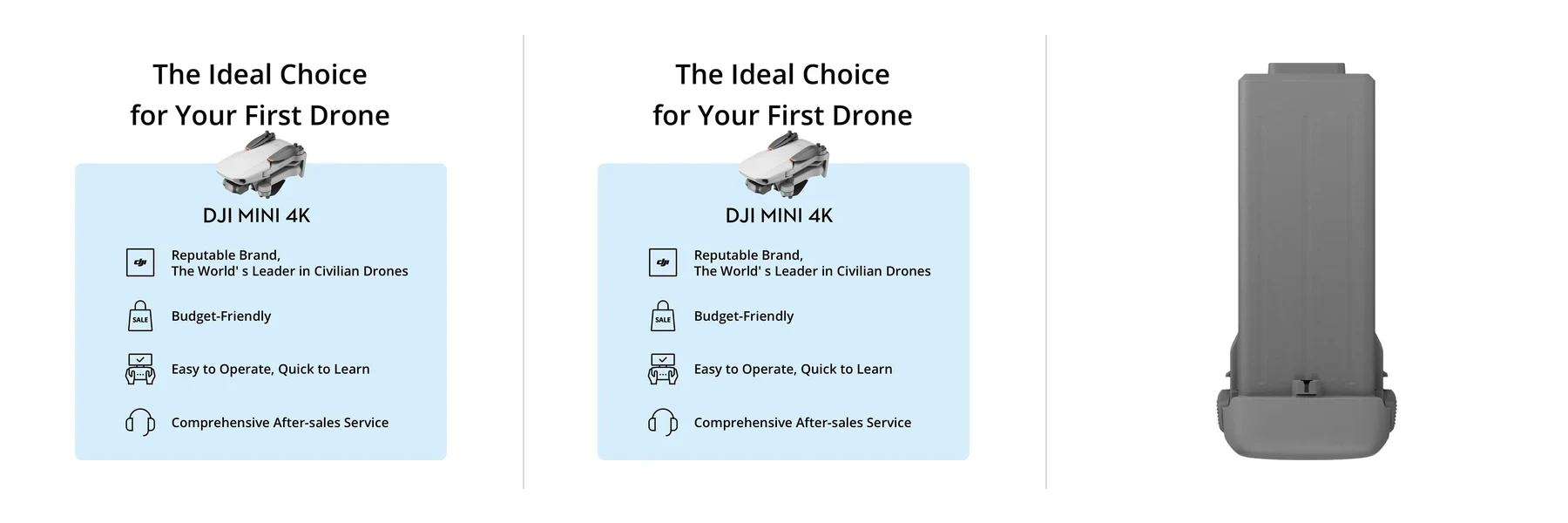
As drone technology continues to evolve in 2026, the DJI Mini 4K, DJI Mini 3, and DJI Avata 360 each bring unique strengths to the table for different types of users. While the Mini models focus on portability and high-quality cinematic footage, the Avata 360 emphasizes immersive FPV flying with advanced safety features. This three-way comparison highlights their key differences to help you choose the right drone for your needs.
At a Glance
| Feature | DJI Mini 4K | DJI Mini 3 | DJI Avata 360 |
|---|---|---|---|
| Price | $209 | $209 | $99 |
| Overall Score | 86/100 | 85/100 | 85/100 |
| Best For | Travel aerial photography | Social media and HDR shooting | Safe FPV flying |
| Flight Time | 34 min (29+ real-world) | 35+ min | Drops at high speeds |
| Camera | 4K/60fps strong dynamic range | 1/1.3″ sensor true HDR | 4K/120fps low-light |
| Obstacle Avoidance | Lacks omnidirectional | Lacks forward sensors | True 360-degree |
Design and Build
The DJI Mini 4K and DJI Mini 3 both feature ultra-portable designs, with the Mini 4K’s 249g build making it perfect for travel and locations where heavier drones face restrictions. The Mini 3’s foldable design is equally travel-friendly, requires no registration in most regions due to its sub-250g weight, and brilliantly executes vertical shooting mode for social media content. However, the Mini 4K’s build materials, while functional, feel somewhat basic compared to premium models.
The DJI Avata 360 takes a distinctly different approach with refined ergonomics designed for comfortable long flying sessions. Its goggles still feel somewhat heavy during extended multi-hour shooting days, and it offers limited third-party modification options compared to fully open-source FPV platforms.
Performance and Features
As our full review of the DJI Mini 4K highlights, it delivers excellent 4K/60fps footage with strong dynamic range and stabilization for its size. It also boasts impressive 34-minute flight time that consistently delivers 29+ minutes in real-world mixed use, along with strong transmission performance and reliable Return-to-Home functionality that enhance pilot confidence. Wind resistance becomes noticeable above 8 m/s, and it lacks omnidirectional obstacle avoidance, requiring more attentive piloting in complex environments.
The full review of DJI Mini 3 praises its outstanding image quality from the 1/1.3-inch sensor with true HDR capabilities and exceptional flight time that routinely exceeds 35 minutes in real-world conditions. Its vertical shooting mode is brilliantly executed for social media content and the ultra-portable design makes it the perfect travel drone, though maximum 4K recording is limited to 30fps rather than 60fps. It also lacks forward obstacle avoidance sensors found on newer models, the standard controller feels somewhat dated, and DJI Fly app restrictions can frustrate users wanting more manual control options.
Meanwhile, the DJI Avata 360 provides true 360-degree sensing that dramatically improves safety during aggressive FPV flight, as noted in our full review of DJI Avata 360. It features excellent 4K/120fps image quality with strong low-light performance, intuitive software with useful AI-assisted creative tools, and a strong transmission system that maintains clear video feed at impressive distances. Refined ergonomics make long flying sessions more comfortable than previous generations, though flight time drops significantly when pushing maximum speeds in Manual mode and it requires a learning curve to fully utilize manual controls despite the safety features.
Pricing and Value
Priced at $209, both the DJI Mini 4K and DJI Mini 3 deliver strong value for users seeking portable, high-quality aerial imaging. The Mini 4K’s slightly higher overall score, 60fps capabilities, refined DJI Fly app, and consistent real-world flight time give it a marginal edge in everyday value over the Mini 3 at the same price point.
The DJI Avata 360 at $99 stands out as the most affordable of the three, bringing 360-degree sensing, high-frame-rate video, and FPV-specific features that provide a different kind of value for enthusiasts. Its safety-focused design and image quality help justify the cost for those interested in immersive flying rather than traditional cinematic drone work.
Pros and Cons
DJI Mini 4K
Pros:
– Delivers excellent 4K/60fps footage with strong dynamic range and stabilization for its size.
– Impressive 34-minute flight time consistently delivers 29+ minutes in real-world mixed use.
– Ultra-portable 249g design makes it perfect for travel and locations where heavier drones face restrictions.
– Refined DJI Fly app provides an intuitive, feature-rich experience with regular updates.
– Strong transmission performance and reliable Return-to-Home functionality enhance pilot confidence.
Cons:
– Lacks omnidirectional obstacle avoidance, requiring more attentive piloting in complex environments.
– ND filters are not included in the standard package and must be purchased separately for optimal daylight shooting.
– Wind resistance becomes noticeable above 8 m/s, limiting usability in challenging weather conditions.
– Advanced subject tracking is competent but not as sophisticated as the systems found in the Mini 4 Pro.
– Build materials, while functional, feel somewhat basic compared to premium magnesium alloy models.
DJI Mini 3
Pros:
– Outstanding image quality from the 1/1.3-inch sensor with true HDR capabilities.
– Exceptional flight time that routinely exceeds 35 minutes in real-world conditions.
– Ultra-portable foldable design makes it the perfect travel drone.
– No registration required in most regions due to sub-250g weight.
– Vertical shooting mode is brilliantly executed for social media content.
Cons:
– Lacks forward obstacle avoidance sensors found on newer models.
– Maximum 4K recording is limited to 30fps rather than 60fps.
– The standard controller feels somewhat dated compared to newer RC 2 units.
– DJI Fly app restrictions can frustrate users wanting manual control options.
– Battery charging speed is relatively slow at around 90 minutes for a full charge.
DJI Avata 360
Pros:
– True 360-degree sensing dramatically improves safety during aggressive FPV flight.
– Excellent 4K/120fps image quality with strong low-light performance.
– Refined ergonomics make long flying sessions more comfortable than previous generations.
– Intuitive software with useful AI-assisted creative tools.
– Strong transmission system maintains clear video feed at impressive distances.
Cons:
– The $1,299 price point puts it out of reach for many hobbyists and beginners.
– Flight time drops significantly when pushing maximum speeds in Manual mode.
– Goggles still feel somewhat heavy during extended multi-hour shooting days.
– Limited third-party modification options compared to fully open-source FPV platforms.
– Requires a learning curve to fully utilize manual controls despite the safety features.
Who Should Buy Which
Travelers and casual pilots who value portability, long flight times, and excellent 4K stabilization without complex obstacle avoidance systems should choose the DJI Mini 4K. Its refined app, reliable Return-to-Home, and consistent real-world performance make it the most approachable option for everyday aerial shooting in open environments.
Social media creators and vloggers will find the DJI Mini 3 the best fit thanks to its true HDR image quality, exceptional battery life that exceeds 35 minutes, and brilliantly executed vertical shooting mode. The sub-250g weight and foldable design further cement its position as the ideal grab-and-go content creation tool.
FPV enthusiasts who prioritize safety during aggressive flying should opt for the DJI Avata 360. Its true 360-degree sensing, 4K/120fps low-light performance, and AI-assisted creative tools suit pilots willing to embrace the learning curve for immersive, high-speed experiences.
Verdict
The DJI Mini 4K wins overall in 2026 with its 86/100 score, striking the best balance of excellent 4K/60fps footage, impressive real-world flight time, portability, and user-friendly features for most pilots. The DJI Mini 3 remains an extremely close second and is the clear choice for social media creators who rely on its HDR capabilities and vertical shooting mode. The DJI Avata 360 excels in its specific use case of safe, immersive FPV flight where 360-degree sensing and high-frame-rate video are priorities.