




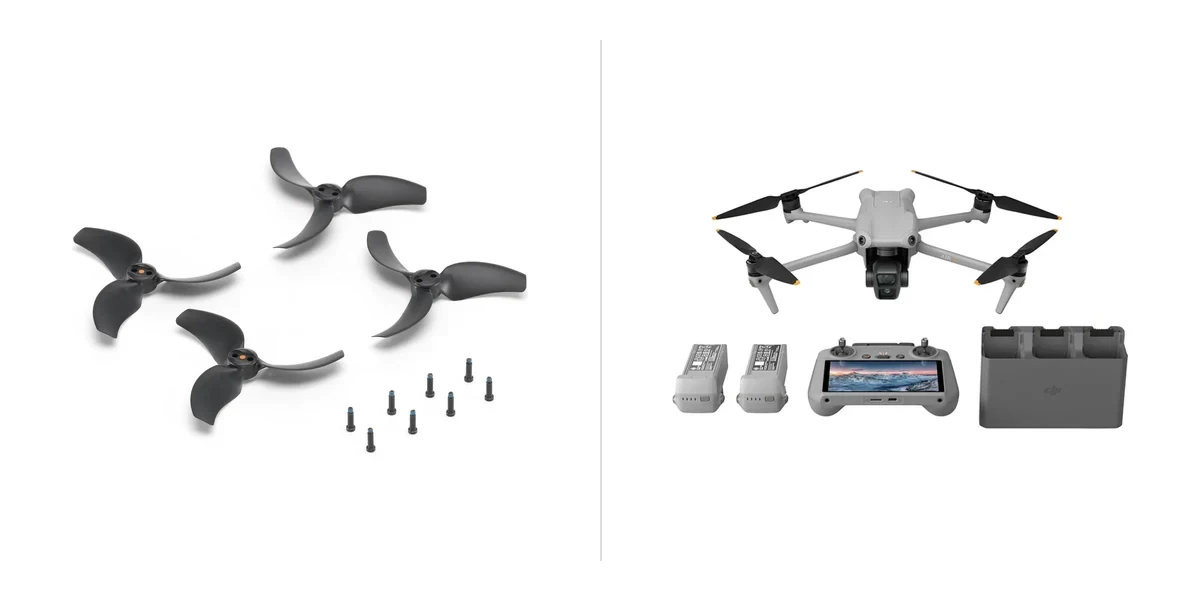
In 2026, the DJI Avata 2 and DJI Air 3 represent two distinct philosophies in consumer drones: immersive FPV flying versus versatile cinematic capture. The Avata 2 prioritizes responsive controls and stabilization during aggressive maneuvers, while the Air 3 focuses on dual-camera flexibility and extended flight endurance for professional workflows. This head-to-head breaks down their real-world differences to help pilots choose the right tool.
At a Glance
| Feature | DJI Avata 2 | DJI Air 3 |
|---|---|---|
| Price | $21.99 | $1499 |
| Overall Score | 85/100 | 84/100 |
| Best For | Immersive FPV maneuvers and intermediate pilots | Professional cinematic workflows |
| Flight Time | 23 minutes | 46 minutes |
| Camera & Stabilization | Exceptional 4K with stabilization in aggressive FPV | Dual-camera versatility with superb stabilization |
| Safety Features | Refined controls and safety for indoor/outdoor use | Omnidirectional obstacle avoidance |
Design and Build
The DJI Avata 2 emphasizes robust build quality that instills confidence during both indoor and outdoor flights. Its design philosophy centers on seamless integration between drone, goggles, and app, resulting in a polished end-to-end experience that feels cohesive and purpose-built for FPV flying. This approach makes the system feel durable and ready for dynamic use cases.
By contrast, the DJI Air 3 adopts a more conventional camera drone form factor that prioritizes safety and versatility over FPV immersion. At 720g, it requires registration with aviation authorities in most countries, adding administrative overhead not present with the lighter, more agile Avata 2. While both drones feel premium, the Avata 2’s ruggedness shines in tight spaces while the Air 3 focuses on confident flight in complex outdoor environments.
Performance and Features
The DJI Avata 2 delivers exceptional 4K image quality with excellent stabilization even during aggressive FPV maneuvers, backed by 23-minute flight times that significantly reduce the need for multiple batteries. Refined controls and safety features make it accessible to intermediate pilots while still exciting experienced users, though some advanced manual flight techniques still require considerable practice to master. Occasional minor connectivity hiccups can occur in areas with heavy RF interference, and battery charging takes approximately 90 minutes per pack. For a deeper look, read our full review of DJI Avata 2.
The DJI Air 3 counters with outstanding 46-minute flight time and a dual camera system that provides exceptional versatility with seamless switching between wide and telephoto perspectives. Omnidirectional obstacle avoidance offers industry-leading safety for confident flying in complex environments, paired with excellent 4K video quality and superb stabilization suitable for professional workflows. The refined DJI Fly app includes intuitive controls and regular updates, though occasional software glitches appear in beta intelligent flight modes and it lacks internal storage. Full details are available in our full review of DJI Air 3.
Both drones excel at video capture but target different experiences: the Avata 2 thrives on dynamic, first-person excitement while the Air 3 prioritizes reliable, versatile production capability.
Pricing and Value
At $21.99, the DJI Avata 2 appears far more affordable than the DJI Air 3’s $1499 price point. However, the complete Avata 2 system with goggles and controller still represents a substantial financial investment, and limited aftermarket modification options may frustrate enthusiasts who prefer open-source FPV communities. Its strong 23-minute flight times and polished experience deliver solid everyday value for FPV-focused users.
The DJI Air 3’s premium price may feel steep for casual users or those not fully utilizing the dual-camera system. Yet for professionals who leverage its 46-minute endurance, omnidirectional safety, and versatile perspectives, the higher cost translates into genuine workflow efficiency. Value ultimately depends on whether your flying style aligns with FPV thrills or cinematic versatility.
Pros and Cons
DJI Avata 2
Pros:
– Delivers exceptional 4K image quality with excellent stabilization even during aggressive FPV maneuvers.
– 23-minute flight times significantly reduce the need for multiple batteries during shoots.
– Refined controls and safety features make it accessible to intermediate pilots while still exciting experienced users.
– Seamless integration between drone, goggles, and app creates a polished end-to-end experience.
– Robust build quality instills confidence during both indoor and outdoor flights.
Cons:
– The complete system with goggles and controller represents a substantial financial investment.
– Limited aftermarket modification options compared to the open-source FPV community.
– Battery charging time is relatively slow at approximately 90 minutes per pack.
– Some advanced manual flight techniques still require considerable practice to master.
– Occasional minor connectivity hiccups can occur in areas with heavy RF interference.
DJI Air 3
Pros:
– Dual camera system provides exceptional versatility with seamless switching between wide and telephoto perspectives.
– Outstanding 46-minute flight time delivers reliable performance for extended shooting sessions.
– Omnidirectional obstacle avoidance offers industry-leading safety for confident flying in complex environments.
– Excellent 4K video quality with superb stabilization and dynamic range suitable for professional workflows.
– Refined DJI Fly app with intuitive controls and regular updates that enhance functionality over time.
Cons:
– At 720g, the drone requires registration with aviation authorities in most countries, adding administrative overhead.
– Lacks a 1-inch sensor found in higher-end models, resulting in slightly compromised low-light performance.
– No internal storage means users must purchase and carry microSD cards for every shoot.
– The premium price point may feel steep for casual users or those not fully utilizing the dual-camera system.
– Occasional software glitches in beta intelligent flight modes require users to stay current with updates.
Who Should Buy Which
Pilots who crave immersive FPV flight, aggressive maneuvers, and a refined, integrated system should buy the DJI Avata 2. It suits intermediate users who value robust build quality, excellent stabilization, and 23-minute flight times without needing extensive aftermarket customization.
Cinematographers and content creators needing versatile perspectives, long flight endurance, and industry-leading safety should choose the DJI Air 3. Its dual-camera setup and 46-minute performance make it ideal for professional workflows, despite registration requirements and the higher price.
Verdict
The DJI Avata 2 wins overall by a narrow margin thanks to its exceptional stabilization during dynamic FPV flight, robust build quality, and seamless user experience that feels more polished for its target audience. It is clearly the better choice for immersive, exciting flying where accessibility and confidence matter most. The DJI Air 3 remains the superior option for professional cinematic work that demands dual-camera versatility, omnidirectional safety, and extended 46-minute sessions. Choose based on whether your passion lies in FPV thrills or versatile production capability.