







EXCERPT_START
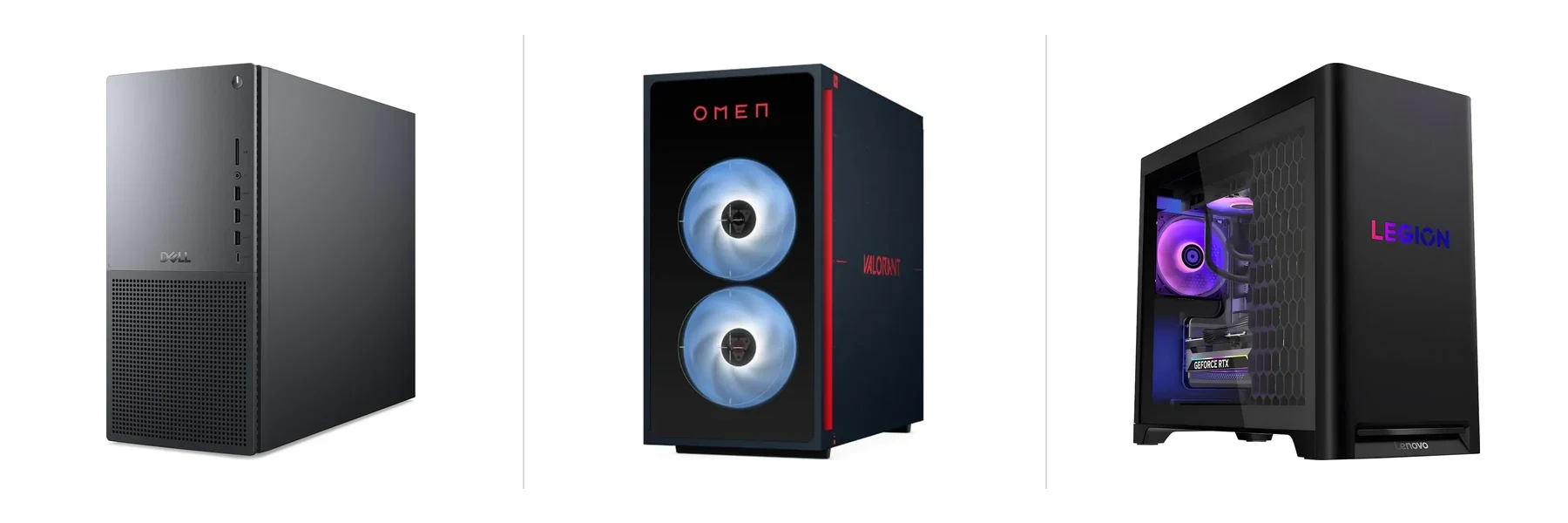
In the 2026 desktop market, the Dell Tower Plus EBT2250, HP Omen 35L, and Lenovo Legion Tower 5i offer distinct approaches to premium prebuilt performance for gaming and content creation. Dell emphasizes quiet sophistication and enterprise-grade support, HP focuses on outright 4K gaming prowess, while Lenovo delivers strong capabilities at a significantly lower price point. This head-to-head breaks down their design, real-world behavior, and value.
EXCERPT_END
META_DESCRIPTION
Dell Tower Plus EBT2250 vs HP Omen 35L vs Lenovo Legion Tower 5i (2026): Compare performance, cooling, build quality, and value to find the best gaming and creation desktop. (154 characters)
TAGS
Dell Tower Plus EBT2250, HP Omen 35L, Lenovo Legion Tower 5i, desktop comparison, gaming PC 2026, content creation desktop, prebuilt tower, high-end PC review
At a Glance
| Feature | Dell Tower Plus EBT2250 | HP Omen 35L | Lenovo Legion Tower 5i |
|---|---|---|---|
| Price | $2,999 | $2,653.49 | $1,575 |
| Overall Score | 87/100 | 85/100 | 84/100 |
| Best For | Quiet multi-core creation and gaming | 4K gaming with ray tracing | High performance on a budget |
| Noise Level | Remarkably quiet even under sustained load | Noticeably loud under heavy sustained loads | Noticeably loud when CPU and GPU are pushed |
| Connectivity | Wi-Fi 7, Thunderbolt 4, PCIe 5.0 | Wi-Fi 7, USB4, generous expansion | Optional Wi-Fi 7 upgrade required |
| Build & Support | Premium tool-less, strong enterprise warranty | Clean premium with tool-less access | Professional design with 3-year on-site warranty |
Design and Build
All three systems deliver clean, premium builds with excellent cable management and tool-less access for upgrades. The Dell Tower Plus EBT2250 stands out with its thoughtful tool-less design and sophisticated cooling that keeps it remarkably quiet, though its large physical footprint demands significant desk or floor space. It is only available in a single black colorway with minimal RGB customization. The HP Omen 35L and Lenovo Legion Tower 5i both offer professional aesthetics, but the Lenovo weighs nearly 40 pounds, making it cumbersome for users who frequently rearrange their setup, while the HP provides clean lines and easy access that match its gaming-focused personality.
The Dell benefits from Dell’s established enterprise infrastructure for support, giving it an edge in long-term reliability. HP’s build includes proprietary motherboard and power delivery components that may limit certain advanced upgrade paths. Lenovo emphasizes easy upgradability and a professional appearance but includes relatively limited RGB lighting effects compared with deeper ecosystem offerings from rival brands.
Performance and Features
The Dell Tower Plus EBT2250 delivers exceptional multi-core performance paired with class-leading GPU capabilities for both creation and gaming. Its sophisticated cooling enables remarkably quiet operation even under sustained heavy workloads, and it offers future-proof connectivity including Wi-Fi 7, Thunderbolt 4, and PCIe 5.0 storage support. In our testing it maintained strong clock speeds while staying significantly quieter than its competitors.
The HP Omen 35L excels at exceptional 4K gaming performance with high frame rates even when ray tracing is enabled. Its highly effective cooling system maintains low temperatures during extended sessions, though fan noise becomes noticeably loud under heavy sustained loads. The comprehensive Omen Gaming Hub provides detailed monitoring and customization, and the system includes strong future-proofing through Wi-Fi 7 and USB4.
The Lenovo Legion Tower 5i offers exceptional gaming and content-creation performance with the latest Intel and NVIDIA hardware. Legion Coldfront 5.0 cooling keeps temperatures and clock speeds excellent, and the improved Lenovo Vantage software has become genuinely useful. However, the system can become noticeably loud during extended stress tests, its base configuration lacks Wi-Fi 7, and RGB lighting is relatively limited.
Pricing and Value
At $2,999, the Dell Tower Plus EBT2250 is the most expensive of the trio and carries a premium that reflects its quiet operation, enterprise support, and extensive future-proof features. The HP Omen 35L at $2,653.49 sits in the middle, delivering outstanding 4K gaming but with the caveat that enthusiasts comfortable with self-building could reach similar specifications for less. The Lenovo Legion Tower 5i at $1,575 delivers exceptional performance and a strong three-year on-site warranty at a notably lower price, making it the clear value leader for buyers who can accept louder operation under load and a base configuration that may require a Wi-Fi 7 upgrade.
While the Dell justifies its higher cost for users who need quiet sustained performance and robust support, the Lenovo provides the best price-to-performance ratio in this group.
Pros and Cons
Dell Tower Plus EBT2250
Pros:
– Exceptional multi-core performance paired with class-leading GPU capabilities for both creation and gaming.
– Premium build quality with thoughtful tool-less design and excellent cable management.
– Future-proof connectivity including Wi-Fi 7, Thunderbolt 4, and PCIe 5.0 storage support.
– Remarkably quiet operation even under sustained heavy workloads thanks to sophisticated cooling.
– Strong warranty and support ecosystem from Dell’s established enterprise infrastructure.
Cons:
– The $2,499 starting price positions it as a premium option that may be too expensive for some enthusiasts.
– Large physical footprint requires significant desk or floor space compared to more compact mini-towers.
– Peak power consumption exceeds 600W under maximum load, which may concern users with limited electrical infrastructure.
– Only available in a single black colorway with minimal RGB customization options.
– RAM modules are not the absolute fastest kits available, leaving a small amount of performance on the table for extreme overclockers.
HP Omen 35L
Pros:
– Exceptional 4K gaming performance with the RTX 5090 delivering high frame rates even with ray tracing enabled.
– Highly effective cooling system maintains low temperatures during extended gaming and rendering sessions.
– Clean, premium build quality with excellent cable management and tool-less access for upgrades.
– Comprehensive Omen Gaming Hub software provides detailed monitoring and customization options.
– Strong future-proofing through Wi-Fi 7, USB4, and generous expansion capabilities.
Cons:
– Fan noise becomes noticeably loud under heavy sustained loads, which may bother users in quiet environments.
– The Omen software still contains some bloatware that requires manual disabling during initial setup.
– Proprietary motherboard and power delivery components may limit certain advanced upgrade paths.
– Premium pricing means enthusiasts comfortable with self-building can achieve similar specs for less money.
– Lack of included peripherals means buyers will need to budget separately for a quality keyboard and mouse.
Lenovo Legion Tower 5i
Pros:
– Exceptional gaming and content-creation performance with the latest Intel and NVIDIA hardware.
– Highly effective Legion Coldfront 5.0 cooling that maintains excellent temperatures and clock speeds.
– Clean, professional design with thoughtful cable management and easy upgradability.
– Comprehensive Lenovo Vantage software that has become genuinely useful rather than bloat.
– Strong three-year on-site warranty provides peace of mind for a premium prebuilt system.
Cons:
– The system can become noticeably loud when both CPU and GPU are pushed to their limits during extended stress tests.
– Legion Vantage, while improved, still includes some unnecessary promotional elements and telemetry.
– At nearly 40 pounds, the tower is quite heavy and may prove cumbersome for users who frequently rearrange their setup.
– Base configuration lacks Wi-Fi 7, requiring an optional upgrade for the fastest wireless connectivity.
– RGB lighting effects are relatively limited compared with systems from Corsair or ASUS that offer deeper ecosystem integration.
Who Should Buy Which
Buy the Dell Tower Plus EBT2250 if you need a premium, remarkably quiet system for sustained multi-core workloads, content creation, or gaming. Its sophisticated cooling, future-proof connectivity, and strong enterprise support make it ideal for users who value silence and long-term reliability over upfront cost.
Choose the HP Omen 35L if 4K gaming with ray tracing at high frame rates is your priority. Gamers who appreciate comprehensive monitoring software, effective cooling during long sessions, and a clean premium build will find it highly satisfying, provided they can tolerate louder fan noise under load.
Select the Lenovo Legion Tower 5i if you want strong gaming and content-creation performance without spending premium prices. It suits buyers seeking excellent cooling, easy upgradability, and a three-year on-site warranty while accepting some noise under heavy load and the need for a Wi-Fi 7 upgrade.
Verdict
The Dell Tower Plus EBT2250 wins overall thanks to its exceptional multi-core and GPU performance, remarkably quiet operation, future-proof connectivity, and strong enterprise support, earning the highest score of the three. It is the best choice for users who prioritize silence during sustained workloads and premium long-term reliability. The Lenovo Legion Tower 5i delivers the strongest value at $1,575 for budget-conscious buyers who still want high-end gaming and creation performance, while the HP Omen 35L is the clear pick for enthusiasts specifically chasing maximum 4K gaming frame rates with ray tracing enabled.