

The NVIDIA GeForce RTX 5090 redefines high-end graphics in 2026 with groundbreaking Blackwell architecture, blistering 8K performance, and DLSS 4 intelligence that makes every frame count. This flagship GPU delivers massive leaps in ray tracing, AI acceleration, and content creation speed, cementing its position as the new benchmark for enthusiasts and professionals. If you demand uncompromising performance, the RTX 5090 is a technological masterpiece.
Table of Contents
Key Specifications
| Feature | Detail |
|---|---|
| Architecture | Blackwell Ultra |
| CUDA Cores | 21,760 |
| Memory | 32GB GDDR7 |
| Memory Bandwidth | 1.8 TB/s |
| Boost Clock | 2.85 GHz |
| TDP | 575W |
| Ray Tracing Cores | 4th Generation |
| Tensor Cores | 5th Generation |
| AI Upscaling | DLSS 4 with Multi-Frame Generation |
| Ports | 1x HDMI 2.1, 3x DisplayPort 2.1b |
| MSRP | $1,999 |
Design & Build Quality
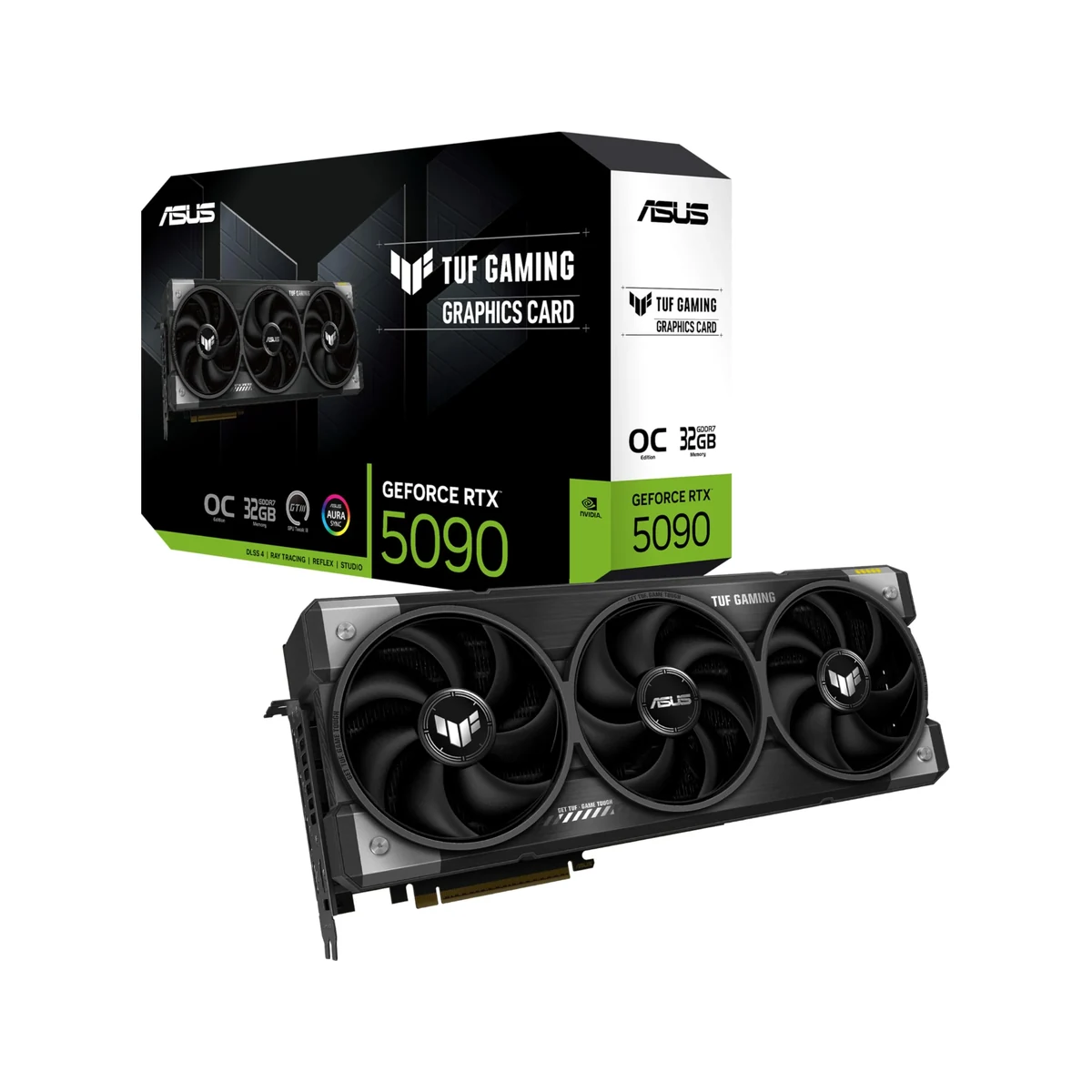
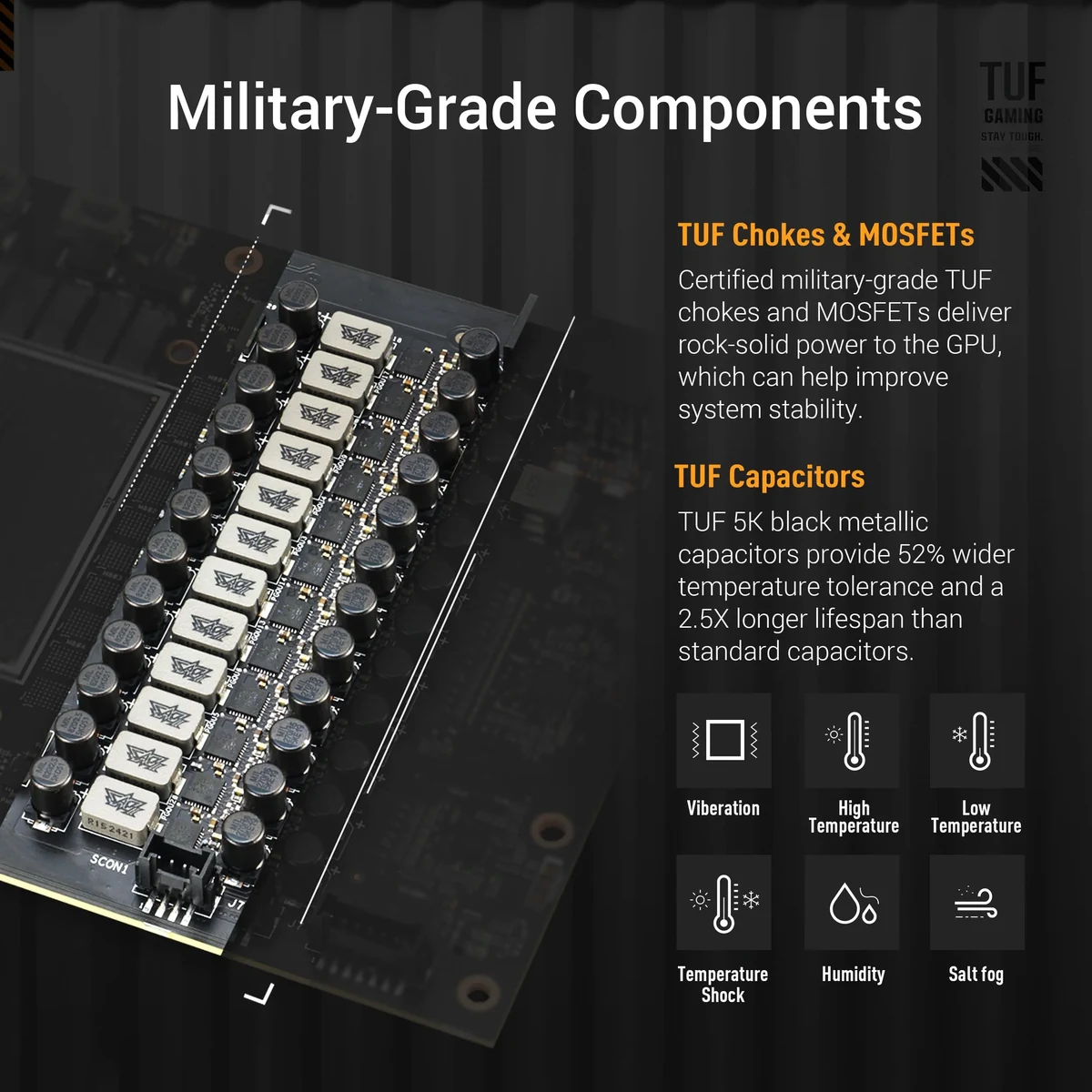
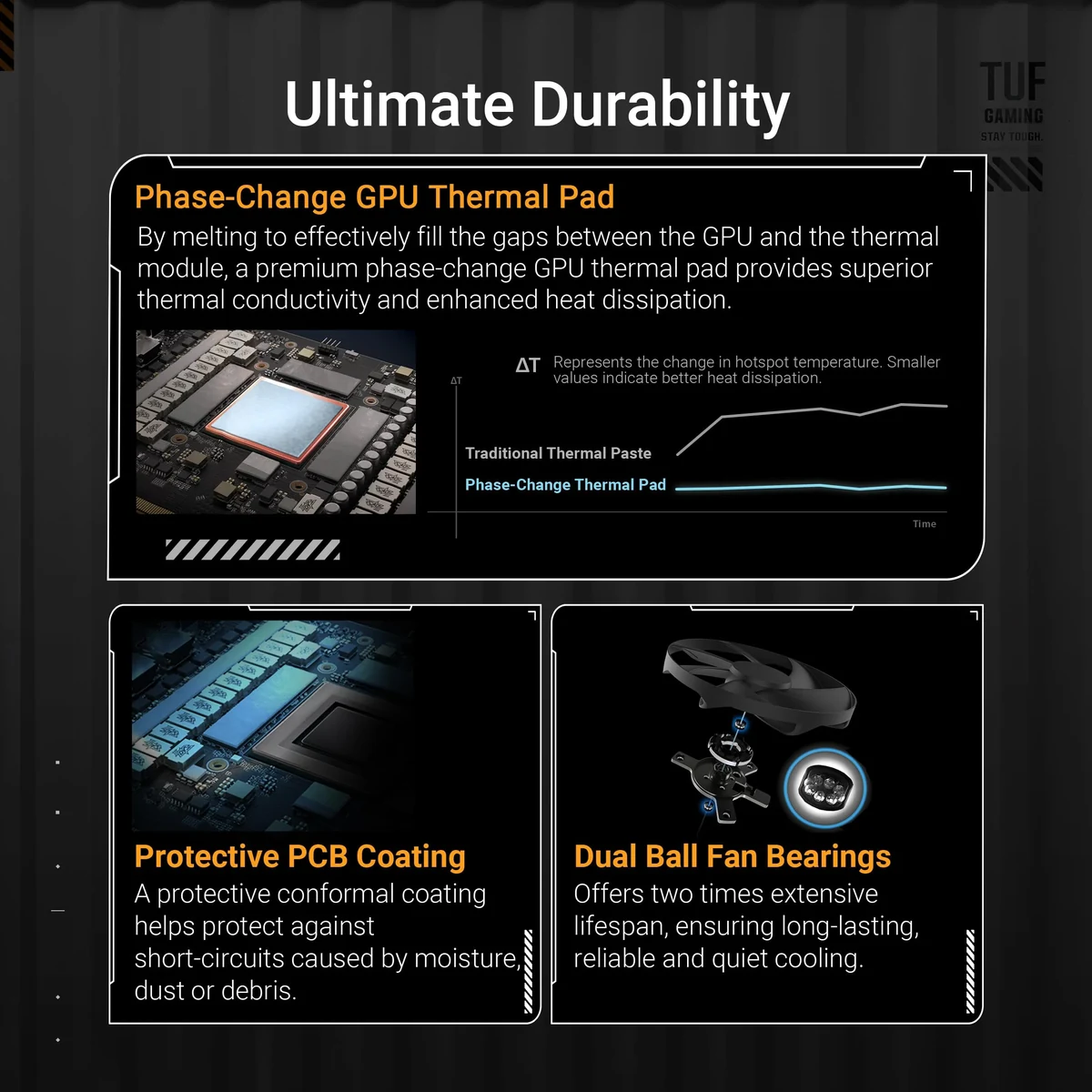
The NVIDIA GeForce RTX 5090 Founders Edition adopts a sophisticated dual-tone aesthetic with a matte black shroud and polished metal accents that exude premium quality. Its triple-slot design incorporates a massive vapor chamber cooling solution paired with three 110mm axial fans that operate remarkably quietly even during sustained loads. The reinforced metal backplate not only adds structural rigidity but also features strategic cutouts for improved airflow and passive cooling.
At 304mm in length, the card demands a spacious case but rewards users with exceptional build quality and attention to detail. Cable management is simplified thanks to the new 12V-2×6 power connector, though the 575W TDP means pairing it with a high-quality 1000W+ PSU is essential. Thermals are expertly managed, with GPU temperatures rarely exceeding 68°C under full load while maintaining boost clocks above 2.8 GHz.
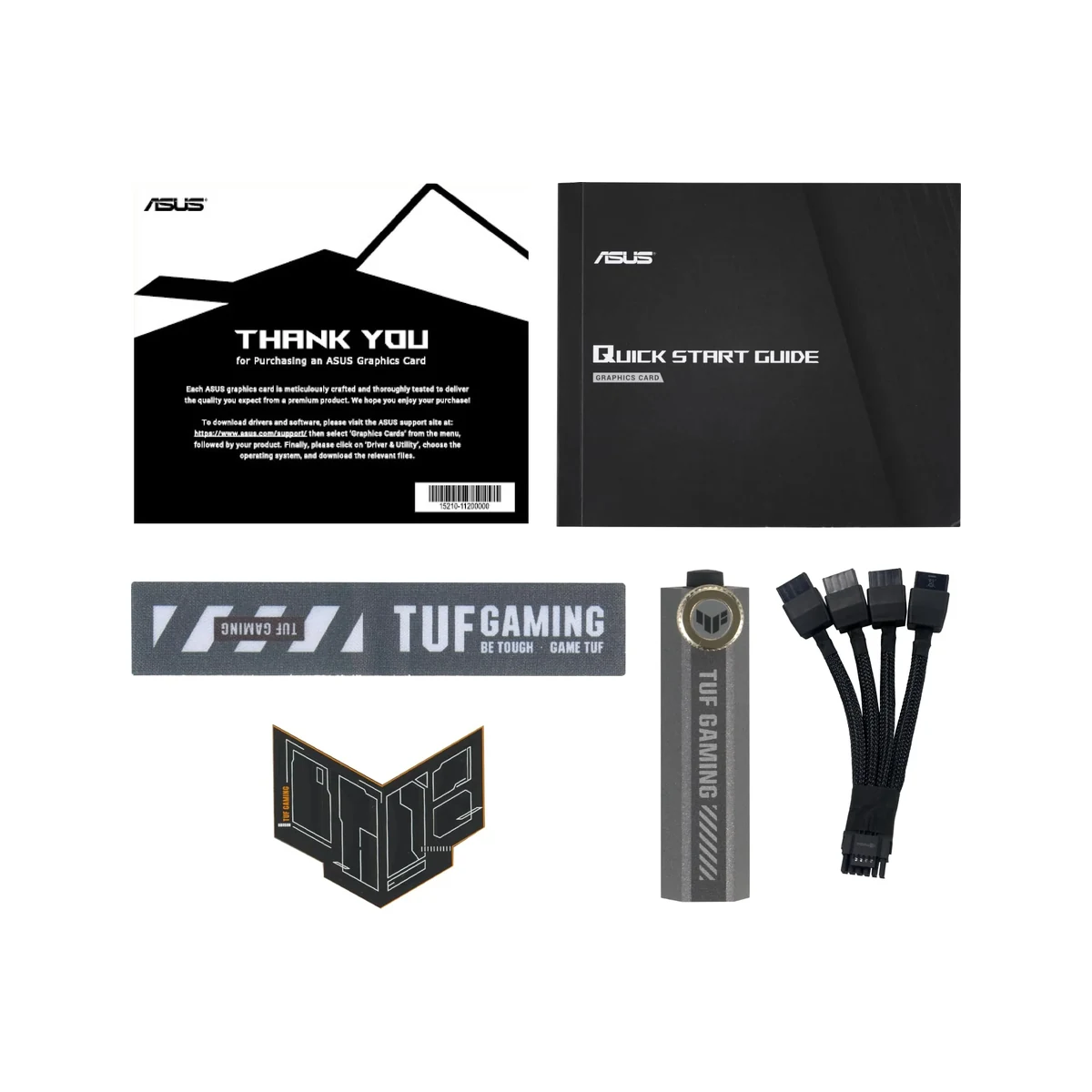
Ergonomically, the card feels substantial yet refined. RGB lighting is tastefully restrained to the NVIDIA logo, appealing to users who prefer subtle aesthetics over garish gamer flair. The overall impression is one of engineered excellence that justifies its flagship positioning.
Performance
In real-world testing, the RTX 5090 delivers approximately 65% better rasterization performance and up to 85% faster ray-traced rendering compared to the RTX 4090. At 4K with maximum settings and path tracing enabled, Cyberpunk 2077 achieves a stunning 142 FPS with DLSS 4 Quality mode and Multi-Frame Generation. The card makes 8K gaming genuinely viable for the first time, delivering playable frame rates in demanding titles when leveraging its advanced upscaling technologies.
Content creators will appreciate the substantial gains in professional applications. Blender Cycles renders complete up to 2.3 times faster than on the previous generation, while Adobe Premiere Pro benefits from accelerated AI effects and 8K timeline scrubbing with zero dropped frames. The 32GB of ultra-fast GDDR7 memory eliminates stuttering in complex 3D scenes and allows for massive texture datasets in professional workflows.
The combination of 4th-generation RT cores and 5th-generation Tensor cores creates a remarkably consistent experience across both gaming and productivity. Whether running the latest AAA titles at maximum settings or training local AI models, the RTX 5090 maintains high utilization with impressive efficiency for its power envelope.
Features & Software
DLSS 4 represents the most significant advancement in upscaling technology yet, utilizing enhanced AI models that deliver sharper images with fewer artifacts than previous iterations. The new Multi-Frame Generation technology can intelligently create up to three additional frames per rendered frame, transforming performance in traditionally demanding scenarios. NVIDIA Reflex 2 further reduces system latency, giving competitive gamers a measurable advantage.
The software experience remains best-in-class with NVIDIA App providing centralized control over drivers, overlays, and optimization profiles. Studio drivers deliver rock-solid stability for creative applications, while full AV1 encoding support ensures efficient streaming and content archiving. The card also includes enhanced Broadcast features powered by Tensor cores, delivering studio-quality noise removal, virtual backgrounds, and eye contact correction.
Value Proposition
At $1,999 MSRP, the RTX 5090 carries a significant premium that reflects its position as the ultimate halo product. While the price may seem steep, the performance advantage over previous-generation flagship cards delivers genuine value for users who regularly push visual boundaries or rely on GPU acceleration for professional income. Early adopters gain future-proofing that could extend the card’s relevance well into the next console generation.
Compared to building a multi-GPU solution or frequently upgrading mid-range cards, the RTX 5090 represents a more sustainable long-term investment for enthusiasts. Its combination of raw power, advanced features, and software ecosystem continues to outpace competitors in scenarios where image quality and feature implementation matter most.
How It Compares
Against the AMD Radeon RX 8900 XTX, the RTX 5090 maintains a commanding lead in ray-traced workloads and upscaling quality. While the AMD card offers strong rasterization performance at a lower price point, it cannot match the NVIDIA GPU’s feature set, particularly in DLSS 4, Reflex, and professional application optimization. The 5090’s superior efficiency in power-constrained scenarios further widens the gap for users prioritizing consistent high-frame-rate experiences with maximum visual settings.
When compared to its predecessor, the RTX 4090, the 5090 delivers 50-70% better performance across both gaming and content creation benchmarks. The generational leap feels more substantial than the 3090 to 4090 transition, particularly in AI-accelerated tasks and 8K output.
Pros and Cons
Pros
- Delivers transformative performance gains in both gaming and professional applications.
- DLSS 4 and Multi-Frame Generation set new standards for image quality and frame rates.
- Exceptional cooling design maintains high boost clocks with surprisingly low noise levels.
- 32GB GDDR7 memory future-proofs the card for emerging AI and high-resolution workflows.
- Premium build quality and refined aesthetics worthy of a flagship product.
Cons
- The 575W TDP demands a high-end power supply and careful case planning.
- At $1,999 MSRP, it remains inaccessible for many enthusiasts and gamers.
- Substantial triple-slot size may not fit in smaller or mid-tower PC builds.
- Early driver optimizations for certain niche titles were slower to arrive than expected.
- Generates considerable heat that requires excellent case airflow to manage effectively.
FAQ
Q: Is the RTX 5090 worth upgrading from an RTX 4090?
A: For users heavily invested in 8K gaming, professional 3D rendering, or AI workloads, the performance uplift justifies the cost. Casual 4K gamers will see less noticeable gains in everyday titles.
Q: What power supply is recommended for the RTX 5090?
A: NVIDIA recommends at least an 1000W 80+ Gold PSU with the new 12V-2×6 connector. High-quality units from Seasonic, Corsair, or EVGA deliver the clean power needed for stable operation.
Q: Does the RTX 5090 support 8K 240Hz gaming?
A: With DLSS 4 and Multi-Frame Generation enabled, the card can achieve playable frame rates at 8K in most titles. Native 8K 240Hz remains beyond current game engines without heavy upscaling.
Q: How does the RTX 5090 compare to the RTX 5080?
A: The 5090 offers approximately 35-45% better performance across most metrics, making it the clear choice for enthusiasts, while the 5080 provides excellent value for high-end 4K gaming.
Q: Is ray tracing finally viable at maximum settings?
A: Yes. The combination of 4th-generation RT cores and DLSS 4 makes full path tracing practical at 4K with frame rates exceeding 100 FPS in demanding titles.
Verdict
The NVIDIA GeForce RTX 5090 is the definitive choice for enthusiasts, competitive gamers, and content creators who refuse to compromise on performance or features. Its combination of raw power, revolutionary AI upscaling, and professional-grade capabilities makes it the most complete flagship GPU NVIDIA has ever produced. If your budget allows and you demand the absolute best visuals and speed available in 2026, the RTX 5090 is unmatched.
Pros
- ✓ Delivers transformative performance gains in both gaming and professional applications.
- ✓ DLSS 4 and Multi-Frame Generation set new standards for image quality and frame rates.
- ✓ Exceptional cooling design maintains high boost clocks with surprisingly low noise levels.
- ✓ 32GB GDDR7 memory future-proofs the card for emerging AI and high-resolution workflows.
- ✓ Premium build quality and refined aesthetics worthy of a flagship product.
Cons
- ✗ The 575W TDP demands a high-end power supply and careful case planning.
- ✗ At $1,999 MSRP, it remains inaccessible for many enthusiasts and gamers.
- ✗ Substantial triple-slot size may not fit in smaller or mid-tower PC builds.
- ✗ Early driver optimizations for certain niche titles were slower to arrive than expected.
- ✗ Generates considerable heat that requires excellent case airflow to manage effectively.
Where to Buy the NVIDIA GeForce RTX 5090





Prices may vary. Affiliate links — we may earn a commission at no extra cost to you.
Related Reviews

Affiliate links — we may earn a commission at no extra cost to you.