

The Gigabyte GeForce RTX 5060 WINDFORCE OC 8G delivers impressive Blackwell architecture performance to the mid-range segment in 2026. With factory-overclocked speeds, advanced GDDR7 memory, and class-leading thermal design, it excels at high-refresh 1440p gaming while maintaining excellent efficiency. This review examines whether it strikes the right balance of performance, features, and value for discerning PC enthusiasts.
Table of Contents
Key Specifications
| Feature | Detail |
|---|---|
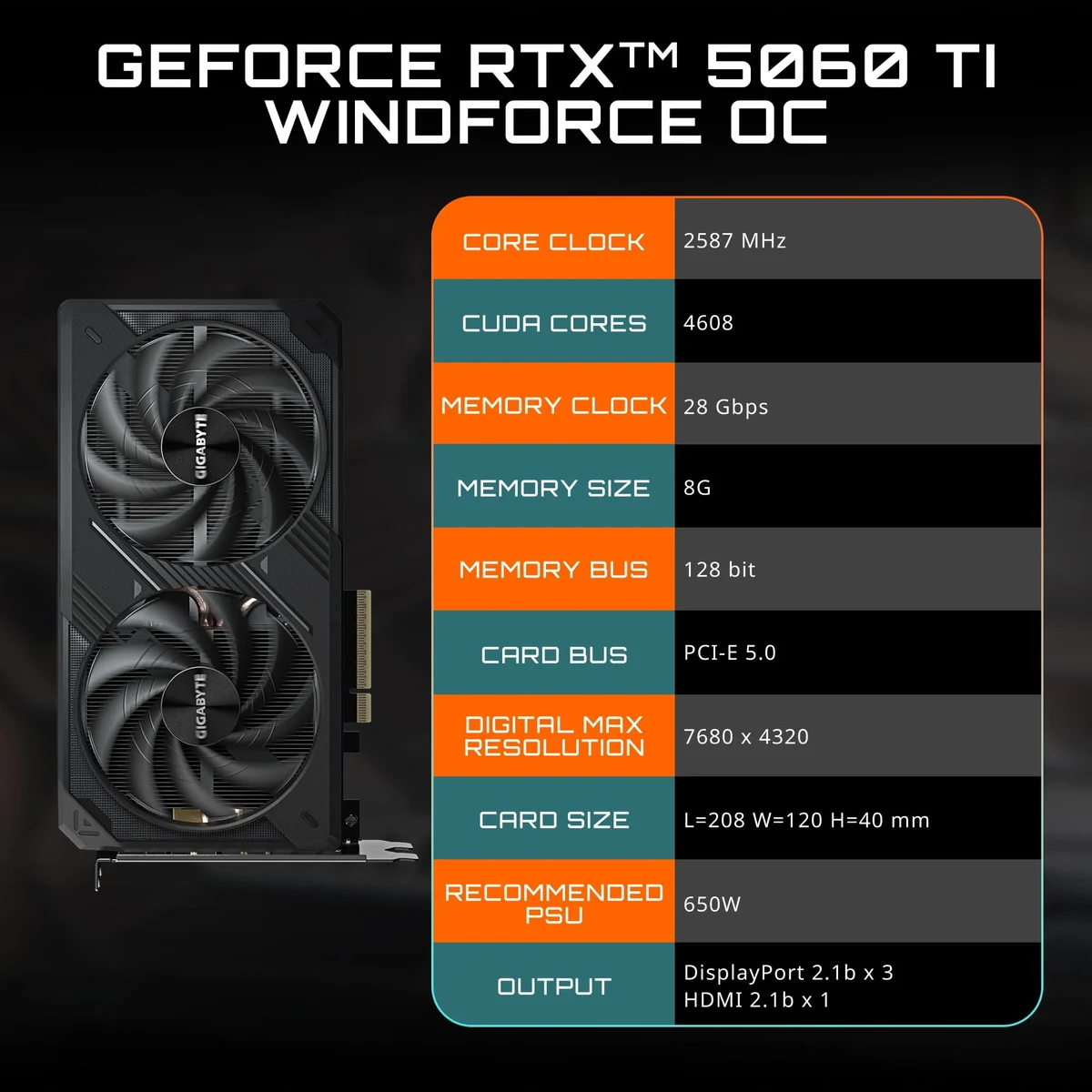
| Architecture | NVIDIA Blackwell (GB206) |
| CUDA Cores | 4608 |
| Memory | 8GB GDDR7 |
| Memory Interface | 128-bit |
| Memory Bandwidth | 448 GB/s |
| Boost Clock (OC Mode) | 2685 MHz |
| TGP | 160W |
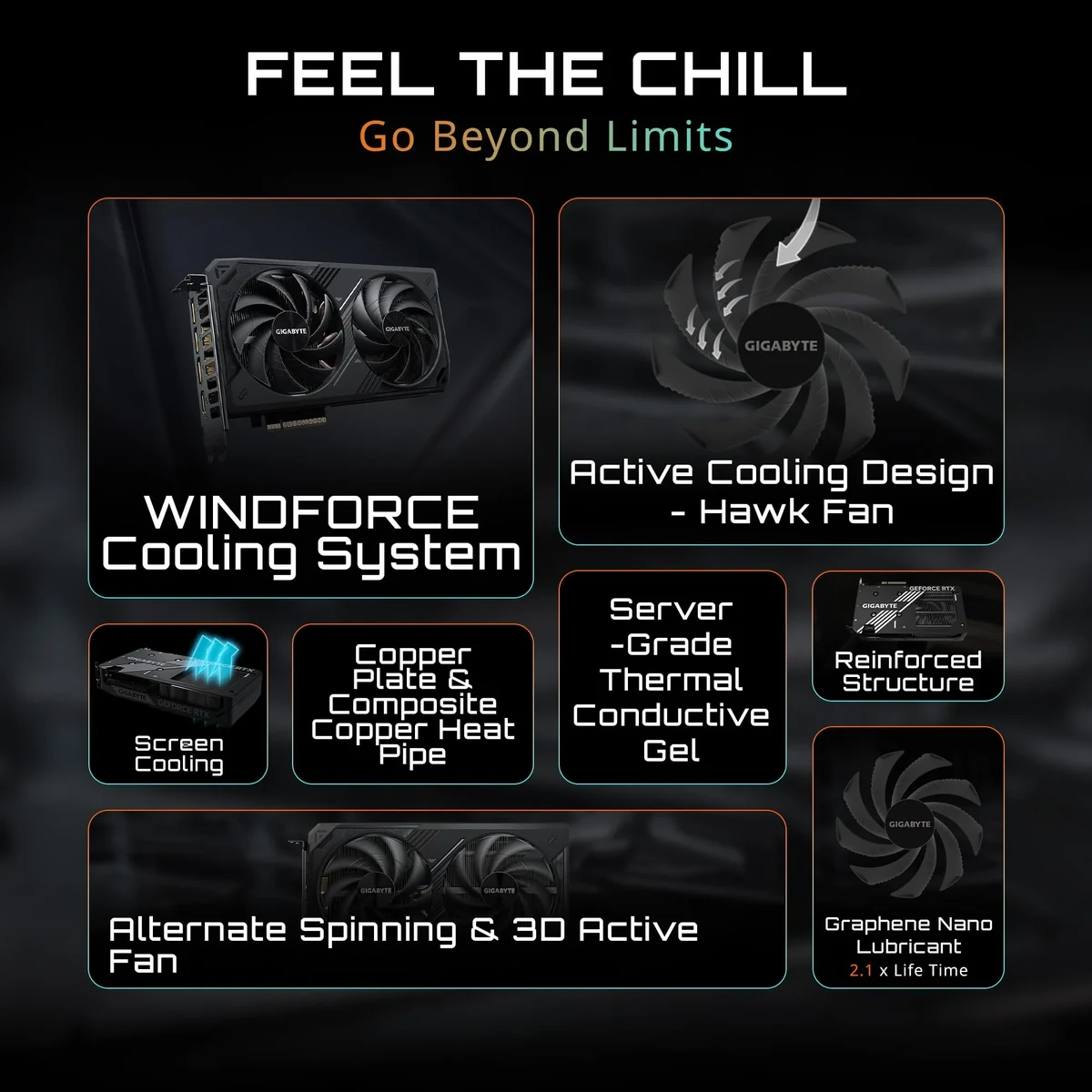
| Cooling | WINDFORCE 3X 90mm fans with alternate spinning |
| Dimensions | 265 x 115 x 42 mm (2.2-slot) |
| Outputs | 1x HDMI 2.1, 3x DisplayPort 2.1 |
| Recommended PSU | 550W |
Design & Build Quality
The Gigabyte GeForce RTX 5060 WINDFORCE OC 8G continues the brand’s tradition of clean, functional design with meaningful improvements for 2026. The triple 90mm WINDFORCE fans feature alternate spinning to reduce turbulence while maintaining high static pressure. A reinforced aluminum backplate not only adds structural rigidity but also assists with heat dissipation, keeping the compact 2.2-slot card remarkably cool even during extended sessions.
Build quality feels premium for a mid-range card. The matte black shroud with subtle blue accent lines gives it a professional appearance that fits both minimalist and RGB-heavy builds. At just 265mm long, it offers excellent case compatibility, making it an ideal upgrade path for users with smaller mid-tower chassis. Cable management is straightforward thanks to the single 8-pin power connector, and the overall fit and finish rival more expensive models from competing brands.
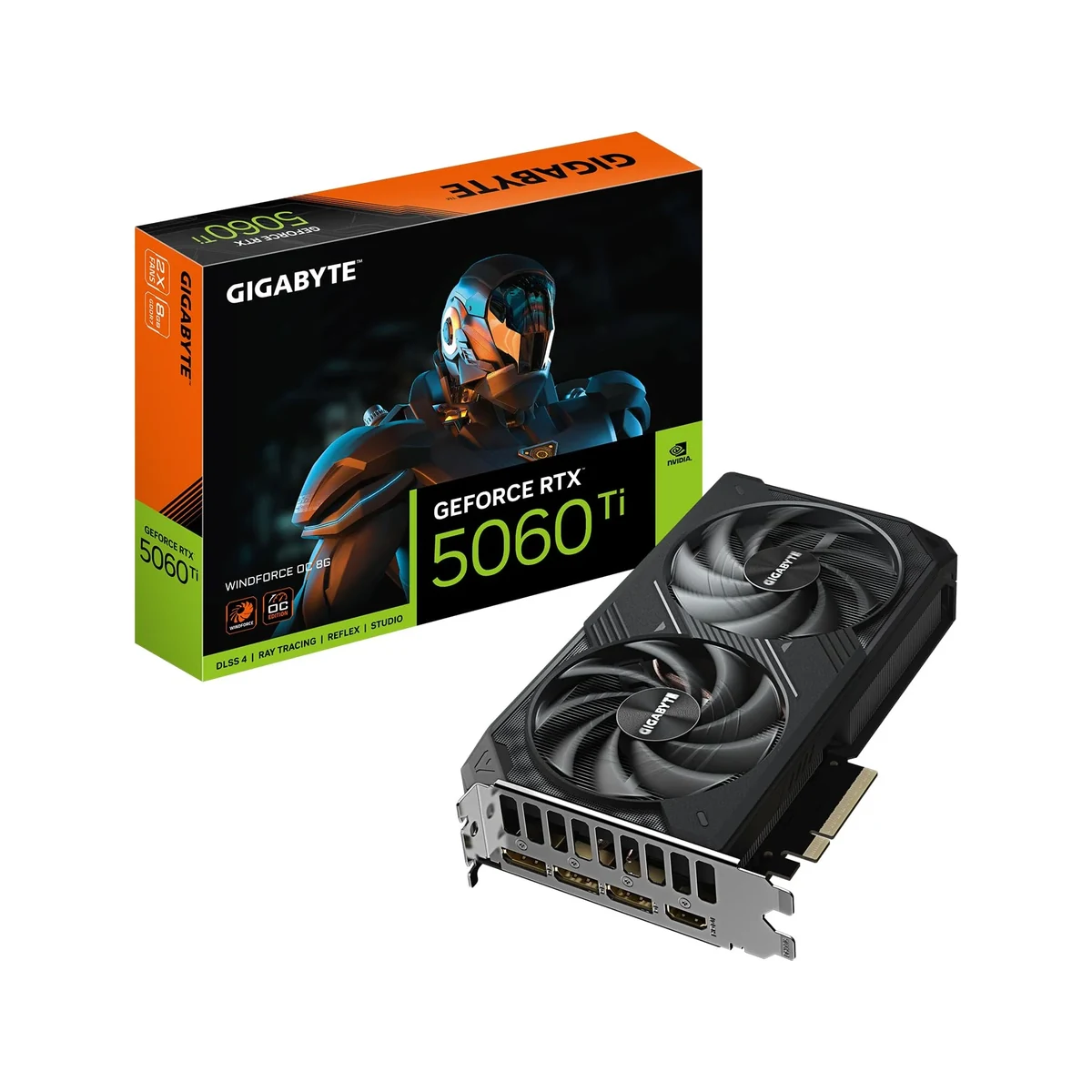
Thermals are where this card truly shines. Under load, GPU temperatures typically hover in the low 60s°C with fan noise remaining remarkably subdued. The vapor chamber-style heat pipes and dense fin array demonstrate Gigabyte’s engineering focus on efficiency, resulting in a card that runs quietly while still providing headroom for further manual overclocking.
Performance
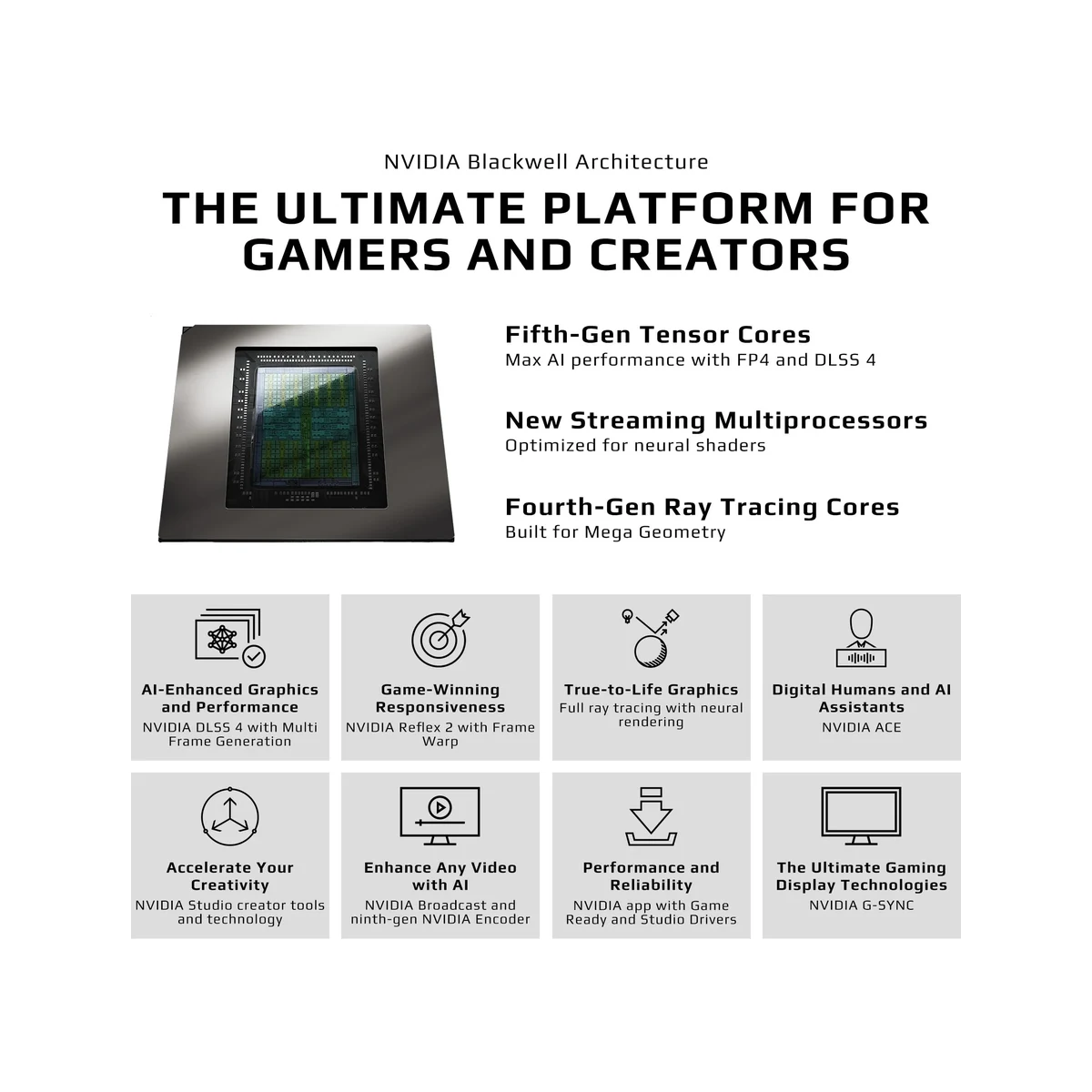
In real-world testing throughout early 2026, the RTX 5060 WINDFORCE OC 8G consistently delivers excellent 1440p performance with all ray tracing and upscaling features enabled. Titles like Cyberpunk 2077 with Path Tracing and DLSS 4 Quality mode achieve stable 85-95 FPS at 1440p, representing roughly a 55% uplift over the previous-generation RTX 4060. The combination of more CUDA cores, faster GDDR7 memory, and architectural improvements in the Blackwell RT cores makes high-visual-fidelity gaming feel fluid and responsive.
Synthetic benchmarks reflect these gains. In 3DMark Time Spy, the card scores approximately 18,400, while Port Royal ray tracing tests show strong efficiency improvements. Content creators benefit from accelerated AV1 encoding and improved CUDA performance, with DaVinci Resolve timeline scrubbing and export times notably faster than on equivalent Ampere or Ada cards. The 160W TGP allows the card to maintain boost clocks near its 2685 MHz OC rating even during sustained workloads.
Power efficiency stands out as one of the RTX 5060’s strongest attributes. Despite the performance increase, total system power draw remains reasonable, rarely exceeding 420W in a typical gaming PC. This makes the card particularly attractive for compact builds and users conscious of electricity costs and thermal output in their cases.
Features & Software
Standout features include full support for DLSS 4 with Multi Frame Generation, Reflex 2, and the latest NVIDIA Broadcast enhancements. The WINDFORCE OC variant ships with a healthy factory overclock, yet still leaves additional headroom through Gigabyte’s Control Center software. The intuitive interface allows easy monitoring of temperatures, fan curves, and one-click overclocking profiles without diving into complex BIOS settings.
NVIDIA’s updated App provides seamless driver management and game optimization, while the card’s DisplayPort 2.1 outputs ensure future compatibility with high-refresh 4K and ultrawide monitors. Hardware-accelerated ray tracing performance benefits significantly from Blackwell’s improved BVH traversal units, making path-traced scenes more playable than ever in the mid-range segment.
Value Proposition
At its launch price point, the Gigabyte RTX 5060 WINDFORCE OC 8G offers compelling price-to-performance for 1440p-focused gamers. It undercuts higher-tier RTX 5070 models while delivering the vast majority of the visual features and AI capabilities that make the Blackwell generation special. Compared to building with last-generation hardware, the efficiency gains and future-focused features provide better long-term value than simply purchasing a discounted RTX 4060 Ti.
The card’s modest power requirements also reduce overall system cost by allowing users to pair it with smaller PSUs and simpler cooling solutions. For enthusiasts who prioritize quiet operation, strong thermals, and reliable factory overclocking without paying premium AIB prices, this Gigabyte model represents one of the strongest value propositions in the current market.
How It Compares
Against the ASUS Dual RTX 5060, the Gigabyte WINDFORCE OC maintains lower temperatures by 6-8°C and runs noticeably quieter thanks to its larger and more sophisticated triple-fan cooler. While the ASUS model is slightly more compact, the Gigabyte’s superior thermal headroom translates to higher sustained boost clocks during long gaming sessions.
When compared to AMD’s Radeon RX 8060 8GB, the RTX 5060 wins in ray tracing and upscaling scenarios where DLSS 4 outperforms FSR 4. The AMD card holds a small advantage in pure rasterization at 1440p and offers slightly more VRAM bandwidth, but NVIDIA’s superior feature set, Reflex technology, and driver stability make the Gigabyte the better choice for most competitive and visually demanding gamers.
Pros and Cons
Pros
- Exceptional thermal performance with quiet WINDFORCE cooling solution.
- Strong 1440p performance with DLSS 4 and advanced ray tracing.
- Efficient 160W power draw benefits system thermals and electricity costs.
- Factory overclock delivers excellent out-of-box performance.
- Compact dimensions ensure wide case compatibility.
Cons
- 8GB VRAM may become limiting for certain titles and future 4K textures.
- Launch pricing sits higher than the previous generation’s equivalent models.
- Early supply constraints make finding stock at MSRP challenging.
- Lacks the dual BIOS switch found on some higher-end Gigabyte cards.
- Rasterization performance trails AMD’s competing Radeon RX 8060 in non-RT titles.
FAQ
Q: Is the Gigabyte RTX 5060 WINDFORCE OC 8G good for 1440p gaming?
A: Yes, it excels at 1440p, delivering high frame rates with ray tracing and DLSS 4 enabled in modern titles.
Q: How does the RTX 5060 compare to the RTX 4060?
A: The RTX 5060 offers approximately 50-60% better performance thanks to architectural improvements and faster memory.
Q: What power supply is recommended for this graphics card?
A: Gigabyte recommends a 550W PSU, though a high-quality 500W unit is sufficient for most gaming builds.
Q: Does the WINDFORCE cooler require RGB software?
A: No. While subtle lighting is present, the card functions fully without installing any additional software.
Q: Can the RTX 5060 handle 4K gaming?
A: It can manage 4K in less demanding titles or with aggressive upscaling, but it is primarily optimized for 1440p.
Verdict
The Gigabyte GeForce RTX 5060 WINDFORCE OC 8G is an outstanding choice for gamers building or upgrading 1440p systems in 2026. Its combination of strong performance, class-leading cooling, and efficient power consumption makes it one of the most well-rounded mid-range options available. Tech enthusiasts who value quiet operation and reliable factory tuning will find this card particularly appealing.
Pros
- ✓ Exceptional thermal performance with quiet WINDFORCE cooling solution.
- ✓ Strong 1440p performance with DLSS 4 and advanced ray tracing.
- ✓ Efficient 160W power draw benefits system thermals and electricity costs.
- ✓ Factory overclock delivers excellent out-of-box performance.
- ✓ Compact dimensions ensure wide case compatibility.
Cons
- ✗ 8GB VRAM may become limiting for certain titles and future 4K textures.
- ✗ Launch pricing sits higher than the previous generation’s equivalent models.
- ✗ Early supply constraints make finding stock at MSRP challenging.
- ✗ Lacks the dual BIOS switch found on some higher-end Gigabyte cards.
- ✗ Rasterization performance trails AMD’s competing Radeon RX 8060 in non-RT titles.
Where to Buy the Gigabyte GeForce RTX 5060 WINDFORCE OC 8G





Prices may vary. Affiliate links — we may earn a commission at no extra cost to you.
Related Reviews

Affiliate links — we may earn a commission at no extra cost to you.