




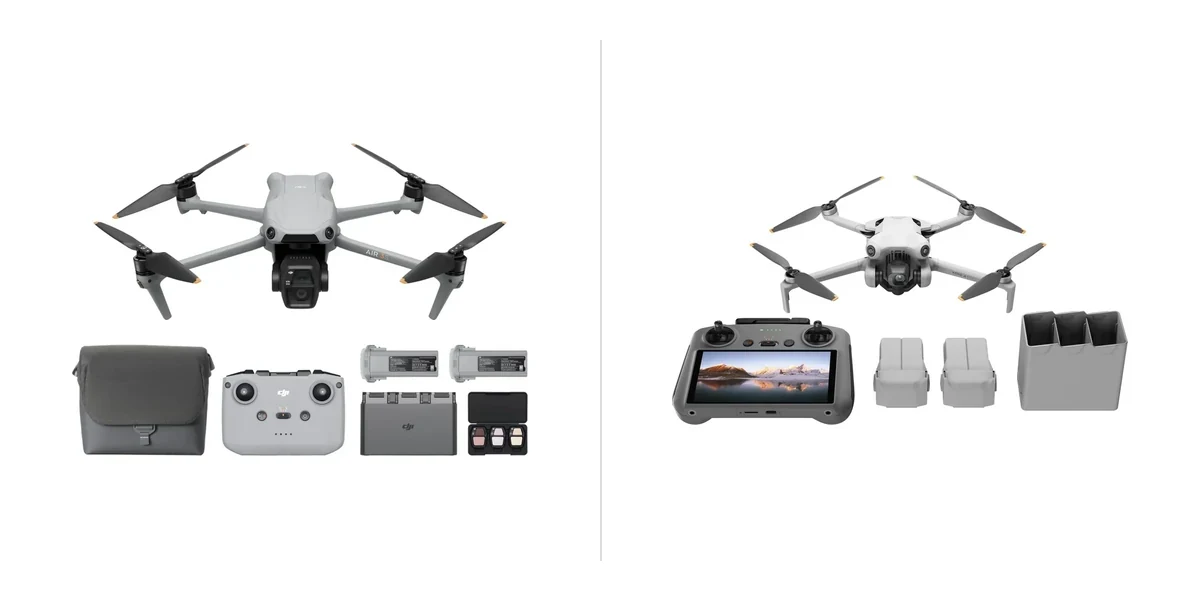
In the evolving drone landscape of 2026, choosing between the DJI Air 3S and DJI Mini 4 Pro depends on your priorities for image quality, portability, and regulatory compliance. The Air 3S offers premium features like a 1-inch sensor and extended flight time, while the Mini 4 Pro excels in being lightweight and accessible. This head-to-head looks at how these two popular DJI drones compare across key categories.
At a Glance
| Feature | DJI Air 3S | DJI Mini 4 Pro |
|---|---|---|
| Price | $1249 | $985 |
| Overall Score | 91/100 | 90/100 |
| Best For | Serious creators needing zoom and endurance | Users prioritizing portability and no registration |
| Max Flight Time | 48 minutes | 34 minutes |
| Obstacle Avoidance | Omnidirectional with APAS 6.0 | True omnidirectional |
| Camera Highlights | 1-inch sensor with 3x optical zoom | 4K/60fps with excellent dynamic range |
| Weight | 724g (requires registration) | Under 249g (no registration) |
Design and Build
The DJI Air 3S features a more substantial build at 724g that accommodates its dual-camera system and larger 1-inch sensor. This design delivers superior image quality and stability for complex flight paths but brings additional administrative requirements since it must be registered in most regions.
By contrast, the DJI Mini 4 Pro prioritizes a compact, lightweight construction that stays under 249g. This approach eliminates registration hassles in most countries and improves portability for travel, though it forgoes the advanced zoom hardware found on larger models like the Air 3S. Both reflect DJI’s refined engineering and quality materials.
Performance and Features
The DJI Air 3S stands out with its 1-inch sensor that produces exceptional image quality, outstanding dynamic range, and superior low-light performance. Its 48-minute maximum flight time supports genuinely productive sessions with fewer battery swaps, while omnidirectional obstacle avoidance with APAS 6.0 delivers industry-leading safety. The dual camera system with 3x optical zoom adds remarkable creative flexibility. As covered in our full review of the DJI Air 3S, the refined DJI Fly app and regular firmware updates keep the drone improving over time.
The DJI Mini 4 Pro delivers stunning 4K/60fps footage with excellent dynamic range and low-light performance of its own, backed by true omnidirectional obstacle avoidance that boosts pilot confidence. Its 34-minute flight time remains practical for extended sessions, and the intelligent flight modes integrate seamlessly with the DJI ecosystem. However, performance drops noticeably in extremely cold temperatures, and the DJI Fly app can still experience occasional connectivity hiccups.
Both drones lack built-in storage, so users must always carry high-speed microSD cards. The Air 3S presents a steeper learning curve for those moving up from basic models, while the Mini 4 Pro lacks the advanced zoom capabilities of larger drones. Our full review of the DJI Mini 4 Pro explores these nuances in depth.
Pricing and Value
Priced at $1249, the DJI Air 3S sits at a clear premium that places it beyond casual users or beginners. However, the exceptional image quality, 48-minute flight time, and 3x optical zoom deliver tangible productivity gains that can justify the cost for dedicated creators who need its advanced capabilities and industry-leading safety systems.
At $985, the DJI Mini 4 Pro offers stronger value for a broader audience. Its sub-249g weight removes registration barriers, and the 34-minute flight time with excellent 4K footage provides most of the essential performance at a lower entry point. While both carry premium pricing, the Mini 4 Pro edges ahead on accessibility and overall value for travelers and hobbyists, whereas the Air 3S rewards those who can utilize its extra features enough to offset the $264 price difference.
Pros and Cons
DJI Air 3S
Pros:
– The 1-inch sensor produces exceptional image quality with outstanding dynamic range and low-light performance.
– 48-minute maximum flight time translates to genuinely productive shooting sessions with fewer battery swaps.
– Omnidirectional obstacle avoidance with APAS 6.0 provides industry-leading safety for complex flight paths.
– Dual camera system with 3x optical zoom offers remarkable creative flexibility without changing drones.
Cons:
– At 724g, the Air 3S requires registration in most regions, creating additional administrative requirements for owners.
– The premium price positions it beyond the reach of casual users or those just beginning aerial photography.
– Battery charging takes approximately 90 minutes with the included charger, which feels slow compared to competitors.
– Lack of built-in storage means users must always carry high-speed microSD cards for every shoot.
– The advanced feature set presents a steeper learning curve for users transitioning from basic consumer drones.
DJI Mini 4 Pro
Pros:
– Delivers stunning 4K/60fps footage with excellent dynamic range and low-light performance.
– True omnidirectional obstacle avoidance significantly improves flight safety and confidence.
– Impressive 34-minute flight time makes it practical for extended shooting sessions.
– Remains under 249g, avoiding registration requirements in most countries.
– Refined intelligent flight modes and industry-leading DJI ecosystem enhance creativity.
Cons:
– Premium pricing positions it beyond the reach of many casual users and beginners.
– No internal storage means users must purchase and install a microSD card separately.
– Performance in extremely cold temperatures drops noticeably, limiting winter shooting.
– The DJI Fly app, while improved, can still present occasional connectivity hiccups.
– Lacks the 8K resolution and advanced zoom capabilities found on larger DJI models.
Who Should Buy Which
The DJI Air 3S is the better choice for experienced aerial photographers and videographers who value maximum image quality, extended flight endurance, and creative options like 3x optical zoom. These users are willing to handle registration requirements and invest the additional money for a drone that supports complex, professional-level workflows and continues to improve through firmware updates.
The DJI Mini 4 Pro suits travelers, hobbyists, and beginners who prioritize portability and regulatory simplicity. Its lightweight design eliminates registration hassles in most countries while still delivering excellent 4K footage, strong safety features, and refined intelligent modes that make creative aerial shooting accessible without the steeper learning curve or higher price of larger models.
Verdict
The DJI Air 3S wins this 2026 head-to-head with its 91/100 overall score versus the Mini 4 Pro’s 90/100, thanks to superior low-light performance from the 1-inch sensor, nearly 50% more flight time, and the versatile dual-camera system with 3x optical zoom. These advantages make it the more productive and creatively flexible tool for serious users despite the registration requirement and higher $1249 price. That said, the DJI Mini 4 Pro remains an outstanding drone that delivers exceptional value at $985 for anyone who needs to stay under the 249g limit. Choose based on whether your workflow benefits more from the Air 3S’s capabilities or the Mini 4 Pro’s portability.