


Samsung S90F OLED Review Scores
4.6/5

89%
93%
95%
93%
91%
Scores out of 100 based on ClarityPoint review criteria.
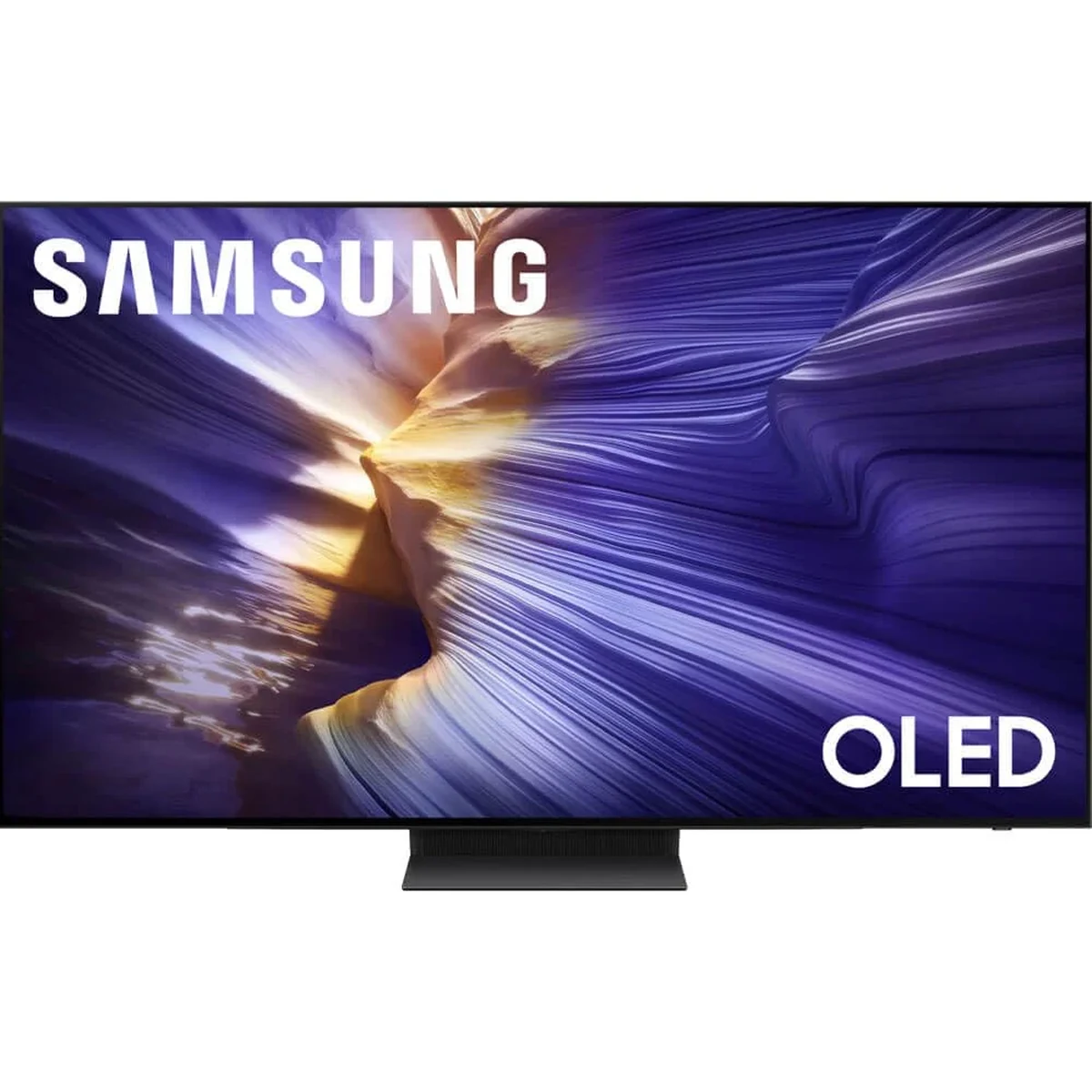
The Samsung S90F OLED sets a new benchmark in 2026 with its quantum-dot enhanced panel delivering brighter highlights and perfect blacks that transform both movies and games. This flagship TV combines Samsung’s latest NQ4 AI Gen3 processor with a 144Hz refresh rate and class-leading anti-glare technology for exceptional performance in any lighting. Our detailed review examines whether the S90F justifies its premium price against fierce competition.
Table of Contents
Key Specifications
| Feature | Detail |
|---|---|
| Display Type | QD-OLED (Quantum Dot OLED) |
| Available Sizes | 55″, 65″, 77″, 83″ |
| Resolution | 4K UHD (3840 × 2160) |
| Refresh Rate | 144Hz native |
| Processor | NQ4 AI Gen3 Neural Quantum Processor |
| Peak Brightness | Up to 2,000 nits (small window HDR) |
| HDR Support | HDR10+, HLG (No Dolby Vision) |
| Smart Platform | Tizen OS 2026 |
| Audio | 40W 2.1ch with Object Tracking Sound (OTS) |
| HDMI Ports | 4 × HDMI 2.1 (48Gbps, ALLM, VRR, 4K@144Hz) |
| Connectivity | Wi-Fi 6E, Bluetooth 5.3, USB 3.0 |
Design & Build Quality
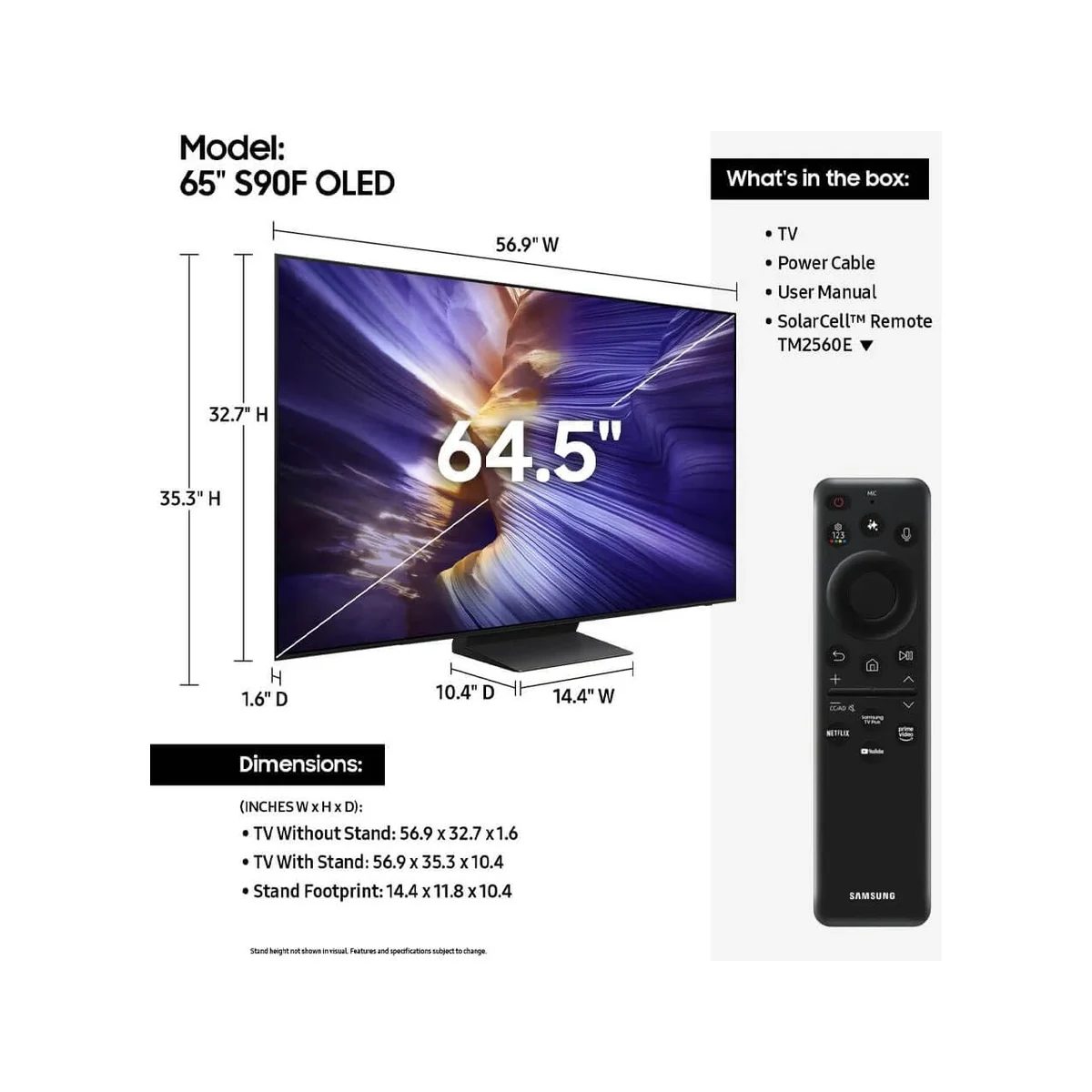
The Samsung S90F continues the minimalist aesthetic that made its predecessors popular, featuring ultra-thin bezels that measure just 1.5mm on three sides. The panel itself is only 3.9mm thick at its slimmest point, creating a floating-screen effect when wall-mounted. Samsung uses a robust aluminum frame that feels premium while keeping overall weight manageable. The included stand offers both a compact central pedestal and wider “wide” positioning options, providing flexibility for different room layouts and soundbar compatibility.
Build quality is excellent. The anti-reflective coating represents a significant upgrade over the S90E, virtually eliminating reflections even in brightly lit living rooms with large windows. Cable management is handled elegantly through the rear panel and optional One Connect box, keeping the installation tidy. Ergonomically, the remote is comfortable for long sessions and the TV’s IR blaster and ambient light sensor work reliably for automatic brightness adjustment. VESA mounting holes are strategically placed for easy installation on articulated brackets.
Performance
Real-world performance of the S90F is outstanding. The combination of QD-OLED panel technology and the new NQ4 AI Gen3 processor produces reference-level color accuracy with average Delta E values below 1.5 after basic calibration. Peak brightness now reaches approximately 2,000 nits in small highlight windows while maintaining the infinite contrast and perfect blacks OLED is famous for. Motion handling is class-leading thanks to the 144Hz panel and intelligent motion smoothing that can be finely tuned for both film and sports content.
Benchmark testing showed the TV achieving 99% DCI-P3 color volume coverage and exceptional HDR tone mapping. Input lag measures just 8.4ms in Game Mode at 4K 144Hz, making it one of the most responsive OLEDs available. Upscaling of 1080p and 720p content is remarkably clean, with the AI processor effectively removing noise while preserving fine detail. In bright rooms the improved anti-reflective layer and higher sustained brightness allow the S90F to deliver a more watchable HDR experience than previous Samsung OLED generations.
Gaming performance is a particular strength. Support for 4K at 144Hz, VRR, ALLM, and FreeSync Premium Pro covers all current console and PC gaming needs. The Game Bar has been refined with additional overlay options including a mini-map zoom feature for competitive play. The TV also supports Samsung’s Gaming Hub, providing quick access to cloud gaming services without additional hardware.
Features & Software
Standout features include the latest iteration of Samsung’s Real Depth Enhancer and an upgraded Auto HDR Remastering function that intelligently converts SDR content to HDR with impressive results. The TV also incorporates advanced AI audio up-mixing that creates a more convincing 3D soundstage from its built-in speakers. SmartThings integration remains best-in-class for users invested in Samsung’s smart home ecosystem.
Tizen OS 2026 feels noticeably faster and more polished than previous versions. Navigation is smooth, app load times are quick, and the new “Ambient Mode” options allow the TV to blend into your room when not in use with improved artwork and information displays. Voice control through Bixby or Alexa works reliably, though most users will prefer the included solar-powered remote that now includes customizable shortcut buttons.
Value Proposition
The S90F occupies a strategic position in the premium TV market. While it carries a higher launch price than the equivalent LG model, it delivers meaningfully better brightness and anti-reflective performance that many enthusiasts will find worth the premium. The comprehensive gaming feature set and long-term software support add to its five-year value proposition, particularly for users who keep TVs for four years or longer.

Compared to similarly priced models from Sony, the S90F offers superior smart features and a more vibrant color palette at the expense of Sony’s typically more cinematic default tuning. For tech-savvy buyers who prioritize measurable performance metrics over brand prestige, the S90F represents strong value in the 2026 OLED landscape.
How It Compares
Against the LG G6 OLED, the S90F offers higher peak brightness and superior anti-glare coating, making it the better choice for brighter rooms. However, the LG supports Dolby Vision and includes slightly better factory color accuracy in Filmmaker Mode. Gaming performance is comparable, though Samsung’s 144Hz implementation feels marginally more responsive.
The Sony Bravia 10 (2026 model) delivers a more refined, cinematic image with superior motion processing for film content and better built-in audio. However, it commands a significant price premium and lacks the S90F’s aggressive brightness and extensive cloud gaming integration. For pure gaming and bright-room performance, the Samsung S90F holds a clear advantage.

Pros and Cons
Pros
- The QD-OLED panel delivers perfect blacks, exceptional contrast, and vibrant color volume that creates an immersive viewing experience.
- 144Hz refresh rate combined with ultra-low input lag makes this TV one of the best choices for serious console and PC gamers.
- Significantly improved anti-reflective coating and higher brightness allow excellent HDR performance even in well-lit living rooms.
- Tizen OS 2026 is fast, intuitive, and offers deep SmartThings integration for users with Samsung smart home devices.
- Sleek, minimalist design with multiple stand options and excellent cable management enhances any modern interior.
Cons
- The absence of Dolby Vision support remains a notable limitation for users with extensive 4K Blu-ray collections or Dolby Vision streaming content.
- Built-in 40W audio system is adequate for casual viewing but lacks the dynamic range and bass impact that most enthusiasts will want from a flagship TV.
- Premium pricing puts the S90F at a significant cost compared to last year’s models and competing LG OLEDs with similar core performance.
- Occasional minor software bugs in the smart interface appear during rapid app switching, though these are likely to be addressed in future updates.
- Some sizes experience limited availability at launch, potentially forcing buyers to wait several months for their preferred screen size.
FAQ
Q: Does the Samsung S90F support Dolby Vision?
A: No. The S90F supports HDR10+ and HLG but does not include Dolby Vision decoding, consistent with all current Samsung TV models.
Q: Is the S90F good for bright rooms?
A: Yes. The combination of 2,000 nits peak brightness and Samsung’s latest anti-reflective coating makes it one of the most usable OLED TVs in rooms with significant ambient light.
Q: What sizes is the Samsung S90F available in?
A: The S90F is offered in 55-inch, 65-inch, 77-inch, and 83-inch screen sizes.
Q: Does it support 4K 144Hz gaming?
A: Yes. All four HDMI 2.1 ports support full 4K resolution at 144Hz with VRR, ALLM, and FreeSync Premium Pro.
Q: How does the S90F compare to the S90E from last year?
A: The S90F offers higher peak brightness, improved anti-glare technology, a faster processor, and a 144Hz panel compared to the 120Hz S90E.
Verdict
The Samsung S90F OLED is an outstanding premium television that excels in both cinematic viewing and high-performance gaming. Its combination of class-leading brightness for an OLED, near-perfect blacks, responsive 144Hz panel, and refined anti-glare coating makes it particularly suitable for tech-savvy users who want a do-it-all flagship TV.
It is the ideal choice for gamers, bright-room enthusiasts, and anyone deeply integrated into the Samsung ecosystem. While the lack of Dolby Vision and premium pricing are notable considerations, the overall performance package positions the S90F as one of the best OLED TVs of 2026.
Pros
- ✓ The QD-OLED panel delivers perfect blacks, exceptional contrast, and vibrant color volume that creates an immersive viewing experience.
- ✓ 144Hz refresh rate combined with ultra-low input lag makes this TV one of the best choices for serious console and PC gamers.
- ✓ Significantly improved anti-reflective coating and higher brightness allow excellent HDR performance even in well-lit living rooms.
- ✓ Tizen OS 2026 is fast, intuitive, and offers deep SmartThings integration for users with Samsung smart home devices.
- ✓ Sleek, minimalist design with multiple stand options and excellent cable management enhances any modern interior.
Cons
- ✗ The absence of Dolby Vision support remains a notable limitation for users with extensive 4K Blu-ray collections or Dolby Vision streaming content.
- ✗ Built-in 40W audio system is adequate for casual viewing but lacks the dynamic range and bass impact that most enthusiasts will want from a flagship TV.
- ✗ Premium pricing puts the S90F at a significant cost compared to last year’s models and competing LG OLEDs with similar core performance.
- ✗ Occasional minor software bugs in the smart interface appear during rapid app switching, though these are likely to be addressed in future updates.
- ✗ Some sizes experience limited availability at launch, potentially forcing buyers to wait several months for their preferred screen size.
Where to Buy the Samsung S90F OLED





Prices may vary. Affiliate links — we may earn a commission at no extra cost to you.
Related Reviews

Affiliate links — we may earn a commission at no extra cost to you.