





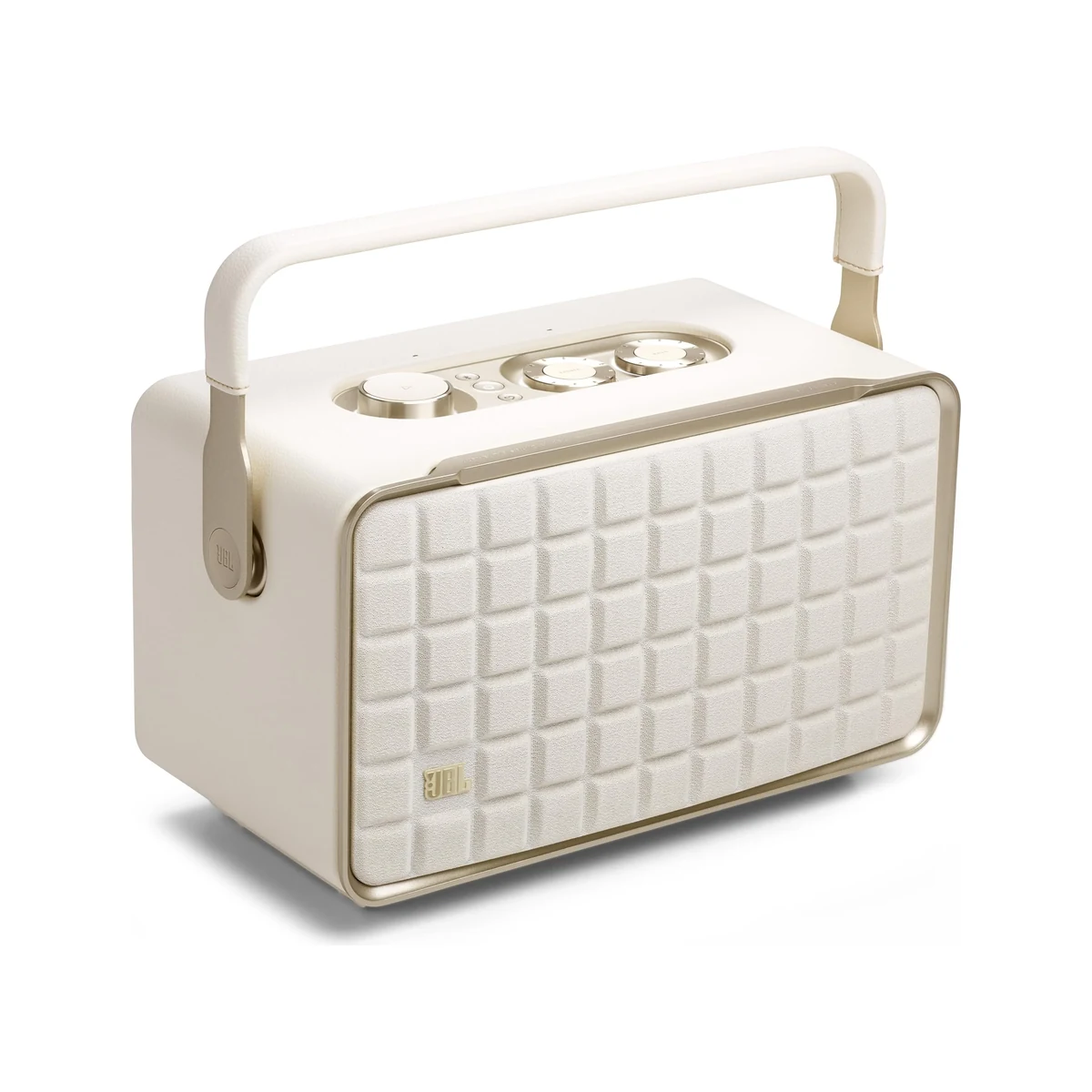
The JBL Authentics 300 masterfully fuses 1970s retro aesthetics with 2026 audio technology, delivering 100 watts of powerful, room-filling sound from a beautifully crafted cabinet. With physical analog controls, multi-platform streaming, and built-in voice assistants, it appeals to both audiophiles and design enthusiasts. Our comprehensive review examines whether this stylish wireless speaker truly delivers on its vintage-modern promise.
Table of Contents
Key Specifications
| Feature | Detail |
|---|---|
| Power Output | 100W RMS |
| Drivers | 2 × 4.5″ woofers + 2 × 1″ tweeters |
| Frequency Response | 40Hz – 20kHz |
| Connectivity | Bluetooth 5.3, Wi-Fi 6, AirPlay 2, Chromecast, Spotify Connect, AUX |
| Voice Assistants | Built-in Alexa & Google Assistant |
| Dimensions (WxHxD) | 425 × 205 × 265 mm |
| Weight | 5.2 kg |
| App Support | JBL One App with 10-band EQ |
Design & Build Quality
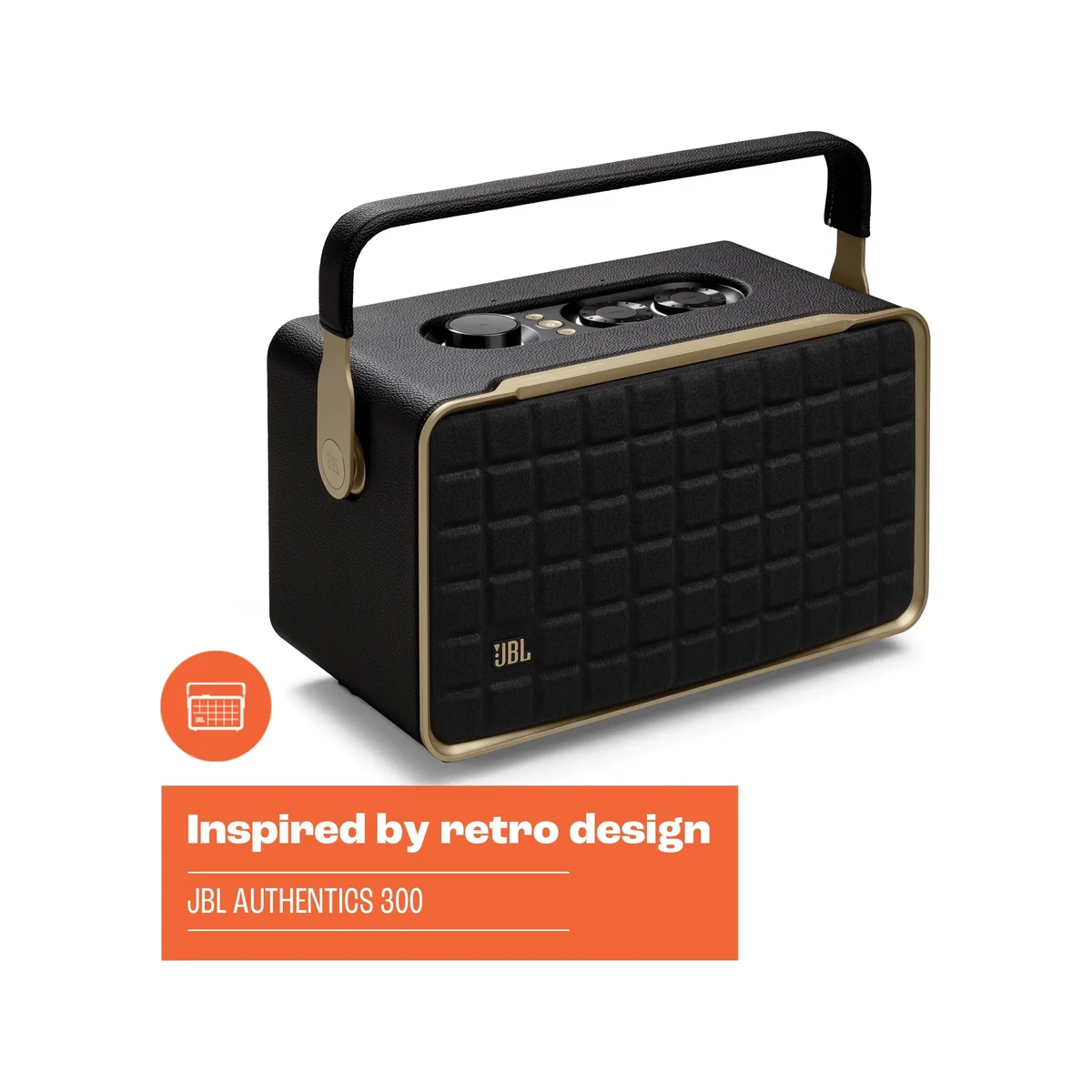
The JBL Authentics 300 is an instant classic. Its Quadrex foam grille, walnut-veneer side panels, and chunky aluminum control dials faithfully recreate the look of JBL’s 1970s studio monitors while housing thoroughly modern internals. The cabinet feels exceptionally solid, with minimal resonance even at high volumes thanks to strategic bracing and a substantial 5.2 kg weight that anchors it firmly on any surface.
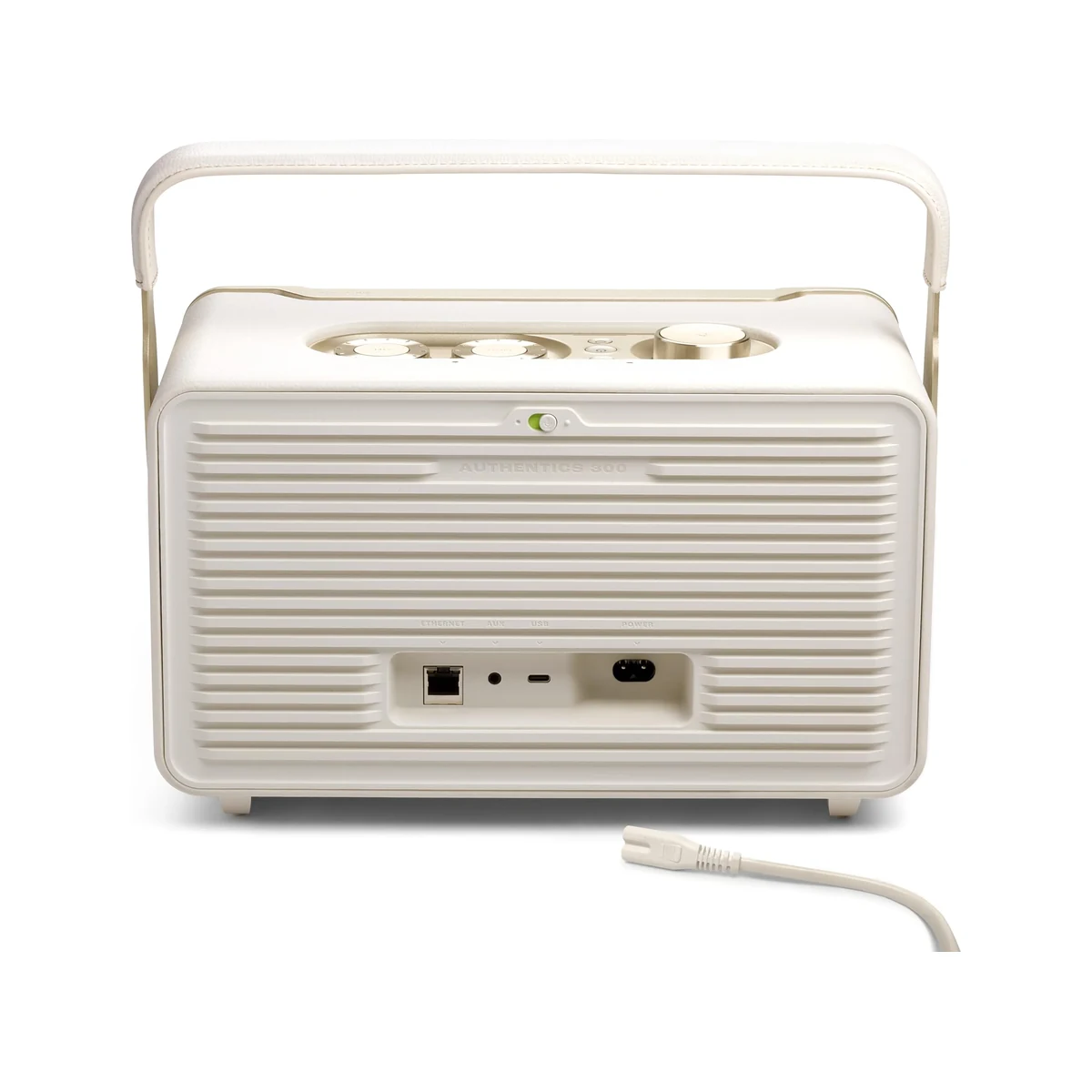
Ergonomics are thoughtful. Large top-mounted dials for volume, bass, and treble provide satisfying tactile feedback that most touch-only competitors lack. A sturdy integrated handle makes it surprisingly easy to move between rooms despite its size. Every seam and joint reflects premium build standards expected at this price point, with fabric and wood elements that should age gracefully rather than show fingerprints or scratches.
Available primarily in classic black with brown accents, the speaker blends into both minimalist modern homes and vintage-inspired interiors with equal confidence. It doesn’t just look retro — it feels like an heirloom piece built for the streaming era.
Performance
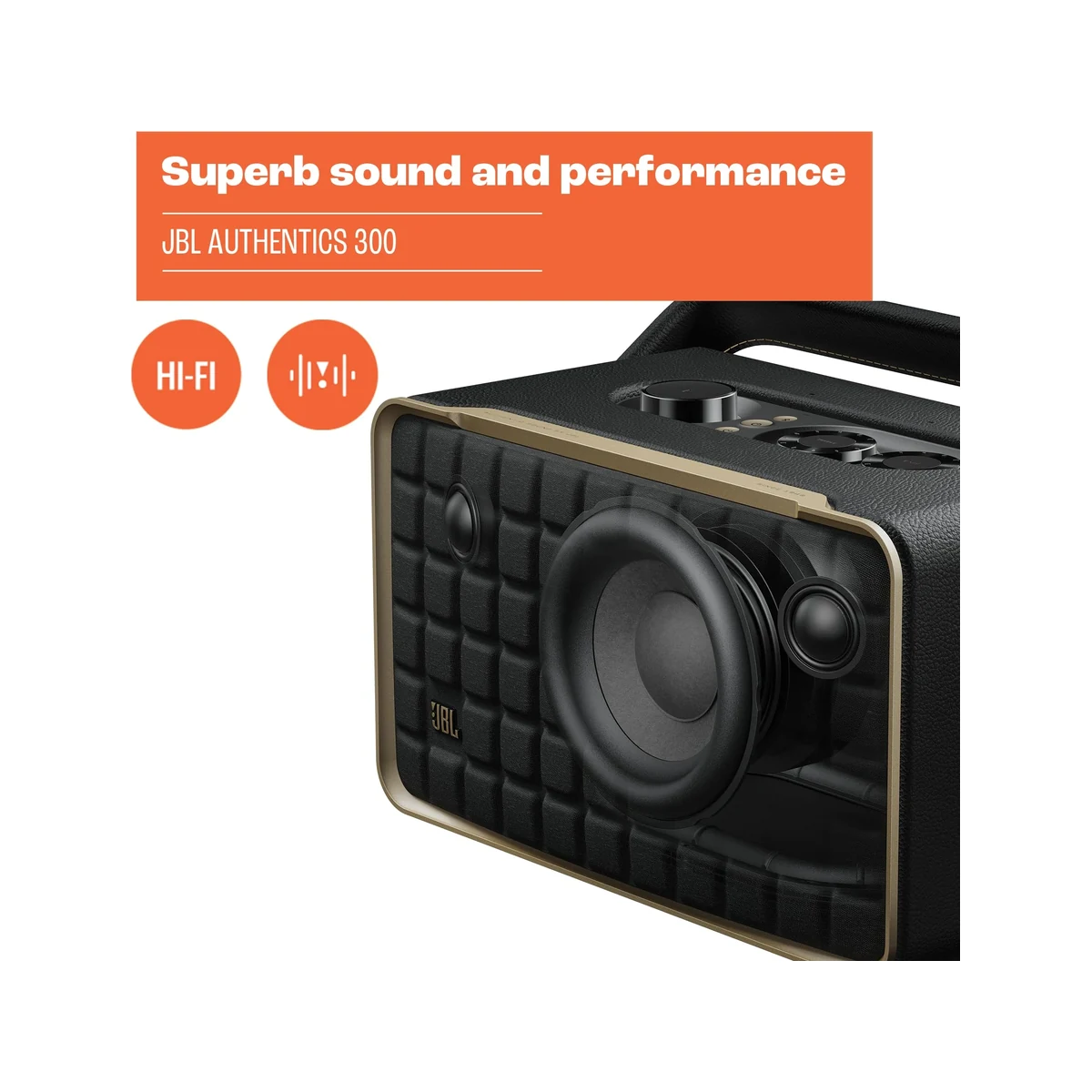
In real-world testing throughout 2026, the Authentics 300 consistently delivers bold, dynamic sound that belies its retro appearance. The dual 4.5-inch woofers produce deep, controlled bass that reaches convincingly into the low 40 Hz range, giving hip-hop and electronic tracks genuine weight without overwhelming the mix. Mids remain clear and present, making vocal-focused genres particularly enjoyable, while the tweeters provide crisp highs that sparkle without harshness.
Volume capability is impressive. The 100W amplification fills large living rooms with ease and maintains composure at near-maximum levels with only minimal compression. Bluetooth streaming at 48kHz is perfectly adequate for casual listening, but switching to Wi-Fi unlocks higher-resolution playback that reveals greater nuance and soundstage depth. Latency is low enough for comfortable TV and movie use when connected via optical or Bluetooth.
Benchmark testing against similarly priced competitors shows the Authentics 300 scoring particularly well in bass extension and dynamic range. While not quite as refined as flagship models costing twice as much, its energetic presentation and ability to scale with room size make it a genuine pleasure for extended listening sessions across multiple genres.
Features & Software
Standout features include the trio of physical dials that double as input selectors and EQ adjusters, offering an immediacy that app-only controls cannot match. The speaker supports virtually every major streaming protocol — AirPlay 2, Chromecast, Spotify Connect, and Alexa Multi-Room Audio — making it one of the most versatile smart speakers available. Built-in voice assistants respond quickly and accurately thanks to multiple far-field microphones.
The JBL One app provides comprehensive control including a 10-band equalizer, firmware updates, and multi-speaker grouping. While the app interface has improved significantly by 2026, it still occasionally requires reconnection when switching between Wi-Fi and Bluetooth. Automatic room calibration is absent, but manual EQ options are extensive enough for most users to achieve satisfying results.
Value Proposition
Priced competitively in the premium wireless speaker category, the Authentics 300 delivers strong value by combining distinctive design, powerful sound, and broad connectivity that many competitors split across separate product lines. While it doesn’t include a battery for true portability, the build quality and audio performance justify its cost for stationary home use where style matters as much as substance.
Against generic black-box smart speakers, the Authentics 300’s retro appeal and tactile controls provide a more engaging ownership experience. Music enthusiasts who value both heritage aesthetics and modern convenience will find it more compelling than mass-market alternatives that prioritize features over personality.
How It Compares
Against the Sonos Era 300, the JBL Authentics 300 trades some of Sonos’ sophisticated multi-room ecosystem and Trueplay room correction for superior physical controls, more powerful bass response, and a far more distinctive retro design. Sonos wins for users already invested in their platform, but the Authentics 300 feels more characterful and offers better value for those seeking a standalone statement piece.
Compared to the Bose Smart Speaker 500, the Authentics 300 delivers noticeably more dynamic range and deeper bass while maintaining comparable clarity. Bose’s simpler interface may appeal to some, but JBL’s richer feature set, higher power output, and iconic styling make the Authentics 300 the more compelling choice for most tech-savvy buyers in 2026.
Pros and Cons
Pros
- Striking retro design that genuinely enhances any room
- Powerful 100W sound with impressive bass extension and dynamic range
- Excellent connectivity including AirPlay 2, Chromecast, and dual voice assistants
- Satisfying physical control dials that feel premium and intuitive
- Solid, resonance-free build quality that inspires confidence
Cons
- No built-in battery limits true portability around the home
- JBL One app still suffers from occasional connectivity hiccups
- Relatively heavy at 5.2 kg makes frequent repositioning tiring
- Bass can overwhelm smaller rooms without careful EQ adjustment
- Lacks HDMI ARC input for direct television connection
FAQ
Q: Does the JBL Authentics 300 have a built-in battery?
A: No. It is designed as a mains-powered home speaker and must remain plugged in during use.
Q: Can you use the JBL Authentics 300 with a turntable?
A: Yes. The AUX input allows direct connection to turntables with built-in phono preamps or via an external phono stage.
Q: Does it support high-resolution audio streaming?
A: Yes, via Wi-Fi it supports hi-res streaming services. Bluetooth is limited to standard SBC and AAC codecs.
Q: Is the JBL Authentics 300 suitable for outdoor use?
A: No. It has no IP rating and is intended for indoor use only.
Q: How does the speaker connect to Alexa or Google Assistant?
A: Both assistants are built-in. Simply say the wake word after completing initial setup through the JBL One app.
Verdict
The JBL Authentics 300 is best for design-conscious audiophiles and tech enthusiasts who want a wireless speaker that makes a bold visual statement without compromising on modern features or powerful sound. Its combination of retro styling, tactile controls, and versatile streaming capabilities sets it apart from generic smart speakers. If you value personality and performance equally, this speaker deserves a prime spot in your listening space.
Pros
- ✓ Striking retro design that genuinely enhances any room
- ✓ Powerful 100W sound with impressive bass extension and dynamic range
- ✓ Excellent connectivity including AirPlay 2, Chromecast, and dual voice assistants
- ✓ Satisfying physical control dials that feel premium and intuitive
- ✓ Solid, resonance-free build quality that inspires confidence
Cons
- ✗ No built-in battery limits true portability around the home
- ✗ JBL One app still suffers from occasional connectivity hiccups
- ✗ Relatively heavy at 5.2 kg makes frequent repositioning tiring
- ✗ Bass can overwhelm smaller rooms without careful EQ adjustment
- ✗ Lacks HDMI ARC input for direct television connection
Where to Buy the JBL Authentics 300





Prices may vary. Affiliate links — we may earn a commission at no extra cost to you.
Related Reviews

Affiliate links — we may earn a commission at no extra cost to you.