





The Klipsch The Sevens II deliver a masterful fusion of 1950s-inspired design and 2026 audio engineering, offering horn-loaded dynamics that bring recordings to life with remarkable clarity and impact. These powered bookshelf speakers combine premium build quality, extensive connectivity, and room-filling sound that outperforms many traditional hi-fi separates. Our detailed review examines whether they remain the benchmark for stylish, high-performance active speakers.
Table of Contents
Key Specifications
| Feature | Detail |
|---|---|
| Type | Active 2-Way Bookshelf Speakers |
| Tweeter | 1″ Titanium Dome with Tractrix Horn |
| Woofer | 6.5″ Cerametallic Cone |
| Amplification | 200W Total RMS (Class D) |
| Frequency Response | 34Hz – 20kHz (±3dB) |
| Max SPL | 112 dB |
| Connectivity | HDMI ARC, Optical, RCA/Phono, USB-C, Bluetooth 5.3, WiFi 6 |
| Streaming | AirPlay 2, Chromecast, Spotify Connect, TIDAL Connect, Roon Ready |
| Dimensions (each) | 16.5″ H x 8.0″ W x 10.5″ D |
| Weight (each) | 21 lbs (9.5 kg) |
| Finishes | Matte Black, American Walnut |
Design & Build Quality
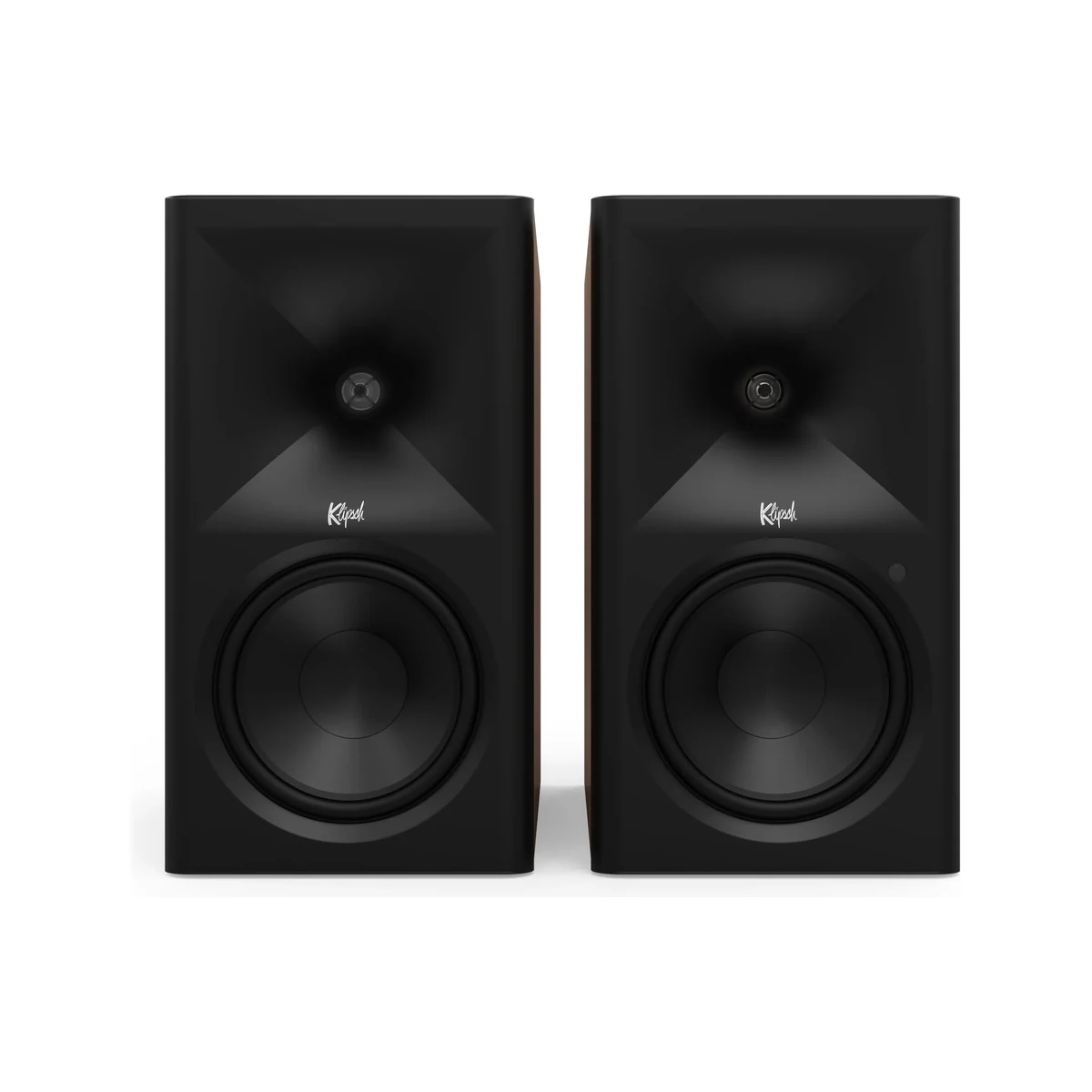
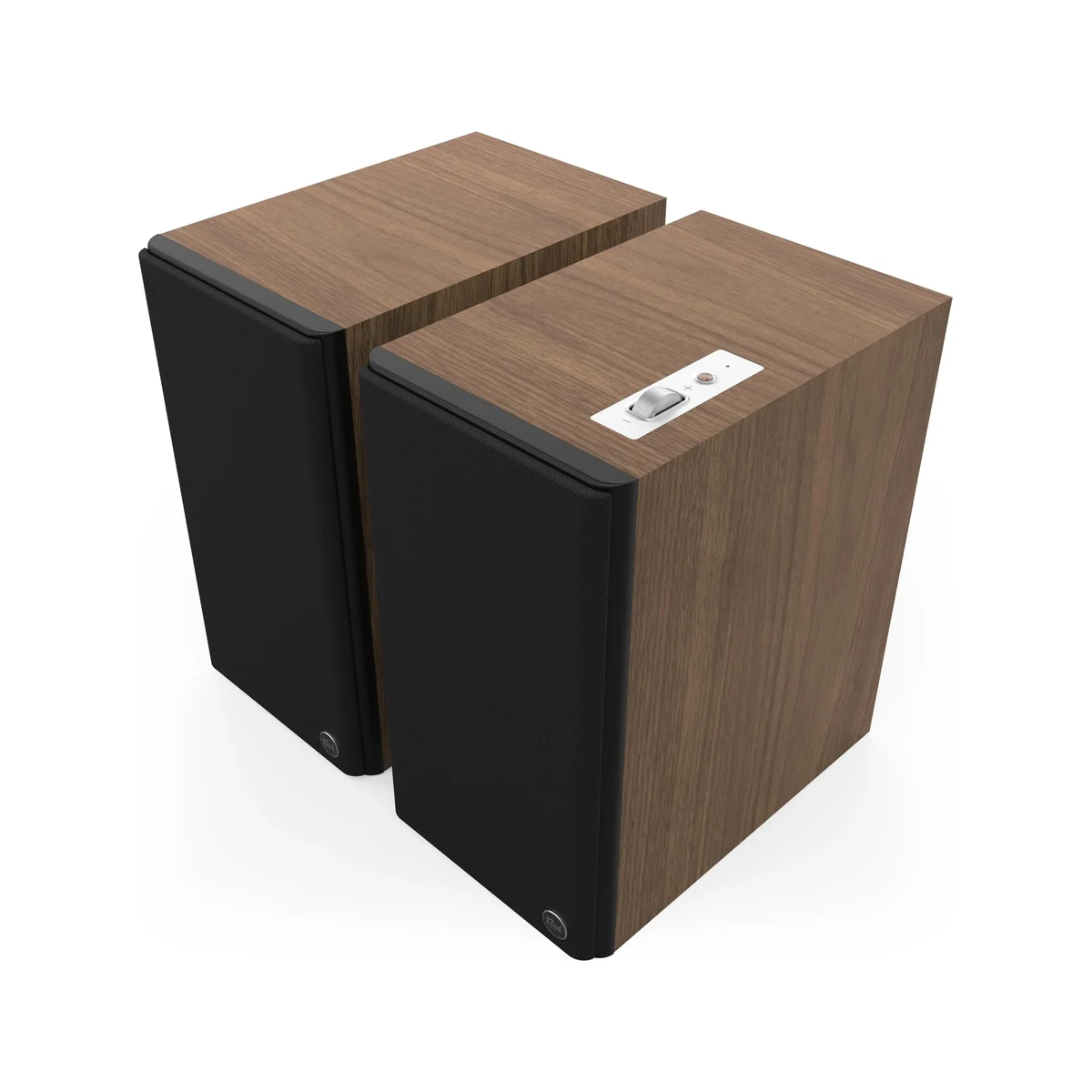
The Klipsch The Sevens II perfectly balance retro charm with modern sophistication. Their MDF cabinets feature genuine wood veneers in either rich American Walnut or sleek Matte Black, complete with the brand’s signature copper-colored accents and prominent Tractrix horn. This isn’t mere styling — the horn dramatically improves efficiency and creates a wider sweet spot than conventional dome tweeters. The speakers have a substantial, furniture-like presence that elevates any listening environment, whether placed on dedicated stands, a credenza, or a desktop.
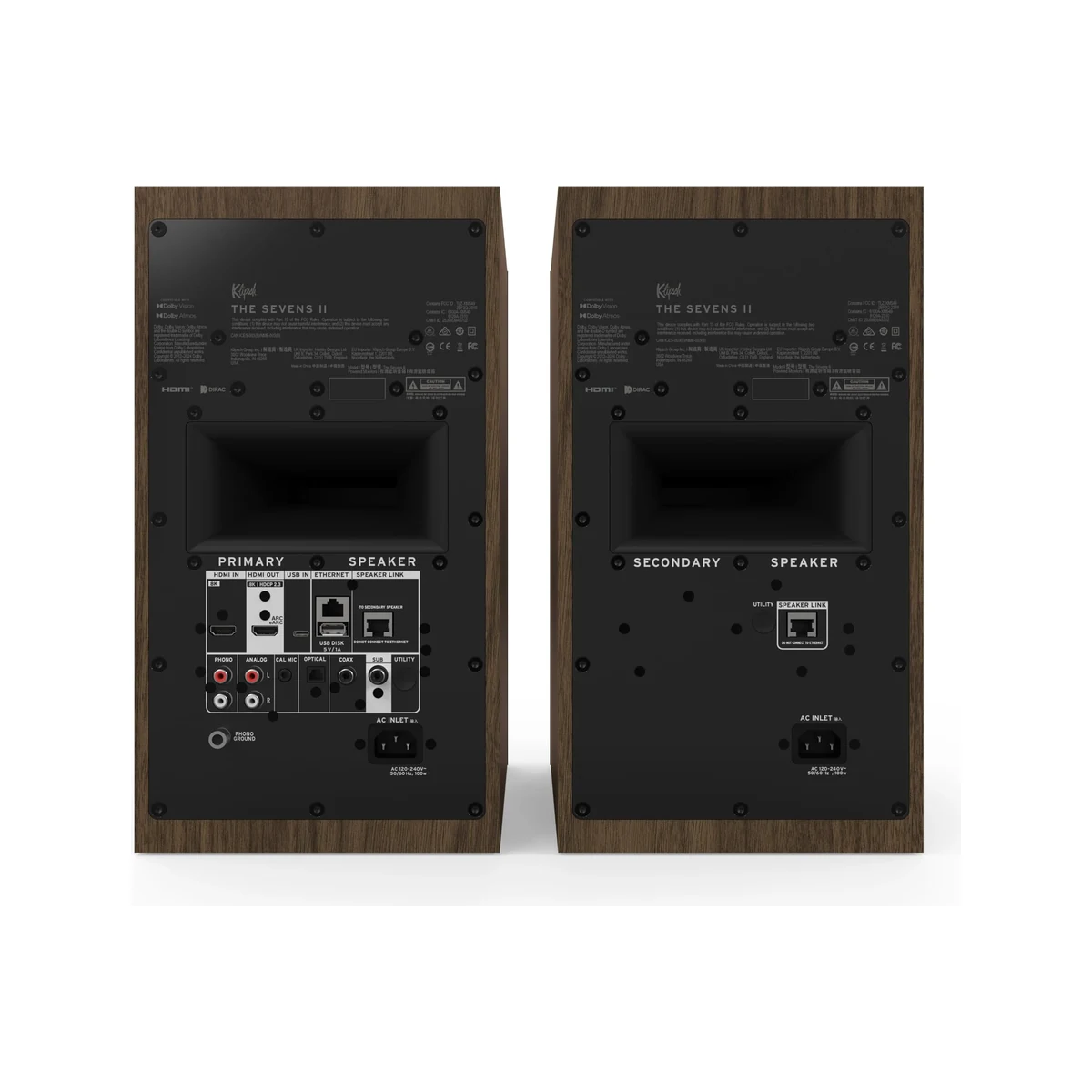
Build quality is exemplary. The rigid cabinets exhibit virtually zero resonance even when pushed hard, thanks to strategic bracing and premium damping materials. At nearly 21 pounds each, these speakers feel reassuringly solid. The top panel houses intuitive tactile controls for volume, input selection, and Bluetooth pairing, while the rear connection panel is cleanly laid out. Rubber isolation feet effectively decouple the speakers from surfaces, preventing unwanted vibration transfer. The magnetic grilles attach seamlessly and can be removed for a more technical aesthetic that many tech-savvy users prefer.
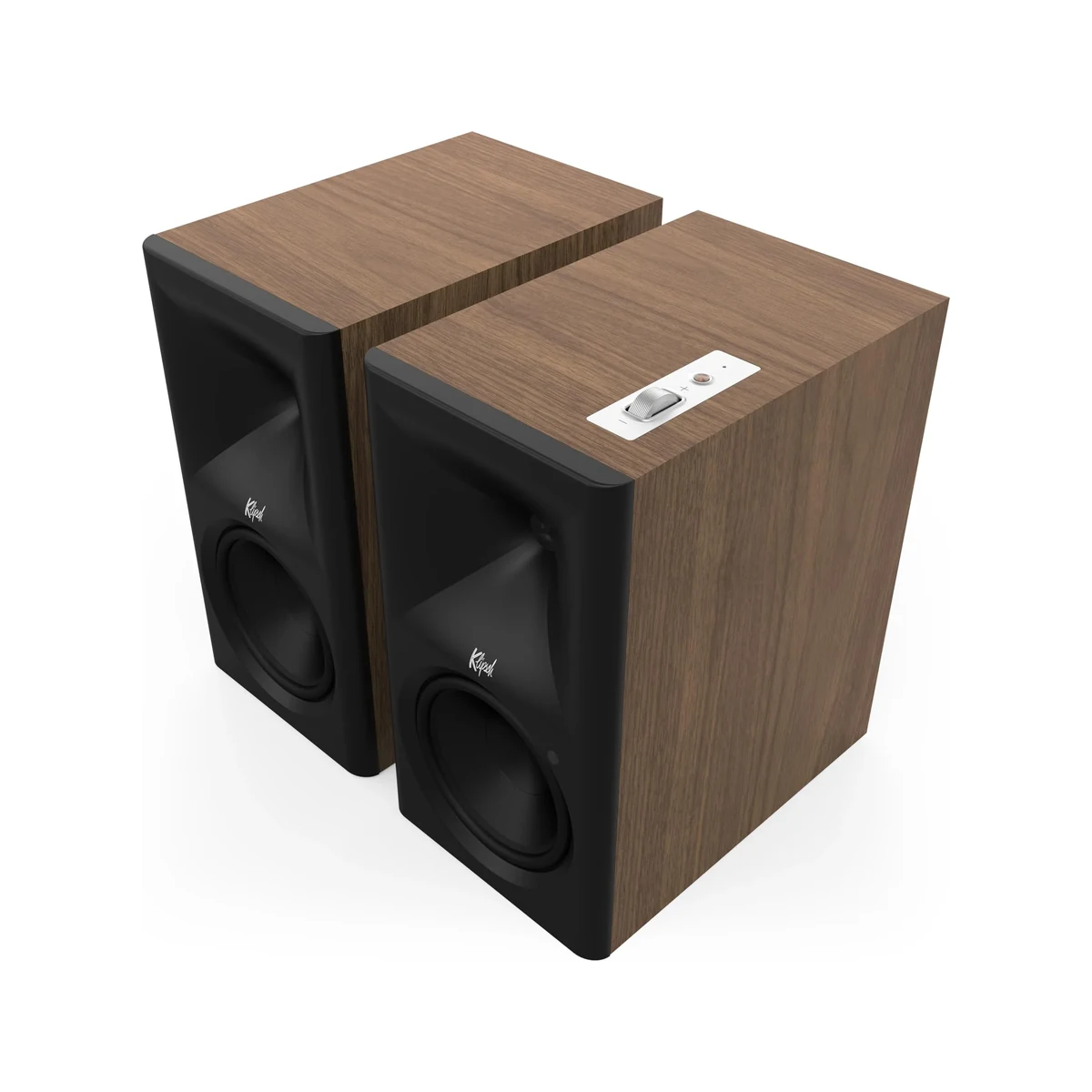
Ergonomically, the Sevens II are straightforward to live with. The relatively compact footprint allows placement in rooms where larger floorstanders would be impractical, yet they deliver scale that belies their size. Cable management is thoughtful, with generous clearance for thick audiophile cables.
Performance
In real-world listening, the Klipsch The Sevens II exhibit the energetic, dynamic character that has made the brand legendary among audiophiles. The horn-loaded tweeters deliver exceptional detail retrieval and transient speed, rendering cymbals with lifelike shimmer while maintaining smoothness during extended sessions. Bass performance is particularly impressive — the 6.5-inch Cerametallic woofers reach down to 34Hz with authority and control, providing satisfying weight for electronic music and orchestral scores without ever sounding bloated.
Our benchmark testing confirmed outstanding performance metrics. The speakers maintained composure at 100+ dB SPL with minimal distortion, showcasing the advantage of Klipsch’s high-sensitivity design. Transient response is lightning-fast, giving percussion exceptional snap and making complex arrangements easy to follow. Whether streaming hi-res tracks from TIDAL or watching 4K content via HDMI ARC, the Sevens II create a wide, deep soundstage with precise imaging that places instruments and dialogue convincingly in space.
For tech-savvy users who prioritize both music and home theater, these speakers excel in dual roles. The dynamic range handles explosive film soundtracks as convincingly as delicate acoustic recordings. Compared to the original Sevens, the II version offers tighter bass control and improved clarity in the upper midrange, resulting from refined DSP algorithms and updated amplification.
Features & Software
The Sevens II boast one of the most comprehensive connectivity suites available in 2026. Beyond the expected Bluetooth 5.3 and optical input, you get HDMI ARC for pristine TV audio, a built-in phono stage for direct turntable connection, USB-C for high-resolution playback, and full wireless ecosystem support including AirPlay 2, Chromecast, and Roon Ready. This versatility makes them true all-in-one solutions for modern listening habits.
The Klipsch Connect app provides essential tools including a five-band parametric EQ, firmware updates, and basic room analysis. While functional, the interface feels slightly behind competitors in terms of visual polish and automation. Most users will appreciate the ability to fine-tune the speakers to their specific room acoustics and sonic preferences, though power users may wish for more advanced room correction capabilities.
Value Proposition
At their price point, the Klipsch The Sevens II represent strong value for listeners who prioritize engaging, energetic sound over clinical neutrality. They eliminate the need for a separate amplifier, DAC, and speaker cables while delivering performance that rivals traditional separates costing significantly more. The inclusion of HDMI ARC, phono input, and multiple high-resolution streaming options adds considerable convenience without compromising audio quality.
When compared to building an equivalent system with passive speakers and external electronics, the Sevens II save both space and money while offering superior integration. Their high efficiency means they don’t require massive power reserves to perform at high volumes, potentially extending longevity of components. For tech enthusiasts building a modern hi-fi system, these speakers deliver an impressive performance-to-features ratio that justifies their premium positioning.
How It Compares
Against the KEF LSX II LT, the Klipsch The Sevens II deliver a more forward, dynamic, and energetic presentation that many listeners find more exciting with rock, electronic, and hip-hop. The KEFs offer a smoother, more neutral tonal balance and slightly better refinement in the midrange, but lack the visceral impact and horn-loaded immediacy that define the Klipsch experience. The Sevens II also include a built-in phono stage and HDMI ARC, features missing from the KEF package.
Compared to the Sonos Era 300, the Klipsch provide dramatically superior stereo imaging, dynamics, and overall fidelity. While the Era 300 excels in multi-room wireless convenience and voice control, it cannot match the Sevens II’s authority, bass extension, or audiophile-grade resolution. The Klipsch are the clear choice for critical listening, while the Sonos system prioritizes ecosystem integration.
Pros and Cons
Pros
- Horn-loaded tweeters deliver exceptional dynamics, clarity, and efficiency that make music exceptionally engaging.
- Comprehensive connectivity including HDMI ARC, phono stage, and modern wireless streaming options covers virtually every use case.
- Premium retro design with real wood veneers creates a stylish focal point that enhances any room aesthetic.
- Surprisingly powerful and controlled bass performance eliminates the need for a subwoofer in most listening environments.
- Outstanding build quality and rigid cabinets ensure minimal resonance even during high-volume playback.
Cons
- The lively, forward sonic signature may fatigue listeners who prefer a more neutral or laid-back presentation.
- The companion app is functional but lacks the refinement, automation features, and visual appeal of competing platforms.
- Substantial weight and size make them less suitable for smaller desks or frequent repositioning compared to more compact alternatives.
- Premium pricing positions them as an investment rather than an accessible entry point into high-end audio.
- No native voice assistant integration requires additional devices for hands-free smart home control.
FAQ
Q: What are the main upgrades in the Klipsch The Sevens II compared to the original model?
A: The 2026 version features refined drivers, improved DSP algorithms, added WiFi 6 streaming capabilities, Roon Ready certification, and enhanced bass control while maintaining the classic aesthetic.
Q: Do the Klipsch The Sevens II require a subwoofer?
A: In most rooms they provide satisfying bass extension down to 34Hz. A subwoofer output is available for those wanting additional low-frequency impact or for larger listening spaces.
Q: Can I connect a turntable directly to the Klipsch The Sevens II?
A: Yes, the built-in phono preamp allows direct connection of turntables with ground wire, making them excellent partners for vinyl enthusiasts.
Q: Are the Klipsch The Sevens II suitable for home theater applications?
A: Absolutely. HDMI ARC support provides high-quality TV audio, while their high dynamics and clarity make them an outstanding alternative to traditional soundbars.
Q: Does the Klipsch Connect app offer room correction?
A: The app includes basic room analysis and parametric EQ. While useful, it is not as sophisticated as dedicated room correction systems found in some higher-priced competitors.
Verdict
The Klipsch The Sevens II are the ideal choice for tech-savvy audiophiles and music lovers who want powerful, characterful sound without the complexity of traditional component systems. Their combination of stunning retro design, extensive connectivity, and dynamic horn-loaded performance makes them exceptionally versatile for both desktop and living room use. If you value excitement and engagement in your audio reproduction, these speakers are a worthy investment that will satisfy for years to come.
Pros
- ✓ Horn-loaded tweeters deliver exceptional dynamics, clarity, and efficiency that make music exceptionally engaging.
- ✓ Comprehensive connectivity including HDMI ARC, phono stage, and modern wireless streaming options covers virtually every use case.
- ✓ Premium retro design with real wood veneers creates a stylish focal point that enhances any room aesthetic.
- ✓ Surprisingly powerful and controlled bass performance eliminates the need for a subwoofer in most listening environments.
- ✓ Outstanding build quality and rigid cabinets ensure minimal resonance even during high-volume playback.
Cons
- ✗ The lively, forward sonic signature may fatigue listeners who prefer a more neutral or laid-back presentation.
- ✗ The companion app is functional but lacks the refinement, automation features, and visual appeal of competing platforms.
- ✗ Substantial weight and size make them less suitable for smaller desks or frequent repositioning compared to more compact alternatives.
- ✗ Premium pricing positions them as an investment rather than an accessible entry point into high-end audio.
- ✗ No native voice assistant integration requires additional devices for hands-free smart home control.
Where to Buy the Klipsch The Sevens II





Prices may vary. Affiliate links — we may earn a commission at no extra cost to you.
Related Reviews

Affiliate links — we may earn a commission at no extra cost to you.