

The Suunto Race marks a significant leap forward for the Finnish brand, combining a vibrant AMOLED display with exceptional battery life in a rugged titanium or stainless steel chassis. Designed for endurance athletes and data-hungry tech enthusiasts alike, it offers advanced training metrics without compromising on everyday usability. Discover if this premium multi-sport watch has what it takes to dethrone the current smartwatch kings.
Table of Contents
Key Specifications
| Feature | Detail |
|---|---|
| Display | 1.43-inch AMOLED (466 x 466 resolution, 1,000 nits) |
| Lens Material | Sapphire Crystal |
| Bezel Material | Stainless Steel or Grade 5 Titanium |
| Battery Life | Up to 40 hours in multi-band GPS; up to 26 days in daily mode |
| Sensors | Dual-band GNSS, Optical Heart Rate, Pulse Ox, Barometric Altimeter |
| Water Resistance | 100 meters (10 ATM) |
| Weight | 83g (Stainless Steel) / 69g (Titanium) |
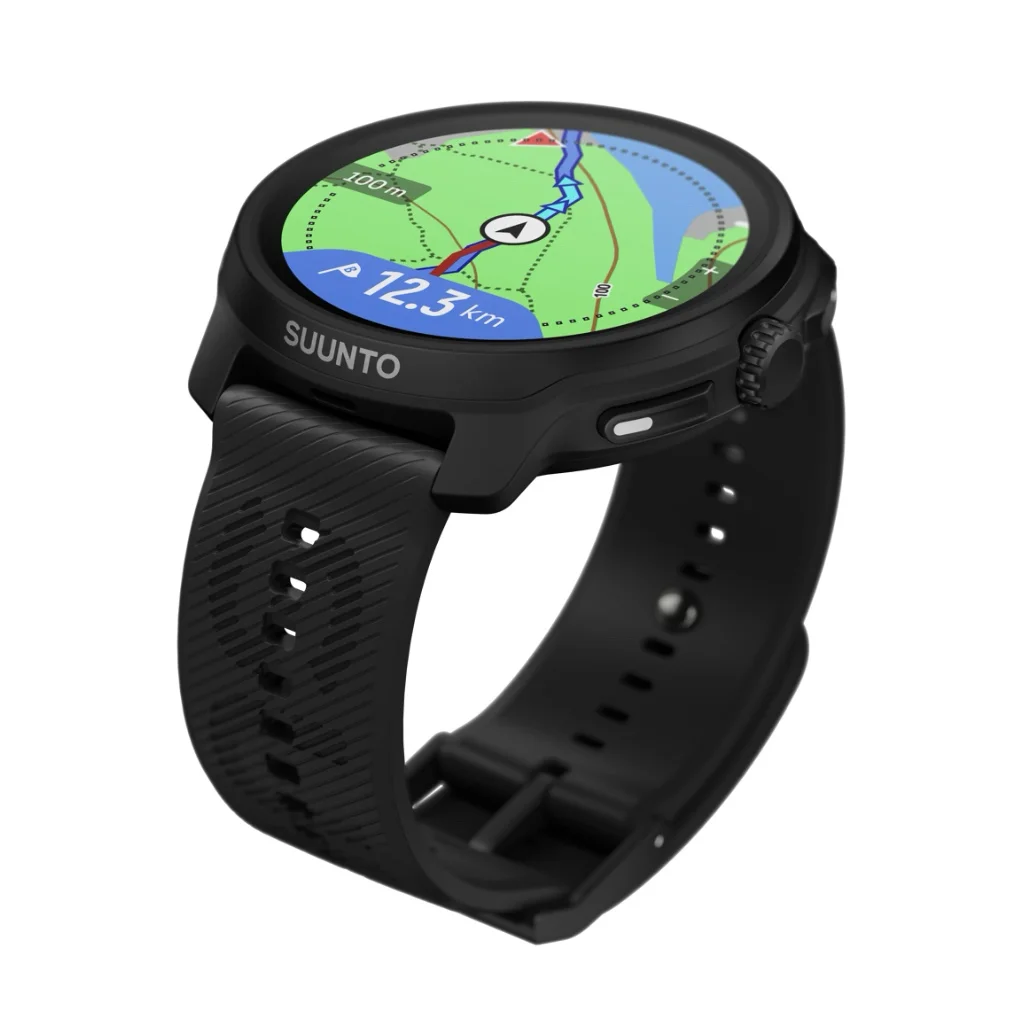
| Offline Maps | Yes, global free offline topographical mapping |
Design & Build Quality
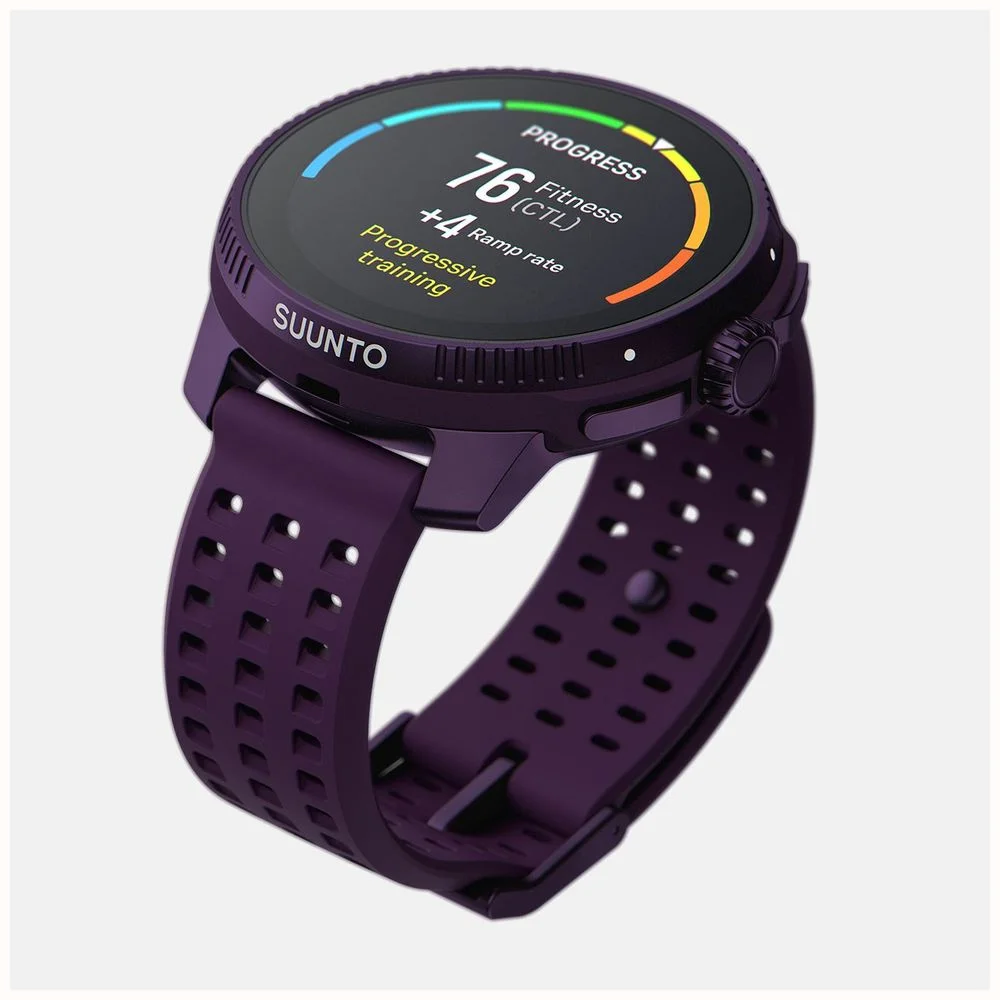
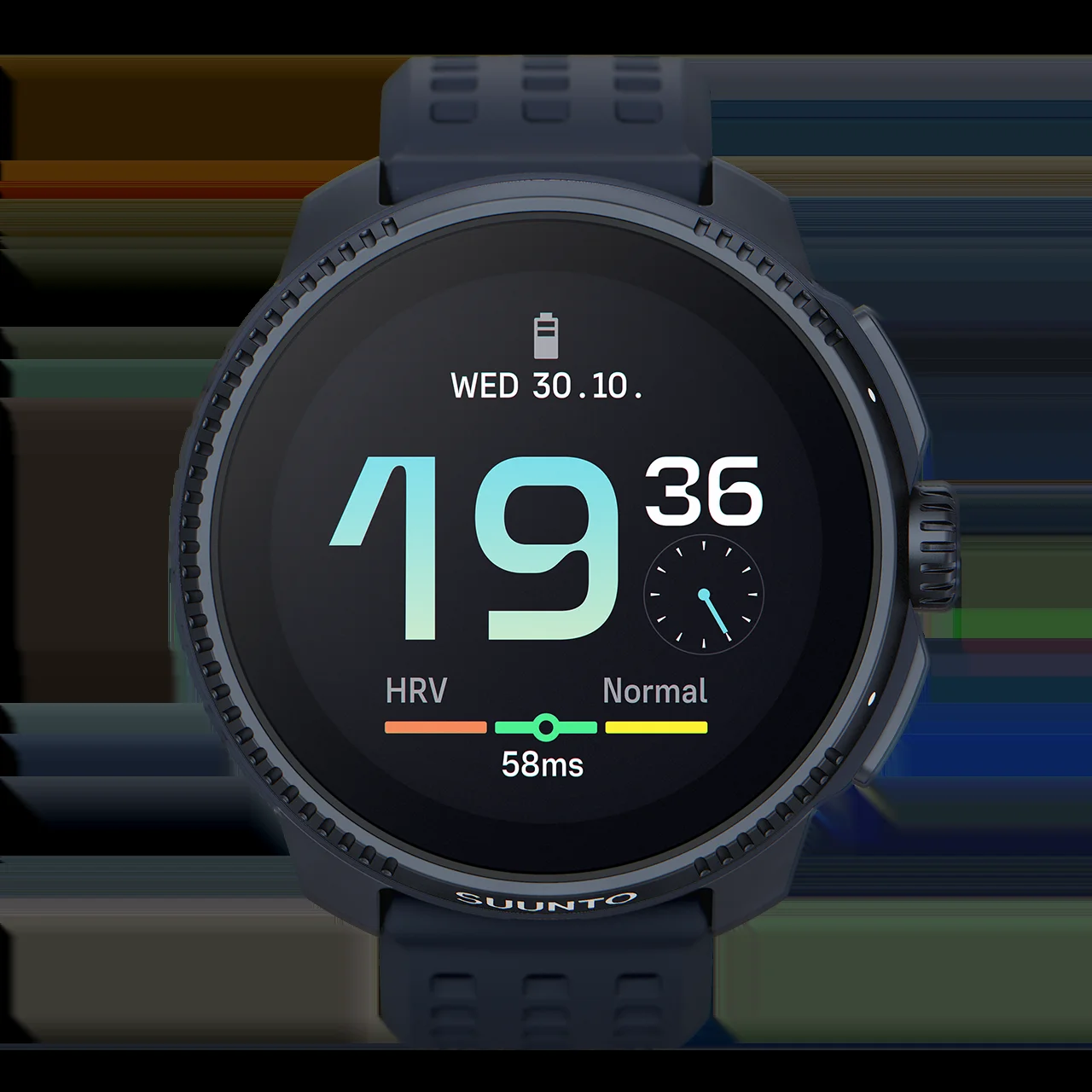
Suunto has long been synonymous with rugged durability, and the Suunto Race proudly carries that torch into 2026. Available in either stainless steel or Grade 5 titanium, the watch feels substantial yet perfectly balanced on the wrist. The standout design upgrade is the introduction of a digital crown alongside two tactile pushers, which dramatically improves menu navigation, especially when wearing gloves or swimming in open water. Protected by a tough sapphire crystal lens, the aesthetic manages to strike a fine balance between a hardcore alpine tool and a sophisticated everyday timepiece.
The focal point of the Suunto Race is undeniably its 1.43-inch AMOLED display. Strikingly bright at 1,000 nits, it renders complex topographical maps and dense training data with crisp, vibrant clarity, even under the harsh glare of direct sunlight. While an AMOLED screen traditionally spells doom for endurance battery life, Suunto’s engineering manages to mitigate this, delivering a visual experience that rivals mainstream lifestyle smartwatches without sacrificing its identity as a dedicated multisport tracker.
Performance
When it comes to real-world performance, the Suunto Race is a formidable companion for both elite athletes and weekend warriors. The dual-band GNSS chip locks onto satellite signals with impressive speed, routinely establishing a connection within seconds, even in dense urban canyons or heavily forested trails. Benchmark tests of the track logs reveal pinpoint accuracy that easily goes toe-to-toe with industry leaders, ensuring your pacing metrics and distance measurements are exceptionally reliable no matter the terrain.
Under the hood, the processing speed is noticeably snappy. Rendering offline topographical maps, zooming in on complex route intersections, and swiping through daily widgets happens with minimal lag. This is a testament to the optimized UI and the fluid mechanical efficiency of the digital crown. Heart rate tracking via the optical sensor provides solid baseline data for steady-state efforts, though, like most wrist-based sensors, it can occasionally lag during rapid interval sprints—a minor hurdle easily solved by pairing an external chest strap via Bluetooth.
Battery performance is where the Suunto Race truly defies expectations. Delivering up to 40 hours of continuous dual-band GPS tracking with the AMOLED screen active is a monumental achievement. For general smartwatch usage, you can stretch the battery up to 26 days on a single charge, effectively eliminating the battery anxiety usually associated with bright, high-resolution displays.
Features & Software
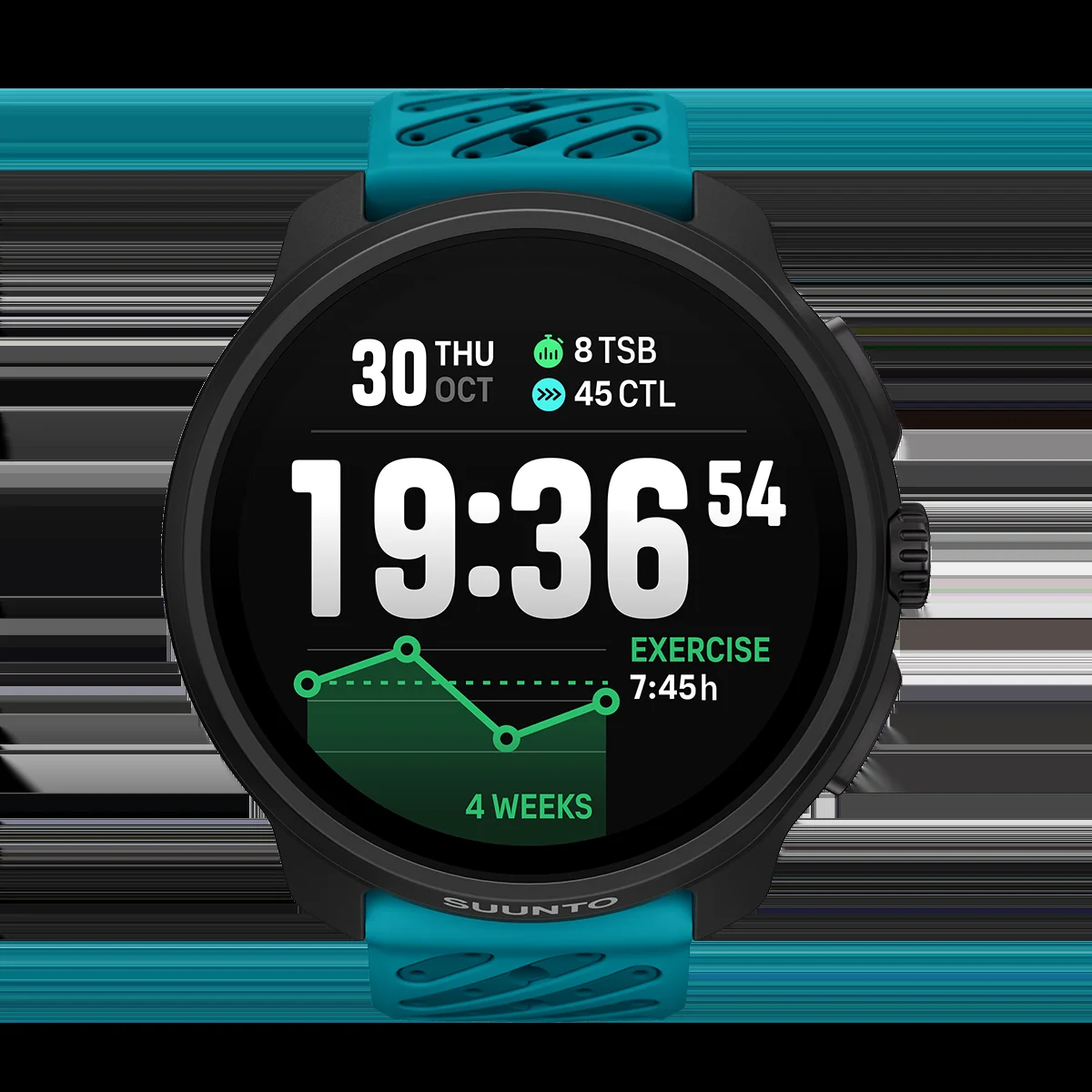
The Suunto software ecosystem has matured beautifully, transforming the Race into a comprehensive coaching tool rather than just a passive tracker. Standout features include the integration of Heart Rate Variability (HRV) for deep recovery insights, and the AI-driven Suunto Coach, which provides personalized, actionable feedback based on your Training Stress Score (TSS). Furthermore, the inclusion of detailed, free offline global maps is a massive win for trail runners and hikers, offering seamless on-wrist navigation complete with breadcrumb trails and elevation route profiles.
On the smartwatch front, the Suunto Race covers the essential bases—notifications, weather forecasts, and media controls—but it decidedly remains a sports-first device. It eschews NFC payments and onboard music storage in favor of laser-focused athletic utility. The companion Suunto App remains one of the best in the business for post-workout analysis, offering gorgeous route visualizations and frictionless third-party integrations with platforms like Strava, TrainingPeaks, and Komoot.
Value Proposition
Priced aggressively against its high-end rivals, the Suunto Race disrupts the premium sports watch market by offering flagship hardware at a mid-tier price point. When you factor in the titanium build option, sapphire glass lens, vibrant AMOLED display, and highly accurate dual-band GPS, the cost-to-feature ratio is incredibly compelling. Many competitors charge a steep premium for offline mapping and sapphire lenses, whereas Suunto includes these as standard.
For the tech-savvy athlete who prioritizes training metrics, recovery data, and battery longevity over lifestyle smartwatch gimmicks, the Suunto Race represents an outstanding investment. It forces buyers to ask whether they truly need cellular connectivity and contactless payments, or if a robust, specialized training tool is a better use of their budget.
How It Compares
Compared to the Garmin Epix Pro, the Suunto Race holds its own admirably, particularly in battery life and map rendering speed. While Garmin still edges out Suunto in lifestyle utility (like Garmin Pay and Spotify integration) and granular daily wellness metrics, the Suunto Race undercuts the Epix Pro significantly in price while delivering arguably better hardware aesthetics. Against the COROS Apex 2 Pro, the Suunto Race wins on display quality thanks to its brilliant AMOLED screen compared to the COROS’s dimmer Memory-In-Pixel (MIP) display, though COROS retains a slight advantage in raw battery endurance for multi-day, ultra-distance expeditions.
Pros and Cons
Pros
- The bright 1.43-inch AMOLED display makes reading maps and metrics effortless in all lighting conditions.
- Exceptional battery life delivers up to 40 hours of dual-band GPS tracking, defying typical AMOLED limitations.
- The inclusion of a digital crown drastically improves user interface navigation and map zooming.
- High-quality materials including a sapphire crystal lens and optional titanium bezel come at a highly competitive price.
- Advanced HRV tracking and the Suunto Coach feature provide excellent, actionable recovery insights.
Cons
- The optical heart rate sensor can occasionally lag during high-intensity, rapid interval training.
- It lacks modern lifestyle smartwatch features such as NFC contactless payments and offline music storage.
- The watch case is relatively large and thick, which may feel cumbersome on smaller wrists.
- Syncing large offline map regions over Wi-Fi can be a slow and tedious process.
FAQ
Q: Does the Suunto Race support offline music playback?
A: No, the Suunto Race only offers music controls for the media playing on your connected smartphone; it does not have onboard storage for downloading offline music.
Q: Are the topographical maps free to download?
A: Yes, Suunto provides global topographical maps completely free of charge, which can be downloaded directly to the watch via a Wi-Fi connection.
Q: Can I wear the Suunto Race while swimming?
A: Absolutely, the watch is water-resistant up to 100 meters (10 ATM) and includes dedicated sports profiles for both pool and open water swimming.
Q: How does the HRV tracking work on this watch?
A: The Suunto Race automatically tracks your Heart Rate Variability during sleep, establishing a baseline over time to help you gauge your nervous system’s recovery and readiness for intense training.
Verdict
The Suunto Race is an exceptional choice for serious endurance athletes, trail runners, and data-driven tech enthusiasts who want a premium, highly durable training tool without the exorbitant price tag. If you value a brilliant AMOLED display, best-in-class battery life, and precise offline mapping over everyday smartwatch features like NFC payments, this watch is a near-perfect fit. It brilliantly balances rugged alpine heritage with modern hardware performance.
Where to Buy
No products found.
Pros
- ✓ The bright 1.43-inch AMOLED display makes reading maps and metrics effortless in all lighting conditions.
- ✓ Exceptional battery life delivers up to 40 hours of dual-band GPS tracking, defying typical AMOLED limitations.
- ✓ The inclusion of a digital crown drastically improves user interface navigation and map zooming.
- ✓ High-quality materials including a sapphire crystal lens and optional titanium bezel come at a highly competitive price.
- ✓ Advanced HRV tracking and the Suunto Coach feature provide excellent, actionable recovery insights.
Cons
- ✗ The optical heart rate sensor can occasionally lag during high-intensity, rapid interval training.
- ✗ It lacks modern lifestyle smartwatch features such as NFC contactless payments and offline music storage.
- ✗ The watch case is relatively large and thick, which may feel cumbersome on smaller wrists.
- ✗ Syncing large offline map regions over Wi-Fi can be a slow and tedious process.