




The Crucial P3 Plus NVMe SSD continues to be a staple in the budget storage market, offering an enticing blend of PCIe 4.0 speeds and high-capacity options. We dive deep into its real-world performance, longevity, and overall value to see if it still holds up for builders and upgraders in 2026.
Table of Contents
Key Specifications
| Feature | Detail |
|---|---|
| Form Factor | M.2 2280 |
| Interface | PCIe 4.0 x4 / NVMe 1.4 |
| NAND Flash Memory | 176-layer QLC (Micron) |
| Controller | Phison E21T (DRAM-less) |
| Max Sequential Read | Up to 5,000 MB/s |
| Max Sequential Write | Up to 4,200 MB/s |
| Capacities Available | 500GB, 1TB, 2TB, 4TB |
| Endurance (TBW) | Up to 800 TBW (4TB model) |
| Warranty | 5-Year Limited |
Design & Build Quality
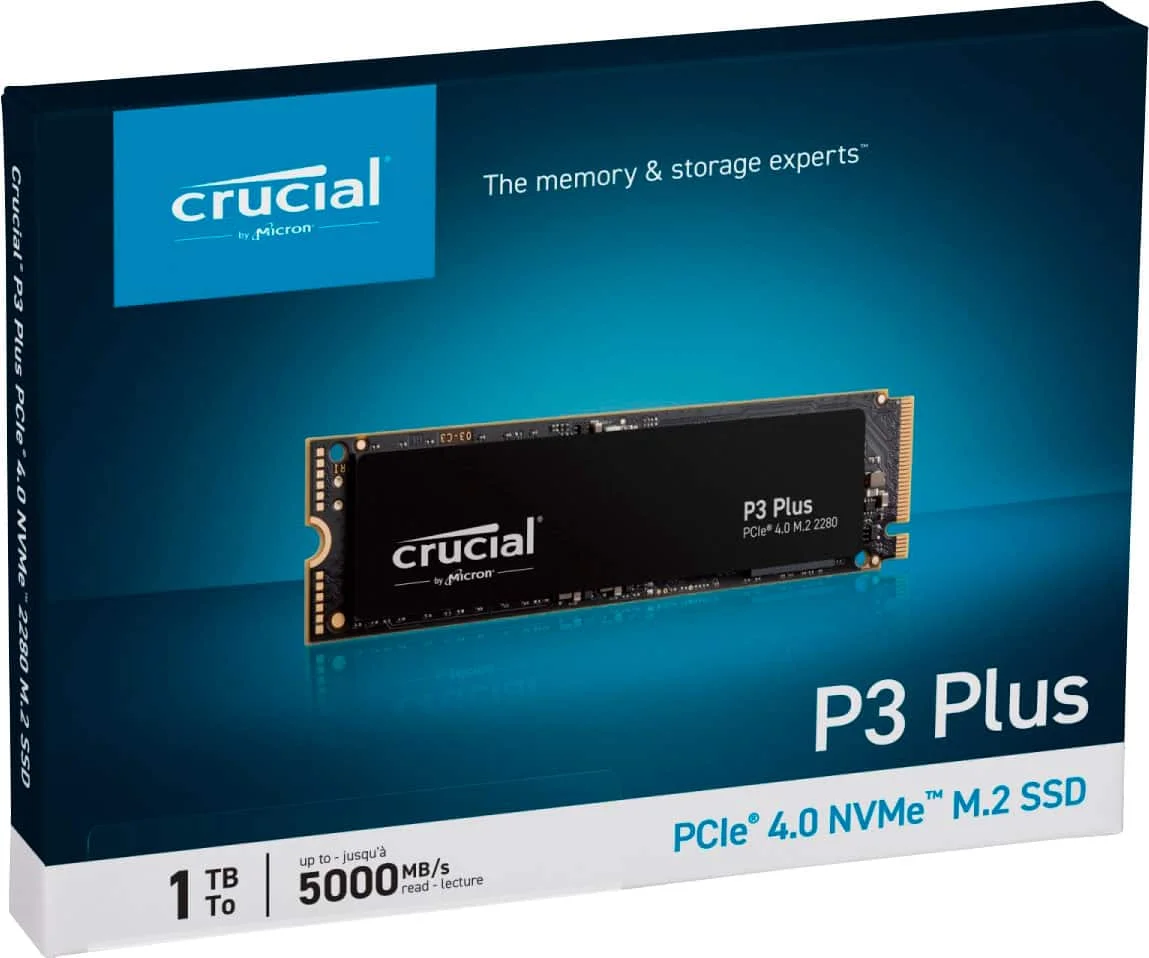
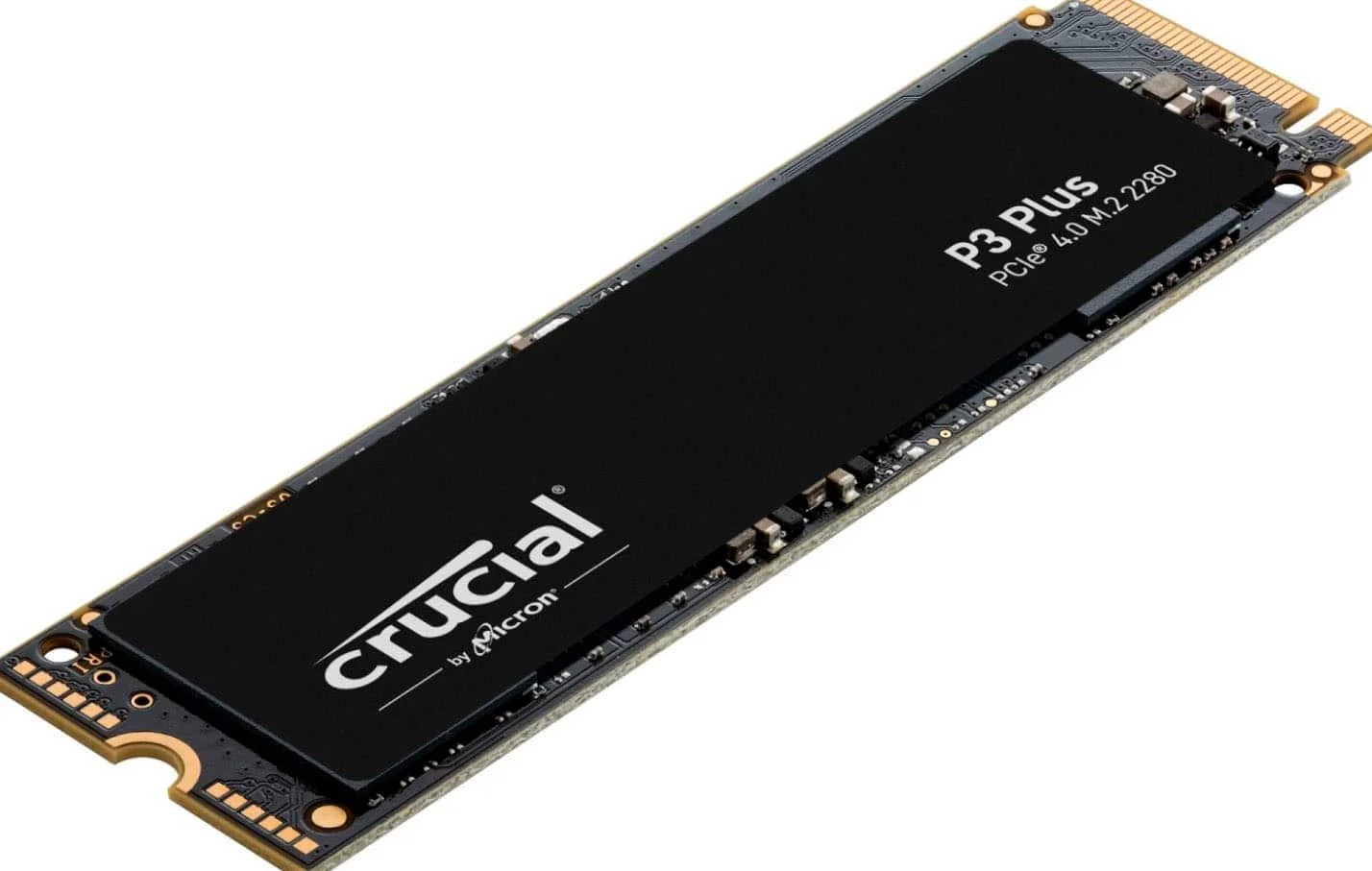
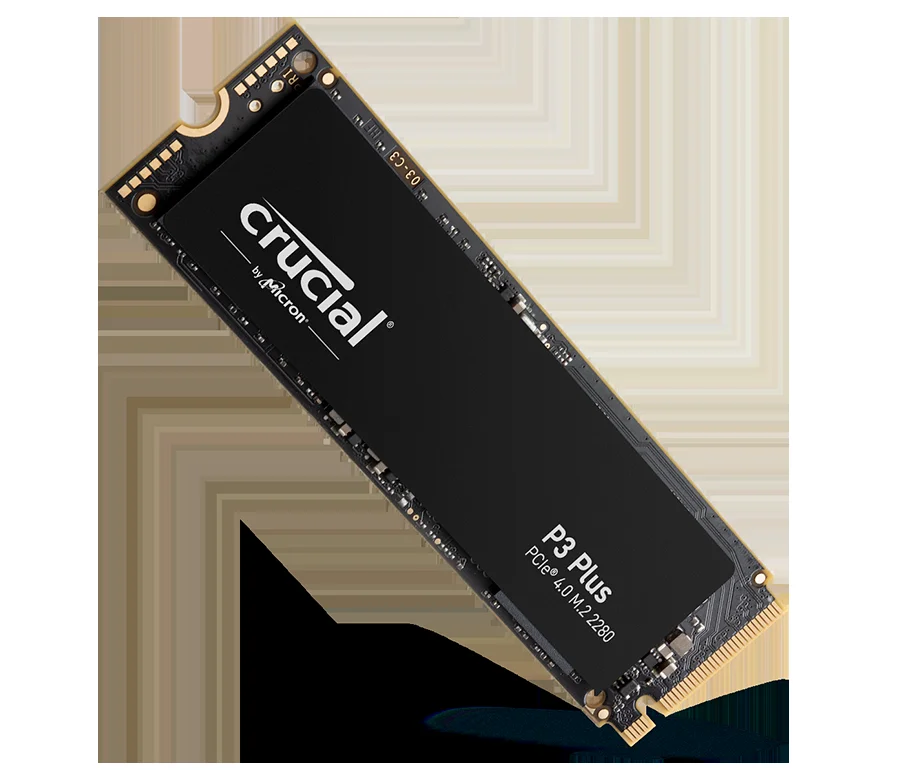
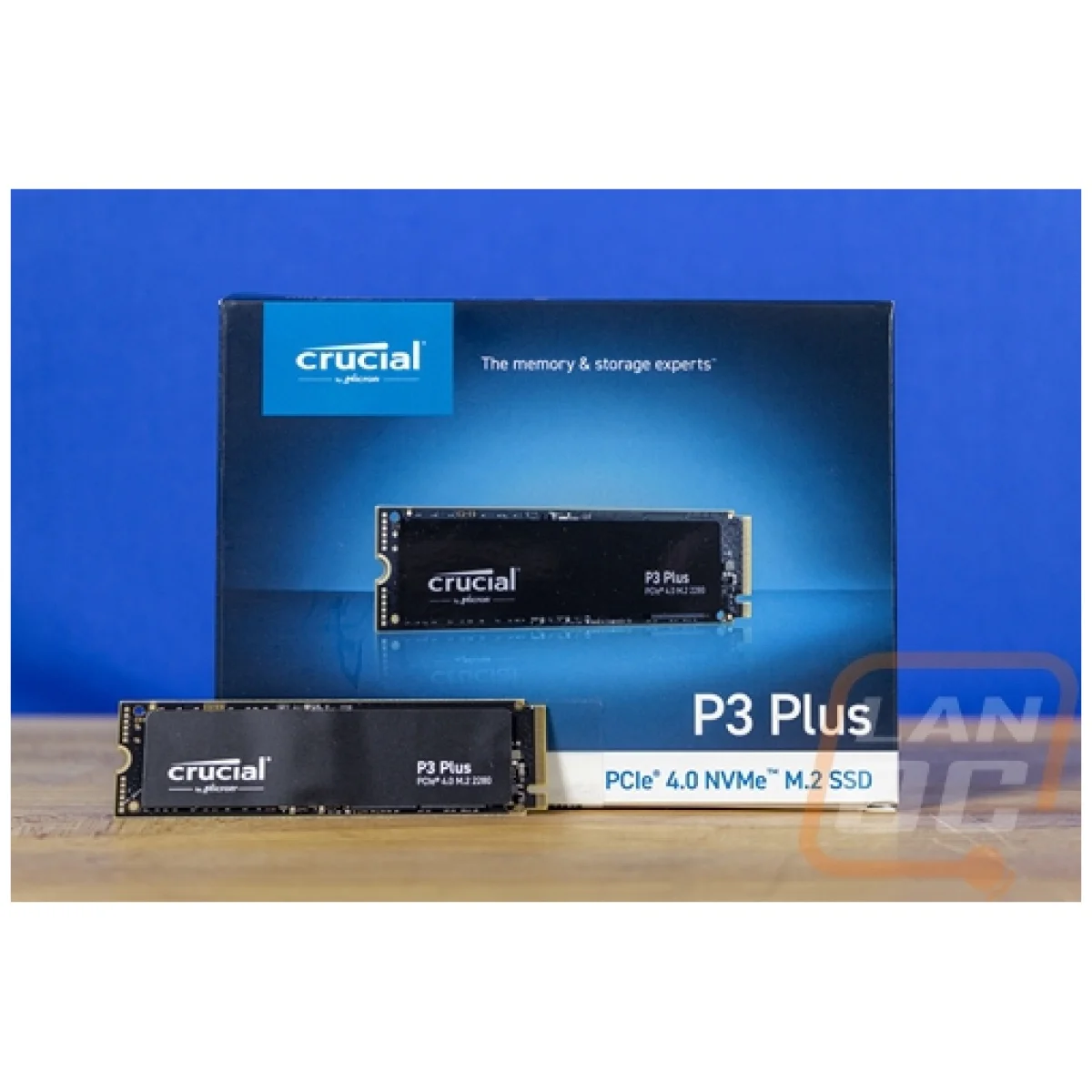
The Crucial P3 Plus arrives in the familiar, unassuming form factor we’ve come to expect from Micron’s consumer-facing brand. Utilizing the standard M.2 2280 specification, this drive features a single-sided PCB layout even up to the massive 4TB capacity. This remarkably thin profile ensures maximum compatibility, making it an ideal drop-in upgrade for cramped ultrabooks, mini-PCs, and standard desktop motherboards alike.
Aesthetically, Crucial has opted for a minimalist black PCB covered by a simple branded sticker displaying the drive’s serial and regulatory information. Notably absent is any form of integrated heat spreader or graphene thermal pad. While PCIe 4.0 drives are notorious for running hot under load, the highly efficient Phison E21T controller and DRAM-less design keep temperatures surprisingly manageable. Nonetheless, we still recommend utilizing your motherboard’s integrated M.2 heatsink to guarantee stable thermal performance during sustained workloads.
Performance
In the realm of PCIe 4.0 NVMe SSDs, the Crucial P3 Plus occupies a comfortable middle ground, prioritizing affordability and capacity over chart-topping benchmarks. Rated for sequential reads of up to 5,000 MB/s and writes of up to 4,200 MB/s, it easily fulfills the needs of everyday computing, gaming, and light content creation. In our CrystalDiskMark testing, the drive reliably hit these advertised metrics, providing snappy boot times and rapid game load sequences that easily outpace older Gen3 hardware and leave SATA drives in the dust.
However, the drive’s reliance on QLC (Quad-Level Cell) NAND flash memory and a DRAM-less architecture does introduce performance caveats during heavy, continuous write operations. Thanks to a dynamic SLC cache, initial transfers are exceptionally fast. Yet, once you exhaust this cache by transferring massive files—typically exceeding a couple hundred gigabytes at once—the write speeds dramatically plummet, sometimes dipping down to traditional mechanical hard drive speeds until the cache recovers.
For the average consumer and gamer in 2026, this cache limitation will rarely, if ever, be noticeable in daily operation. Game installations are almost always bottlenecked by internet connection speeds rather than the drive’s sustained write limit. For day-to-day application loading, web browsing, and media consumption, the P3 Plus feels virtually indistinguishable from premium tier SSDs that cost significantly more.
Features & Software
Crucial ships the P3 Plus with access to their proprietary Storage Executive software, which remains one of the more comprehensive and user-friendly SSD management tools on the market. The software provides a clean dashboard to monitor drive health, check operating temperatures, update firmware, and execute secure data wipes. Additionally, buyers receive a complimentary license for Acronis True Image for Crucial, making drive cloning and OS migration a completely frictionless process for upgraders.
On the hardware side, the feature set is relatively basic, reflecting its budget-conscious positioning. It utilizes Host Memory Buffer (HMB) technology, cleverly leveraging a small sliver of your system’s RAM to compensate for the lack of onboard DRAM. While it lacks high-end security features like hardware-based AES 256-bit encryption, it provides standard S.M.A.R.T. attributes and robust power-loss immunity for data at rest.
Value Proposition
The Crucial P3 Plus has carved out a massive footprint in the storage market precisely because of its undeniable value. By utilizing high-density QLC NAND, Crucial is able to offer massive storage capacities—up to 4TB—at price points that were previously reserved for clunky mechanical hard drives or much slower SATA SSDs. For users looking to bulk up their Steam libraries or store vast media collections without spending a premium, the cost-per-gigabyte ratio here is incredibly compelling.
While power users, data hoarders, and professional video editors might find the QLC endurance ratings and sustained write limitations frustrating, the vast majority of mainstream consumers will find that the P3 Plus strikes the perfect balance. It delivers the snappy responsiveness of Gen4 NVMe technology at a price tag that leaves plenty of room in your PC building budget for a better GPU or more system memory.
How It Compares
When stacked against the WD Blue SN580, the Crucial P3 Plus offers similar peak sequential speeds but relies on QLC NAND instead of the TLC NAND found in the Western Digital drive. This gives the SN580 a slight edge in endurance and sustained write performance under heavy loads, though Crucial often wins out on aggressive pricing, particularly at the higher 2TB and 4TB tiers.
Compared to the Samsung 990 EVO, the P3 Plus clearly sits in a more budget-focused category. The Samsung drive offers significantly better power efficiency, higher TBW (Terabytes Written) endurance ratings, and superior thermal management. However, the Crucial P3 Plus remains the better buy for gamers strictly looking for a secondary mass storage drive, as the real-world loading time differences between the two are practically imperceptible.
Pros and Cons
Pros
- Offers excellent cost-per-gigabyte value, especially at 2TB and 4TB capacities.
- Delivers fast PCIe 4.0 sequential speeds that easily handle modern gaming and daily tasks.
- Includes free, user-friendly Acronis True Image cloning software.
- Single-sided design ensures wide compatibility with laptops, mini-PCs, and handhelds.
Cons
- Sustained write speeds plummet significantly once the dynamic SLC cache fills up.
- QLC NAND results in lower overall endurance (TBW) compared to TLC-based alternatives.
- Lacks onboard DRAM, relying instead on system memory via Host Memory Buffer (HMB).
- Does not include a heat spreader or physical heatsink in the box.
FAQ
Q: Is the Crucial P3 Plus compatible with the PS5?
A: Yes, it is compatible with the PlayStation 5, but its read speeds of 5,000 MB/s fall slightly below Sony’s officially recommended 5,500 MB/s. Despite this, real-world gaming performance remains excellent and rarely causes issues.
Q: Does the Crucial P3 Plus have DRAM?
A: No, the P3 Plus is a DRAM-less SSD. It utilizes Host Memory Buffer (HMB) technology to use a very small amount of your system RAM to help manage data mapping efficiently.
Q: What is the warranty on the Crucial P3 Plus?
A: Crucial provides a 5-year limited warranty, or up to the maximum Terabytes Written (TBW) rating for your specific capacity tier, whichever comes first.
Q: Can I use this drive in an older PCIe 3.0 motherboard?
A: Yes, the Crucial P3 Plus is fully backwards compatible with PCIe 3.0 slots, though its maximum sequential speeds will be capped at Gen3 limits (roughly around 3,500 MB/s).
Verdict
The Crucial P3 Plus NVMe SSD is an outstanding choice for budget-conscious gamers, everyday PC users, and anyone needing massive storage capacities without breaking the bank. While its QLC NAND and DRAM-less design make it unsuited for heavy professional video editing or intensive workstation tasks, it delivers more than enough speed for snappy boot times and rapid game loads. It remains one of the smartest, most value-driven storage upgrades available in 2026.
Where to Buy
Pros
- ✓ Offers excellent cost-per-gigabyte value, especially at 2TB and 4TB capacities.
- ✓ Delivers fast PCIe 4.0 sequential speeds that easily handle modern gaming and daily tasks.
- ✓ Includes free, user-friendly Acronis True Image cloning software.
- ✓ Single-sided design ensures wide compatibility with laptops, mini-PCs, and handhelds.
Cons
- ✗ Sustained write speeds plummet significantly once the dynamic SLC cache fills up.
- ✗ QLC NAND results in lower overall endurance (TBW) compared to TLC-based alternatives.
- ✗ Lacks onboard DRAM, relying instead on system memory via Host Memory Buffer (HMB).
- ✗ Does not include a heat spreader or physical heatsink in the box.
Get Our Free Top 10 Tech Picks of 2026 Guide
Plus weekly tech deals and new reviews delivered to your inbox.
[cp_email_signup]
No spam. Unsubscribe anytime.
Ready to buy the Crucial P3 Plus NVMe SSD?
Affiliate link — we may earn a commission at no extra cost to you.