





The Samsung Odyssey G9 Neo remains a behemoth in the ultrawide monitor space, pushing the boundaries of immersive gaming and extreme productivity. With its jaw-dropping Mini LED panel and aggressive 1000R curve, it promises an unparalleled visual experience for desktop enthusiasts. But in a highly competitive 2026 market, does this premium display still justify its hefty price tag and desk real estate?
Table of Contents
Key Specifications
| Feature | Detail |
|---|---|
| Screen Size | 49 inches |
| Panel Type | VA with Quantum Mini LED |
| Curvature | 1000R |
| Resolution | 5120 x 1440 (Dual QHD) |
| Refresh Rate | 240Hz |
| Response Time | 1ms (GTG) |
| HDR Support | Quantum HDR2000 |
| Local Dimming Zones | 2,048 |
Design & Build Quality
The Samsung Odyssey G9 Neo is a masterclass in aggressive yet futuristic industrial design. Commanding your desk with its sprawling 49-inch frame, the monitor is defined by its sweeping 1000R curvature. This extreme curve isn’t just an aesthetic choice; it meticulously wraps around your peripheral vision to ensure uniform focal distance across the massive 32:9 canvas. The stark white exterior and glossy finish give it a distinct sci-fi aesthetic, accentuated by the mesmerizing Infinity Core lighting on the rear panel, which syncs flawlessly with your gameplay via CoreSync.
Build quality is largely premium, featuring a robust metal stand that easily supports the substantial weight of the display. However, due to the sheer size and width of the panel, some minor screen wobble is inevitable if you type aggressively or bump your desk. Ergonomically, the heavy-duty stand offers commendable flexibility, including tilt, swivel, and height adjustments—a rare and welcome treat for an ultrawide monitor of this magnitude.
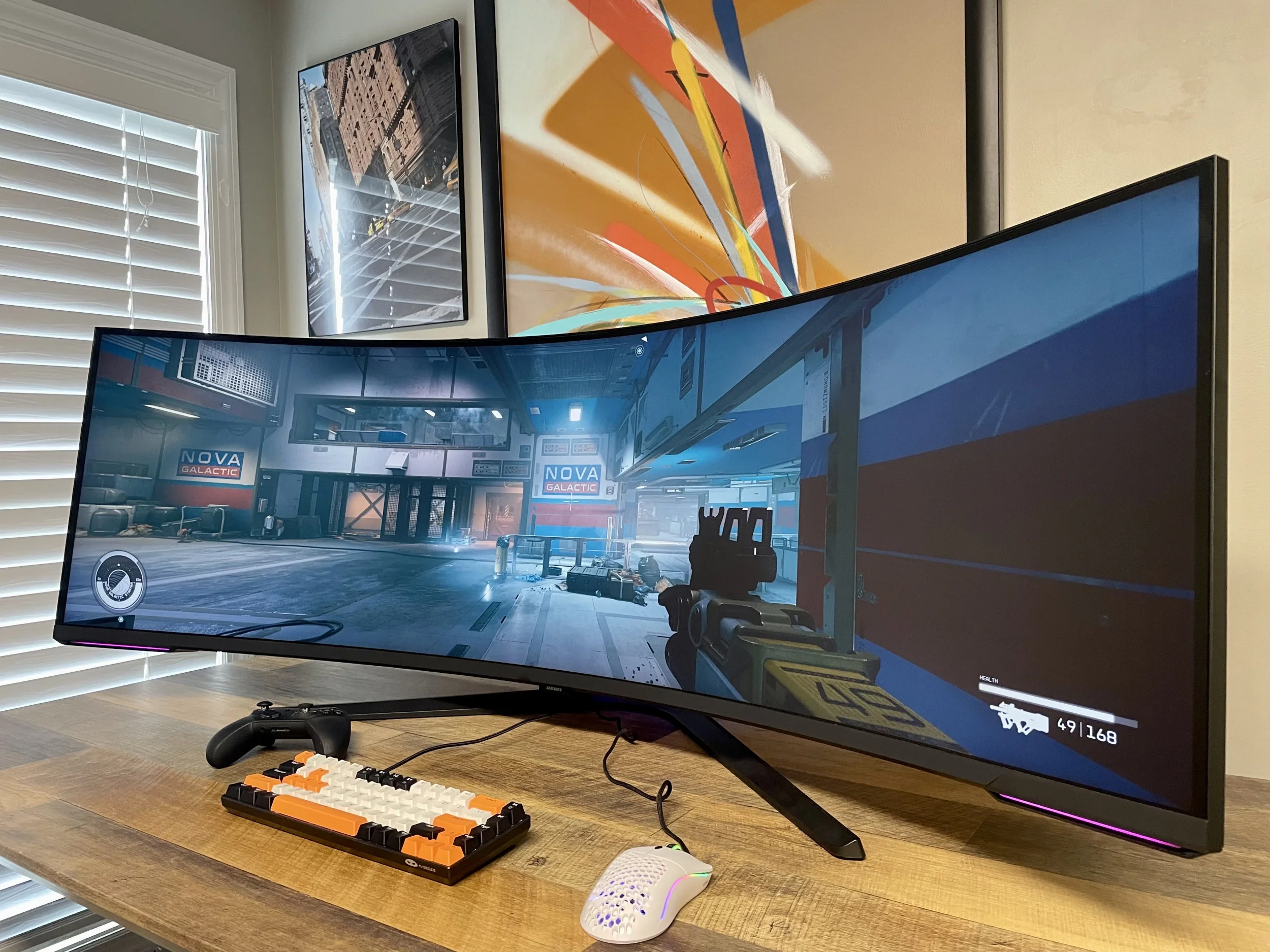
Cable management is thoughtfully integrated right into the stand, keeping your battlestation pristine. While the sheer footprint demands a remarkably deep, sturdy desk, the physical presence of the G9 Neo remains undeniably spectacular in 2026, setting a gold standard for premium monitor design.
Performance
When it comes to performance, the Odyssey G9 Neo leverages its Quantum Mini LED technology to deliver awe-inspiring visuals. With 2,048 local dimming zones, the display expertly tackles the notorious haloing issues found in older edge-lit VA panels, resulting in exceptionally deep, inky blacks that closely rival modern OLED screens. Peak brightness is where this monitor truly flexes its muscles. Hitting up to 2,000 nits in HDR content, explosions in fast-paced shooters and sunbeams in sprawling RPGs burst off the screen with blinding realism.
In terms of speed, the 240Hz refresh rate paired with a 1ms (GTG) response time ensures buttery-smooth motion clarity. Real-world gaming on titles heavily reliant on wide fields of view, such as flight simulators or competitive racing games, is nothing short of transformative. Ghosting is practically non-existent, and input lag is kept to an absolute minimum, making it highly viable for competitive gamers who refuse to compromise on screen real estate.
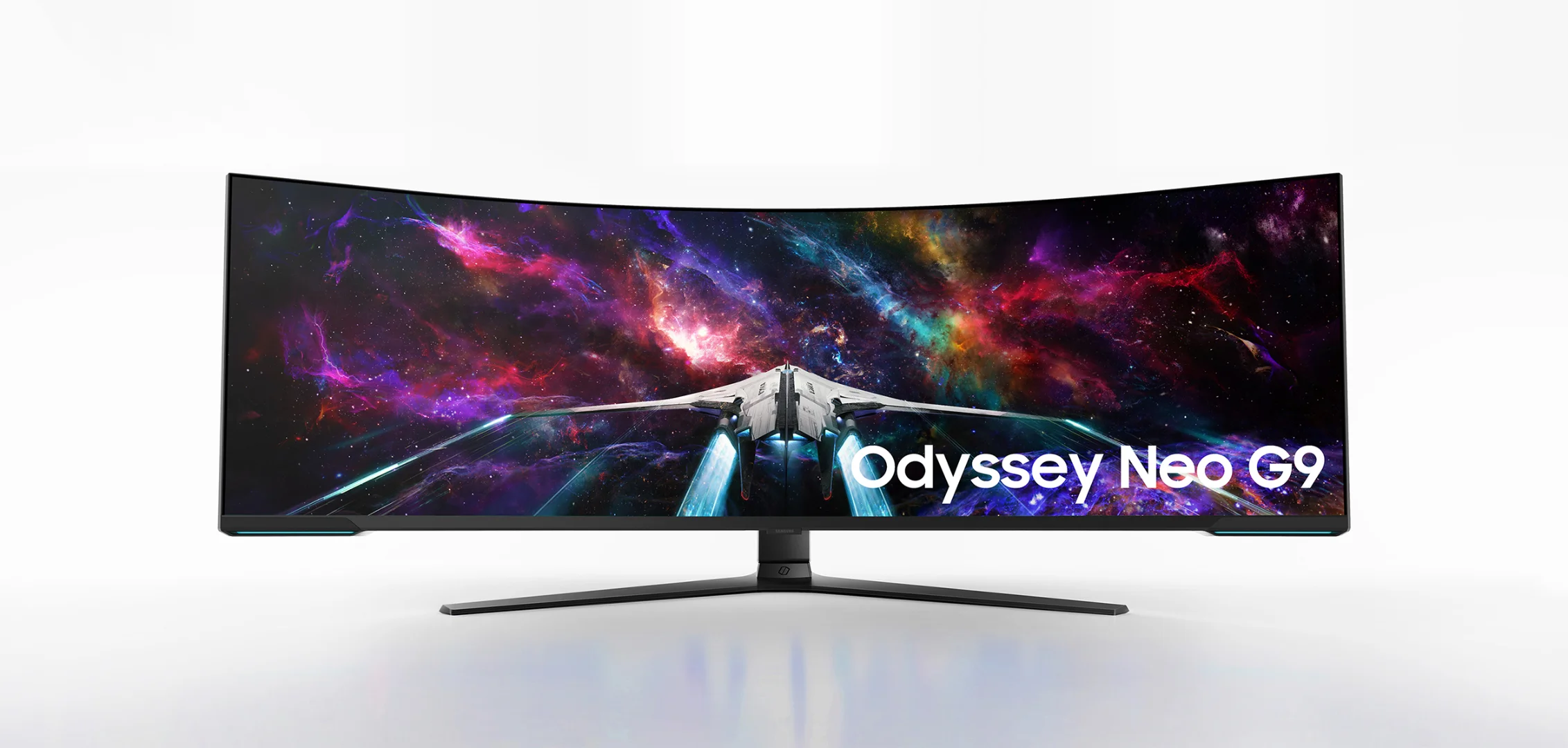
Productivity performance is equally formidable. The 5120 x 1440 Dual Quad HD resolution effectively grants you two 27-inch 1440p displays seamlessly stitched together without a central bezel. Whether you are scrubbing through massive video timelines, monitoring complex data streams, or running four full-sized browser windows side-by-side, the G9 Neo acts as an unmatched multitasking powerhouse.
Features & Software
Samsung has packed the G9 Neo with a comprehensive suite of software features aimed at maximizing its dual-screen potential. The Picture-by-Picture (PbP) and Picture-in-Picture (PiP) modes are standout functionalities, allowing you to connect two separate input sources—like a dedicated gaming PC and a work laptop—and display them simultaneously at full native resolution. Furthermore, it boasts full compatibility with both NVIDIA G-Sync and AMD FreeSync Premium Pro, guaranteeing tear-free gaming regardless of your hardware ecosystem.
The On-Screen Display (OSD) is intuitive and navigated via a snappy directional joystick tucked beneath the bottom bezel. While the software menus are geared heavily toward gamers, offering custom crosshairs, black equalizer settings, and refresh rate overlays, they remain cleanly organized. The Auto Source Switch+ feature also deserves praise, intelligently detecting newly connected devices and instantly switching over to the active signal without manual intervention.
Value Proposition
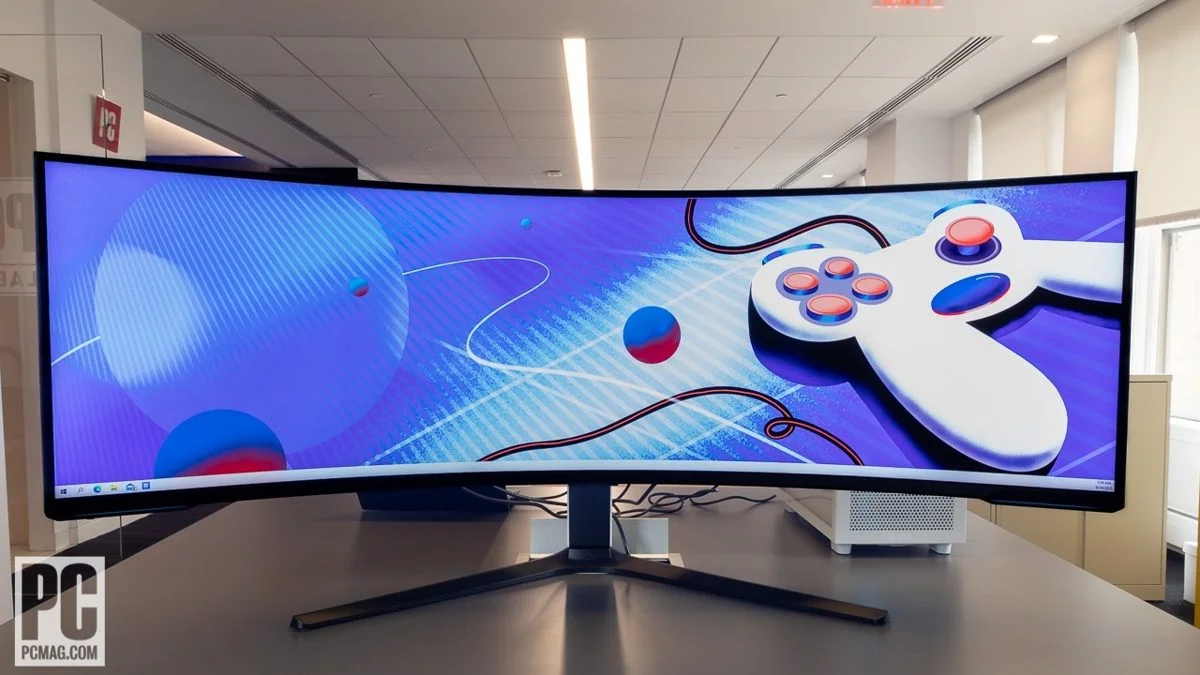
As we navigate the premium monitor market in 2026, the Odyssey G9 Neo remains a major investment, firmly positioned in the ultra-high-end bracket. However, when you consider that it effectively replaces a multi-monitor setup while delivering cutting-edge Mini LED backlighting and a blisteringly fast 240Hz refresh rate, the return on investment becomes clear for power users. It completely eliminates the need for complex dual-mounting arms and the visual interruption of bezels, offering a streamlined, all-in-one solution.
While early adopters paid a massive premium, current market pricing makes it significantly more palatable compared to newly released, experimental display technologies. It delivers roughly 90% of the perceived contrast of an OLED while offering vastly superior peak brightness and zero risk of permanent burn-in, making it a highly compelling, durable value proposition for both relentless gamers and 9-to-5 professionals.
How It Compares
When pitted against the LG UltraGear 45GR95QE-B, the Odyssey G9 Neo trades blows fascinatingly. The LG utilizes a 45-inch OLED panel, granting it perfect pixel-level contrast and marginally faster response times. However, the Samsung’s 32:9 aspect ratio offers significantly more horizontal screen real estate for multitasking, and its Mini LED technology reaches peak brightness levels the LG OLED simply cannot touch, making the G9 far superior in brightly lit environments.
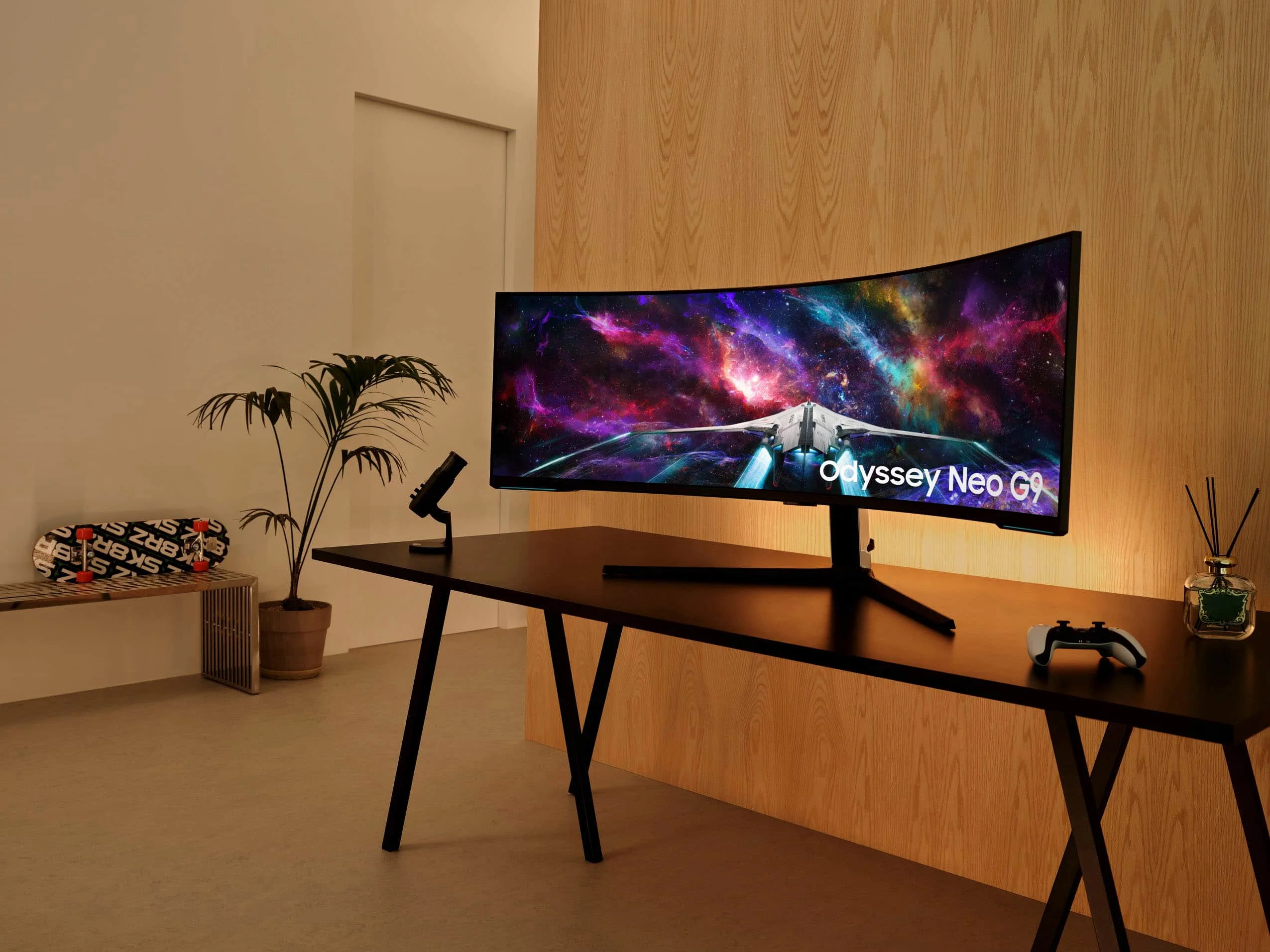
Compared to the Alienware AW3423DW, another OLED darling, the G9 Neo caters to a completely different scale. The Alienware is a 34-inch 21:9 display, which is much easier to drive with mid-tier GPUs and fits easily on traditional desks. Yet, for users demanding the absolute maximum field of view for sim-racing or high-end productivity, the 49-inch G9 Neo remains in a league of its own.
Pros and Cons
Pros
- Incredible peak brightness of up to 2,000 nits delivers jaw-dropping HDR performance.
- The aggressive 1000R curve provides unmatched immersion for gaming and sim-racing.
- Dual Quad HD resolution creates massive, bezel-free multitasking real estate.
- Quantum Mini LED backlighting heavily minimizes haloing and offers OLED-like blacks.
- Excellent motion handling with a 240Hz refresh rate and 1ms response time.
Cons
- The massive physical footprint requires an exceptionally deep and sturdy desk.
- Driving 5120 x 1440 pixels at 240Hz demands a top-tier, incredibly expensive graphics card.
- The monitor stand’s splayed legs limit keyboard and mouse placement for players who sit close to the screen.
- Prone to slight screen wobble if the desk is bumped or during aggressive typing sessions.
FAQ
Q: Does the Samsung Odyssey G9 Neo suffer from OLED burn-in?
A: No, the G9 Neo uses a VA panel with Quantum Mini LED backlighting. Because it does not use organic light-emitting diodes, there is absolutely no risk of permanent image burn-in.
Q: What graphics card do I need to run this monitor effectively?
A: To fully utilize the 5120 x 1440 resolution at 240Hz in modern games, you will need a flagship GPU such as an NVIDIA RTX 4090 or an AMD Radeon RX 7900 XTX.
Q: Can I use the Odyssey G9 Neo with a Mac?
A: Yes, it is fully compatible with modern Macs. However, to achieve the full native resolution and higher refresh rates, you must use a high-bandwidth connection like a Thunderbolt to DisplayPort adapter.
Q: Is the 1000R curve too aggressive for standard office work?
A: While it takes a few days to get used to, the curve actually reduces eye strain during long productivity sessions by keeping the far edges of the 49-inch screen at the exact same focal distance as the center.
Verdict
The Samsung Odyssey G9 Neo remains a technological marvel that offers a uniquely breathtaking, bezel-free experience for hardcore gamers, sim-racing enthusiasts, and power-multitaskers. If you have the desk space and the GPU horsepower to drive it, it stands as one of the most capable and immersive ultra-wide monitors available on the market today.
Where to Buy
Pros
- ✓ Incredible peak brightness of up to 2,000 nits delivers jaw-dropping HDR performance.
- ✓ The aggressive 1000R curve provides unmatched immersion for gaming and sim-racing.
- ✓ Dual Quad HD resolution creates massive, bezel-free multitasking real estate.
- ✓ Quantum Mini LED backlighting heavily minimizes haloing and offers OLED-like blacks.
- ✓ Excellent motion handling with a 240Hz refresh rate and 1ms response time.
Cons
- ✗ The massive physical footprint requires an exceptionally deep and sturdy desk.
- ✗ Driving 5120 x 1440 pixels at 240Hz demands a top-tier, incredibly expensive graphics card.
- ✗ The monitor stand’s splayed legs limit keyboard and mouse placement for players who sit close to the screen.
- ✗ Prone to slight screen wobble if the desk is bumped or during aggressive typing sessions.
Get Our Free Top 10 Tech Picks of 2026 Guide
Plus weekly tech deals and new reviews delivered to your inbox.
[cp_email_signup]
No spam. Unsubscribe anytime.
Ready to buy the Samsung Odyssey G9 Neo?
Affiliate link — we may earn a commission at no extra cost to you.