







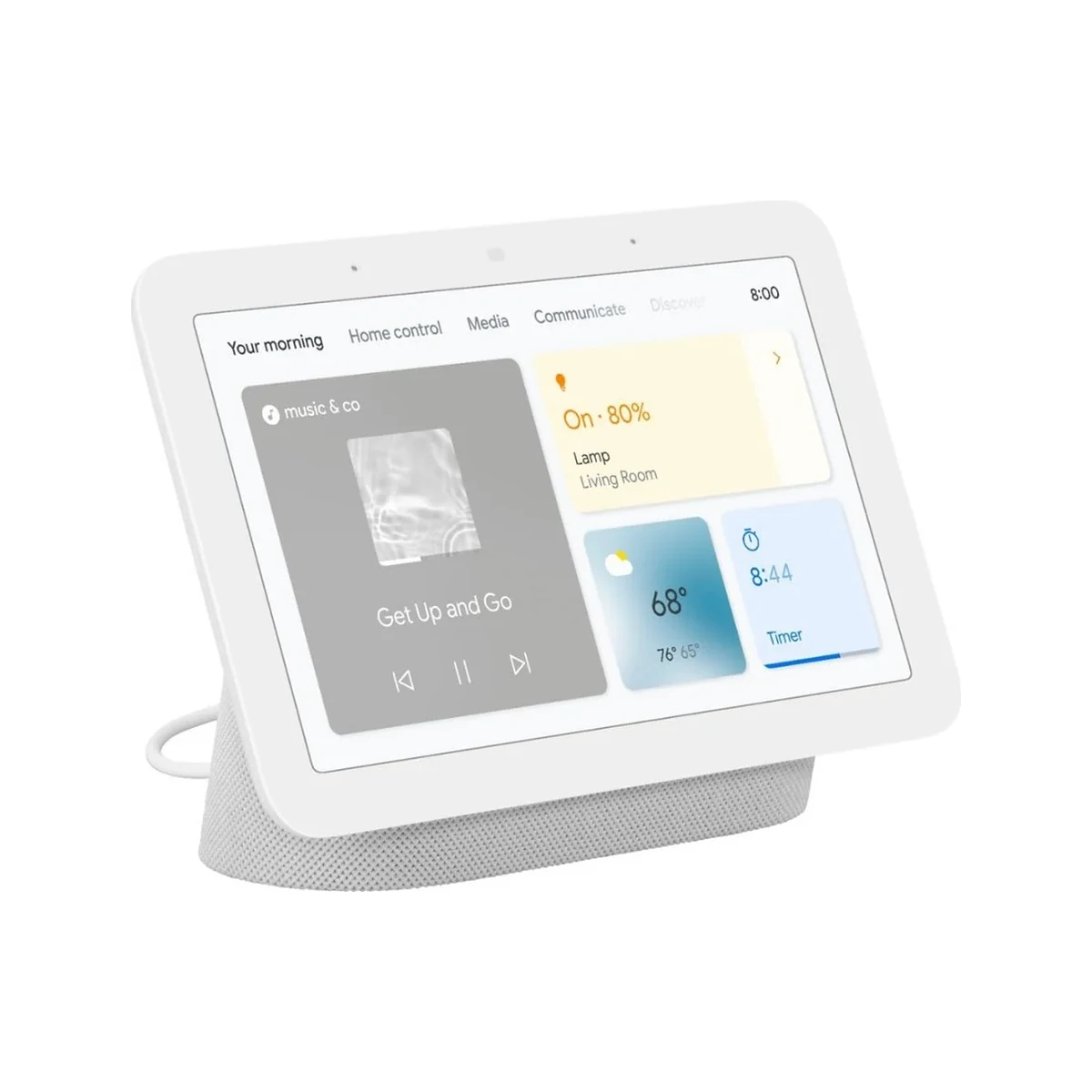
The Google Nest Hub (2nd Gen) combines a compact smart display with Google Assistant, improved audio, and groundbreaking contactless sleep tracking powered by Soli radar. Years after launch, it continues delivering seamless smart home control, media streaming, and wellness insights while maintaining strong privacy credentials. This 2026 review examines whether this affordable Google ecosystem hub remains a worthwhile investment for modern homes.
Table of Contents
Key Specifications
| Feature | Detail |
|---|---|
| Display | 7-inch LCD touchscreen (1024 x 600 resolution) |
| Audio | Improved full-range speaker with passive radiator |
| Assistant | Google Assistant with on-device processing |
| Sensors | Soli radar, ambient light, temperature, 3 far-field microphones |
| Connectivity | Wi-Fi 802.11ac, Bluetooth 5.0, Thread, Matter controller |
| Dimensions | 177 x 120 x 101 mm |
| Power | Mains power (no battery) |
| Colors | Chalk, Charcoal, Sand |
Design & Build Quality
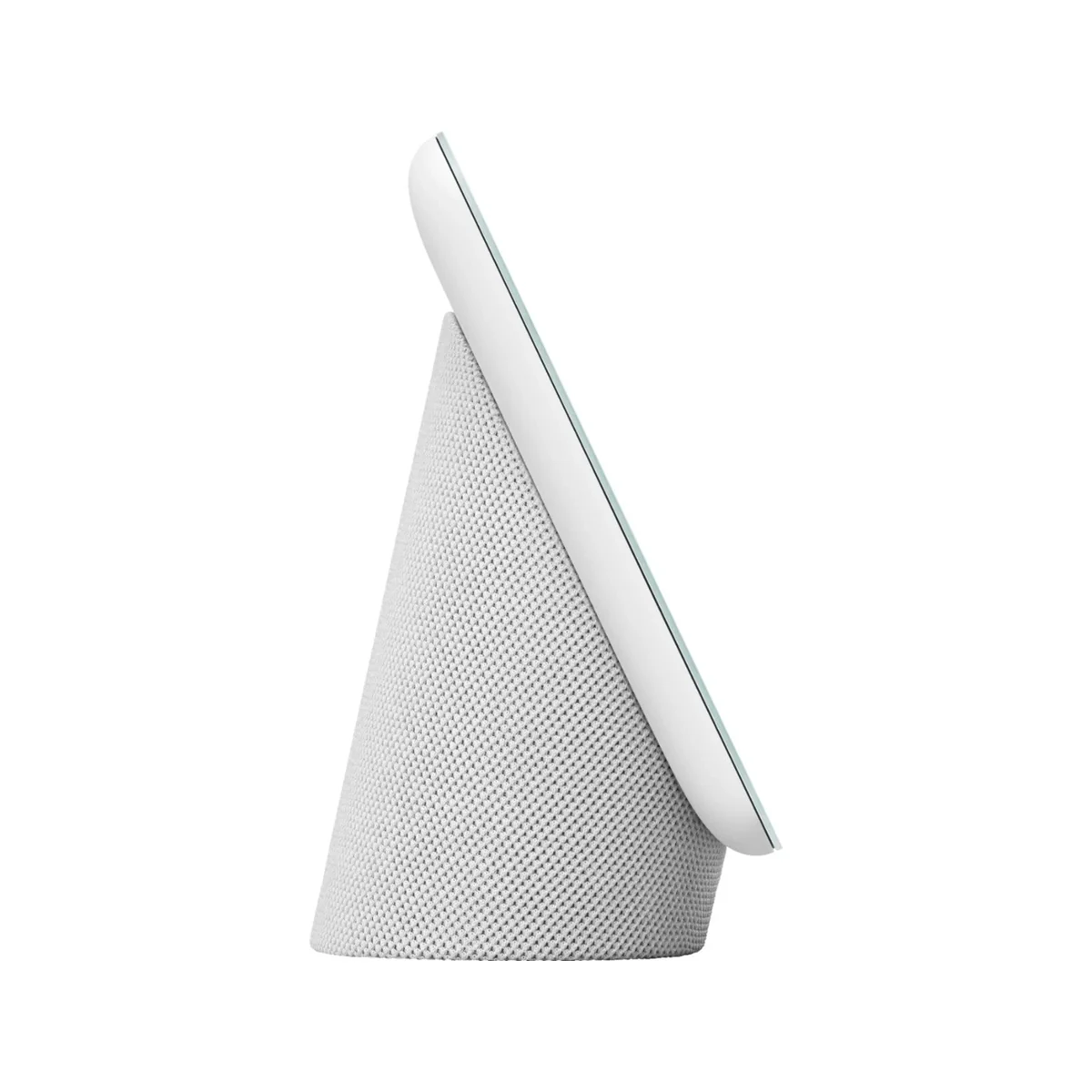
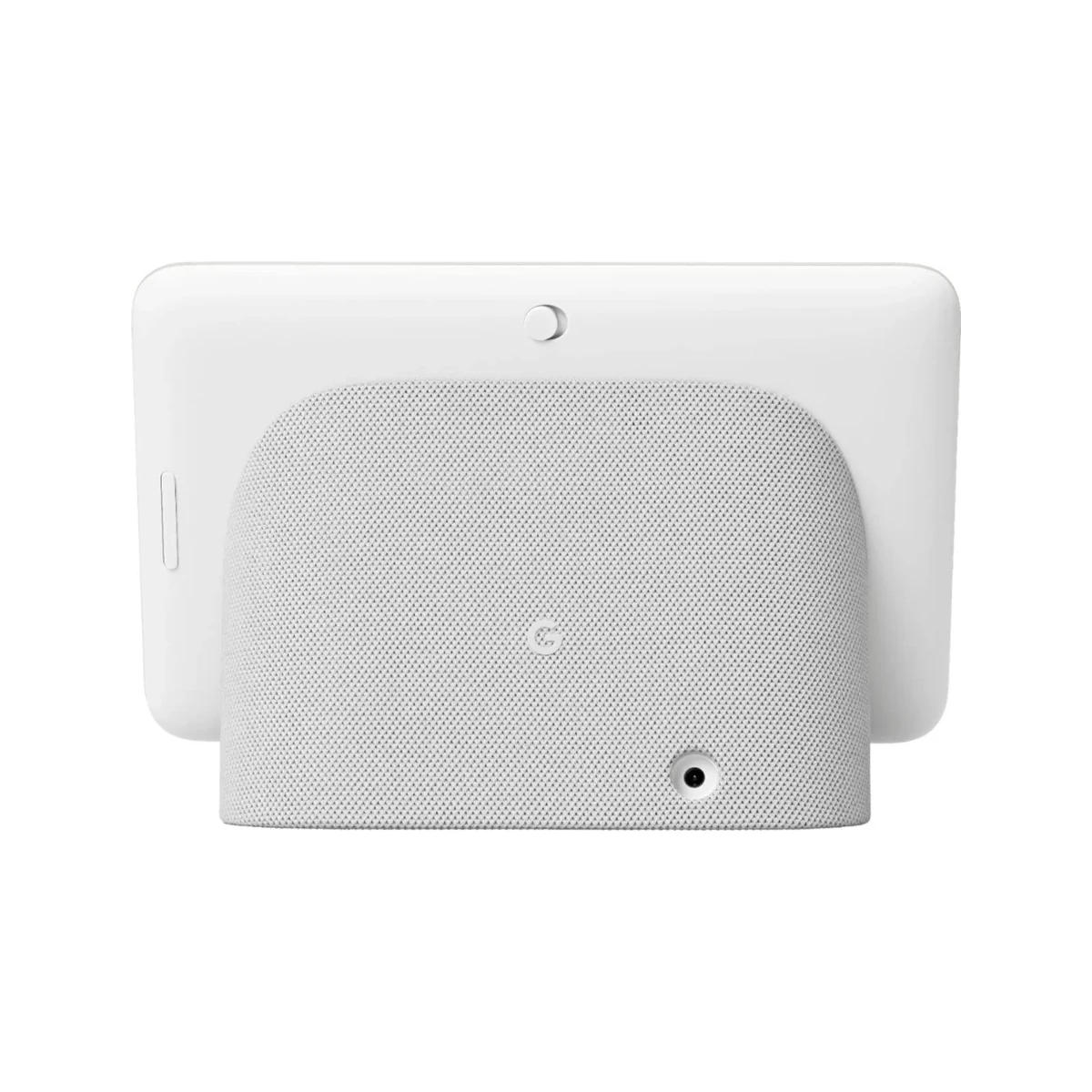
The Google Nest Hub (2nd Gen) features a minimalist, unobtrusive design that blends seamlessly into any room. The 7-inch display sits at a fixed, ergonomic viewing angle atop a rounded base wrapped in durable, recycled fabric. Available in neutral Chalk, Charcoal, and Sand finishes, the device maintains a small footprint perfect for nightstands, kitchen counters, or office desks. Build quality feels premium with tight tolerances, matte finishes that resist fingerprints, and satisfying physical controls along the top edge for volume and microphone mute.
Materials emphasize sustainability, incorporating post-consumer recycled plastics and fabric that look and feel more expensive than the device’s price point suggests. The unit stays remarkably stable even when tapped or adjusting settings, and the fixed tilt offers excellent viewing angles whether you’re standing or lying in bed. At just over half a kilogram, it’s easy to reposition but feels substantial enough to avoid seeming cheap.

Ergonomically, Google nailed the balance between functionality and simplicity. The lack of a motorized base or camera keeps the design clean and privacy-focused, while the fabric covering helps dampen vibrations during audio playback. In 2026, it still looks contemporary among newer smart displays, proving that thoughtful, restrained design ages better than flashy alternatives.
Performance
In real-world use throughout 2026, the Nest Hub (2nd Gen) remains impressively responsive thanks to on-device machine learning that handles most common commands locally. Voice recognition excels even in challenging acoustics, with the three far-field microphones accurately distinguishing commands from background noise or music playback. The interface feels snappy for daily tasks like adjusting smart lights, setting multiple timers, or pulling up calendar information.
While it isn’t a performance powerhouse like a tablet, the quad-core processor delivers smooth animations and quick app switching within the Google Home environment. Video streaming from YouTube and supported services maintains consistent quality with minimal buffering on modern Wi-Fi 6 networks. Sleep tracking via the Soli radar sensor operates reliably night after night, generating detailed reports on sleep duration, disturbances, and breathing patterns without any wearable required.
The improved speaker delivers surprisingly rich sound for the form factor, with better bass response than the first-generation model. Music playback through YouTube Music or Spotify fills medium-sized rooms adequately, though it lacks stereo separation. Occasional complex smart home routines involving multiple Matter devices can introduce minor latency, but regular firmware updates have significantly improved stability and speed since launch.
Features & Software
Standout features include the Soli radar sensor that enables both contactless gesture controls and advanced sleep sensing capabilities. The device doubles as a capable Matter controller and Thread border router, making it an excellent central hub for modern smart homes. The software experience benefits from years of Google updates, offering deep integration with Photos for digital frame functionality, seamless casting, and personalized routines that adapt to your lifestyle.
Google Assistant on the Nest Hub feels more natural than ever in 2026, with improved contextual understanding and the ability to handle multi-step commands efficiently. Privacy remains a priority with the physical microphone mute switch and no built-in camera, addressing many users’ concerns about always-listening devices.
Value Proposition
At its current price point in 2026, the Nest Hub (2nd Gen) delivers exceptional value for users invested in the Google ecosystem. It combines smart display functionality, audio playback, smart home control, and unique health tracking at a cost significantly lower than larger competitors. The addition of Matter and Thread support has extended its longevity, transforming what was already a capable device into a future-proof hub for expanding smart homes.
Compared to standalone smart speakers or basic displays, the sleep tracking and visual feedback provide meaningful additional utility that justifies the modest premium over audio-only devices. For the vast majority of users seeking an affordable entry into Google’s smart home platform, few alternatives match its combination of features, performance, and ongoing software support.
How It Compares
The Google Nest Hub (2nd Gen) holds up well against the Amazon Echo Show 8. While the Echo offers a slightly larger display and broader video streaming app selection, the Nest Hub provides superior privacy with no camera, more accurate sleep tracking, and tighter Google ecosystem integration. The Echo’s Alexa sometimes feels less conversational for complex queries, though it edges ahead for users preferring Amazon’s content ecosystem.
Against the original first-generation Nest Hub, the 2nd Gen represents a substantial upgrade with its Soli sensor, improved speaker, temperature sensor, and Thread/Matter capabilities that the older model lacks even after software updates.
Pros and Cons
Pros
- Exceptional integration with Google services makes controlling your entire smart home effortless and intuitive.
- Soli radar delivers accurate, contactless sleep tracking that provides genuine insights without requiring wearables.
- Improved speaker offers surprisingly rich sound with better bass than most devices in this price range.
- Regular software updates have kept the device relevant and secure well into 2026.
- Compact, privacy-focused design with no camera makes it ideal for bedrooms and family spaces.
Cons
- The 7-inch display feels limited for video streaming and detailed information browsing in 2026.
- Lack of a built-in battery means the device must remain permanently plugged in.
- Full sleep insights often require a subscription to Fitbit Premium or similar services.
- Audio output is mono only, lacking the spatial quality that stereo competitors provide.
- Limited selection of third-party apps compared to larger smart displays or tablets.
FAQ
Q: Is the Google Nest Hub (2nd Gen) still worth buying in 2026?
A: Yes, especially for Google Home users who value sleep tracking, privacy, and Matter smart home control at an affordable price.
Q: Does the Nest Hub (2nd Gen) support Matter and Thread?
A: Yes, it functions as both a Matter controller and Thread border router, making it an excellent smart home hub.
Q: How accurate is the Soli sleep tracking?
A: The radar sensor provides reliable data on sleep stages, duration, and disturbances, though full analysis may require a subscription service.
Q: Can you make video calls on the Nest Hub (2nd Gen)?
A: No. The device has no camera, which many users appreciate for privacy reasons in bedrooms.
Q: Does it work with Apple Home or Alexa devices?
A: Limited compatibility exists through Matter, but it performs best within the Google ecosystem.
Verdict
The Google Nest Hub (2nd Gen) remains an excellent choice for users deeply invested in Google services who want a versatile smart display with outstanding sleep tracking capabilities. Its combination of privacy-focused design, reliable performance, and regular software updates make it particularly well-suited for bedrooms and smaller living spaces. If you prioritize seamless smart home control and non-invasive health insights over a larger screen or camera, this device continues to deliver strong value in 2026.
Pros
- ✓ Exceptional integration with Google services makes controlling your entire smart home effortless and intuitive.
- ✓ Soli radar delivers accurate, contactless sleep tracking that provides genuine insights without requiring wearables.
- ✓ Improved speaker offers surprisingly rich sound with better bass than most devices in this price range.
- ✓ Regular software updates have kept the device relevant and secure well into 2026.
- ✓ Compact, privacy-focused design with no camera makes it ideal for bedrooms and family spaces.
Cons
- ✗ The 7-inch display feels limited for video streaming and detailed information browsing in 2026.
- ✗ Lack of a built-in battery means the device must remain permanently plugged in.
- ✗ Full sleep insights often require a subscription to Fitbit Premium or similar services.
- ✗ Audio output is mono only, lacking the spatial quality that stereo competitors provide.
- ✗ Limited selection of third-party apps compared to larger smart displays or tablets.