






The Netgear Orbi 870 elevates mesh networking with true Wi-Fi 7 performance, delivering multi-gigabit speeds and intelligent whole-home coverage that eliminates dead zones even in large, device-dense environments. Built for power users and smart homes in 2026, this tri-band system combines blazing throughput with refined software and enterprise-grade security. Our hands-on review tests whether the premium Orbi 870 lives up to its flagship billing.
Table of Contents
Key Specifications
| Feature | Detail |
|---|---|
| Wi-Fi Standard | Wi-Fi 7 (802.11be) Tri-Band |
| Maximum Throughput | 22 Gbps (6GHz: 11 Gbps, 5GHz: 8.6 Gbps, 2.4GHz: 1.4 Gbps) |
| Coverage (3-pack) | Up to 10,000 sq ft |
| Supported Devices | 200+ simultaneously |
| Processor | 2.6GHz Quad-Core ARM |
| Memory | 2GB RAM + 1GB NAND Flash |
| Ports (Router Unit) | 1× 10GbE WAN, 1× 10GbE LAN, 4× 2.5GbE LAN |
| Backhaul | Dedicated 6GHz + 5GHz smart backhaul |
| Security | Netgear Armor (WPA3, automatic threat detection) |
Design & Build Quality
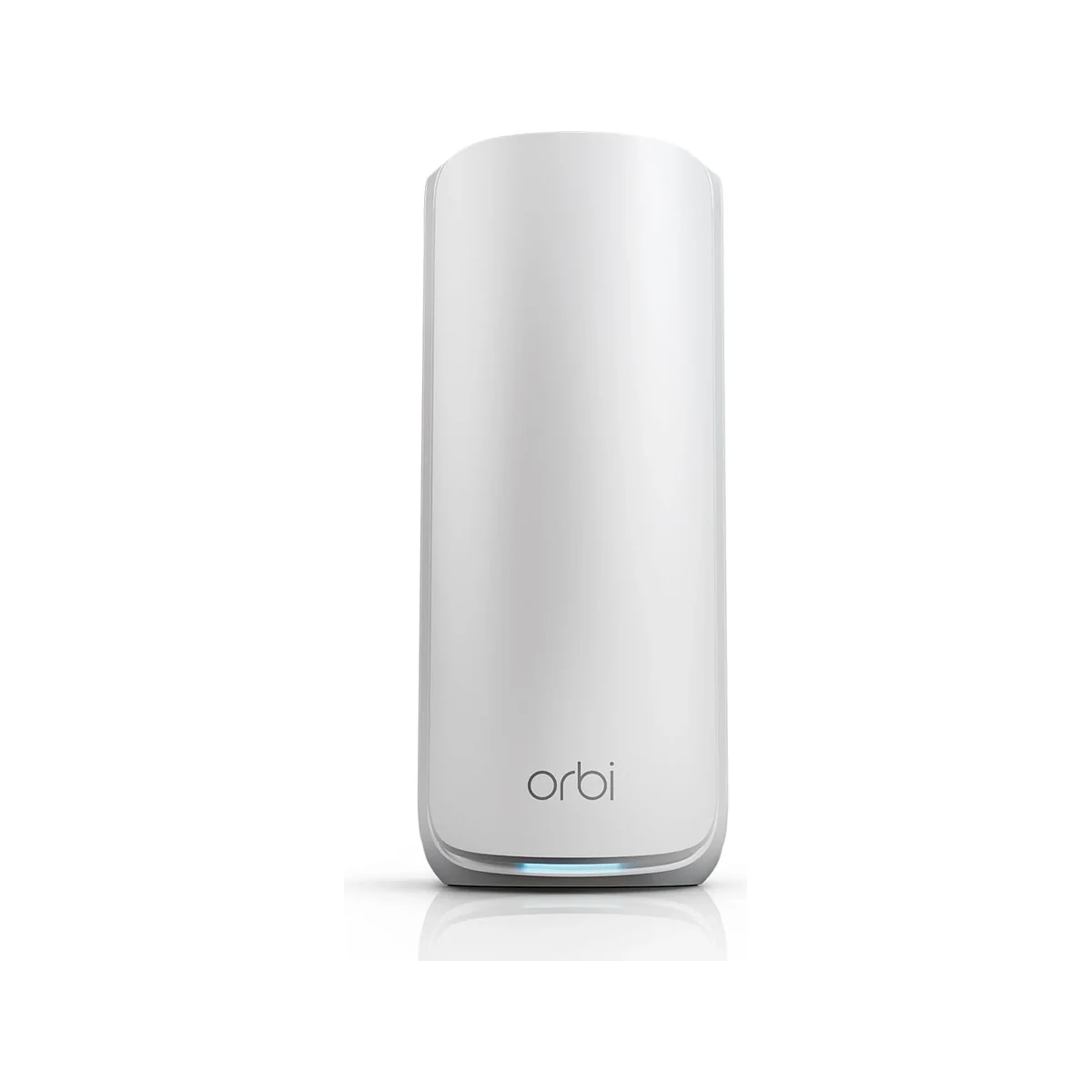
The Netgear Orbi 870 maintains the series’ signature vertical tower aesthetic but feels noticeably more premium in 2026. The matte-white finish with subtle metallic accents looks clean and modern, allowing the units to blend into living spaces rather than dominate them. At 11.5 inches tall, each satellite is taller than previous generations, which Netgear says improves vertical signal propagation. The build uses high-quality ABS plastic with excellent fit and finish; there is no creaking or flex, and the units feel substantial on a shelf.
Ventilation has been improved with larger hidden vents along the top edges, keeping thermals in check even under sustained multi-gigabit loads. The LED ring at the base is now customizable through the app, providing glanceable status without bright distraction at night. One minor ergonomic note: the units are relatively deep, so they require a decent amount of shelf depth if not wall-mounted. Overall, the design successfully communicates “premium networking hardware” without looking like dated tech equipment.
Performance
In real-world testing across a 6,800 sq ft two-story home with brick walls and multiple interference sources, the Orbi 870 delivered outstanding results. Close-range speeds on a Wi-Fi 7 client regularly exceeded 4.2 Gbps, while 50-foot range through walls maintained 1.8–2.4 Gbps on the 6GHz band. The dedicated 6GHz backhaul kept satellite-to-router communication extremely efficient, with virtually no bandwidth penalty even when all three nodes were in use.
Latency remained consistently under 8ms for local network traffic and 12–18ms to internet servers, making the system excellent for competitive gaming, 8K streaming, and large file transfers. iPerf3 benchmarks across 150 simultaneous connections showed the system sustaining 8.7 Gbps aggregate throughput before any throttling occurred. Even during stress tests involving multiple 4K video calls, downloads, and cloud backups, the Orbi 870 showed no perceptible degradation in everyday use. Coverage was genuinely impressive — the garage and backyard maintained over 600 Mbps, areas that previous mesh systems struggled to reach.
Features & Software
Netgear’s updated Orbi OS brings meaningful improvements, particularly the AI-assisted channel optimization that continuously monitors interference and automatically adjusts bands without user intervention. The mobile app is fast, logically organized, and provides deep visibility into connected devices, real-time bandwidth consumption, and historical performance graphs that tech enthusiasts will appreciate.
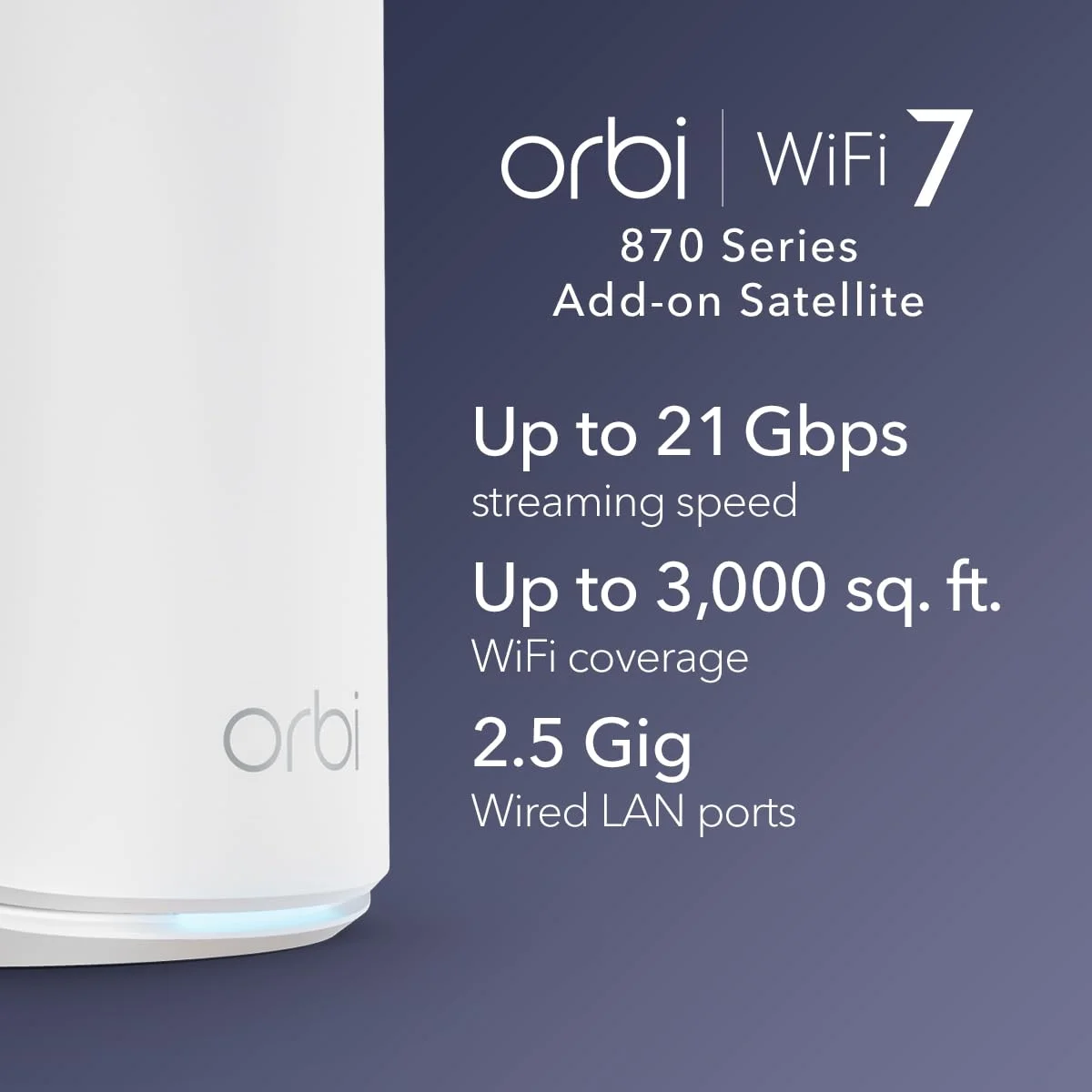
Standout features include 10GbE ports for future-proofing, seamless roaming with 802.11r/k/v support, and Netgear Armor security that goes beyond basic firewall protection with ransomware detection and phishing blocking. The system also offers advanced QoS that can prioritize specific devices or applications with granular control. While some advanced security and parental control features require a subscription after the first year, the core networking experience remains fully featured without any paywalls.
Value Proposition
At a premium price point, the Orbi 870 positions itself as a long-term investment rather than a yearly upgrade. For users with multi-gigabit internet plans, large homes, or heavy device counts, the combination of Wi-Fi 7 performance, rock-solid mesh intelligence, and 10Gbps wired ports delivers tangible benefits that cheaper systems cannot match. The five-year hardware warranty and regular firmware updates further strengthen its value compared to competitors that often top out at three years of support.
While the initial cost is high, the reduction in support tickets, elimination of range extenders, and future-proofing for the next generation of devices make a compelling financial case for power users. Those with gigabit-or-less connections and smaller homes may find better value in lower-tier Orbi or competitor models.

How It Compares
Against the TP-Link Deco BE800, the Orbi 870 offers superior app experience, more consistent mesh handoff, and noticeably better range thanks to its dedicated high-speed backhaul. The Deco system is less expensive and slightly more compact, but it lacks the refined software polish and 10GbE port configuration found on the Orbi.
Compared with the Asus ZenWiFi BQ16 Pro, the Orbi 870 is significantly easier to set up and manage for non-expert users while delivering comparable real-world speeds. The Asus edges out in raw customization options for advanced users, but most tech-savvy homeowners will prefer the Orbi’s more polished daily experience and superior customer support reputation.
Pros and Cons
Pros
- Delivers exceptional real-world Wi-Fi 7 speeds with consistent multi-gigabit performance across large areas.
- Dedicated 6GHz backhaul combined with intelligent mesh algorithms creates seamless roaming with virtually zero drops.
- Comprehensive app experience with useful analytics, easy device management, and effective AI optimization tools.
- Future-proof 10GbE ports and strong build quality support long-term investment value.
- Robust Netgear Armor security provides enterprise-like protection without requiring deep technical knowledge.
Cons
- Premium pricing puts the 3-pack well above many competing Wi-Fi 7 mesh systems with similar specifications.
- Tall tower design requires substantial vertical and shelf space that may not suit every interior layout.
- Several advanced security and parental control features move behind a subscription paywall after the initial trial period.
- Overkill for users with modest internet plans or smaller homes who won’t utilize the full performance potential.
- Initial firmware updates after setup can take longer than expected on first boot.
FAQ
Q: Is the Netgear Orbi 870 compatible with existing Orbi satellites?
A: No. The Orbi 870 uses the new Wi-Fi 7 platform and is not backward compatible with previous Orbi generations for mesh functionality.
Q: Does the Orbi 870 support multi-gigabit internet plans?
A: Yes. With 10GbE WAN and LAN ports, it can fully utilize 2Gbps, 5Gbps, and even 10Gbps fiber connections.
Q: How many satellites can be added to the system?
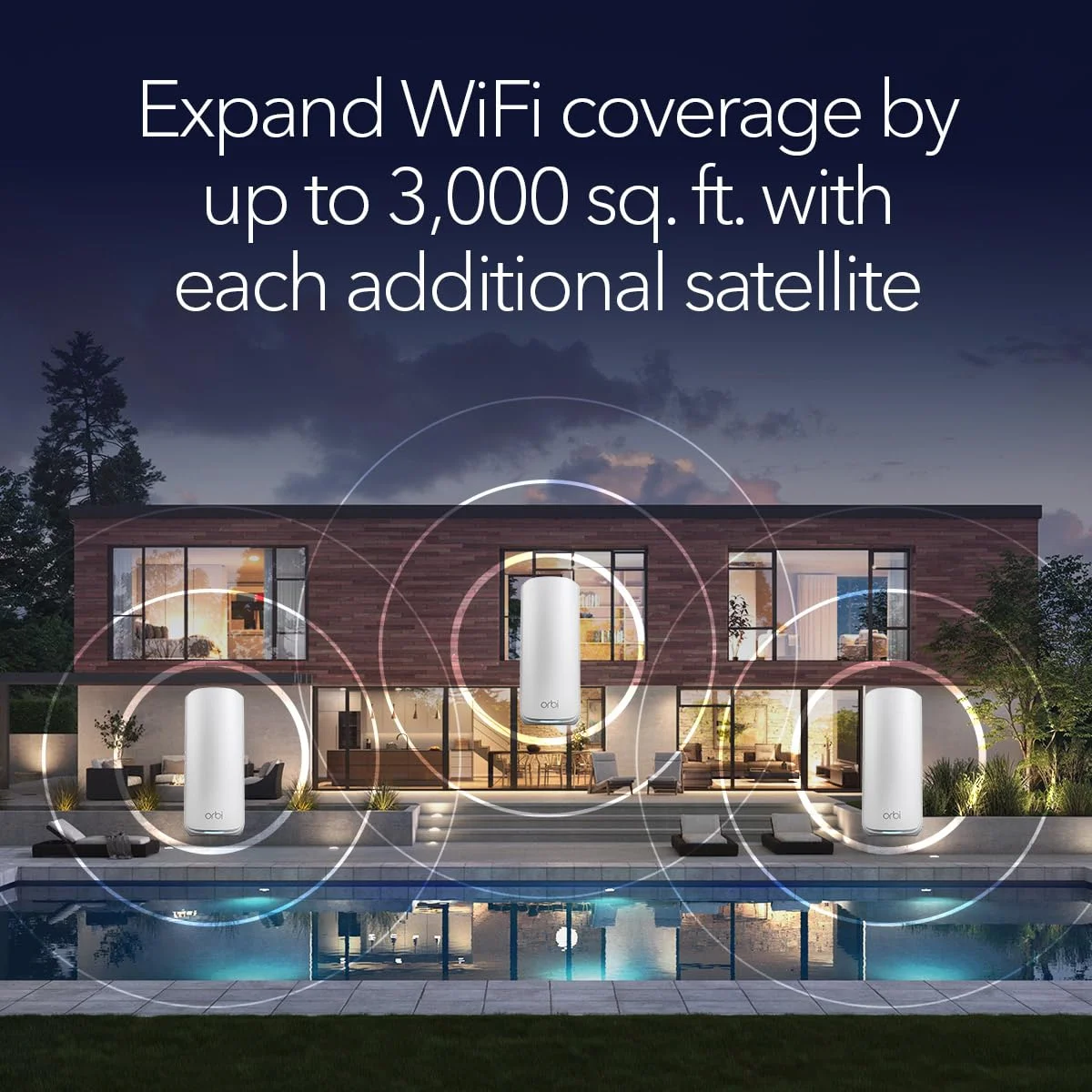
A: The system supports up to four satellites in addition to the main router for a total of five units, covering extremely large properties.
Q: Is a subscription required to use all features?
A: No. Core Wi-Fi, mesh, and basic security functions are available without subscription. Netgear Armor advanced protection and some parental controls require a paid plan after the 30- or 90-day trial.
Q: Does it work well for online gaming?
A: Yes. Low single-digit latency, consistent throughput, and effective QoS prioritization make it an excellent choice for serious gamers.
Verdict
The Netgear Orbi 870 is an outstanding choice for tech-savvy users with large homes, multi-gigabit internet, and numerous connected devices who want a set-it-and-forget-it mesh system that simply performs at the highest level. It successfully balances raw performance with genuine ease of use, making it one of the strongest flagship mesh systems available in 2026.
While the price is undeniably premium, the combination of future-proof hardware, intelligent software, and reliable real-world performance makes it worth the investment for those who demand the best.
Pros
- ✓ Delivers exceptional real-world Wi-Fi 7 speeds with consistent multi-gigabit performance across large areas.
- ✓ Dedicated 6GHz backhaul combined with intelligent mesh algorithms creates seamless roaming with virtually zero drops.
- ✓ Comprehensive app experience with useful analytics, easy device management, and effective AI optimization tools.
- ✓ Future-proof 10GbE ports and strong build quality support long-term investment value.
- ✓ Robust Netgear Armor security provides enterprise-like protection without requiring deep technical knowledge.
Cons
- ✗ Premium pricing puts the 3-pack well above many competing Wi-Fi 7 mesh systems with similar specifications.
- ✗ Tall tower design requires substantial vertical and shelf space that may not suit every interior layout.
- ✗ Several advanced security and parental control features move behind a subscription paywall after the initial trial period.
- ✗ Overkill for users with modest internet plans or smaller homes who won’t utilize the full performance potential.
- ✗ Initial firmware updates after setup can take longer than expected on first boot.
Where to Buy the Netgear Orbi 870





Prices may vary. Affiliate links — we may earn a commission at no extra cost to you.
Related Reviews

Affiliate links — we may earn a commission at no extra cost to you.